pop culture
Pop culture has a place in the classroom; popular trends like hip hop help to foster interest and ignite conversations in education.
What will happen if the moon is gone?
The moon, Earth's natural satellite, holds a crucial role in our planet's existence. The Moon has a diameter that is roughly one-quarter the size of Earth, comparable to the width of Australia. This makes it the fifth largest satellite in the Solar System and the largest and heaviest relative to its parent planet. Additionally, it is bigger than all identified dwarf planets in the Solar System. The Moon is a planetary-mass entity with a differentiated rocky body, classifying it as a satellite planet under geophysical definitions. It does not possess a significant atmosphere, hydrosphere, or magnetic field. Its surface gravity is 0.1654 g, which is about one-sixth of Earth's. Jupiter's moon Io is the only known satellite in the Solar System with a greater surface gravity and density. The Moon orbits Earth at an average distance of 384,400 km (238,900 mi), which is about 30 times the diameter of Earth. Its gravitational impact is the primary force behind Earth's tides and gradually lengthens Earth's day. The Moon's sidereal period, which is the time it takes to orbit Earth once, is roughly 27.3 days. Every synodic period of 29.5 days, the amount of visible surface illuminated by the Sun varies from none to 100%. This results in lunar phases that serve as the basis for the months of a lunar calendar. The Moon is tidally locked to Earth, which means its same side (the near side) always faces Earth because the length of its full rotation on its axis is equivalent to the synodic period. Because of cyclical perspective shifts (libration), 59% of the lunar surface is visible from Earth. According to the prevailing theory, the Moon came into existence approximately 4.51 billion years ago, shortly after the formation of Earth. This occurred due to a colossal collision between Earth and a theoretical, Mars-sized object referred to as Theia, resulting in debris that eventually formed the Moon. Over time, the Moon moved further away from Earth due to the interaction of tides. The dark volcanic maria, or "seas," are visible on the Moon's near side and occupy the areas between the ancient bright highlands and significant impact craters.
By Julio Javier3 years ago in Education
The Best Fruits for Diabetes
Fruits are like nature's candy! They're sweet, tart, and delicious. But if you have diabetes, you might be worried about eating too much sugar. Don't worry, though - you can still enjoy fruit! In fact, fruit is really good for you. We're going to tell you about the five best fruits for people with diabetes. Plus, we'll share a secret fruit that's super healthy and yummy. We're here to help you learn about diabetes and how to stay healthy. Stick around to find out how you can get some free gifts from us!
By Julio Javier3 years ago in Education
Certain types of fish that you should avoid eating
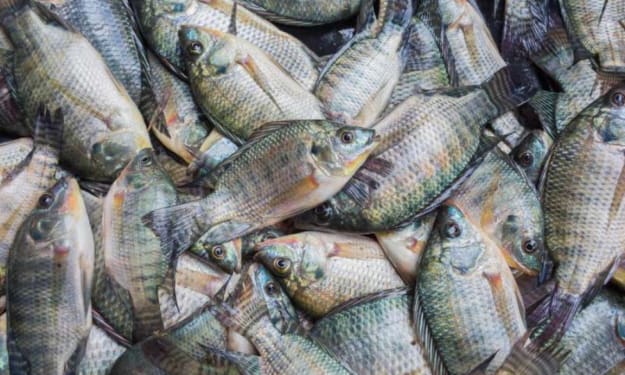
Let's discuss the benefits and potential risks of consuming fish. Fish is a rich source of vital nutrients, including protein and omega-3, which promote a healthy heart and overall well-being. However, not all types of fish are equal in terms of nutritional value, and selecting the wrong kind could have negative consequences. It's important to be aware of the best options available when purchasing fish. Additionally, we'll identify a type of fish that is frequently featured on restaurant menus and can live up to 150 years, but we advise against consuming it due to the accumulation of toxins over time. Toxins can have a detrimental impact on both the body and brain once they enter the bloodstream. Before we delve deeper, we ask that you remain with us to learn about two heart-healthy gifts that you will love. Tilapia, a commonly consumed fish in the United States, should be consumed with caution due to its high omega-6 to omega-3 ratio.
By Julio Javier3 years ago in Education
From Farm to Fork
In an era dominated by fast food chains and convenience-driven meals, a movement has emerged that celebrates the connection between food and its origins. The farm-to-table movement, with its roots in sustainability and conscious consumption, has taken the culinary world by storm, offering a unique and innovative approach to dining. The farm-to-table concept revolves around the idea of shortening the distance between food producers and consumers. It promotes the use of locally sourced, seasonal ingredients that are cultivated with sustainable farming practices. The movement aims to establish a direct relationship between farmers, chefs, and diners, ensuring transparency and traceability throughout the entire food production process. At its core, the farm-to-table movement is a celebration of flavors, freshness, and community. By eliminating the middlemen and long-distance transportation, farmers can focus on growing high-quality produce that's picked at the peak of ripeness. These ingredients are then delivered directly to local restaurants, where skilled chefs transform them into delectable dishes bursting with flavor. One of the key pillars of the farm-to-table movement is sustainability. Conventional agricultural practices often rely on heavy pesticide use, synthetic fertilizers, and monoculture, which harm the environment and deplete natural resources. In contrast, the movement promotes organic farming techniques, responsible land management, and biodiversity preservation. By supporting local farmers who adhere to these principles, consumers contribute to a more sustainable and resilient food system. Furthermore, the farm-to-table movement encourages diners to reestablish a deeper connection with the food they consume. It emphasizes the importance of understanding where our food comes from, who grows it, and how it is produced. This newfound awareness fosters appreciation for the effort and skill involved in bringing food to our plates. It also inspires a sense of gratitude for the abundance provided by the earth and encourages mindful eating.
By Pradip Sarkar3 years ago in Education
Embracing Adventure
In a world where mundane routines often dominate our lives, there's something truly inspiring about taking a leap of faith and embracing the unknown. Such was the case when a seemingly simple question was posed to a drowsy 15-year-old: "Would you rather have ten thousand dollars or take a chance with the Mystery Box?" Little did they know that this lighthearted inquiry would lead to a whirlwind of excitement, pushing boundaries and redefining what's possible.
By nassar chadi hafiz3 years ago in Education
Countries with no snakes
Snakes belong to a group called Serpentes and are elongated, limbless creatures that consume meat. Certain species of snakes possess unique skulls that enable them to devour prey that exceeds the size of their heads. Due to their slim physiques, their organs are arranged differently from other animals to fit within their bodies. Unlike most animals, snakes typically have only one lung. Although some legless lizards share the elongated and limbless traits of snakes, they are a separate species altogether and possess eyelids and ears, which snakes lack.
By Julio Javier3 years ago in Education
The Influence of American Pop Culture in Society and Movies
American pop culture has had an enormous impact on both society and the world of cinema. With its vibrant music, fashion trends, iconic celebrities, and influential media, American pop culture has become a powerful force that shapes the global cultural landscape. This essay explores the multifaceted influence of American pop culture, examining its significance in society and its transformative role in the realm of movies. By delving into various aspects, such as music, fashion, celebrity culture, and media representation, we can understand the pervasive impact and enduring legacy of American pop culture.
By Culture Cat3 years ago in Education
The Power and Influence of Popular Culture: Exploring its Roots, Impact, and Significance
Investigating popular culture's complexities requires further analysis of its roots and the various interpretations embraced throughout history. As popular culture continues to evolve and encompass different aspects of society, it becomes increasingly important to recognize the factors driving its expansion, as well as its impact on society at large.
By Culture Cat3 years ago in Education
Roman and Greek Mythology in Popular Culture: Examples, References, and Allusions
Roman and Greek mythology, with their captivating tales of gods, heroes, and mythical creatures, have left an indelible mark on popular culture. From literature and art to film and advertising, the influence of these ancient mythological traditions can be seen across a wide range of mediums. This essay explores the enduring presence of Roman and Greek mythology in popular culture, examining notable examples, references, and allusions that continue to fascinate and captivate modern audiences.
By Culture Cat3 years ago in Education
Make Money Watching YouTube Videos In 2023
"Join us as we explore an exciting opportunity for hustlers and online money-makers. Imagine getting paid to watch YouTube videos from anywhere in the world, and the best part is, it's completely free. Now, you might be skeptical, and I was too at first, but let me assure you, this is a real possibility. We have tested it ourselves and seen results. People are already capitalizing on this method, and today, I'll walk you through the process. So, get ready to turn your YouTube addiction into a profitable side hustle.
By nassar chadi hafiz3 years ago in Education
The Life Of Kim Kardashian
Kim Kardashian, a name that has become synonymous with celebrity culture, social media dominance, and entrepreneurial success. Born on October 21, 1980, in Los Angeles, California, Kimberly Noel Kardashian West has captured the world's attention with her larger-than-life persona, business ventures, and influential presence.
By Ben Gramms3 years ago in Education