movie review
Movie reviews for the lifelong learner; films about inspiring educators, the college experience, high school woes, education rights worldwide and more.
The Psychology of Solitude: How Alone Time Shapes Creativity and Mental Health
In today’s fast-paced world, the idea of spending time alone can be intimidating. Many people associate solitude with loneliness or isolation, often fearing the quiet moments that come when we are disconnected from others. However, research and experience show that solitude can be a powerful tool for personal growth, creativity, and emotional well-being. The Science of Solitude At its core, solitude is simply the state of being alone without feeling lonely. It’s important to distinguish solitude from loneliness, as the latter can lead to feelings of isolation and sadness, while solitude can foster introspection, self-discovery, and creativity. The key difference lies in the intention behind it. While loneliness often stems from a lack of social connection, solitude is a voluntary experience that provides space for reflection and inner peace. Psychologically, solitude has been shown to have numerous benefits. When alone, the brain shifts into a different mode, allowing individuals to process thoughts, analyze experiences, and engage in deep thinking. This cognitive shift can trigger creativity, as it allows the brain to wander freely without distractions. In solitude, the mind is able to make connections that may not be possible in a busy, social environment. Research by the University of California has found that solitude helps to increase brain activity in the regions associated with memory and creative problem-solving. When we are alone, the brain has the freedom to engage in “mind-wandering,” a state that has been linked to creative breakthroughs and innovative ideas. In this mental space, new neural connections are formed, allowing individuals to solve problems more efficiently and come up with original solutions. Solitude and Creativity One of the most profound impacts of solitude is its ability to enhance creativity. Many artists, writers, musicians, and other creators have long advocated for spending time alone to nurture their creative processes. This is because, in solitude, the mind is free from external noise and social pressures, allowing it to focus solely on the task at hand. Albert Einstein once said, “The monotony and solitude of a quiet life stimulates the creative mind.” Indeed, solitude provides the perfect environment for deep thought and creative exploration. When we are alone, we are less likely to be influenced by others’ opinions or societal expectations. Instead, we can focus on our own ideas and perspectives, giving rise to innovation and originality. In addition to fostering creativity, solitude allows individuals to develop their creative talents without fear of judgment or interruption. Writers, for instance, often experience a surge in inspiration when they retreat into solitude, enabling them to write freely without distractions. Similarly, musicians and artists benefit from uninterrupted time alone, where they can experiment, refine their skills, and push the boundaries of their craft. Mental Health Benefits of Solitude Beyond its creative benefits, solitude also plays a crucial role in improving mental health. In our constantly connected world, many people feel overwhelmed by the demands of daily life, including work, social media, and relationships. Taking time to be alone allows individuals to recharge, clear their minds, and regain a sense of inner balance. Spending time alone can help reduce stress and anxiety by providing a break from external stimuli and social pressures. It’s in these moments of solitude that we can engage in mindfulness practices, meditation, and self-reflection, all of which contribute to better mental health. Research from the American Psychological Association suggests that solitude can help individuals reduce their stress levels, improve their emotional regulation, and foster greater self-awareness. Moreover, solitude allows for emotional healing. Many people find that spending time alone gives them the space they need to process difficult emotions, such as grief, anger, or disappointment. In solitude, there are no distractions to mask these feelings; instead, individuals can confront their emotions head-on, leading to personal growth and emotional resilience. How to Use Solitude Effectively While solitude can be incredibly beneficial, it’s important to approach it mindfully. Spending too much time alone, especially without purpose, can lead to feelings of loneliness and isolation. To reap the benefits of solitude, it’s essential to balance it with meaningful activities that nourish the mind and spirit. Here are some tips for using solitude effectively: 1. Set Intentions: Use your time alone with a clear purpose. Whether it’s to work on a creative project, reflect on your emotions, or practice mindfulness, having an intention will help you make the most of your solitude. 2. Create a Comfortable Space: Designate a quiet area where you can feel at ease. This could be a cozy corner at home, a peaceful spot in nature, or a quiet café. A comfortable environment helps you relax and focus. 3. Limit Distractions: To fully immerse yourself in solitude, turn off your phone or any other distractions. This allows you to engage deeply with your thoughts and emotions. 4. Practice Mindfulness or Meditation: Use your alone time to engage in mindfulness practices, such as deep breathing, journaling, or meditating. These activities help to calm the mind and improve emotional well-being. 5. Take Breaks from Social Media: Social media can often lead to overstimulation and comparison. Taking time away from these platforms allows you to reconnect with yourself and your own thoughts. Conclusion Solitude is often misunderstood as a negative experience, but when used intentionally, it can be a powerful tool for enhancing creativity and improving mental health. By embracing moments of solitude, we can foster self-awareness, reduce stress, and unlock the creative potential within us. So, the next time you find yourself alone, embrace the opportunity to explore your thoughts, recharge your spirit, and allow your creativity to flourish.
By Majid Ullahabout a year ago in Education
Earth Day 2025
when is earth day 2025 Earth Day 2025: A Pivotal Moment for Our Planet As the 55th anniversary of Earth Day approaches in 2025, the world stands at a critical crossroads in the fight against climate change. With Google Trends data revealing surging interest in “Earth Day 2025,” this milestone is poised to become a defining moment for global environmental awareness, innovative green technology, and collective climate action. In this blog, we’ll unpack the trends, predictions, and SEO-optimized insights you need to stay ahead of this revolutionary movement.
By John Williamabout a year ago in Education
The Lion and the Rabbit: A Tale of Wit and Strength
Once upon a time, in a lush green forest ruled a mighty lion named Zor. His roar echoed through the trees, and all the animals feared him. He declared himself the king of the jungle and demanded that each day, one animal would come to him as his meal. “This way,” he said, “I won’t have to hunt, and you all will live longer.”
By Ak Hussain about a year ago in Education
Harvard University sues Trump administration to stop funding freeze . AI-Generated.
Cambridge, Mass. — Harvard University filed a federal lawsuit this week against the Trump administration, challenging a controversial decision to freeze millions of dollars in federal research funding. The prestigious institution argues that the move is politically motivated, unjustified, and threatens not only vital academic research but also the broader national interest in scientific innovation.
By arefin chowdhuryabout a year ago in Education
The Great Gatsby
The Great Gatsby is a famous American novel written by F. Scott Fitzgerald and published in 1925. Though it wasn’t very popular when it first came out, today it’s considered one of the greatest novels ever written. The story is about love, dreams, money, and the search for happiness. It takes place in the 1920s, a time in America known as the Roaring Twenties, when people were celebrating, partying, and trying to live the “American Dream.”
By Muhammad Hayatabout a year ago in Education
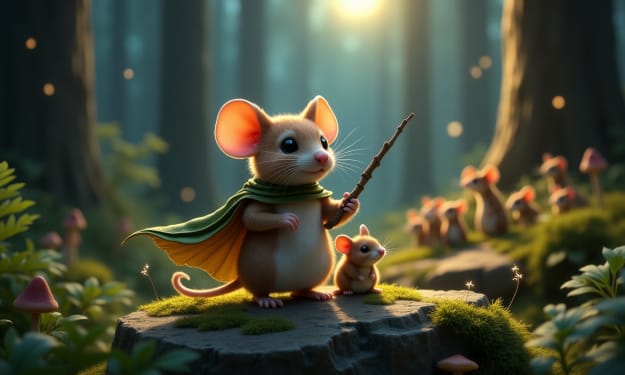
The Brave Little Mouse
The Brave Little Mouse Once upon a time, in a quiet little village nestled between rolling green hills, there lived a small mouse named Milo. Unlike the other mice in his colony, Milo was not content with simply hiding in the shadows and scavenging for crumbs. He dreamed of being brave, of standing up for others, and of making a difference—no matter how small he was.
By Shahzad Khanabout a year ago in Education
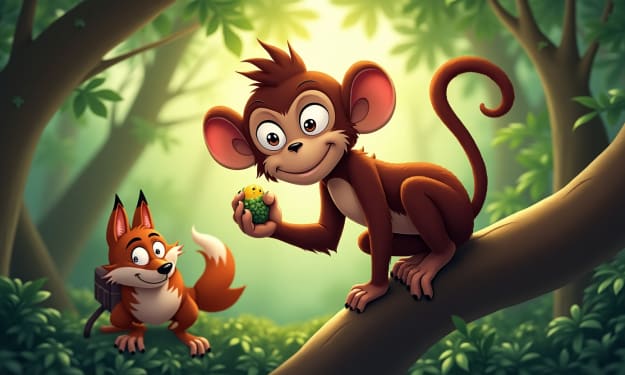
The Cunning Monkey
The Cunning Monkey Deep in the heart of a vast, vibrant jungle, where sunlight filtered through thick canopies and the air buzzed with the songs of birds, there lived a monkey named Miko. Unlike the other monkeys who spent their days swinging from branches and playing together, Miko was different. He was clever—too clever. His sharp mind often led him to mischief, and while some animals admired his intelligence, many others distrusted him.
By Shahzad Khanabout a year ago in Education
Silence Has a Name
In a small, quiet town nestled between rolling hills, everyone knew everyone. It was the kind of place where secrets were hard to keep, and life moved slowly, like the winding river that cut through the valley. People lived simple lives, greeting each other with smiles and small talk. But when a new boy named Naveed arrived at the local school, things began to change.
By Majeed Ullahabout a year ago in Education