interview
Interviews with educators, innovative graduate students and individuals who've devoted their lives to the development of the world's youth.
Influential Women LinkedIn: Building Impact Through Every Connection
In a world overflowing with digital noise, there’s one place where women are not just talking about change - they’re creating it. That place is Influential Women LinkedIn, a growing global movement that blends authenticity, leadership, and purpose into one dynamic network.
By influentialwomenmagazine12 months ago in Education
The Art and Science of Raising a Labrador: 5 Secrets to Surviving the First Year
The first week I brought my Labrador puppy home, I was certain I had made a terrible mistake. This wasn't the calm, noble dog I had seen in movies. This was a 15-pound ball of needles, chaos, and boundless, chaotic energy. He was a "Land Shark," a title he earned by systematically attempting to chew my hands, my furniture, and every electrical cord he could find.
By Stefano D'angello12 months ago in Education
Top 30 Meta Behavioral Questions and How to Crush Them. AI-Generated.
Why Meta Behavioral Interviews Are Different The behavioral round at Meta, the company formerly known as Facebook, isn't about rote answers—it's about evidence. They aren't just checking boxes; they're looking for measurable impact, a collaborative mindset, and your ability to lead through influence in their famously flat organizational structure.
By Devin Rosarioabout a year ago in Education
The Science of Habit Formation: How Your Brain Shapes Your Life. AI-Generated.
Every day, we make countless choices — some small, some significant. From brushing your teeth to checking your phone first thing in the morning, our lives are filled with habits. But have you ever wondered why habits are so hard to change? And why some people seem to develop good habits effortlessly while others struggle?
By shakir hamidabout a year ago in Education
The Day the Results Came In
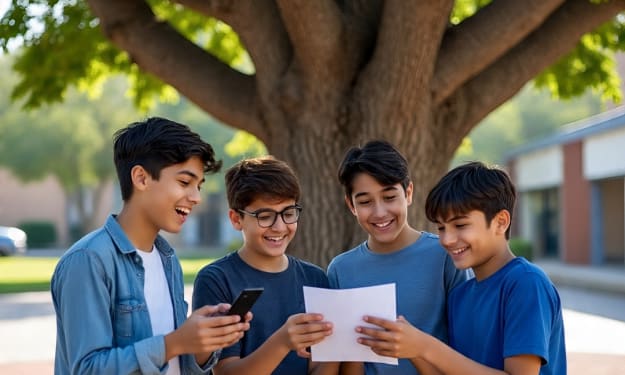
The Day the Results Came In How One Group of Students Discovered More Than Just Their Grades The morning sun poured over the red-brick walls of St. Alder High School, turning the courtyard into a warm, golden glow. It was results day — the one date circled, highlighted, and whispered about for months. The gates had barely opened when clusters of students began to gather, envelopes clutched in nervous hands, their laughter and chatter hiding the shared thrum of anxiety beneath. Mia stood at the centre of it all, her stomach twisting in knots. She’d been dreaming about this day since the exams ended, running through every possible scenario in her head. She had studied harder than she ever had before — late-night flashcards, group calls, endless practice papers — but the uncertainty still gnawed at her. Around her, her friends—Eli, Zara, and Noah—were trying to look casual, leaning against the wall and joking about who would faint first. “Can’t believe this is it,” Noah said, spinning his envelope between his fingers. “Months of suffering in that library, and it all comes down to this piece of paper.” Zara laughed, though her voice trembled slightly. “If I open this and it says I passed maths, I’m framing it.” Mia smiled faintly, grateful for the light-heartedness. The sound of envelopes tearing open began to ripple through the courtyard. Gasps, squeals, sighs — all blending into a strange symphony of relief and emotion. She took a deep breath, felt her heartbeat in her fingertips, and opened hers. For a moment, all she saw were the numbers, neatly typed in black ink. Then they began to make sense. Her grades were better than she dared hope — not perfect, but enough. Enough to get into the university she wanted. Enough to feel that the long nights and self-doubt had been worth it. She looked up, a wide grin spreading across her face before she could stop it. “I did it!” she said, almost breathless. Zara let out a cheer. “You did? Let me see!” Within seconds, they were all comparing results — some shouting in triumph, some hugging in quiet relief. Eli, who had always been the calm one, smiled as he looked at his paper. “Looks like we’re all going to make it,” he said softly. But not everyone was smiling. A few steps away, another student sat on a bench, staring at her paper, tears welling up. Mia hesitated for a moment, then walked over. It was Sophie — someone she’d worked with on a group project but didn’t know well. “Hey,” Mia said gently. “You okay?” Sophie shook her head, trying to smile through her tears. “I didn’t get the grade I needed. I thought I would. I really thought I would.” Mia sat beside her. “I get it. It feels awful right now. But this isn’t the end. You’re still one of the hardest workers I know. You’ll find another way — you always do.” Sophie gave a small laugh at that. “You sound like a teacher.” “Guess I’ve heard enough pep talks to start giving them,” Mia said with a grin. As they sat together, the rest of the courtyard buzzed with life — laughter, chatter, hugs, and selfies. It was a celebration of more than just numbers on paper. It was a celebration of effort, friendship, resilience. When the group finally left the school grounds, the late-morning sun was shining even brighter. They walked down the familiar street, their envelopes now folded and tucked safely away, but their spirits light. There was something freeing about it — not just knowing their results, but realizing that they were moving forward, together. Later that day, when Mia’s mum asked how it went, she smiled and said, “It was a good day. We all learned something — and not just about grades.” Because in the end, the day the results came in wasn’t just about who scored what. It was about discovering what really mattered: courage, kindness, and the belief that every ending is just the beginning of something new.
By Muhammad Saad about a year ago in Education
Learning Beyond Grades. AI-Generated.
When we think about education, most of us picture the same familiar scene — rows of desks, students bent over notebooks, and a teacher trying to explain something that half the class pretends to understand. The smell of chalk, the ring of the lunch bell, and the slow countdown to graduation.
By shakir hamidabout a year ago in Education
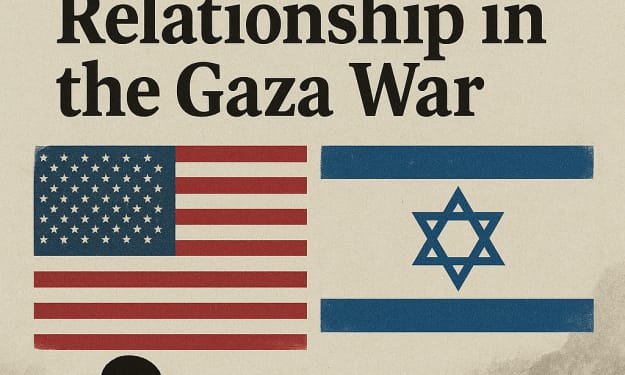
When Alliance Meets Fracture: The U.S.–Israel Relationship in the Gaza War
For decades, the alliance between Israel and the United States has been described as “unshakeable.” But as the war in Gaza enters its third year, the nature of that alliance is being tested — not only by the strategic realities on the ground, but by questions of power, agency, morality and diplomacy. A Two-Way Street of Support — and Dependence The U.S. has long backed Israel militarily and diplomatically. In the recent war with Hamas, the U.S. dispatched naval and air assets, sped up weapons transfers, and repeatedly used its veto power at the United Nations Security Council to shield Israel from unanimous censure. For Israel, that backing has provided strategic reassurance. But for many observers, it has blurred the lines of independence and accountability. The notion that Israel is somehow a “client state” of the U.S. has been floated increasingly in the media and diplomatic discussions. That language sparked push-back this week, when Israeli Prime Minister Benjamin Netanyahu dismissed the idea as “hogwash,” and U.S. Vice President J.D. Vance publicly reaffirmed that Israel is an ally — not a vassal. From Solidarity to Strain The 2023 October 7 attack by Hamas marked a dramatic escalation. Israel opened a major military campaign in Gaza, and the U.S. response was swift and unequivocal. What followed, however, has strained the alliance in less visible ways. One key shift: American public opinion. A recent survey by the Pew Research Center found that 39% of U.S. adults say Israel is going too far in its military operation against Hamas — up from 27% in late 2023. Meanwhile, only 16% say Israel is taking about the right approach. On the Israeli side, the government is simultaneously pushing post-war plans—such as annexation bills for the West Bank—that complicate U.S. diplomacy. For the United States, the war is increasingly being viewed through the lens of global reputation, humanitarian credibility and balance in the Middle East. The Ceasefire and the Diplomatic Tightrope In mid-October 2025, a cease-fire brokered by the U.S., Egypt, Qatar and others came into effect in Gaza. As part of the deal, discussions shifted from open warfare to reconstruction, disarmament of Hamas (or at least containment), and the question of Gaza’s future governance. The U.S. is now visibly trying to reverse some of the narrative that it simply arms Israel and stands by. Yet the cease-fire remains fragile. Vice President Vance admitted the path ahead is “very hard.” Meanwhile, Israel is resisting certain elements of American-backed plans—particularly the idea of a multinational peace-keeping or reconstruction force in Gaza, or Turkish involvement in it. Aid, Accountability and the Humanitarian Question One of the thorniest issues is humanitarian access. The International Court of Justice (ICJ) this week issued a non-binding opinion that Israel must allow the UN relief agency UNRWA to operate freely in Gaza, and uphold its obligations as occupying power. Israel disputes the findings, citing allegations of UNRWA links to Palestinian militant groups. From the U.S. perspective, supporting Israel while remaining credible on human rights and international law is becoming a balancing act. Israeli military campaigns have created mounting civilian casualties and infrastructure destruction in Gaza. Publicizing support too visibly could undermine U.S. standing, while withdrawing too early risks alienating a key regional ally. The Strategic and Geopolitical Stakes Beyond U.S.–Israel bilateral ties, the war is part of a larger Middle Eastern chessboard. Iran, Hezbollah in Lebanon, regional Arab capitals, and global competitors like Russia and China all have stakes. The U.S. is seeking to shift its posture: less boots on the ground, more diplomatic architecture for stability. Analysts say the war has offered the U.S. an opportunity to begin “disentangling” from decades-old Middle East wars and refocusing on global competition. Meanwhile, Israel wants to ensure that its future security does not become hostage to U.S. domestic politics. Netanyahu’s messaging—strongly asserting Israel’s independence—reflects concerns that political shifts in Washington might lead to strategic surprises. Where the Alliance Stands Today At its core, the U.S.–Israel alliance remains intact: shared democratic identity, heavy U.S. arms transfers, and close coordination on intelligence and defense. But the nature of the relationship is under evolution: The U.S. is less willing to simply rubber-stamp Israeli policy without added caveats around humanitarian law and long-term strategy. Israel is more insistent on acting as a sovereign actor—especially when it comes to Gaza’s future—and resisting what it perceives as external dictates. U.S. public opinion and congressional sentiment are shifting; political cost for backing Israel unconditionally is rising. Both parties now face increased pressure—from allies, adversaries and global civil society—to define the “after-war” scenario in Gaza, the West Bank and Israeli security beyond Hamas. Looking Ahead: Pitfalls and Prospects The biggest risk is that the cease-fire unravels, dragging the U.S. visibly back into direct confrontation. Equally risky: that Gaza remains a frozen zone of humanitarian crisis and reconstruction limbo. Either outcome could fracture the U.S.–Israel alliance if seen as failure. On the positive side, the alliance could emerge stronger if the U.S. helps steer a viable political-economic reinvestment in Gaza, supports Israeli legitimate security needs, and simultaneously pushes for meaningful Palestinian governance reform. The alternative is drift: Israel operating unilaterally, the U.S. shifting focus elsewhere, and the Middle East becoming even more fragmented. For platforms like Vocal, this moment offers a rich story: not just of war, but of alliances, shifting power dynamics, public opinion, and moral accountability. As the war evolves, so too must the narrative about who holds agency, what values guide intervention, and how partners like the U.S. and Israel redefine their relationship in a changing world. Conclusion The U.S.–Israel relationship in the Gaza war has moved from mutual certainty into nuanced tension. In an era of great-power competition and complex regional alignments, each side is recalibrating. The U.S. cannot simply fund and defend; Israel cannot simply fight and rebuild. The question now is how they act together to shape peace rather than war—and whether their alliance can adapt to the demands of this moment.
By Fazal wahid about a year ago in Education
Is Your Child's Habit Destroying Their Life? The Truth About Masturbation. Content Warning. AI-Generated.
As a parent, discovering your child is masturbating can trigger a wave of panic. Your mind might race with fears: Are they addicted? Is this harming them? Will it ruin their future? In the silence of your worry, it’s easy to imagine the worst. But before you confront them, it’s crucial to separate the normal from the problematic.
By The 9x Fawdiabout a year ago in Education