how to
How tos for the learners and the learned; tips and tricks to help you study effectively, survive your school years, impress your teachers and more.
Communication in Business Development
How Communication Works in Business Development Communication is the backbone of business development, enabling the formation and maintenance of relationships, the negotiation and closing of deals, effective collaboration, and the execution of strategic initiatives. As businesses increasingly operate in a global and digital environment, the importance of refined communication skills cannot be overstated. Below is an in-depth exploration of how communication functions across various facets of business development.
By Naila Sajjad2 years ago in Education
The fastest way to reduce stress (in seconds)
breathing something that seems so natural and simple and yet apparently we're all doing it completely wrong most people don't know how to breathe you're probably breathing wrong 95% of are breathing wrong you've been breathing wrong your entire life okay so people say a lot of things on the internet but today we're going to talk about breathing and breath work and what the science actually says first is there a proper way to breathe in everyday life that can optimize your body and brain or hurt you if you're not doing it right second can practicing breath work make you a healthier less anxious and happier person and finally we're going to finish off this video with a really simple breathing trick that has been shown experimentally to calm down the nervous system and minimize stress within seconds to minutes first let's quickly understand what's happening to your body when you breathe apart from the oxygen entering into your bloodstream and being taken around your body to your cells and CO2 and other waste gas leaving your body when you breathe out every time you breathe you activate a lot of nerves in your body breathe in and the sympathetic nervous system is activated your heart rate increases and noradrenaline is released which can perk you up breathe out and the parasympathetic system gets triggered which relaxes the body in fact every time you breathe in your diaphragm moves down and stretches the heart a little making it bigger this means the blood travels a little more slowly and your brain sends a signal to speed up your heart rate and whenever you breathe out the heart gets a little smaller pushing the blood through faster and the Brain tells the heart to slow down a little because of this mechanism focusing on your out breath can actually bring down your heart rate and bump your parasympathetic activity ultimately calming you down and when you focus on slowly breathing there's evidence it can even increase the activity of the neurotransmitter Gaba in your brain which further calms down nerves now research has found when it comes to emotional regulation breath work may actually be more effective than something like mindful meditation one study had four different breath work groups studied one that breathed in and out equally using something called called box breathing one that focused on longer inhales one that focused on longer exhales and finally the mindful meditation group as a control which didn't focus on their breathing they would spend 5 minutes a day doing this for a month and the study found that while all groups saw Improvement the breath work groups felt more positive less stressed and less anxious than the control but the group that performed best was the long exhale group this type of breathing is called cyclic sighing which we'll go over later and in the study this group's breathing actually ended up slowing down the most suggesting they were the most physically relaxed not just while they were doing the breathing their average respiratory rate over the month went down and many Studies have found similar results when it comes to overall stress mood and anxiety levels but it's important to take a step back and emphasize that the effect size of this wasn't like Monumental it's not like the subjects suddenly became Buddhas or the happiest people you know just that there is is a measurable Improvement that makes you feel better which makes the next claim a little more surprising breathing exercises have actually been found to help with things like depression and PTSD in these cases the subjects worked with therapists or very focused breathing workshops that they would take for a week and then continued on their own for 20 minutes a day over 6 weeks in these instances depression scores dropped significantly a study on US veterans found breath work techniques to be as effective as traditional therapy in reducing PTSD though it is important to note that some of these studies included faster breathing techniques that weren't just focused on slow exhales now are you breathing through your mouth or through your nose take a second to check in general it's suggested that nose breathing is better some studies show it provides more oxygen because the higher resistance in the nose allows you to actually inflate the lungs more but your nose also has a better capacity to protect against infection after all you've got nose hairs and membranes to help moisturize and warm up the air before it goes to your lungs mouth breathing at night can also cause issues you're more likely to snore trigger sleep apnea where you stop breathing at night and get an extremely dry mouth less saliva can impact your teeth health as well some research even suggest that mouth breathing over long periods especially for kids can change your face shape so in general physicians do recommend you focus on nose breathing if you can but of course most people are switching back and forth between them especially depending on your activity level at the moment if you're an average person without any specific breathing issues you're probably already balancing the two pretty well so don't hyper fixate on this and just know that nose breathing is generally considered better breathing exercises can also improve your sleep this has even been found in studies on atrisk kids who were given mindfulness training and breath work techniques in fact this study was not even about sleeping or telling the kids how to improve their sleep but the result from the practices had them sleeping an hour more on average and when measuring their brain waves saw a marked improvement in REM sleep which is critical for brain development we even see improvements in memory this claim gets made a lot and I personally find the evidence a little less compelling but it's still worth mentioning research has shown examples of people retaining more information when nose breathing than mouth breathing and when doing breath work that focuses on more rigorous inhalation some Studies have found that memory and reaction times improve so if you're studying or trying to learn maybe make a breath work focus on inhalation and the sympathetic nervous system as opposed to trying to calm down the system and while obviously false claims about curing cancer or other diseases get thrown around from time to time there is evidence that breath work can help with pain management whether it's patients undergoing chemotherapy or those recovering from physical injuries pain scores regularly decrease with breath work training some Studies have even shown that in the moment of taking on pain whether it's extreme cold or heat breathing techniques can lower pain Sensations though it's still unclear why some hypothesize that the cardiovascular changes in the body are somehow minimizing the pain while others believe it's because of attentional reality ocation expectations stress reduction Andor emotional modulation but perhaps the most amazing thing that I've come across when it comes to breath work is that as little as 5 minutes a day can change physical health markers particularly blood pressure more than some exercise and even prescription drugs there's a specific maneuver called high resistance inspiratory muscle strength training or imst and it was developed as a way to help critically ill respiratory disease patients strengthen their diaphragm and other breathing muscles the difference here is that they're inhaling through a handheld device that provides resistance or suction in the other direction it's almost like sucking a milkshake through a straw after using the device for 5 minutes a day over 6 weeks systolic blood pressure dropped nine points on average which is more than you would typically see from adding a 30-minute walk five times per week or the effect seen from some prescribed drugs and this is a huge deal given that 65% of adults over 50 have high blood pressure and the majority do not meet the recommended exercise guidelines this could play a role in minimizing one of the leading killers of cardiovascular disease not only is it efficient it's effective but even without the use of a Contraption we can all get the benefit of breath work in minutes and we're going to go over the most effective technique right now it's called cyclic sighing which I mentioned earlier doing even one of these breaths is the fastest physiologically verified way to reduce your levels of stress and reintroduce calm in seconds According to some scientists and if repeat it for 5 minutes once a day can greatly reduce stress in your life just make sure that you're doing this somewhere safe and relaxing cuz it could cause you to become a little light-headed or dizzy temporarily so the idea here is that you're going to do a quick and intense breath through your nose hold it for a split second and then breathe in again that little bit extra that you can then you're going to release that breath more slowly through your mouth together it's like this try it with me do you feel better do you feel more calm you can find some guided versions of this with Andrew huberman online if you want to do the practice that goes for minutes at a time the idea here is that extra little breath not only forces your alvioli to open up more and allows you to take in more oxygen but it also allows you to offload more carbon dioxide when you breathe out and doing it just a few times is enough to trigger your parasympathetic nervous system and calm down your nerves especially in a moment of high stress whereas doing it for 5 minutes a day can boost your overall mood anding bring down your stress levels in a more sustained way that's supported by research let's do it one more time all of this to say that breath work can have a significant impact on your body and mental health but it's important to remember that a lot of the claims do get exaggerated I think my main takea away from all this research is that it's a lot like meditation it can be profoundly positive in your life but it's become super trendly so a lot of claims get over exaggerated it's just a super simple and time efficient way to address anxiety and stress in your life both in the immediate and in The Chronic forms not to mention it's free with very low risk so I say it's worth a try see if it does anything for you and now that of you who leave likes and comments I'd love to hear your perspectives or experiences with breath work thank you to all the subscribers of the channel and we'll see you ASAP for some more science peace
By TBH Agencia Exclusiva Colsanitas2 years ago in Education
It's way different than you think
what does it feel like to die it's a question that many are curious if not a little scared about but scientists are now closer than ever to understanding what actually happens while you're dying recently researchers studied the brains and bodies of dying people to gain new insight into what it feels like as you die first up relaxation a recent meta analysis found that most people in the Western World will die in medical institutions where the first sign of death is a loss of hunger and thirst Physicians call this the beginning of active dying and it is caused by an intense feeling of relaxation where you will likely only be capable of handling small spoonfuls of food and water step two of death extreme fatigue and unconsciousness one study found that 72% of patients in this phase of death reported pre-death dreams involving reuniting with people who had already died 59% said that they dreamed about getting ready to travel somewhere and 28% dreamed of meaningful experiences from their past these pre-death dreams are happening because at this time you are mostly asleep and even dipping into unconsciousness this means that if someone tries to physically wake you up nothing will happen the thing is studies of unconscious patience show that when they did eventually wake up from being unconscious they thought they were only just asleep essentially you are not going to be aware of going in and out of Consciousness some Reports say that this stage of dying feels a bit like when you can't get out of bed from an intense cold or flu but when you are dying the sleep is no longer rejuvenating and the fatigue is consistent because at times you are now unconscious it's harder to plan for oral medications so at this point you might be hooked up to syringe pumps or suppositories in order to get oral medications or dying AIDS before death step three of death seeing light at this point studies show that your heart will beat less forcefully your blood pressure will fall and your organs including your brain will function less essentially your brain is trying to Ser serve energy as it slowly dies and this causes your brain to lose the power of inhibition you may have heard people talking about seeing the light or moving towards the light during near-death experiences brain studies on Rats show that a dying brain's lack of inhibition causes the visual brain system to fire this has also been found in some human studies as well which may explain why many people report this phenomenon of seeing light as their brain begins to die step four of death scary breathing known as the death rattle an unconscious person's breathing still follows the automatic patterns generated by the respiratory system of their brain but they don't have proper awareness of their mouth and throat so saliva builds up the saliva in the back of the throat mixed with the automatic quick breaths creates loud breathing noises that many people will observe as disturbing but it's important to note that the person dying is actually feeling no distress in fact the reason that this is happening to the dying person is because physiologically they are so so relaxed step five of death brain surging a 2013 study on rat brains dying from Cardiac Arrest found that specific brain regions surged with synchronized low gamma waves more coherent than when the rats were alive and healthy the brain waves were similar to when rats were engaged in highlevel cognitive activity this of course got researchers interested in what's happening to our brains as we die as well in humans a study on 567 dying men and women had their brains scanned as they were being resuscitated with CPR it turns out that like the rats the brains fired in intense ways and those who survived the CPR reported Lucid experiences such as perception of separation from the body observing events with no pain or distress a meaningful evaluation of their life and assessing their own actions towards others throughout their life this is again all likely linked to the disinhibition of our brain as we done it was also found that this dis inhibition caused the part of the brain involved in memory to light up allowing some people to access stored memories while other patients when resuscitated couldn't remember anything that had just happened to them even though brain scans showed that their brains were firing in uninhibited active ways some of these patients reported knowing that they were dying but also that they were going towards a place that felt like home one other study of a man's brain while dying found that his brain activation was similar to people who were on the psychedelic drug DMT but more recent studies found resuscitated dying people reported that what they had experienced right before death felt different than hallucinations Illusions or even dreams but what are people thinking about before they die are there common regrets or emotions we actually did a whole
By TBH Agencia Exclusiva Colsanitas2 years ago in Education
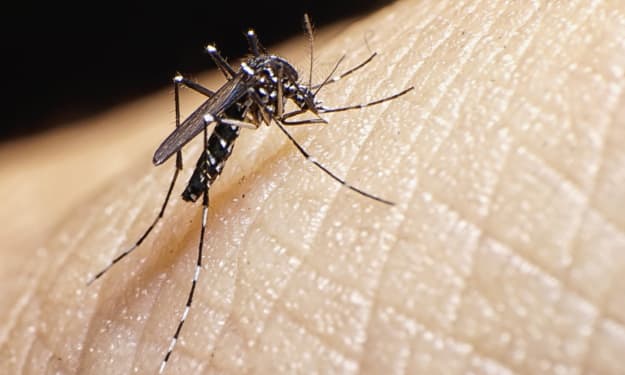
What If We Killed Every Mosquito On Earth?
a mosquito Factory in Brazil is about to unleash 5 billion infected mosquitoes across the country for the first time ever is this the beginning of a sci-fi film or one of the most ingenious bits of science I've come across in a Long Time spoiler alert it's the ladder we all hate mosquitoes right and not for no reason on top of being a pure nuisance with their buzzing and itchy bites they're actually the deadliest animal to humans literally they kill more humans than any other creature primarily through spreading disease but before we can understand and why scientists would want to make more of them we should ask ourselves the question couldn't we just destroy them all like would it really be so bad if we killed every mosquito on Earth nature Journal actually did an analysis on this exact question and found that there wouldn't actually be a huge Fallout if mosquitoes disappeared tomorrow at least not for humans and even then very few species heavily rely on mosquitoes the ones that do like some birds and fish would likely replace them with something else and while some mosquitoes do act as pollinators there's nothing humans rely on them exclusively for of course there's like 3,200 species of mosquito and only 200 of them bite humans so it seems unfair to kill them all but because of the ones that do bite us around 247 million people are infected with malaria every year not to mention a myriad of other diseases like Deni and zika but while destroying mosquitoes may be a net positive for humans one is it really that feasible to do and two can we really know the ecological Fallout from something of that magnitude in comes the idea to make more mosquitoes in a factory which sounds crazy until you realize it's not you see scientists have discovered a way to stop disease transmission from mosquitoes without the need for killing them all thanks to a bacteria called wakia wakia has sort of been in the background in mosquito biology if you like for the last 100 years but only quite recently attracting a lot of attention some of the work that we did a number of years ago now showed that if you had W back here in the mosquito that transmits viruses to people like yellow fever chcken Gia Dy the viruses couldn't grow very well in the mosquito if the head will back here in them this was confusing to the scientists at first but they realized that the bacteria is likely out competing any other pathogens like the Deni virus so if wakia is present the virus is unable to proliferate properly and ultimately can't spread to humans and if you take some of these wakia infected mosquitoes and let them loose into the wild they'll end up infecting other mosquitoes with wakia if an infected male mates with a noninfected female the eggs She lays won't hatch if the female has it and the male doesn't her eggs will hatch but they'll all be infected with wakia and the same happens if both are infected after a few Generations the number of wakia carrying mosquitoes increases rapidly we've done you know deployments in 14 countries usually our release programs last anywhere from a couple of months to maybe 6 months and that provides the opportunity for those mosquitoes to make little wild mosquitoes and then pass W back here into that wild mosquito population most importantly Den cases dropped significantly one of the first comprehensive studies in Indonesia found the protective efficacy of the intervention was 77.1% that's the equivalent of being four times less likely to develop the disease if you were in those areas now some test sites saw results as low as 38% but still pretty major for the reduction of a disease the lower results may be because it takes longer in some communities depending on their size and environment for wakia to spread to the entire mosquito population however the most recent results from the abura valley Colombia which were just released in November 2023 actually saw a decline of 95 to 97% in D fever bringing it to the lowest rate in 20 years for the region what makes this result even more profound is that the rest of the Americas actually had the second worst year for Deni fever since 1980 so while some parts of Colombia were seeing record highs of Denay this region where modified mosquitoes were Unleashed saw record lows this Colombia project began releasing Wakia infected mosquitoes in 2015 so to see a 95% reduction in Deni fever is pretty astounding and now the teams are trying to figure out how to deploy these modified mosquitoes as effectively as possible over even larger areas Deni is a huge problem in Brazil as zika has then we are working together to produce a facility that will produce up to 100 million mosquitoes a week uh in Brazil so that we can deploy them over multiple Brazilian cities now you might be wondering are humans being infected with the Wakia in these mosquitoes like is there a larger risk of having so much of it in our environment so about 50% of all insects naturally have wakum I can guarantee that you and everybody that listens to this will have been bitten by what we call the common house mosquito that's the mosquito that's just IND descript Brown mosquito that will buzz around your ears and that mosquito naturally has vakia in it vakia was a problem we'd know about it there's not a link between wak here and any negative outcomes that anyone's been able to find currently the wh is evaluating this technology for use in other countries of course the scientists involved see this as a supplementary measure and not meant to prevent or discourage Deni vaccines in the regions that are at high risk but in the long run it could end up saving hundreds of millions of people from being infected by Deni and around 100 million people from getting sick it's all an amazing reminder how Innovation and sometimes an unexpected approach can literally change the lives of hundreds of millions of people for the better I want to send a big thanks to Dr O'Neal for helping me to break down this incredible science thanks so much for
By TBH Agencia Exclusiva Colsanitas2 years ago in Education
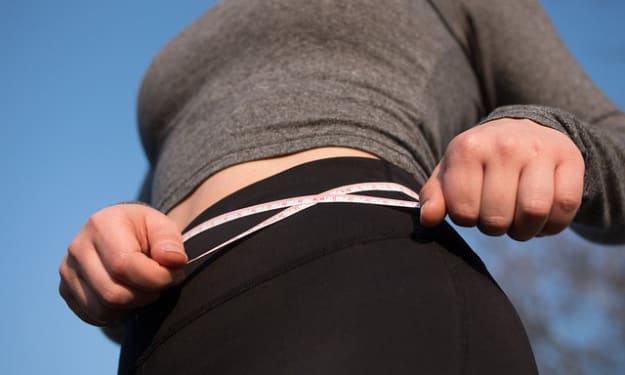
The Dark Truth about Weight Loss Supplements
Hello friends! Did you know that half of the people in India are physically unfit? This shocking statistic comes from the recent Lancet Global Health Report. According to the World Health Organization, everyone should exercise for at least 2.5-3 hours per week. Unfortunately, half of our population isn't meeting this goal. Out of 195 countries, India ranks as the 12th worst in terms of physical fitness. This lack of exercise has led to unhealthy weight gain for millions of people, who then turn to shortcuts like green tea, apple cider vinegar, or various weight loss supplements. But do these methods really work?
By 15.Goutami Debnath2 years ago in Education