how to
How tos for the learners and the learned; tips and tricks to help you study effectively, survive your school years, impress your teachers and more.
7 Surprising Habits That Are Keeping Your Belly Fat Stubborn—And How to Break Them!. AI-Generated.
Disclaimer: This article was created with the assistance of AI to ensure compliance with Vocal Media's guidelines for quality, engagement, and accuracy. The information provided is based on the latest research and trends, tailored to deliver valuable insights for our readers.
By Charles Funk2 years ago in Education
Reducing Neck and Shoulder Strain While Sitting at Work
Sitting at a desk for extended periods can lead to significant strain in the neck and shoulders, resulting in discomfort, tension, and even chronic pain. Fortunately, there are practical steps you can take, both at work and home, to reduce this strain. This blog will explore effective massage techniques and simple home remedies to keep your neck and shoulders relaxed and pain-free.
By Remedial Massage by Billy2 years ago in Education
Understanding and Releasing the Psoas Muscle
Understanding and Releasing the Psoas Muscle: A Guide to Relief and Relaxation The psoas muscle, often referred to as the "soul muscle," plays a crucial role in our body's movement and emotional well-being. Located deep within the core, the psoas connects the lower spine to the femur, influencing our posture, stability, and even our stress levels. Despite its importance, the psoas is often overlooked, leading to tightness, discomfort, and various health issues. In this blog, we'll explore what the psoas muscle is, why it gets tight, and how you can effectively release it for better health and relaxation.
By Remedial Massage by Billy2 years ago in Education
How does Google My Business impact local SEO efforts for businesses?
In today’s digital age, having a strong online presence is essential for businesses looking to attract customers in their local community. One powerful tool that can significantly impact a business’s local SEO efforts is Google My Business. By optimizing and effectively utilizing this free platform, businesses can improve their visibility in local search results, increase website traffic, and ultimately drive more foot traffic to their physical locations. This article aims to explore the key ways in which Google My Business can positively impact a business’s local SEO efforts and provide tips on how to maximize its potential for success.
By LITON BARUA2 years ago in Education
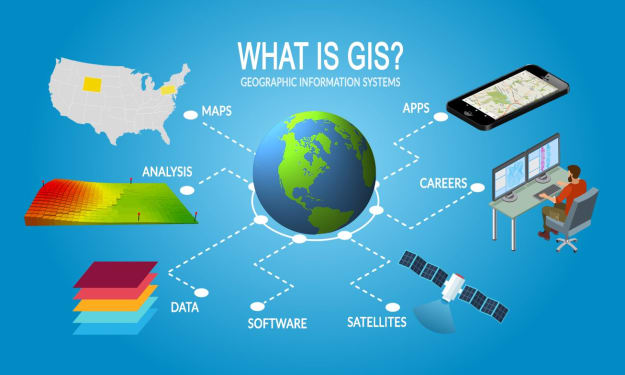
Why is a GIS needed?
A Geographic Information System (GIS) is a powerful tool that plays a crucial role in various sectors by enabling the analysis and visualization of spatial data. Its importance cannot be overstated, particularly in a world where geographic data is becoming increasingly essential for decision-making. The following discussion will delve into why a GIS is needed, highlighting its various applications, benefits, and the impact it has on modern society. 1. **Understanding Geographic Data** At its core, GIS is a system designed to capture, store, manipulate, analyze, manage, and present all types of geographical data. This data can be anything from the location of a new store to the pattern of deforestation in the Amazon. The need for GIS arises from the necessity to understand and interpret these spatial patterns and relationships. Without GIS, it would be nearly impossible to analyze large sets of geographic data effectively. Traditional methods of analyzing spatial data, such as paper maps and manual plotting, are time-consuming and prone to errors. GIS automates these processes, allowing for quicker and more accurate analysis. 2. **Improved Decision-Making** One of the primary reasons a GIS is needed is its ability to improve decision-making processes. By analyzing geographic data, GIS helps organizations and governments make informed decisions. For instance, urban planners use GIS to determine the best locations for new infrastructure, such as roads, schools, or hospitals. Environmentalists rely on GIS to track changes in ecosystems and plan conservation efforts. Emergency response teams use GIS to map disaster-prone areas and plan evacuation routes. In all these scenarios, GIS provides critical insights that lead to better outcomes. The ability to layer different types of data (such as population density, transportation networks, and natural resources) on a single map enables decision-makers to see the bigger picture and consider all relevant factors before taking action. 3. **Enhanced Efficiency and Productivity** GIS significantly enhances the efficiency and productivity of various tasks. For instance, in agriculture, GIS can be used to monitor crop conditions, predict yields, and optimize the use of resources like water and fertilizers. This not only saves time and money but also increases crop productivity and reduces environmental impact. In the transportation sector, GIS is used to manage and optimize routes for delivery trucks, reducing fuel consumption and improving delivery times. By automating the collection, analysis, and presentation of spatial data, GIS eliminates the need for labor-intensive manual processes, allowing organizations to achieve more with fewer resources. 4. **Data Integration and Management** Another critical need for GIS is its ability to integrate and manage large volumes of spatial data. In many fields, data is collected from various sources, such as satellite images, GPS devices, and field surveys. GIS provides a platform where all this data can be brought together, stored, and organized in a way that makes it easy to access and analyze. This capability is especially important in complex projects that require collaboration between different organizations or departments. For example, in urban development projects, data from different agencies (such as land use data, transportation data, and environmental data) can be integrated into a single GIS system, enabling seamless collaboration and coordination. 5. **Better Communication and Visualization** GIS is also a vital tool for communication and visualization. Maps are a universal language that can convey complex information in an easily understandable format. With GIS, data can be visualized in various ways, such as through thematic maps, 3D models, or time-series animations. This ability to present data visually is crucial for conveying information to stakeholders, such as government officials, investors, or the general public. For instance, a GIS map showing the spread of a disease can help public health officials communicate the urgency of a situation and mobilize resources effectively. In the business world, GIS-generated maps can be used in presentations to illustrate market trends or the potential impacts of a new project. 6. **Real-Time Monitoring and Analysis** The need for real-time monitoring and analysis is another reason why GIS is indispensable. In sectors such as disaster management, transportation, and environmental monitoring, having up-to-date information is crucial for effective decision-making. GIS systems can be integrated with real-time data sources, such as weather stations, traffic cameras, or IoT devices, to provide a live view of what is happening on the ground. This capability is particularly valuable in emergency situations, where quick responses are necessary to mitigate risks and save lives. For example, during a flood, GIS can be used to monitor water levels in real-time and predict which areas are at risk of flooding, allowing for timely evacuations and resource allocation. 7. **Support for Sustainable Development** GIS plays a vital role in supporting sustainable development goals. As the world grapples with challenges such as climate change, resource depletion, and population growth, GIS provides the tools needed to plan and implement sustainable solutions. For instance, GIS can be used to model the impacts of climate change on different regions, helping policymakers develop strategies for mitigation and adaptation. In urban planning, GIS can be used to design cities that are more resilient to environmental challenges and that promote sustainable practices, such as energy efficiency and waste reduction. By providing a comprehensive view of the interactions between human activities and the natural environment, GIS helps ensure that development is carried out in a way that is socially, economically, and environmentally sustainable. 8.**Risk Assessment and Management** In today’s world, where natural and human-made disasters are increasingly common, GIS is essential for risk assessment and management. By analyzing spatial data, GIS helps identify areas that are at risk of hazards such as floods, earthquakes, or industrial accidents. This information is crucial for planning and implementing risk mitigation strategies, such as building flood defenses, enforcing building codes, or planning evacuation routes. In addition to assessing risks, GIS is also used in disaster response and recovery efforts. For example, after a hurricane, GIS can be used to assess the extent of the damage, plan recovery efforts, and coordinate the delivery of aid to affected areas. 9. **Resource Management and Conservation** GIS is indispensable in the field of resource management and conservation. Natural resources such as water, minerals, and forests are finite and need to be managed sustainably. GIS provides the tools needed to monitor the use of these resources, identify areas where they are being depleted, and develop strategies for their conservation. For instance, in water resource management, GIS can be used to map water catchment areas, monitor water quality, and plan the distribution of water resources. In wildlife conservation, GIS is used to track animal populations, map their habitats, and plan conservation strategies to protect endangered species. By providing a detailed understanding of the spatial distribution and usage of natural resources, GIS plays a crucial role in ensuring that these resources are managed in a way that meets current needs without compromising the ability of future generations to meet theirs. 10. **Economic and Social Impact** Finally, the economic and social impact of GIS cannot be ignored. GIS is not just a tool for analyzing geographic data; it is a driver of innovation and economic growth. By providing insights into spatial patterns and relationships, GIS helps businesses identify new opportunities, optimize their operations, and increase their competitiveness. For example, retailers use GIS to analyze consumer demographics and market trends, helping them choose the best locations for new stores or target their marketing efforts more effectively. In the public sector, GIS is used to improve the delivery of services, such as healthcare, education, and transportation, leading to better outcomes for citizens. By enabling more efficient and effective use of resources, GIS contributes to economic growth and social well-being. Conclusion In conclusion, a GIS is needed because it provides the tools and insights necessary to understand and manage the complex spatial relationships that underlie many of the challenges we face today. Whether it’s improving decision-making, enhancing efficiency, supporting sustainable development, or managing risks, GIS is an indispensable tool that has a profound impact on modern society. As the world continues to generate more geographic data, the need for GIS will only grow, making it a vital component of our efforts to build a better and more sustainable future.
By Mohamed sha2 years ago in Education
The Complete Manual for Developing Time Management Skills
Effective time management is an essential ability that can have a big impact on both your personal and professional life. Learning time management skills can help you accomplish your goals more quickly and with less stress, whether you're a working parent, student, or professional balancing a lot of commitments. This comprehensive book will lead you through the necessary techniques, resources, and routines to maximize your time.
By Sujit Rajbongshi2 years ago in Education
Your Fit Journey: Overcoming Self-Doubt. AI-Generated.
Starting a fitness journey can be a transformative experience, but it’s not without its hurdles. Among the most significant challenges you might face is self-doubt. It’s that nagging voice that questions whether you’re strong enough, disciplined enough, or capable of achieving your goals. The truth is, overcoming self-doubt is not just about physical strength — it’s about harnessing the incredible power of your mind and consciousness to reshape your reality.
By Odallion Health & Fitness2 years ago in Education
How much does VEVO cost?. AI-Generated.
In today’s digital age, where video content dominates online platforms, VEVO has emerged as one of the leading platforms for artists and record labels to showcase their music videos. With its reputation for high-quality content and vast audience reach, VEVO offers a unique opportunity for artists to gain exposure on a global scale. However, one of the most pressing questions for artists and industry professionals alike is, “How much does it cost to get your content on VEVO?” Understanding the financial commitment required to join VEVO is crucial for anyone considering this platform as part of their music marketing strategy. This article will break down the various costs associated with VEVO and help you decide if it’s the right investment for your music career.
By Music Industry Updates2 years ago in Education