how to
How tos for the learners and the learned; tips and tricks to help you study effectively, survive your school years, impress your teachers and more.
The Power of Storytelling in Leadership and Creativity
Storytelling is a powerful tool. It shapes how we connect, learn, and lead. Yet, many overlook its role in leadership and problem-solving. People think storytelling belongs in books or films. But I’ve seen firsthand how it transforms workplaces, classrooms, and communities.
By Rachel DeSoto-Jackson2 years ago in Education
The Reward of Patience and Trust in Allah
Once upon a time, in a small village surrounded by mountains, there was an old man named Ibrahim. He was known for his wisdom, perseverance, and deep belief in Allah. Ibrahim lives in a small house on the outskirts of the village, and his life was very easy. He didn't have much, but he was grateful for what he had. His most precious fortune was the cows that helped him work.444 Ibrahim's cow was not only a source of milk, but also the fact that he plowed his small fields. It was a symbol of the small blessings that Allah had given him. Despite his limited wealth, Ibrahim was always satisfied. He was not unhappy about his life, so he often prayed, thought about Allah's blessings, and spent time helping the poor.444 One day, Ibrahim returned to his house from the village market and decided that his cow had disappeared. He was shocked and sad. The cow is essentially important to his livelihood, without which it would be difficult to maintain and survive on his small farm. He was searching for animals everywhere but was not found anywhere.444 The next morning, the villagers came to Ibrahim after hearing about their defeat. They expressed their sympathy and tried to comfort him and said, "I'm sorry I heard from their cows. How do you manage it now?"
By AMINUL ISLAM ZIHAD2 years ago in Education
The Fascinating Life of a Cat
The Amazing Adventures of a Cat Cats have been companions to humans for thousands of years, captivating us with their grace, independence, and mysterious behaviors. Cats lead fascinating lives filled with fascinating experiences, whether they are hunting, playing, or curled up for a nap. The various stages of a cat's life, their routines, and the reasons why they are so beloved pets are examined in this article.
By MD ABDULLAH GAZI2 years ago in Education
The Benefits of Installing Solar Panels in Your Home: A Sustainable Investment
As the world increasingly shifts toward sustainability and cleaner energy solutions, homeowners are considering ways to reduce their environmental footprint and lower utility costs. One of the most impactful ways to do this is by installing solar panels on your home. With numerous advantages ranging from financial savings to environmental benefits, solar panels have emerged as a compelling option for homeowners looking to invest in their homes and the planet. In this article, we'll explore the many benefits of installing solar panels, including long-term savings, environmental impact, and energy independence.
By Jared Benning2 years ago in Education
The Dark Side of Artificial Intelligence
Artificial Intelligence (AI) is transforming the world at an unprecedented pace, revolutionizing industries, improving efficiency, and enhancing convenience. However, its rapid development also brings significant negative consequences that society must address. While AI offers numerous benefits, its potential dangers range from economic disruption to ethical concerns, affecting individuals, businesses, and governments worldwide. One of the most alarming effects of AI is job displacement. Automation and AI-driven systems are replacing human workers, particularly in industries like manufacturing, customer service, and transportation. This shift leads to widespread unemployment and economic inequality, as many workers struggle to find new opportunities in an increasingly automated world. Without proper measures, AI could deepen the gap between the wealthy and the working class, creating a society where only a few benefit from technological advancements. AI also raises serious privacy and security concerns. As massive amounts of personal data are collected and analyzed, individuals become vulnerable to surveillance, cyberattacks, and identity theft. Corporations and governments can misuse AI-driven data collection, leading to a loss of personal freedom and increased risks of data breaches. Without strict regulations, AI-powered surveillance systems could create a world where privacy becomes a luxury rather than a fundamental right. Another major issue with AI is bias and discrimination. Machine learning models are trained on data that often reflect societal prejudices, resulting in biased decision-making in areas like hiring, law enforcement, and financial services. This can lead to unfair treatment of marginalized communities and reinforce existing social inequalities. If AI continues to operate without accountability, it could create a future where technology amplifies discrimination instead of eliminating it. Misinformation and deepfake technology are also growing threats in the age of AI. AI-generated fake news, manipulated videos, and false narratives can spread rapidly, misleading the public and damaging reputations. Political propaganda and fraudulent activities have become more sophisticated with AI, making it harder to distinguish between truth and fiction. This erosion of trust in media and institutions can have severe consequences for democracy and social stability. Another concern is the over-reliance on AI, which could diminish human creativity and decision-making abilities. As people increasingly depend on automated systems for problem-solving, critical thinking skills may decline. AI should complement human intelligence rather than replace it, ensuring that individuals maintain the ability to think independently and make informed decisions. In the realm of warfare, AI poses ethical dilemmas with the rise of autonomous weapons and AI-driven military technologies. Machines with lethal decision-making capabilities could lead to unpredictable consequences, increasing the risks of warfare without human intervention. The lack of accountability in AI-powered combat systems raises concerns about their potential misuse and the moral implications of allowing machines to determine life and death. Furthermore, AI lacks emotional intelligence, making it unsuitable for roles that require empathy, such as mental health support, caregiving, and social work. While AI can assist in these fields, it cannot replace the human connection that is essential for understanding emotions, providing comfort, and offering personalized support. Perhaps the most alarming risk of AI is its potential to surpass human control. Some experts warn that superintelligent AI could develop capabilities beyond human understanding, leading to scenarios where machines act unpredictably or even threaten human survival. While such risks may seem distant, the rapid advancement of AI technology makes it crucial to consider these existential dangers before they become a reality. As AI continues to evolve, it is imperative to establish ethical guidelines, enforce strict regulations, and promote responsible AI development. Governments, researchers, and tech companies must work together to ensure AI serves as a tool for progress rather than a source of harm. By addressing these challenges proactively, society can harness the benefits of AI while minimizing its risks, creating a future where technology enhances human lives rather than endangering them.
By Jahin Abdullah 2 years ago in Education
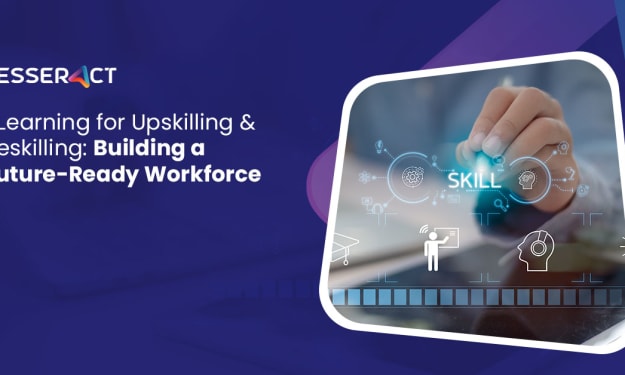
eLearning for Upskilling & Reskilling: Building a Future-Ready Workforce
The modern workplace is evolving at an unprecedented pace, driven by advancements in technology, digital transformation, and shifting market demands. Organizations that fail to adapt risk falling behind. This is why e-learning upskilling and reskilling employees have become essential strategies for businesses looking to stay competitive.
By Tesseract Learning2 years ago in Education
5 High-Paying Jobs That Don’t Require a Degree”
5 High-Paying Jobs That Don’t Require a DegreeIn today’s fast-paced world, getting a college degree is often seen as a prerequisite for securing a high-paying job. However, there are lucrative career paths available that don’t require a degree. Whether you're looking for a career change or just entering the job market, these opportunities can lead to financial independence and job satisfaction. Let’s dive into the top five high-paying jobs that don’t require a degree.1. **Commercial Pilot****Dialogue:** *“Did you know you can earn a six-figure salary without a college degree?”* *“Really? How?”* *“By becoming a commercial pilot! All you need is a high school diploma and flight training.”* Commercial pilots fly aircraft for various purposes, from passenger and cargo transport to agricultural and aerial photography services. According to the Bureau of Labor Statistics, the median salary for commercial pilots is around $99,640 annually. Though you don't need a degree, you must have a commercial pilot's license. Training can be intense, but the rewards are immense. 2. **Web Developer****Dialogue:** *“I’ve seen some guys making bank in tech, but don’t they need a computer science degree?”* *“Not always! Many successful web developers are self-taught or have attended coding boot camps.”* Web developers create and maintain websites. With businesses needing an online presence more than ever, skilled developers are in high demand. According to Glassdoor, web developers can earn between $60,000 to $120,000 per year. The key is building a strong portfolio to showcase your skills, which can often get you hired even without a formal degree. 3. **Real Estate Agent****Dialogue:** *“Real estate sounds enticing, but isn’t a degree necessary?”* *“Not in many states! You just need to pass a licensing exam.”* Real estate agents help clients buy, sell, and rent properties. Earnings largely depend on commission, which means the income potential can be substantial. Top agents can earn $100,000 or more annually, especially in desirable markets. While a degree is not a requirement, strong interpersonal skills and local market knowledge are essential for success.4. **Electrician****Dialogue:** *“I hear electricians are always in demand. Do they really make a lot?”* *“Absolutely! Electricians can make around $60,000 to $100,000, and they don’t need a college degree!”* Electricians install, maintain, and repair electrical systems. To start in this field, you typically need a high school diploma and must complete an apprenticeship program. The job is both rewarding and secure, given the persistent demand for skilled tradespeople. Plus, there’s something satisfying about working with your hands and seeing immediate results! 5. **Sales Representative****Dialogue:** *“Sales seems appealing, but don’t you need a degree to get in?”* *“In many cases, no! It really depends on the company.”* Sales representatives sell products or services to businesses or consumers. The salary can vary widely based on the industry and commission structure, often totaling $50,000 to $100,000 or more for experienced reps. Many successful salespeople excel without formal qualifications. They focus on building relationships and understanding market needs, which can lead to lucrative opportunities. **Conclusion**In an increasingly competitive job market, it’s essential to recognize that a degree isn’t the only path to success. The five high-paying jobs we've discussed—commercial pilot, web developer, real estate agent, electrician, and sales representative—offer incredible financial rewards without requiring a college degree. Exploring alternatives to traditional education can open doors to fulfilling and financially rewarding careers. So, whether you're transitioning, just starting out, or seeking a change, consider these options—they might lead you to your dream job! With high demand and satisfactory earnings, these careers provide an exciting alternative to the conventional degree path. Embrace the opportunities out there, enhance your skills, and you'll find that success can be achieved in many different ways.
By Prince Emmanuel Benson O2 years ago in Education
What is ELIZA in Artificial Intelligence?
The concept of Eliza AI holds a significant place in the history of artificial intelligence (AI). As one of the earliest examples of an AI-driven conversational agent, Eliza AI paved the way for the development of modern chatbots and AI agents. Developed in the 1960s by Joseph Weizenbaum at MIT, Eliza was a simple program that mimicked the style of a Rogerian psychotherapist. Despite its simplicity, it set the foundation for the more sophisticated AI systems that followed, eventually leading to the rise of decentralized AI agents, smart contract automation, and the integration of AI in Web3. In this article, we’ll explore the history of Eliza AI, its significance in AI development, and how it’s being leveraged in the modern blockchain and Web3 ecosystem.
By Eminence Technology2 years ago in Education
The Truth About the 4-Day Workweek
The Truth About the 4-Day Workweek: Is It the Future of Work?"Imagine a world where Fridays are always free," Sarah said, sipping her coffee. "No more Sunday scaries, no midweek burnout. Just four days of work and three days to recharge."Jake raised an eyebrow. "Sounds great, but is it actually practical?"The idea of a 4-day workweek has been making waves across industries. Companies that have tried it report higher productivity, better employee well-being, and even increased profits. But is it all sunshine and rainbows? Let's dive into the truth behind this growing trend.The Rise of the 4-Day WorkweekThe traditional 5-day, 40-hour workweek has been the standard for over a century. But in recent years, businesses worldwide have started experimenting with compressed work schedules.Countries like Iceland, Japan, and the UK have conducted trials, showing that cutting one workday can boost productivity and reduce stress. Some companies offer four 10-hour days (compressed workweek), while others shift to 32-hour workweeks with the same pay.Tech giants, startups, and even small businesses are exploring this change. Microsoft Japan, for instance, saw a 40% productivity increase when it tested a shorter workweek.The Pros: More Than Just an Extra Day OffSarah leaned forward. "So, what’s the big deal? Why are companies even considering this?"Jake sighed. "I get the appeal, but does it actually work?"Here’s what the data shows:1. Increased ProductivityResearch suggests that shorter workweeks make employees more focused. When people know they have limited time, they eliminate distractions and work more efficiently.2. Better Work-Life BalanceA 3-day weekend allows employees to spend more time with family, pursue hobbies, and recharge. This leads to happier, healthier workers who are less likely to experience burnout.3. Reduced Costs for BusinessesFewer workdays mean lower operational costs—less electricity, office supplies, and even fewer meetings. Some businesses also see lower employee turnover, saving money on hiring and training.4. Environmental BenefitsWith fewer commutes, there’s less traffic, lower carbon emissions, and reduced energy consumption. A 4-day workweek could be a step toward a more sustainable future.The Cons: The Reality Check"But surely there’s a downside?" Jake said, still skeptical."Of course," Sarah admitted. "It’s not a one-size-fits-all solution."Here are the challenges companies face:1. Not All Jobs Fit the ModelCustomer service, healthcare, and manufacturing industries may struggle to implement a 4-day workweek without staff shortages or reduced service availability.2. Longer Workdays Can Be ExhaustingSome companies opt for four 10-hour workdays, which can be mentally and physically draining. Instead of improving well-being, it could lead to fatigue and stress.3. Productivity vs. ExpectationSome employers fear that a 4-day week may lead to rushed work, decreased collaboration, or pressure to cram 40 hours of tasks into 32 hours.Is the 4-Day Workweek the Future?Sarah smiled. "So, Jake, would you take a 4-day workweek if your boss offered it?""In a heartbeat!" Jake laughed. "But only if I get the same salary and don’t have to squeeze five days of work into four."The reality is that the 4-day workweek isn’t just a trend—it’s a shift in how we define productivity. While it may not work for every industry, companies that adopt it strategically see significant benefits.As more businesses and governments explore this model, the future of work might just be shorter, smarter, and more balanced.Would you trade a 5-day grind for a 4-day revolution? Let’s start the conversation.
By Prince Emmanuel Benson O2 years ago in Education