how to
How tos for the learners and the learned; tips and tricks to help you study effectively, survive your school years, impress your teachers and more.
Transform Your Shed with a Loft Ladder and Durable Shed Siding Materials
Sheds are often overlooked as mere storage spaces, but with a little creativity and the right materials, they can be transformed into functional extensions of your home. One effective way to maximize space in your shed is by adding a loft ladder and using durable siding materials. Knowing how to install a loft ladder properly ensures safety, accessibility, and longevity, making your shed more practical. This not only enhances functionality but also boosts the overall aesthetics of your outdoor space. In this article, we will explore how you can elevate your shed’s design and usability through these two essential upgrades.
By Dig This Design2 years ago in Education
Why the World’s Education System is Failing?
Why the World’s Education System is Failing — and How We Can Fix It. Imagine this: it’s 2025. We’ve built smart cities, discovered AI that can write code, and even planned holidays to Mars. But in most schools, students still sit in rows, take handwritten notes, and prepare for the same kinds of tests that existed in 1950. The world outside has changed completely — but the classroom? Not so much. This is the silent crisis of our time: “education systems across the globe are failing to keep up with the real world.” And it's hurting the very people it's meant to help — our children. “Outdated Curriculum in a Fast-Paced World”. Let’s start with what’s being taught. In many schools — especially in the U.S. — students are still forced to memorize facts, solve complex math problems they’ll never use, and read the same classic novels without ever learning how to: 1- Manage mental health 2- File taxes 3- Start a business 4- Use AI responsibly 5- Navigate relationships 6- Think critically or creatively This gap creates a strange reality: students know how to pass exams but don’t know how to handle real life. Take the U.S. as an example. Students spend “over 1,000 hours a year in school”, yet surveys show that most high schoolers feel unprepared for adult responsibilities. They know how to calculate the area of a triangle, but not how to pay rent or build a credit score. That’s not education — that’s survival training for a system that forgot its purpose. “Inequality Starts in the Classroom”. In theory, schools are supposed to be the "great equalizer." In practice, they often “reflect and repeat society’s deepest inequalities”. In the U.S., a student’s “ZIP code can determine the quality of their education”. Wealthy areas have modern facilities, small class sizes, and experienced teachers. Poorer districts struggle with broken chairs, outdated books, and overworked staff. Consider this: 1- A school in Palo Alto, California might offer robotics, design thinking, and mental health programs. 2- A school in Flint, Michigan might lack basic heating, updated textbooks, and even safe drinking water. Both schools are in the same country. But they might as well exist in different centuries. This isn’t just unfair — it’s dangerous. Because when we deny a child quality education, we deny them opportunity, self-belief, and a future. “The Pressure is Crushing Students”. Modern students are “stressed, anxious, and overwhelmed”— and the system barely notices. In the U.S., “teen mental health issues have skyrocketed”, and many experts link it to the pressure of school. Students are expected to get perfect grades, join clubs, volunteer, play sports, and prepare for college — all while figuring out who they are. But schools rarely teach them how to cope. They don’t offer safe emotional outlets. They don’t talk about depression or burnout. And they definitely don’t ask students how they’re ‘feeling’ — only how they’re ‘performing”. The result? Kids who may look successful on paper, but are silently struggling inside. “Global Glimpses: Different Countries, Same Problems”. The education crisis isn’t just American. It’s global. 1- “India: Millions of students attend school without basic infrastructure — no internet, few teachers, and overcrowded classrooms. 2- Japan: A rigid, high-pressure system produces top scores but also rising student suicides. 3- Nigeria: Many rural schools operate without electricity or even proper roofs. 4-France & UK: Teachers go on strike to demand better pay and modern curriculum updates. Despite being vastly different countries, they share a common problem: education that no longer fits the real world. --- “Who’s Getting It Right? Countries We Can Learn From” But there’s hope. Some nations have started transforming their education models — and the results are inspiring. Finland: is one of the most celebrated examples: 1- No standardized tests. 2- Fewer school hours. 3- High teacher respect and training. 4- Focus on creativity, collaboration, and happiness. The result? Finnish students score well academically and report high levels of life satisfaction. Estonia: , a small Baltic nation, has built one of the world’s most advanced digital learning systems, ensuring **equal tech access** even in remote areas. Singapore: is shifting from rote learning to problem-solving and entrepreneurship, preparing students for uncertain futures. New Zealand :integrates emotional intelligence and indigenous knowledge directly into the school day. These countries prove that “real change is possible” — when the goal is to develop the whole human, not just produce good test scores. --- So… What Should a Modern Education System Look Like? Here’s what we believe 21st-century education must include: 1. Life Skills: Teach students how to budget, manage emotions, file taxes, and plan careers. 2. Digital Fluency: Not just how to use tech, but how to question it. Teach coding, AI ethics, and online safety. 3. Mental Health Education: Every school should offer therapy, emotional literacy, and stress management. 4. Personalized Learning : Move beyond one-size-fits-all. Let students choose their pace, their interests, and their projects. 5. Teacher Empowerment : Pay teachers more. Train them better. Trust them deeply. 6. Project-Based Learning : Instead of memorizing, let students build, create, debate, and explore. 7. Global Awareness : Prepare students to be world citizens — compassionate, informed, and collaborative. --- “What Can You Do?” You don’t need to be a policymaker to start the change. Parents: Ask your school about emotional education and life skills. Teachers: Find small ways to bring creativity and compassion into your classrooms. Studen: Speak up. Your voice matters. Demand change. Everyone: Vote for education reform. Support equitable funding. Advocate for digital access. The future of education doesn’t begin in a government office. It begins in homes, communities, conversations, and classrooms with people like you. --- “Final Thought:” Education is not about passing exams. It’s about passing wisdom, empathy, resilience, and imagination from one generation to the next. Right now, too many students are graduating “without knowing who they are, what they love, or how to survive in the real world.” We can fix this. Not with more rules, but with more vision. Not with more pressure, but with more purpose. Because when we fix education, we don’t just fix schools. We fix futures.
By Riya mandal2 years ago in Education
Safeguarding Satoshi's Legacy: 10 Essential Bitcoin Security Secrets
Bitcoin, the world’s first decentralized digital currency, represents more than just financial innovation—it’s a revolution in autonomy and trustlessness. Yet, with great power comes great responsibility. Protecting your Bitcoin isn’t just about securing wealth; it’s about preserving Satoshi Nakamoto’s vision of a decentralized future. Here are 10 essential security secrets to shield your crypto from hackers, human error, and hubris.
By Jacky Kapadia2 years ago in Education
Are You Ready to Lead in the Era of Industry 4.0?
Leadership 4.0 is not merely an upgrade to traditional leadership—it is a fundamental rethinking of how leaders operate in an era of constant change, where adaptability, technology, and human-centric strategies must coexist.
By Digital production2 years ago in Education
The Impact of AI-Generated Content on Social Media Engagement
While artificial intelligence increasingly shapes our digital existences, questions linger around its social consequences. From intelligent assistants to self-propelled vehicles, AI innovates how we live and work, yet also transforms communication. Consider social media, where algorithmic artifacts now author much of what we see.
By EliteCreation2 years ago in Education
One Month Before a Heart Attack, Your Body May Warn You of These 7 Critical Signs
The Silent Signals You Can’t Afford to Ignore Every 40 seconds, someone in the U.S. has a heart attack. While many assume cardiac events strike suddenly, research reveals that your body often sends distress signals weeks in advance—subtle clues that, if recognized, could save your life. In this article, we’ll uncover the 7 critical warning signs your body may display one month before a heart attack, blending expert insights, real patient stories, and actionable advice. Whether you’re at risk or simply proactive about health, this guide equips you with the knowledge to act before it’s too late.
By Epic Vibes2 years ago in Education
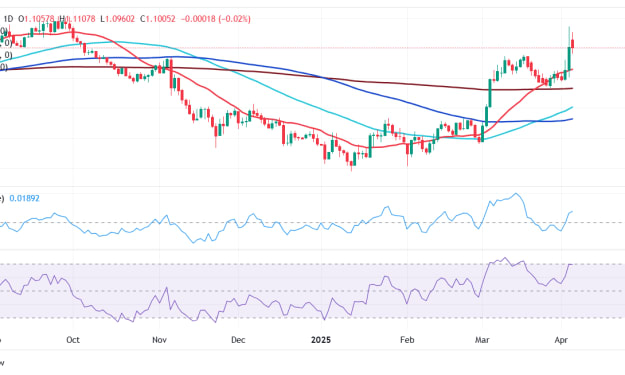
EUR/USD Weekly Forecast: Markets on edge after US “Liberation Day” turmoil just began. Content Warning.
United States President Donald Trump announced widespread reciprocal tariffs on Wednesday. Financial markets collapsed with Wall Street suffering its worst losses since the 2020 pandemic.
By Aaqib Naveed2 years ago in Education
"The Gateway to the Quran: Surah Al-Fatiha"
The Gateway to the Quran: Surah Al-Fatiha In the heart of the Quran, there lies a surah that serves as a gateway to understanding the entire scripture. Surah Al-Fatiha, also known as the Opening Chapter, is a foundational surah that sets the tone for the rest of the Quran. It is a surah that has been revered by Muslims for centuries, and its significance cannot be overstated.
By Muhammad Hayat2 years ago in Education
The Cow: A Journey Through Surah Baqarah
Surah Al-Baqarah, the second chapter of the Quran, is one of the most comprehensive and significant surahs in Islamic teachings. The first three verses set the stage for the entire surah, introducing key themes and concepts that resonate throughout the text. Below is an in-depth exploration of these verses:
By Muhammad Hayat2 years ago in Education