how to
How tos for the learners and the learned; tips and tricks to help you study effectively, survive your school years, impress your teachers and more.
Build a Lead Generation Funnel That Works (Even If You're Just Starting Out). AI-Generated.
Not too long ago, I found myself buried in marketing advice that felt like it was written for giant teams with massive budgets. I wasn’t looking for a 50-step funnel. I just wanted something that worked—something simple that could consistently bring in leads while I focused on actually growing my business.
By Ma Genesa Keefe2 years ago in Education
Turning Ideas Into Money
Introduction Ideas are everywhere. They strike in the shower, while you're stuck in traffic, or during a late-night scroll on social media. But what separates a fleeting thought from a million-dollar business? Action. In a world flooded with creativity, the true winners are those who can transform ideas into income. This article walks you through how to capture, validate, build, and profit from your ideas—whether you’re an aspiring entrepreneur, freelancer, or content creator. --- ### **1. The Power of an Idea** Every business, product, or innovation started with an idea. Apple, Netflix, and even Instagram—all began as thoughts in someone’s head. But ideas, on their own, are cheap. The real power lies in execution. That’s why someone with a “simple” idea but relentless drive will out-earn the person with a genius idea and no action. **Key Point:** *Don’t overthink your idea. Start.* --- ### **2. Capture Your Ideas Before They Escape** Ideas are like dreams—if you don’t write them down, you’ll lose them. Successful entrepreneurs keep idea journals, voice notes, or digital boards where every thought is recorded. **Tips for Capturing Ideas:** - Use apps like Notion, Google Keep, or Evernote. - Keep a notepad beside your bed. - Use voice memos when you're on the go. **Action Step:** *Start building your “idea bank” today. No filters—just store them.* --- ### **3. Filter and Validate: Which Ideas Are Worth Pursuing?** Not every idea is worth turning into a business. Some are passion projects; others are monetizable. You need a system to filter which ideas are worth your time. **Ask Yourself:** - Does this solve a real problem? - Is there a target audience for this? - Are people currently paying for similar solutions? - Can I realistically execute this with the resources I have? **Pro Tip:** *Validation doesn’t need to be complicated. Start by talking to 10 people who fit your target audience.* --- ### **4. Identify a Marketable Niche** Even the best ideas fail without a clear market. It’s not about pleasing everyone—it’s about solving a specific problem for a specific group. **Examples:** - Idea: Fitness tips → Niche: Fitness for busy moms - Idea: Digital marketing → Niche: Email marketing for real estate agents - Idea: Graphic design → Niche: Branding for e-commerce startups **Action Step:** *Niche down until your idea speaks directly to someone’s pain point.* --- ### **5. Develop a Simple MVP (Minimum Viable Product)** Before building an entire product or service, test a basic version. This saves time, money, and gives you real feedback. **Examples:** - Want to launch a course? Start with a 1-hour live Zoom class. - Want to build an app? Create a clickable prototype using tools like Figma. - Want to sell a product? Create a landing page and see if people sign up. **Goal:** *Prove demand before investing heavily.* --- ### **6. Create a Monetization Plan** There are many ways to monetize ideas, depending on what you’re building. Here are common models: - **Selling Products:** Digital or physical (ebooks, courses, merch) - **Freelance Services:** Based on your skills (writing, design, marketing) - **Memberships/Subscriptions:** Exclusive content, community, or mentorship - **Affiliate Marketing:** Promote other people’s products for a commission - **Ads and Sponsorships:** Monetize traffic (YouTube, blogs, podcasts) **Action Step:** *Choose 1–2 monetization models to start, and build around them.* --- ### **7. Build an Audience Around Your Idea** In today’s world, attention is currency. If you can get people to care, follow, and trust you—you can monetize almost anything. **How to Build an Audience:** - Pick 1–2 platforms (Instagram, TikTok, YouTube, LinkedIn, etc.) - Share valuable content related to your idea/niche - Build an email list for long-term control - Engage: Comments, DMs, replies—show you care **Reminder:** *People don’t buy products. They buy solutions from people they trust.* --- ### **8. Use Social Proof and Feedback** People trust results. Testimonials, reviews, screenshots, and case studies build confidence. **What to Collect:** - Testimonials from beta testers - Screenshots of results - Feedback from your first users Even if you’re starting small, document every win. --- ### **9. Create a Simple Sales Funnel** To consistently turn your idea into money, you need a system that guides people from “just curious” to “ready to buy.” **Basic Funnel Example:** 1. Free valuable content (social media, blog, YouTube) 2. Lead magnet (free guide, checklist, class) 3. Email nurture sequence 4. Paid offer (product, service, course) Tools like ConvertKit, Systeme.io, or MailerLite make this easy. --- ### **10. Leverage Automation and AI** You don’t have to do it all manually. Use tools to automate and scale: - **ChatGPT** for content ideas, writing, and brainstorming - **Canva** for graphics and designs - **Zapier** for automating workflows - **Calendly** for appointment setting Let tech do the heavy lifting while you focus on growth. --- ### **11. Reinvest and Scale** Once the money starts coming in, don’t just spend—reinvest. Where to reinvest: - Better tools/software - Marketing and ads - Hiring freelancers (design, content, tech) - Upskilling (courses, coaching) **Goal:** *Turn your idea into a business, not a hustle.* --- ### **12. Stay Consistent & Adaptable** Every successful entrepreneur has one thing in common: consistency. The difference between a $0 idea and a six-figure one is often how long someone stuck with it. But also be flexible. Listen to feedback. Watch trends. Pivot if needed. --- ### **Real-Life Examples of Ideas Turned to Money** 1. **Sara Blakely (Spanx)** – Started with $5,000 and turned her idea for women’s shapewear into a billion-dollar brand. 2. **Ali Abdaal** – From doctor to YouTube productivity creator. Monetizes through courses, affiliates, and content. 3. **Digital Product Creators** – People selling Notion templates, planners, AI prompts, and courses make 5–6 figures a year. --- ### **Conclusion: Your Idea Has Power** The next big thing isn’t a secret—it’s probably sitting in your notes app, waiting for action. If you’ve ever said: - “I wish I could make money doing this” - “This idea keeps coming back to me” - “I just don’t know where to start” The answer is: **start small, stay focused, and keep building**. Ideas only make money when you bring them to life. Your thoughts are valuable—but your action is what turns them into income. Perfect! Here's the revised **ending section** of your article with an added motivational push and a clear CTA (call to action) about your money-printing blueprint: --- some billionaire’s notebook—it’s probably sitting in your mind or notes app, just waiting for you to act on it. If you’ve ever said: - “I wish I could make money doing this” - “This idea keeps coming back to me” - “I just don’t know where to start” Then this is your **wake-up call**. The difference between where you are now and where you want to be is **one idea and one decision** away. You *don’t* need to have it all figured out. You *don’t* need fancy equipment or a million followers. You just need to start with what you have, where you are, and stay consistent. **I believe in you — and your idea deserves a shot.** To help you even further, I’ve created a simple, actionable **Money Printing Blueprint** that walks you through how to turn your ideas into consistent cash flow. **The link is in my bio — grab it now and take your first step toward financial freedom.** Because at the end of the day, **the money won’t print itself — but your idea can.** --- Let me know if you want a shorter version for social posts or want this turned into a lead magnet PDF!
By Keli Chris2 years ago in Education
Mathematics Resources Guide - HeLovesMath
Are you looking for high-quality mathematics resources to help with your studies or teaching? Look no further! This comprehensive guide brings together our extensive collection of mathematics resources for all educational levels, from primary school to advanced studies. Whether you're preparing for exams, looking for practice materials, or seeking to deepen your understanding of mathematical concepts, we've got you covered.
By Aaysha shekhawat2 years ago in Education
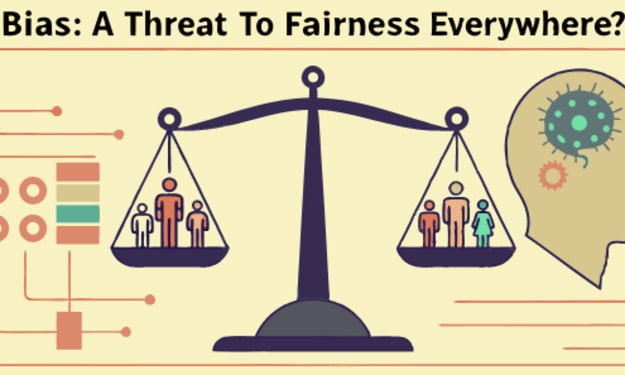
AI Bias: A Threat to Fairness Everywhere?. AI-Generated.
Introduction The integration of artificial intelligence (AI) into critical sectors like recruitment and education has brought transformative potential, but it also raises significant concerns about fairness and equity. AI systems, while promising efficiency and innovation, can inadvertently perpetuate and amplify societal biases, leading to discriminatory outcomes. This article explores the manifestations of AI bias in recruitment and education, its implications, and strategies to mitigate its impact.
By roc chiang2 years ago in Education
Why You Should Never Count Money Before It Arrives
In life, there’s a lesson that many people learn the hard way: never calculate money that has not yet entered your hands. It’s a common habit, especially when we are eager, hopeful, or excited about opportunities, deals, or promises. People start planning how to spend their next paycheck before it arrives, or even worse, they begin spending in advance, assuming that a certain amount will surely come in. This kind of mindset creates a false sense of security, one that can lead to disappointment, debt, stress, and broken trust. Money that is not yet in your possession is merely a possibility, not a reality. No matter how sure you are of its arrival, until it is physically in your bank account or your pocket, it should not be used to make decisions. Promises can fall through, delays can occur, and people can change their minds. Counting on something that is not guaranteed is like building a house on sand. It might stand for a while, but the moment something goes wrong, everything collapses. This kind of financial behavior often stems from desperation or overconfidence. You might feel like your business deal is already sealed because the other party said yes. You might be expecting a payment from a client who has always been reliable. You might be awaiting a loan that has already been approved in principle. But until those funds arrive, they are not yours. And treating them as though they are leads to a series of miscalculations that can cause chaos in your financial life. For instance, imagine you are expecting $2,000 from a freelance gig, and the client has promised to pay you on Friday. You start planning how you’ll use the money you’ll pay your rent, buy groceries, settle your phone bill, and maybe even treat yourself to something nice. By Wednesday, you’re so confident in the money that you begin borrowing from friends or using your credit card, assuming you’ll pay it all back once the money comes. But then Friday arrives, and there’s no payment. The client tells you they need a few more days. Suddenly, you’re in a tight spot. The money you thought was certain is now uncertain. The people you owe are waiting. The stress begins to mount. Situations like this happen every day. It’s not about being pessimistic, but about being wise and grounded in reality. There’s a saying that goes, “Don’t count your chickens before they hatch. That saying applies perfectly to finances. Until money is received, it’s just potential. When you count on it too early, you set yourself up for anxiety, disappointment, and often embarrassment. People also tend to make large commitments based on future income that hasn’t materialized. Maybe you’ve accepted a new job that pays more, and you haven’t even started yet, but you go out and buy a new car because you expect that your first paycheck will cover it. What if something goes wrong with your employment? What if there’s a delay or cancellation? Suddenly, you’re locked into a financial obligation that you are not prepared to handle. Living in anticipation of money rather than the reality of what you have creates a dangerous cycle. It teaches you to operate on hope instead of facts, which can lead to reckless spending and poor financial planning. Responsible financial behavior involves working with what you already have. It means making decisions based on current assets, not on expected income. Moreover, this habit can strain relationships. Borrowing based on money that hasn’t come yet often leads to broken promises. You tell a friend you’ll pay them back by Tuesday because you’re expecting a payment. Tuesday comes and you have to tell them you’re still waiting. If this happens once, they may understand. If it happens repeatedly, it erodes trust. People start to doubt your word. They begin to view you as unreliable. Your integrity suffers, all because you assumed that money would come as planned. Business owners and entrepreneurs often fall into this trap too. They project earnings and start expanding too early, assuming that clients will pay on time or that deals will close smoothly. But in the world of business, many variables can affect cash flow. If you calculate future income as current capital, you may end up spending money that never comes, which can be devastating for a small business. Financial discipline requires patience and realism. It’s about managing today wisely, without assuming that tomorrow’s resources are already available. It’s not wrong to be optimistic about income or opportunities, but that optimism should never replace caution and discipline. Money that hasn’t come in yet is not yours. It’s only yours when you can access it, use it, and make choices with it without depending on others to fulfill a promise. Instead of making financial decisions based on projected income, build a habit of living within your means. Make budgets based on what is available now. If extra income comes in, that’s a bonus not a baseline. This approach protects you from unnecessary stress, failed expectations, and financial ruin. Ultimately, calculating money that has not yet arrived is a trap. It creates illusions that feel comforting in the moment but can quickly turn into nightmares. Be wise, be patient, and be realistic. Use what you have today wisely, and let tomorrow’s money take care of itself when it actually arrives. That mindset will save you from many heartaches and keep your finances and your peace of mind intact.
By Nora Ariana2 years ago in Education
How To Clean Engineered Hardwood Floors
Engineered hardwood flooring has become a much sought-after option in homes because of its durability, versatility, and beauty. Having the look of true wood but with increased resistance to temperature and moisture, it's an ideal option for many rooms. As with any floors, though, they need to be properly cared for and maintained so that they stay looking their best. In this guide, we will discuss how to clean engineered hardwood floors. We will also cover how to choose the best cleaner for them. You will learn about the risks of using a steam mop on these floors. Finally, we will share tips for keeping your floors beautiful for a long time.red wood floors, and how to take care of your floors for long-lasting beauty.
By Genix Flooring2 years ago in Education