how to
How tos for the learners and the learned; tips and tricks to help you study effectively, survive your school years, impress your teachers and more.
I Used AI as My Life Coach for 360 Days — The Results Surprised Me
A year ago, I felt stuck. I wasn’t failing in life, but I wasn’t growing either. Every morning felt the same. Wake up, scroll through my phone, go to work, come home tired, and repeat. I was tired of feeling unmotivated, unsure of my goals, and constantly overthinking everything.
By Dadullah Danishabout a year ago in Education
Think Twice Before You Believe What You Hear
Start writing...Think Twice Before You Believe What You Hear Why It's Important to Question Gossip and Be Kind Have you ever heard something bad about someone and later found out it wasn’t true? Maybe you believed it at first because it came from someone you trusted. But later, you discovered that the person spreading the news had their own issues with the person they were talking about. That’s what the saying “Be careful what you hear about somebody, you might be hearing it from the problem” is all about. This wise saying reminds us to be careful when listening to gossip or negative talk. Sometimes, the person sharing the story is not telling the full truth. They might be upset, jealous, or trying to make someone else look bad to feel better about themselves. If we accept what they say without thinking, we could end up judging someone unfairly—and that’s not right. The Real Danger of Gossip Gossip can spread like wildfire. One person says something, then another repeats it, and soon everyone believes it. But no one stops to ask: Where did this information come from? Is it even true? Most of the time, people don’t. They just go along with it because it’s easy or because they want to fit in. But words are powerful. Hurtful stories, even if they’re not true, can damage a person’s reputation. Friendships can break, people can feel isolated, and someone’s whole life can be affected by a lie or an exaggeration. That’s why it’s so important to think before you believe what you hear. Ask Yourself: Who’s Telling the Story? The next time you hear something negative about someone, pause and ask yourself a few questions: Do I know this person well? Do I trust the one sharing the story? Could they have a reason to make the other person look bad? Is it possible they’re leaving out important details? Sometimes, the person spreading the news might actually be the problem. Maybe they had a fight with the person they’re talking about, or they’re upset because they didn’t get their way. Instead of solving the problem in a healthy way, they choose to talk behind someone’s back. That’s not honest, and it’s definitely not kind. Try to See the Full Picture Instead of believing just one side, try to look at the full picture. Talk to others who know the person. If you feel comfortable, ask the person involved directly. You might learn that what you heard was only part of the story—or completely false. Also, imagine how you would feel if someone believed something bad about you that wasn’t true. You’d want people to come and ask you first, right? You’d want a fair chance to explain. So, let’s give that same respect to others. Choose Kindness Over Judgment It’s easy to judge someone when you only hear negative things about them. But what if they’re going through a tough time? What if they made a mistake and are trying to fix it? Everyone makes mistakes. What matters most is how we treat others while they’re learning and growing. When we choose kindness instead of judgment, we make the world a better place. We help people feel seen and heard, rather than torn down. Turn This Saying Inward Too This saying doesn’t just apply to how we treat others—it can also help us understand ourselves. Think about how you talk to yourself. Are you sometimes too hard on yourself? Do you listen to that little voice in your head that says, “You’re not good enough” or “You always mess things up”? That inner voice might be your own “problem.” It could be based on fear, past failures, or someone else’s hurtful words. Don’t believe everything it says. Challenge it. Replace it with kinder, more honest thoughts like, “I’m doing my best” or “I can learn and improve.” Build a Better World With Your Words Words can build people up or tear them down. The choice is ours. If we speak with care, listen with understanding, and think before we judge, we can help create a more respectful and caring world. So, the next time someone tells you something bad about another person, remember this: Be careful what you hear about somebody—you might be hearing it from the problem. Ask questions, be thoughtful, and always lead with kindness. That way, you’ll be part of the solution, not part of the problem.
By Qaseem Ahmadzaiabout a year ago in Education
How to Start a Profitable Furniture Making Wood Business from Your Garage [2025 Guide]
Furniture making wood businesses are witnessing unprecedented demand as more consumers seek quality handcrafted pieces over mass-produced items. Starting your own woodworking enterprise from your garage requires minimal initial investment while offering substantial profit potential. Many successful furniture makers began with just basic tools and a passion for creating beautiful, functional pieces.
By Hayder Aliabout a year ago in Education
How to Stay Updated With the Latest Development Trends. AI-Generated.
In the fast-moving world of software development, staying current isn't optional—it's necessary. New frameworks, languages, and tools are always popping up. If you're not keeping up, you risk falling behind. Here are practical ways to stay updated without feeling overwhelmed.
By Gustavo Woltmannabout a year ago in Education
The Great scientist Nikola Tesla
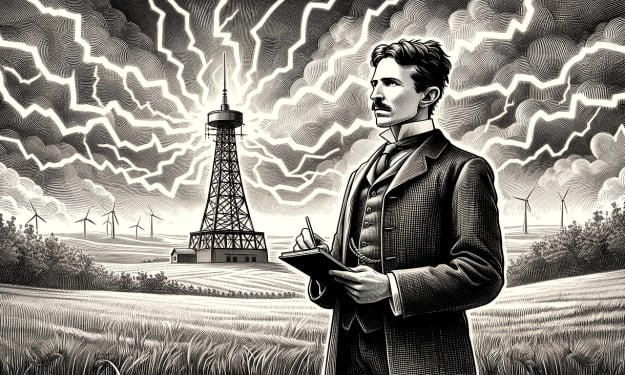
The Life and Times of Nikola Tesla in The Lightning Dreamer In 1856, Nikola Tesla was born in a small Croatian village called Smiljan during a lightning storm. Legend has it that the midwife whispered that it was a bad sign when lightning and thunder struck the night sky. However, Tesla's mother promptly responded, "No, this child will be a child of light." She was correct in many ways. Tesla was not like the other children from a young age. He had extraordinary abilities: his memory was like a picture, his imagination was vivid, and his curiosity was never-ending. Tesla experimented, built models, and studied the forces of nature while his friends were out playing games or chasing animals. He was able to design machines in his mind down to the tiniest details, frequently without ever writing anything down. Tesla was drawn to science and engineering, particularly electricity, which was still a mystery to the majority of people at the time, even though his father wanted him to become a priest like him. Tesla made a personal promise to himself that he would dedicate his life to invention after overcoming a serious illness in his teens. With nothing more than a suitcase, a few coins, and a head full of revolutionary ideas, this determination led him from Austria to Prague and then to the United States in 1884. Tesla started working for the well-known inventor and businessman Thomas Edison as soon as he arrived in New York City. Tesla initially admired him. However, the conflict between the two began quickly. Tesla had come up with the idea for alternating current (AC), which is a better way to send electricity over long distances. On the other hand, Edison was not planning to alter his entire business model because he was so invested in direct current (DC). Tesla asserted that Edison even offered him a substantial bonus for improving his DC generators, but Edison later backtracked and said, "You don't understand our American humor." Tesla left Edison's company and began digging ditches to survive, feeling betrayed. However, he did not give up. George Westinghouse, a businessman who recognized the genius in Tesla's air conditioning system, eventually provided him with support. In what came to be known as the War of the Currents, a fierce and well-publicized battle over the future of electricity, they challenged Edison's DC empire together. Even publicly electrocuting animals, Edison went so far as to fund demonstrations demonstrating the alleged dangers of AC. It was calculated and brutal. However, Tesla's concepts prevailed. The World's Columbian Exposition in Chicago in 1893 marked a turning point when Tesla and Westinghouse used AC power to illuminate the entire fairground. For many, this was their first encounter with electric light. The entire world noticed how stunning it was.Following that, Tesla became somewhat of a household name. He gave dramatic demonstrations of his inventions, including wirelessly lighting lamps, sending electricity through his body, and creating lightning with his Tesla coil. However, he was not simply putting on a show. He was anticipating the future by attempting radio, wireless communication, and even remotely controlled machines. Radio, radar, and wireless transmission are just a few of the modern technologies that can be traced back to Tesla's original concepts. However, his ultimate goal was to provide the entire world with free energy. He started building a huge tower he called Wardenclyffe in New York with support from financier J.P. because he believed he could send power through the atmosphere of the Earth. Morgan. However, Morgan withdrew the funding when he realized that Tesla's plan could not be monetized because there was no way to meter free energy. The tower was never completed. Tesla's fortunes began to decline in the years that followed. He was given credit for his pioneering work by other inventors. He was exhausted by legal battles and lawsuits. He disappeared from the public eye, living by himself in hotels in New York, frequently feeding pigeons, and drifting into bizarre routines. He once claimed to have fallen in love with a white pigeon, claiming that she provided him with light during his darkest hours. In 1943, Tesla passed away by himself in the New Yorker Hotel's Room 3327. He was without friends, family, or money. He appeared to be forgotten by history for a while. However, not forever. Today, Nikola Tesla is hailed as one of history's greatest minds. He is remembered not only for his inventions but also for his vision—his belief in a world where power and knowledge are freely shared and invisible forces connect it all. His name can still be found in museums, books, documentaries, and even electric cars. "The present is theirs; the future, for which I really worked, is mine," Tesla once said. He was correct. Our present is his future.
By Itachi Jhonabout a year ago in Education
If You've Ever Missed a Trade Because of Wi-Fi, Read This. Why Most Forex Bots Fail (And It's Not Your Strategy)
That sinking feeling. You wake up, grab your coffee, check your trading platform... only to see that your meticulously crafted bot missed the trade. The perfect setup. The one your backtests screamed profitability. Instead, a glaring gap in your P&L stares back. "Why?!" you groan, instantly doubting your strategy, your code, maybe even your entire trading approach.
By Epic Vibesabout a year ago in Education
The Human Heart of AI
The Human Spark Behind the Machine Artificial Intelligence (AI) often feels like a creation of pure code, a mysterious force conjured from algorithms and data. But at its core, AI is a profoundly human endeavor. Every neural network, every chatbot, every predictive model is the result of human curiosity, creativity, and persistence. This article explores the human side of AI—how it’s shaped by our dreams, our flaws, and our relentless drive to understand the world. Far from being a cold, autonomous system, AI is a reflection of humanity itself, a mirror held up to our collective ingenuity and ambition.
By Shohel Ranaabout a year ago in Education
How to Naturally Protect Yourself from Flies and Mosquitoes – Day and Night
As the warm breeze of summer flows in, it brings longer days, fresh fruit, and time spent outdoors. But it also invites some of the most annoying — and sometimes dangerous — visitors into our lives: flies and mosquitoes.
By Haroon Bahramzaiabout a year ago in Education
5 Strategies To Help Executives Cultivate A Positive Online Reputation
Warren Buffett once said, “It takes 20 years to build a reputation and five minutes to ruin it. If you think about that, you’ll do things differently.” Having worked in online reputation management (ORM) for over two decades, I can confirm he’s 100% right, though not very reassuring. Building your reputation online requires persistence, but many C-suite executives fear making that one wrong move, so they avoid any kind of online presence.
By Chris Hinmanabout a year ago in Education