how to
How tos for the learners and the learned; tips and tricks to help you study effectively, survive your school years, impress your teachers and more.
How to take a perfect nap
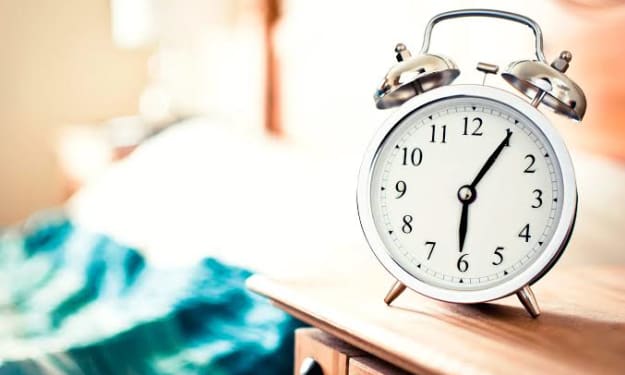
Research has shown an entire night's rest is really great for your memory, state of mind, and resistant framework. framework, just to give some examples benefits, yet And sleeping during the day? Is it useful or destructive? How does the length of the rest influences you and is There is an ideal chance to get a fast rest Fortunately, analysts have investigated that as well, and similar as an oblivious body on a lounge chair in the late evening The outcomes should be spread out. Contingent upon an individual's age, resting is absolutely vital, taking everything into account. The more youthful an individual is, the more rest they need. Their creating cerebrums and bodies need So specialists suggest that babies get 14 to 17 hours of rest while Preschoolers ought to get 10 to 13 hours. of closed eye consistently that is quite a while to spend oblivious, and that is like feline degrees of snoozing, so it's not going to happen all in succession, the youngsters need to lay down for rests, regardless of how much They kick and shout when that's what they hear. Its rest time rules additionally say that Kids ages 6 to 13 ought to go anyplace from 9 to 11 or even 12 hours of rest day to day, so assuming that you're in middle school and On the off chance that you continue to fall asleep in class, recently let The instructor knows that a science YouTube video said that it's solid. All in all, it will not get you in the clear. be that as it may, your educators can have a decent snicker about it later in the educator's relax once individuals are grown-ups, however do They truly need to sneak in a rest. By and large, doesn't appear as something we, as an animal varieties, need to do our current lifestyle with our regular positions also, our extravagant electric lights may have changed how we rest contrasted with our antiquated predecessors, so to check whether that was the situation, analysts contemplated 94 people from the ongoing day agrarian gatherings in Tanzania Namibia and Bolivia, which live more like people completed quite a while back while practically every one of them would take a break around mid-afternoon when the The sun was thumping, and not a solitary one of them would Set aside some margin to doze for a while so it It doesn't look like snoozing is something people would do inherently on the off chance that it weren't for the requests of current life Resting isn't required for grown-ups, however It actually has possible potential gains. since our cerebrums go through various stages during rest and the advantages of a rest are associated with its length if You wind up dialing back in the mid-afternoon after lunch, a speedy 20 A 30-minute power rest could be all you really want. to awaken feeling invigorated and alert A short rest could likewise help your memory. a few different ways, yet longer rests could have greater advantages to learning and review Conking out for an hour could help You recollect jargon or bearings. staying unconscious for an hour to 60 minutes furthermore, a half will permit your mind to enterREM rest, and some examination has observed that the advantages of learning are comparable to getting an entire night's rest. The ideal rest length will change from One individual to the next, the 20-minute power rest is definitely not a firm rule you might get similar advantages from just 10 minutes of rest or as much as 45 minutes, be cautioned, however permitting your cerebrum to go into the profound rest stage. could prompt what's called rest. dormancy, where you awaken feeling tired furthermore, oddly more drained taking a A rest at some unacceptable season of day can likewise make it hard to nod off later. that evening, so assuming you're on that nine to five drudgery, attempt to try not to rest after 4. pm which, I surmise, would mean you'd need to Sleep at work once more; don't attempt to Nail this to me in the event that your manager doesn't support Standard nappers seem to get more out of of it than the people who don't snooze off. Day to day, they could feel more honed and in better spirits contrasted with their partners who feel slow later I'm waking now, and I want to say this was a situation where they had sharpened their snoozing capacities by being truly devoted to their art since that would mean at long last get an opportunity to be genuinely perfect. at something, yet entirely it's conceivable that Individuals who rest consistently decide to do as such. since they get benefits from it in All in all, they're self-choosing. pack of individuals who get themselves Feeling yucky after a rest probably will not do it as frequently as you fall into that second classification of individuals, then, at that point, perhaps rests just aren't so much for you, yet hello, basically there's Continuously experience espresso in the event that you experience issues. getting to rest, you might utilize a white commotion machine, however would it help if your The commotion was pinker.
By Solomon wisdom3 years ago in Education
Mastering Braking Power: A Step-by-Step Guide to Changing Brake Pads
A Comprehensive Guide: How to Change Brake Pads Brake pads are a vital component of a vehicle's braking system, responsible for creating the necessary friction to slow down or stop the vehicle. Positioned on either side of the brake rotor, brake pads are made of a composite material that is designed to withstand high temperatures and provide efficient braking performance. When you press the brake pedal, hydraulic pressure is applied, causing the brake caliper to squeeze the brake pads against the rotor. This friction generates the necessary force to slow down or halt the rotation of the wheels. Over time, brake pads wear down due to constant use, necessitating their replacement to maintain optimal braking efficiency and ensure the safety of both the driver and passengers on the road.
By The PenPal3 years ago in Education
Why so many people need glasses now
During my upbringing, my vision gradually deteriorated, limiting my ability to see objects beyond a certain distance from my face. Anything farther than approximately 10 inches became blurry, prompting me to get glasses. This experience, although inconvenient, is becoming increasingly common. Myopia, or near-sightedness, rates have been steadily rising for decades. In 1971, only 25% of people in the US were myopic, but by 2004, the number had increased to 42%. If current trends persist, it is estimated that by 2050, half of the global population will be myopic. Rates are even higher in Hong Kong, Singapore, Taiwan, and South Korea, where a significant portion of individuals suffer from high myopia, increasing the risk of future vision loss. For a long time, it was believed that genetics solely determined the need for glasses. While genetics do play a role, the rapid increase in myopia suggests an environmental influence. Our modern lifestyle seems to be making it harder for people to see at a distance. Most people are born with eyes that are too short from front to back, causing the lens to focus images behind the retina, resulting in hyperopia or farsightedness. However, as we grow, our eyes usually reach a spherical shape, allowing the lens to focus light directly onto the retina and produce a clear image. In myopia, the eye continues to grow longer, causing close-up images to focus correctly on the retina but distant objects to focus in front of it, leading to blurred distance vision. Essentially, myopic individuals have eyeballs that have grown too long, resembling a rugby ball rather than a basketball. Seang Mei Saw, a myopia epidemiologist and physician, explains that myopia is a lifelong condition that doesn't regress once it develops. The evidence suggests that the way we spend time during childhood and adolescence is a significant factor. This is when our eyes experience the most rapid growth, and it is also when most cases of myopia occur and stabilize. Two factors have a substantial impact: near work, or the time spent focusing on close objects, and the amount of time spent indoors. In a healthy eye, muscles squeeze the lens to focus on nearby objects. Some experts theorize that excessive near work strains the eyes, causing them to grow longer to reduce the strain. However, the stronger explanation is the lack of exposure to bright outdoor light, which stimulates dopamine production in the retina. Dopamine regulates eye growth, and without enough of it, the eye continues to elongate. Indoor light levels are significantly lower than outdoor light levels, contributing to this issue. The phenomenon is particularly evident in East and Southeast Asia, where children spend less time outside due to the highly competitive education system, increased workload, and emphasis on academics. Requiring glasses or contacts for life is inconvenient, but the long-term consequences of myopia can be serious. Excessive elongation of the eyeball places additional stress on the eye structures, leading to potential disorders like myopic macular degeneration, retinal detachment, glaucoma, and cataracts. The risk of these conditions increases as the degree of myopia worsens. Early intervention is crucial, and various treatments are available for those developing myopia. Multifocal soft contacts and glasses intentionally blur peripheral vision, which appears to slow the progression of myopia. Orthokeratology lenses, worn only at night, reshape the cornea during sleep, allowing clear distance vision during the day. Low-dose atropine eye drops, which temporarily paralyze the eyes' focusing muscles, also reduce myopia development. However, prevention is the primary defense. Encouraging children to spend more time outdoors is the simplest and most effective way to prevent myopia. Programs implemented in Taiwan and Singapore, such as increasing outdoor time in schools and public education campaigns, have shown promising results in reversing the upward trend in myopia rates. While current myopia rates may be alarming, we have the opportunity to make a significant impact and change the future trajectory of this condition.
By Solomon wisdom3 years ago in Education
South Kazakhstan Medical University
Explore the vibrant world of South Kazakhstan Medical University, a leading institution dedicated to producing skilled healthcare professionals. Discover its rich history, academic programs, renowned faculty, and commitment to excellence in medical education.
By GERALT DAVE3 years ago in Education