how to
How tos for the learners and the learned; tips and tricks to help you study effectively, survive your school years, impress your teachers and more.
Echoes of Time: A Journey to the Past. Content Warning.
In the core of a clamoring city, where the reverberations of history murmured through the roads and the structures remained as quiet sentinels of the past, there existed an innovation not at all like some other. It was a gadget known as the Worldly Visor, equipped for moving its wearer back so as to observe verifiable occasions firsthand. Furthermore, it was here, in the midst of the murmur of current life and the shadows of the past, that Emma wound up leaving on an excursion dissimilar to some other.
By Godday Shedrack3 years ago in Education
Embracing the Celestial Symphony: Understanding Surya Grahan
In the grand tapestry of the cosmos, few events captivate humanity's imagination like a solar eclipse. As the moon delicately positions itself between the Earth and the sun, casting its shadow upon our planet, we are presented with a breathtaking display of astronomical alignment. The upcoming Surya Grahan on April 8, 2024 promises to be no exception, drawing sky gazers into its captivating embrace. But before we embark on our journey to witness this celestial phenomenon, it's essential to delve deeper into the science behind it.
By Neha Ramesh3 years ago in Education
Trailblazing Healthcare Transformation: The Reza Sadeghian Story
In the ever-evolving landscape of healthcare, few names shine as brightly as Reza Sadeghian's. A trailblazer in every sense of the word, Sadeghian has dedicated his career to transforming the way healthcare is delivered, pushing boundaries, and redefining industry standards. From pioneering digital transformation to championing patient-centric care, his story is one of innovation, resilience, and unwavering commitment to improving the lives of patients and communities worldwide.
By Zac Helpman3 years ago in Education
Dr Robert Minh Cao, Jr Cosmetic Surgery Mastery: Achieving Natural Elegance
In the realm of cosmetic surgery, Dr. Robert Minh Cao, Jr. has emerged as a luminary, his expertise and artistry shaping the landscape of beauty enhancement. With a commitment to excellence and a passion for sculpting natural elegance, Dr. Cao's approach transcends traditional standards, focusing on empowering individuals and celebrating the unique essence of each patient.
By Emma David3 years ago in Education
Embracing the Circle of Life in the Garden. Content Warning.
In the core of a peaceful open country, where the delicate breeze murmured through the trees and the earth murmured with the song of life, there existed a nursery that was a demonstration of the timeless dance of birth, development, and change. It was here, in the midst of the dynamic sprouts and lavish foliage, that the circle of life unfurled in the entirety of its amazing excellence and strong intricacy.
By Godday Shedrack3 years ago in Education
Blooms of Love, Tears of Loss: A Garden's Tale. Content Warning.
In the core of a curious open country, where moving slopes kissed the sky and the air was sweet with the fragrance of wildflowers, there existed a nursery not at all like some other. It was a position of magnificence and quietness, where love sprouted in the midst of the petals and tears fell like raindrops upon the earth.
By Godday Shedrack3 years ago in Education
Blooms of Resilience: Gardening Through Adversity. Content Warning.
In the core of a clamoring city, where substantial wildernesses extended as should have been obvious, there existed a little local area garden concealed in the midst of the confusion. It was here, in the midst of the transcending high rises and clamoring roads, that a gathering of improbable legends tracked down comfort and trust in the midst of difficulty.
By Godday Shedrack3 years ago in Education
The wonder of the fireflies. Content Warning.
In the core of a serene open country, where moving slopes met the perpetual territory of the night sky, there carried on with a little kid named Isabella. She had forever been charmed by the excellence of the regular world, tracking down miracle and amazement in the least difficult of things. In any case, much to her dismay, her life was going to be everlastingly different by a marvelous experience with the fireflies that moved in the twilight evening.
By Godday Shedrack3 years ago in Education
How to study
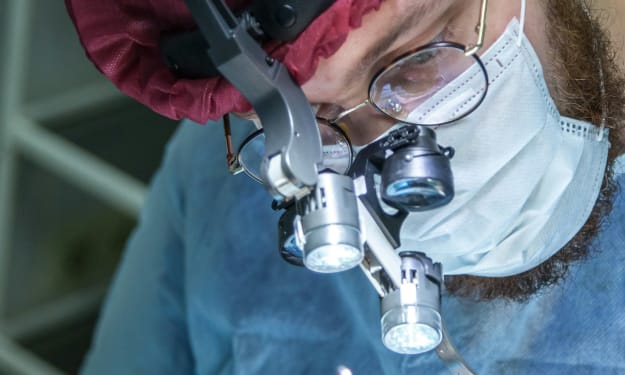
Medical residents acquire knowledge of innumerable techniques, interventions, and procedures that they subsequently implement in order to preserve lives. Literally, the ability to recall these skills can mean the difference between life and death. In light of this, a research study conducted in 2006 divided a cohort of surgical residents who were undergoing artery suturing instruction into two distinct groups. While all groups were provided with identical study materials, one group made a minor adjustment to their approach to studying them. One month later, this group demonstrated a marked improvement in surgical performance compared to the remaining residents. Along with that group's success factor, we shall expound upon two additional efficacious study techniques that have practical applications beyond the confines of the classroom. However, in order to comprehend the efficacy of these approaches, it is imperative to initially deconstruct the mechanisms by which the brain acquires and retains information. Consider that you are attempting to commit to memory the anatomy of the heart. Memories of newly introduced concepts are transiently encoded in clusters of neurons located in the hippocampus, a cerebral region. You reactivate these neurons as you sustain your understanding of the heart's mechanisms in the classroom or scrutinize its chambers in preparation for an examination. This repeated discharge stabilizes the memory by fortifying the intercellular connections. The process by which knowledge of heart anatomy is progressively retained over time entails the neocortex, an additional cerebral region. The process by which data is transferred from short-term to long-term storage remains poorly understood; however, it is hypothesized that this occurs between study sessions and, arguably most significantly, while sleeping. In this stage, the recently acquired information is incorporated with other pertinent concepts that you are already familiar with, such as the methodology for quantifying heart rate or the anatomical structure of other bodily organs. Beyond that, the procedure continues. Recalling heart anatomy induces a reactivation of long-term memory, rendering it vulnerable to modification. It is possible to revise, fortify, and reintegrate the knowledge with additional data. Our initial investigation technique is as follows. Self-evaluation through the use of flashcards and exams compels one to actively retrieve information, thereby strengthening and modernizing the memory. Frequently, students favor alternative study techniques, such as rereading textbooks and annotating notes. Conversely, these practices may engender an illusory perception of mastery due to the conspicuous presence of the information. Conversely, self-testing enables one to assess their knowledge with greater precision. However, suppose that you forget the answers while performing this task. Not to worry—in the long run, learning can be enhanced by making errors. There is a theory that as one laboriously searches for the answer, pertinent knowledge is activated. Then, upon subsequent disclosure of the accurate response, the brain will be in a better position to incorporate this data into its preexisting knowledge. Our second method is an extension of the initial. When studying with flashcards, it is optimal to incorporate a variety of subjects into the deck. By interleaving the concepts you practice in a single session, rather than concentrating on a single skill or subject at a time, retention can be improved. One plausible explanation for this phenomenon is that, similar to examinations, cycling through various subjects induces the brain to momentarily forget and subsequently retrieve information, thereby fortifying the memory. One might also discover correlations among the subjects, thereby enhancing comprehension of their distinctions. Following an understanding of when and how to study, our final strategy will now address how. Scheduling your review over several days provides an opportunity for intermissions of rest and sleep. The brain is hard at work "offline," accumulating and integrating information in the neocortex. Therefore, although it may seem logical to cram for an exam the night before, since the material will still be fresh in your consciousness, the information will not be retained for the long term. We return to our medical residents at this point. The time devoted to studying the surgery was identical for both groups. However, the training of one group was compressed into a single day, whereas the training of the other, more successful group was spread out over four weeks. Each of these three effective study techniques is specifically designed to operate on the workings of the human brain. They reinforce and supplement the remarkable mechanism by which the brain processes and stores the copious amounts of information it is exposed to on a daily basis.
By Violet Muthoni3 years ago in Education