how to
How tos for the learners and the learned; tips and tricks to help you study effectively, survive your school years, impress your teachers and more.
3 Classroom Activities to Increase Empathy
I have been a teacher for nine years. In that time, I’ve met a wide range of students, varying in age, family background, and maturity. As a teacher, I’ve always tried to balance kindness with strict boundaries. This can be difficult in large classrooms, and even more so when there are troubled students who come from neglectful or abusive homes in the mix.
By Kera Hollow11 months ago in Education
Understanding Bitcoin's 2024 Movement: A Look at Recent Developments
If you follow financial markets, you’ve likely noticed increased discussion around Bitcoin this year. Its price activity has captured attention, prompting both seasoned observers and newcomers to ask questions about what’s happening. This article aims to provide a clear, straightforward overview of the key events and factors influencing the cryptocurrency landscape in 2024, separating observable developments from speculation.
By Epic Vibes11 months ago in Education
The data center revolution: Inside the gigawatt supercomputers reshaping our world
We are all talking about data centers, but nobody really knows what they are. We hear about them consuming large amounts of energy, driving up electricity bills, and somehow being the engines of the AI revolution. But what is exactly going on inside these large facilities? And why are tech companies such as META, Microsoft, Open AI competing to build structures that could cover Manhattan, consuming enough electricity to power millions of American homes?
By Andrea Zanon11 months ago in Education
Inside the Black Box: Understanding the Algorithm Behind Smart Stock Trading Bot
Stock trading has changed a lot over time. In the past, traders had to spend many hours looking at charts, managing their emotions, and trying to understand what the market was doing. Today, smart stock trading bots can help with much of this work. They read the market quickly, understand signals, and make clear decisions. These bots do not replace human traders. Instead, they work like helpful partners that make trading easier, faster, and more disciplined. At the center of every smart bot is an algorithm — a set of rules that explains what the bot should look at, how it should think, and what actions it should take. Some people call this the “black box” because they use the bot without really knowing how it works. But when traders understand what is happening inside this black box, they trust the bot more and can use it better.
By james hall11 months ago in Education
The Strategic Investor's Guide . AI-Generated.
In the world of wealth creation, few assets have proven as consistently resilient and profitable as real estate. However, transitioning from a casual property owner to a strategic investor requires a shift in mindset—from seeking a single profitable deal to building a systematic, growing portfolio that generates lasting wealth. This guide delves beyond the basics, offering a detailed framework for building a sustainable real estate investment business.
By Muhammad Sultan11 months ago in Education
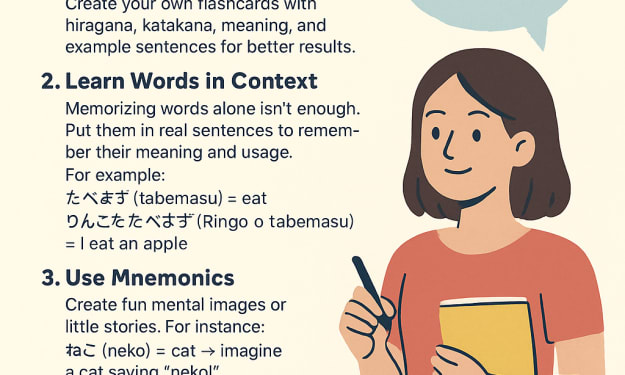
How to Memorize Japanese Words Fast...... Content Warning. AI-Generated.
Learning Japanese is one of the most exciting experiences, but it can also be a bit overwhelming, especially when it comes to memorizing new words. Don’t worry — you’re not alone. Many learners struggle with vocabulary, but the good news is that there are proven strategies to make it easier, faster, and even fun. Today, I’m sharing actionable tips to help you memorize Japanese words quickly and retain them naturally.
By Way To Japan11 months ago in Education
7 Ways to Learn Faster and Improve Your Memory, Backed by Neuroscience
In today’s fast-paced world, learning quickly and retaining information effectively is more important than ever. Whether you’re a student, professional, or lifelong learner, boosting your memory and accelerating your learning can give you a significant advantage. Fortunately, neuroscience research shows that improving your memory is achievable with the right strategies. Here are seven scientifically backed ways to learn faster, remember more, and truly optimize your brainpower. 1. Test Yourself One of the most powerful tools for learning is self-testing. Instead of simply reading or passively reviewing material, actively test yourself on what you’re trying to learn. When you answer incorrectly and then check the correct answer, you create a stronger memory trace. This process not only reinforces the correct information but also highlights areas where your understanding is weak, allowing you to focus on what truly needs improvement. For example, if you’re learning a new language, try recalling vocabulary without looking at your notes. If you’re studying biology, quiz yourself on key processes or functions. Even for professional skills like sales or presentations, rehearsing by testing your recall of key points, data, or procedures can increase confidence and help solidify long-term memory. Regular self-testing is an active learning strategy that engages the brain more deeply than passive review, making it an essential tool for faster learning. 2. Learn Two or Three Things at the Same Time The concept of interleaving involves studying related concepts or skills in succession rather than focusing on one topic exclusively. This method forces the brain to constantly switch and adapt, improving its ability to differentiate between concepts and apply knowledge flexibly. For instance, instead of practicing one type of math problem repeatedly, mix in a few different types of problems during the same study session. Similarly, if learning musical instruments, practice multiple techniques in one session instead of perfecting just one. Interleaving enhances understanding at a deeper level, strengthens memory connections, and helps you apply knowledge in real-world situations more effectively. 3. Change the Way You Study or Practice Repetition alone is not enough to master a skill. Studies show that slightly modifying your practice methods can significantly boost learning. Adjusting the pace, changing the environment, breaking tasks into smaller steps, or adding new challenges can help consolidate memories and improve overall performance. For example, if preparing for a presentation, rehearse in different settings or at varying speeds. Break the presentation into smaller sections, master each, then combine them. This approach strengthens memory by creating multiple neural pathways and prepares you for unexpected situations. Adapting and varying your practice ensures that learning stays active, dynamic, and more effective. 4. Say It Out Loud Speaking information out loud can dramatically enhance memory retention. When you articulate ideas or concepts, you engage multiple areas of the brain, making the information more distinct and easier to recall. Mental rehearsal is helpful, but verbal rehearsal takes it a step further. For instance, when learning new terminology, explain it out loud in your own words. If practicing a speech, deliver it verbally rather than silently reading notes. Speaking creates an additional memory cue and reinforces understanding, ensuring that knowledge is not only stored but also retrievable under pressure. 5. Learn in Bursts Distributed practice, or spacing learning sessions, is far more effective than cramming. Learning in bursts allows the brain to process information, correct mistakes, and integrate knowledge over time. After studying, take breaks, then return to the material later. This approach works because each retrieval strengthens the memory and contextual cues. For example, review a chapter, take a short break, and then revisit key points. Spacing sessions over hours or days enhances retention, improves comprehension, and prevents burnout. It also encourages a more natural, stress-free learning rhythm that the brain prefers. 6. Sleep on It Sleep plays a crucial role in memory consolidation. Research shows that studying before sleep, followed by reviewing the next morning, can improve retention by up to 50 percent. During sleep, the brain processes newly learned information, reinforcing neural connections and organizing memories for easier access later. To optimize learning, schedule study sessions before bedtime and revisit material after waking. Even short naps can aid memory consolidation. By incorporating sleep strategically, you not only retain more information but also improve your ability to recall it efficiently when needed. 7. Exercise Physical activity is not just beneficial for the body—it’s essential for the brain. Moderate to intense exercise enhances memory, associative learning, and overall cognitive function. Short bursts of vigorous activity, even 15 minutes, can prime the brain for faster learning, particularly for tasks requiring motor skills. Exercise also promotes the growth of the hippocampus, a critical brain region for memory formation. Regular physical activity reduces age-related cognitive decline, increases focus, and boosts mental clarity. Incorporating consistent exercise into your routine makes your brain healthier, sharper, and more capable of learning efficiently. --- By applying these seven strategies—testing yourself, interleaving, varying practice, speaking aloud, learning in bursts, sleeping strategically, and exercising—you can significantly improve your learning speed, memory retention, and overall cognitive performance. Combining these techniques creates a powerful, science-backed approach to mastering new skills, absorbing knowledge, and staying mentally sharp in any field.
By Muhammad Reyaz11 months ago in Education
How to Improve Leadership Skills as a Student
Leadership isn’t just for CEOs, politicians, or famous personalities. It starts early, in classrooms, clubs, sports teams, and even small group projects. As a student, developing leadership skills can set you apart, help you succeed academically, and prepare you for the real world. But leadership isn’t something you’re born with—it’s a skill you can nurture, practice, and refine over time. Whether you want to lead a school club, organize a community project, or simply become more confident in group activities, understanding how to improve leadership skills as a student can make a huge difference in your personal and professional life. --- 1. Understand What Leadership Really Means Many students confuse leadership with authority. Being a leader isn’t about bossing others around or having a title—it’s about inspiring, guiding, and motivating people toward a common goal. True leaders: Listen actively Encourage others Make decisions thoughtfully Lead by example Before trying to become a leader, reflect on your current strengths and weaknesses. Ask yourself: Do I motivate people? Can I communicate my ideas clearly? Do I handle challenges calmly? Self-awareness is the first step in becoming a strong, effective leader. --- 2. Improve Your Communication Skills A leader is only as effective as their ability to communicate. Being able to express ideas clearly and listen actively is essential. Tips to enhance communication: Practice public speaking by joining debate clubs or presentations Work on body language: maintain eye contact and open posture Be clear and concise in writing and speaking Learn to listen before responding; understanding others is as important as being understood Strong communication builds trust, resolves conflicts, and ensures everyone is on the same page—key aspects of leadership. --- 3. Take Initiative and Responsibility Leadership is about action. Don’t wait for opportunities to come to you—create them. Examples: Volunteer to organize group projects or events Start a study group or community initiative Take responsibility for mistakes instead of blaming others Students who actively seek opportunities to lead demonstrate confidence and commitment. Initiative shows others that you are ready to take responsibility, a core trait of effective leaders. --- 4. Develop Teamwork Skills No leader works alone. Learning to work well in a team is essential. Leadership is not about dominance—it’s about collaboration. Respect everyone’s ideas, even if they differ from yours Assign tasks based on each team member’s strengths Encourage participation and foster a positive environment Handle disagreements calmly and constructively When your team succeeds, you succeed. A student leader understands that the collective effort outweighs individual recognition. --- 5. Learn Time Management and Organization A leader’s effectiveness is often linked to how well they manage their time. Students juggling studies, extracurriculars, and leadership roles need organization skills. Use planners or digital apps to schedule tasks Set priorities and deadlines Break big projects into smaller, manageable tasks Avoid procrastination Being organized helps you meet goals efficiently and sets a strong example for your peers. Leaders inspire through both action and discipline. --- 6. Seek Feedback and Reflect Leadership is a continuous learning process. No one is perfect, and every experience is an opportunity for growth. Ask teachers, peers, or mentors for constructive feedback Reflect on what worked and what didn’t after completing a project Adapt strategies based on feedback to improve future performance Reflection and feedback develop emotional intelligence, which is crucial for understanding team dynamics and improving leadership skills. --- 7. Build Confidence and Emotional Resilience Leadership often involves making tough decisions and facing challenges. Confidence and resilience allow you to handle stress, overcome obstacles, and keep your team motivated. Face small challenges to build courage Learn from failures rather than fearing them Maintain a positive mindset and encourage others Confidence inspires trust. When your peers believe in you, they are more likely to follow your lead. --- 8. Learn from Role Models Observe leaders around you—teachers, senior students, or even famous personalities. Notice how they communicate, solve problems, and motivate people. Read biographies of great leaders Attend workshops or leadership seminars Watch motivational speeches and analyze the strategies used Role models provide guidance and inspiration, helping you understand practical leadership in action. --- Conclusion Improving leadership skills as a student isn’t about earning a title; it’s about developing habits, attitudes, and skills that inspire others and drive results. By improving communication, taking initiative, working effectively with teams, managing time, seeking feedback, and building confidence, you can become a leader in any sphere of student life. Remember, leadership is a journey, not a destination. Start small, stay consistent, and embrace every opportunity to learn. The skills you cultivate today will not only help you in school but will also prepare you for lifelong success. Leadership is not just what you do—it’s who you become.
By Muhammad Reyaz11 months ago in Education
How AI is Changing the Future of Work
Artificial Intelligence (AI) is transforming the world faster than any technology in history. Just ten years ago, AI systems were experimental tools used only by scientists and large tech companies. Today, AI is everywhere—on our phones, in our workplaces, inside hospitals, financial systems, transportation, security, and even creative fields. Because of this massive change, the future of work is undergoing a dramatic shift. Jobs are evolving, skills are changing, and new opportunities are emerging that were unimaginable before.
By Muhammad Reyaz11 months ago in Education