high school
High school made less stressful; a roundup of high school horror stories and tips on asking your date to prom, preparing for college and much more.
How Innovation is changing Our Lives?. Content Warning.
How Innovation is Transforming us Innovation has turned into a vital piece of our lives, changing the manner in which we live, work, and connect with our general surroundings. From the second we awaken to the time we hit the hay, innovation assumes a critical part in molding our day to day encounters. The following are a few significant ways that technology is transforming our lives:
By Md. Mehedi Hasan2 years ago in Education
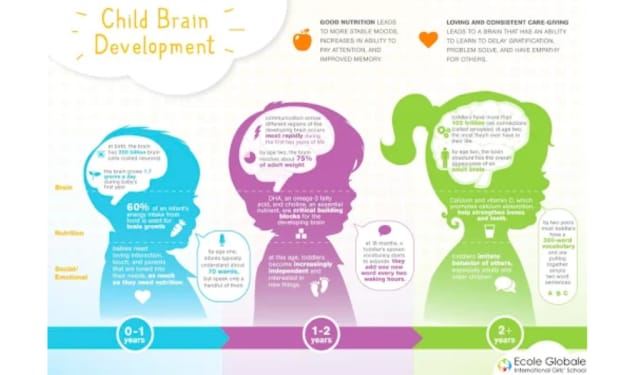
How a Child’s Brain Develops Over the Years
The brain is the most potent and essential organ in the human body. It controls the entire body system and processes. A healthy and well-developed mind is crucial for thriving in life. When we are a baby, our brain is not fully developed, and we rely on assistance from parents and caregivers. As we grow, our brain develops rapidly, enabling us to learn and adapt to our surroundings. This article explores the stages of child brain development and the factors that influence this crucial process.
By Priyangini 2 years ago in Education
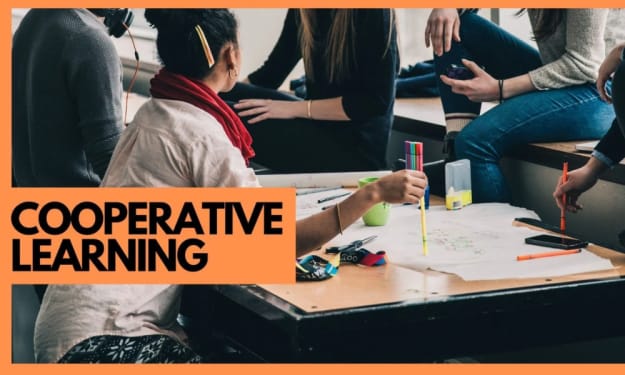
Cooperative Learning: A Path to Academic and Social Success
Cooperative learning is an instructional approach where students work together in small groups to achieve a common goal. This method is not only effective for enhancing academic performance but also for developing social and interpersonal skills. At Ecole Globale Schools, we believe in the power of cooperative learning to transform the educational experience. This article delves into the principles, benefits, and strategies of cooperative learning, providing valuable insights for parents and students.
By Priyangini 2 years ago in Education
Boost Parent-Teacher Communication with a School ERP System
In today's fast-paced world, effective communication between parents and teachers is more critical than ever for the success of students. Traditionally, this communication has relied on parent-teacher meetings, phone calls, and letters sent home. However, these methods can be inefficient, time-consuming, and often fail to provide a comprehensive view of a student's progress. The advent of technology has brought about the development of School ERP systems, which are revolutionizing the way schools operate and enhancing the communication between parents and teachers.
By Radical Logix2 years ago in Education
CBSE Compartment Exams 2024: Key Information for Class 10 and 12 Students
The Central Board of Secondary Education (CBSE) has released the datesheet for the compartment (supplementary) exams for Class 10 and 12 students who are unhappy with their scores in the main exams held earlier this year. The compartment exams will be conducted from July 15th to July 22nd, 2024. For more info... https://www.ecoleglobale.com/blog/cbse-compartment-exams-starts-july-15th-class-10-12/
By Priyangini 2 years ago in Education
Harnessing Artificial Intelligence for Automated PDF Accessibility Remediation
In this rapidly growing digital world, accessibility has become a more important part of content creation and distribution. It is important to make digital documents, particularly PDFs, accessible to everyone, including those with disabilities, as required by law in many places. It's also the right thing to do.
By Ankita Bisht2 years ago in Education
A King and a Queen Story
A King and a Queen Story Sometime in the distant past, in the great and prosperous realm of Elysia, there governed a strong and kind ruler named Alden and his similarly respected sovereign, Seraphina. Their story was one that would stun any average person, loaded up with affection, valiance, and experience.
By shohagweb072 years ago in Education
The Rahasyer Aalo Chhaya
The Rahasyer Aalo Chhaya In the modest community of Suryapara, settled between moving slopes and old banyan trees, individuals talked in quieted tones about the Rahasyer Aalo Chhaya, or "Secret of Light and Shadow." This was any standard peculiarity, yet a mysterious event that happened just once a year the evening of the full moon.
By shohagweb072 years ago in Education
How to boost your focus permanently in minutes
if ever there was a tool that stood to rewire our attentional circuitry in a powerful way this seems to be it a simple practice taking 17 minutes can forever rewire your brain to be able to attend better and offset some of that attentional drift regardless of whether or not you're a child or you're an adult whether or not you have ADHD or not the effects are significant they are long lasting and they appear to exist after just one session of this quiet 17-minute interoception so let's take a step back and think about how we focus and how to get better at focus and I'm to share with you a tool for which there are terrific research data that will allow you in a single session to enhance your ability to focus in theory forever and no I'm not going to try and convince you to meditate what we're about to talk about is when attention works and when attention falters and what we are specifically going to talk about are what are called attentional blinks we do this all the time and people with ADHD tend to have many more attentional blinks than people that don't and this is true for children and for adults if you see something that you're looking for or you're very interested in something you are definitely missing other information in part because you're over focusing on something and this leads to a very interesting hypothesis about what might go wrong in ADHD where we've always thought that they cannot focus and yet we know they can focus on things they care very much about well maybe just maybe they are experiencing more attentional blinks than people who do not have ADHD and indeed there are data now to support the possibility that that's actually what's happening and that should be exciting to anyone that has ADHD it should also be exciting to anyone that cares about increasing their focus and their ability to attend what this is saying is that these circuits that underlie focus on our ability to attend and our ability to eliminate distraction they aren't just failing to focus that's just a semantic way of describing the outcome they are over focusing on certain things and thereby missing other things and so our distractibility or the extractability of somebody with ADHD could exist because they are over focusing on certain elements and they are therefore missing other elements that they should be attending to so what they really need is this property that we call open monitoring now open monitoring is something typically is associated with people who have done a lot of meditation so-called vipassana meditation or have spent a lot of time learning how to do what's called open gaze visual analysis and open gaze thinking but there's a simpler version of this that allows us to bypass all that your visual system has two modes of processing if you're very excited about something you're that soda straw view of the world and you're missing other things okay that's high levels of attention however there's also a property of your visual system that allows you to dilate your gaze to be in so-called panoramic vision panoramic vision is something you can do right now no matter where you are and I can do it right now you won't know that I'm doing it but even though I'm still looking directly at you I'm consciously dilating my gaze so that I can see the ceiling the floor and the walls all around me that panoramic vision is actually mediated by a separate stream or set of neural circuits going from the eye into the brain and it's a stream or set of circuits that isn't just wide angle view it also is better at processing things in time its frame rate is higher so this is something that can be trained up and people can practice whether or not they have ADHD or not what it involves is learning how to dilate your gaze consciously that's actually quite easy for most people whether or not you wear corrective lenses or contacts or not you can consciously go into open gaze and then you can contract your field of view as well there are now published accounts in the literature of a simple practice done for about 15 minutes where subjects were asked to just sit quietly eyes closed and do what is sort of akin to meditation but to not direct their mind into any particular state or place but simply to think about their breathing and to focus on their so-called interception focus on how their body feels their mind drifted to bring it back for about 15 minutes that might not seem like a significant or unusual practice or that it would have any impact at all but remarkably just doing that once for 17 minutes significantly reduce the number of attentional blinks that people would carry out in other words their focus got better in a near permanent way without any additional training there's something about that practice of reducing the amount of visual information coming in and learning to pay attention to one's internal State what we call interoception that allow them an awareness such that when they needed to look for visual targets when they need to focus on multiple things in sequence they didn't experience the same number of attentional blinks and I should mention not incidentally as people age and their working memory gets worse and their ability to focus gets worse the number of attentional blinks that they carry out goes up and there are now studies exploring whether or not this simple meditation-like practice of 15 to 20 minutes or so of sitting and just quietly resting and paying attention to one's breathing and internal State can also offset some of that age-related what is called cognitive decline so what these data tell me is that regardless of whether or not you're a child or you're an adult whether or not you have ADHD or not whether or not you're experiencing age-related cognitive decline or you would simply like to avoid age-related cognitive decline simple practice of taking 17 minutes sitting and paying attention to your internal State just intercepting registering your breathing registering the contact of your skin with whatever surface you're on can forever rewire your brain to be able to attend better and possibly even offset some of that age-related attentional drift now I don't expect anyone to start meditating regularly I don't expect anyone to do anything they don't want to do but I think most of us could handle one meditation's session of 17 minutes or so and so if ever there was a tool that stood to rewire our attentional circuitry in a powerful way this seems to be it and in addition the ability to engage in panoramic Vision to dilate our gaze the so-called open monitoring that allows the brain to function in a way that it can detect more information faster that's a powerful tool as well and the beauty of that tool is that it works the first time and it works every time now how exactly it works is a little bit unclear nonetheless the effects are significant they are long lasting and they appear to exist after just one session of this quiet 17-minute interoception which to me makes it seem like a very worthwhile thing to do for everybody [Music] foreign
By Omotayo raphael2 years ago in Education