high school
High school made less stressful; a roundup of high school horror stories and tips on asking your date to prom, preparing for college and much more.
10 Secrets to Building a Strong and Lasting Relationship: Unlock the Key to Deeper Connections
**10 Secrets to Building a Strong and Lasting Relationship** A strong and lasting relationship is built on trust, understanding, and mutual respect. Whether you're in a romantic partnership, a close friendship, or a professional bond, the principles that underpin successful relationships are universal. Here are 10 secrets to help you build a lasting, fulfilling relationship that can withstand the tests of time and challenges. ### 1. **Communicate Openly and Honestly** Effective communication is the cornerstone of any strong relationship. Open and honest dialogue fosters trust and understanding between individuals. Without good communication, misunderstandings can arise, leading to frustration and conflict. To communicate effectively, it's important to listen actively. This means not just hearing what the other person says, but also understanding their emotions and thoughts. Ask questions, express your feelings, and avoid assuming you know what the other person is thinking. When both parties communicate openly, it creates an environment of transparency, making it easier to address any issues that arise. ### 2. **Build Trust and Respect** Trust is the foundation upon which a lasting relationship is built. Without it, the relationship is likely to crumble under pressure. Building trust takes time, and it is earned through actions, not words. Be reliable, keep promises, and show consistency in your behavior. Respect is also vital. This means valuing the other person’s feelings, opinions, and boundaries. Respect their autonomy and individuality, and always approach differences with an open mind. Relationships where both partners feel respected are more likely to endure and flourish. ### 3. **Practice Empathy and Compassion** Empathy is the ability to understand and share the feelings of another. Practicing empathy helps you see things from your partner’s perspective, leading to greater understanding and connection. In difficult moments, showing empathy can ease tension and help both of you feel heard and valued. Compassion, on the other hand, involves acting on that understanding. It’s about offering support, kindness, and care when your partner is going through tough times. A relationship where both individuals practice empathy and compassion is one where each person feels supported and cared for, no matter what challenges arise. ### 4. **Learn to Compromise** No two people are exactly alike, and conflicts are bound to happen in any relationship. The key to overcoming disagreements is compromise. This doesn’t mean one person always gives in to the other; rather, it’s about finding a middle ground that works for both individuals. When you compromise, it shows that you’re willing to meet the other person halfway, which strengthens the bond between you. It also shows that you value the relationship more than being "right" all the time. Compromise creates an atmosphere where both individuals can feel heard and respected, even when opinions differ.
By Nora Ariana2 years ago in Education
Conquer Your Financial Accounting Assignments Expert Tips and Help for Students
Financial accounting is a fundamental subject for college and university students pursuing degrees in business, finance, or accounting. It provides the backbone for understanding how organizations track, report, and analyze their financial performance. However, mastering the principles and concepts of financial accounting can be daunting. From understanding the intricacies of balance sheets to preparing income statements, the subject often requires a great deal of time, effort, and precision. This is where seeking Financial Accounting Assignment Help can make a significant difference.
By Julia Erhart2 years ago in Education
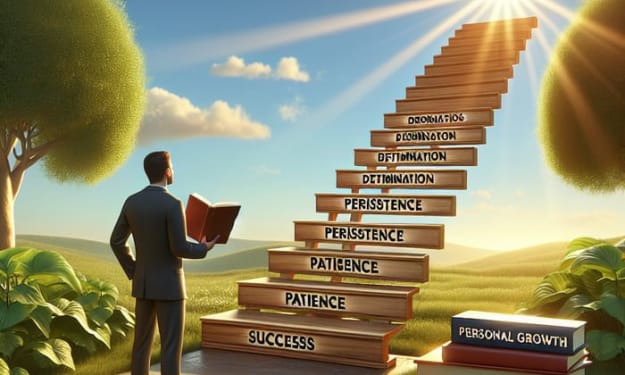
Start Small, Dream Big: The Proven Path to Lasting Success
Start Small and Grow Big: The Path to Sustainable Success In a world that often glorifies instant success, it’s easy to feel pressured to aim big from the very beginning. While ambition is vital, the most sustainable and impactful growth often comes from starting small and expanding steadily. This approach allows for a firm foundation, gradual progress, and the ability to navigate challenges effectively. Coupled with the principles of faith, continuous learning, and strategic planning, this mindset can lead to lasting success. #### Why Starting Small is Better Than Starting Big 1. **Minimized Risk** Starting small reduces the risks associated with large-scale ventures. When you begin on a smaller scale, your financial and emotional investments are lower, allowing you to test the waters and refine your strategies without jeopardizing everything. Mistakes, which are inevitable, are less costly and easier to recover from. 2. **Opportunity to Learn and Adapt** Starting small allows you to learn as you go. You can observe what works and what doesn’t, adjust your approach, and gradually improve. This learning curve is crucial for building resilience and acquiring the skills needed to manage larger operations in the future. 3. **Building a Strong Foundation** Every great structure starts with a solid foundation. By starting small, you lay the groundwork for long-term success. You have the time to develop core values, build trust with your audience or clients, and create a system that can scale effectively. 4. **Focus on Quality Over Quantity** When starting small, you can pay close attention to quality. Whether it’s a business, a personal project, or a skill you’re developing, beginning on a smaller scale allows you to refine your craft and ensure that what you offer is top-notch. #### The Danger of Starting Big and Ending Small Starting big without the necessary experience, resources, or preparation can lead to failure. Many businesses and individuals have fallen into the trap of overestimating their capabilities, only to collapse under the weight of unrealistic expectations. Overspending, poor planning, and the inability to adapt can quickly turn what seemed like a promising venture into a cautionary tale.
By Nora Ariana2 years ago in Education
Understanding the MIT University Ranking and Why You Should Study in the USA
The Massachusetts Institute of Technology (MIT) is synonymous with innovation, academic excellence, and global leadership. Over the years, MIT University ranking has consistently placed it at the pinnacle of global higher education institutions. For those aspiring to study in the USA, MIT is often a dream destination. But what makes MIT stand out, and why is studying in the USA such a coveted goal for students worldwide? Let’s explore.
By shikha rawal2 years ago in Education
Preparing Your Child for School: The Role of Early Childhood Education in Academic Success
As a parent, one of the most significant milestones you’ll experience is preparing your child for school. The transition from home to the classroom can be both exciting and challenging, but with the right foundation, your child will be well-equipped to succeed academically and socially. Early childhood education plays a pivotal role in preparing children for school, fostering essential skills and laying the groundwork for a lifetime of learning. In this article, we’ll explore the importance of early childhood education and how it contributes to your child’s academic success.
By William Henry2 years ago in Education
How Do CDS Exam Coaching Classes Address the Challenges of Negative Marking?
The CDS exam is one of the competitive tests that requires thorough preparation and strategic thinking. One of the major challenges the candidates face is negative marking, where marks are deducted for wrong answers. This system penalizes guesswork and rewards accuracy, and therefore, aspirants need to answer questions very carefully. It is in this regard that coaching classes for CDS play a vital role in preparing students to overcome this challenge effectively.
By Hezal Institute2 years ago in Education
I Promise to Love You More Every Day, Because You Are My Forever
Love is a special connection where we promise to always be there for each other—through happy times and sad times. When we say, “I will love you more every day,” it means we will care for each other forever. But loving someone more every day doesn’t mean doing big, fancy things. It’s about doing small, kind things that show we care.
By Health & Fitness2 years ago in Education
Making Sense of Yourself: A Journey to Self-Awareness and Authentic Living
In the fast-paced world we live in, it's easy to lose track of who we truly are amidst the noise of society’s expectations, external pressures, and daily distractions. Yet, making sense of yourself—understanding who you are, what you want, and where you're headed—is one of the most important journeys you'll ever embark on. Achieving clarity about your life and values isn’t just about finding answers; it’s about creating a relationship with yourself that allows you to embrace your strengths, acknowledge your weaknesses, and navigate life with confidence and authenticity. ### The Foundation: Self-Awareness The first step in making sense of yourself is developing self-awareness. This is the process of gaining insight into your own thoughts, emotions, and behaviors. Self-awareness allows you to examine who you are, what motivates you, and how you interact with the world around you. Without this clarity, it can be challenging to make decisions that align with your true desires. One effective way to build self-awareness is through reflection. Take time each day or week to pause and evaluate your thoughts and actions. Journaling can be a helpful tool here, allowing you to track your emotional responses and patterns over time. Ask yourself important questions: “What do I want from life? What makes me happy? What do I fear? What am I passionate about?” Another useful strategy is seeking feedback from trusted friends, family members, or mentors. Sometimes, others can offer perspectives on our behavior and motivations that we may overlook ourselves. Be open to receiving constructive criticism and allow yourself the space to grow from it. Self-awareness is not a destination, but a lifelong journey. As you change and evolve, so too should your understanding of yourself. ### The Importance of Knowing Your Values Once you gain some self-awareness, the next step is identifying your core values. Values are the guiding principles that shape your behavior, decisions, and relationships. They are the beliefs that define what’s important to you, whether it’s family, honesty, success, creativity, or kindness. When you live in alignment with your values, you feel fulfilled, centered, and at peace. On the other hand, when your actions are out of sync with your values, it can create internal conflict and dissatisfaction. To make sense of yourself, take time to reflect on what truly matters to you. What do you prioritize in life? Is it personal growth? Financial stability? Health? Relationships? Once you've identified your values, ask yourself whether your current actions reflect those principles. If not, consider what changes you need to make in order to live a more authentic life. For instance, if you value health but frequently neglect exercise or a balanced diet, it’s time to take action toward healthier habits that align with your beliefs. ### Embrace Your Strengths and Weaknesses Making sense of yourself involves an honest evaluation of both your strengths and weaknesses. Recognizing your strengths allows you to build on them, creating a sense of pride and self-confidence. However, acknowledging your weaknesses is equally important, as it enables you to understand areas in which you can improve and grow. Many people struggle with acknowledging their weaknesses because it can feel like a sign of failure. However, self-compassion is key here. Instead of viewing weaknesses as shortcomings, consider them as opportunities for personal growth. No one is perfect, and everyone has areas they can develop. Embrace your imperfections and be kind to yourself in the process. Incorporating this self-awareness into your daily life means setting realistic goals that challenge your weaknesses while leveraging your strengths. For example, if you recognize that you struggle with time management, you might begin using productivity techniques or setting clear goals to enhance your efficiency. By focusing on both your strengths and weaknesses, you empower yourself to reach new heights. ### Understanding Your Purpose Another essential component of making sense of yourself is finding your purpose. While this can seem like a daunting task, understanding your purpose gives you direction and meaning in life. Purpose is what drives you—it’s the reason you wake up every day and give your best effort. Many people go through life without ever fully understanding their purpose, while others discover it at a young age. If you’re unsure of your purpose, start by reflecting on the activities and passions that bring you joy and fulfillment. What do you naturally gravitate toward? What are you passionate about? What do you care about deeply? Your purpose might evolve over time as your life changes, and that’s okay. Some people find purpose in their careers, while others discover it in relationships, creative pursuits, or personal growth. Your purpose doesn’t need to be grand or world-changing to be meaningful. It simply needs to resonate with you on a deep level. ### Accepting the Journey of Self-Discovery Making sense of yourself is not a process that happens overnight. It’s a journey that requires patience, introspection, and a willingness to evolve. There will be times when you feel lost or uncertain, and that’s okay. These moments are often part of the process of growth. It’s important to embrace the uncertainty that comes with self-discovery. Life is constantly changing, and you will continue to change along with it. Rather than seeking to find a fixed identity, learn to embrace the fluidity of who you are. This mindset allows you to be more adaptable, open to new possibilities, and better equipped to navigate life’s ups and downs. ### The Role of Mindfulness in Making Sense of Yourself Mindfulness practices can greatly enhance the process of self-discovery. Mindfulness involves being fully present in the moment and observing your thoughts and feelings without judgment. This practice encourages self-compassion and helps you gain clarity about your desires, motivations, and reactions. By incorporating mindfulness techniques—such as meditation, deep breathing, or simply taking time to pause and observe your surroundings—you can gain greater insight into yourself and your needs. Mindfulness helps you listen to your intuition and avoid getting lost in external distractions. ### Conclusion: Embrace the Journey
By Nora Ariana2 years ago in Education
The Power of Grace: How Elegance, Mercy, and Kindness Transform Our Lives
**Grace: The Power of Elegance and Mercy** Grace is a word that carries profound depth and meaning, encompassing not only elegance and beauty but also mercy and forgiveness. It transcends cultures, languages, and philosophies, symbolizing a force that brings comfort, transformation, and connection. Grace is often celebrated in the arts, in literature, and in the spiritual realm. However, its true essence lies in how it manifests in everyday life, affecting our relationships, actions, and attitudes. ### Defining Grace At its core, grace can be described as a form of divine or human kindness that goes beyond what is expected. In Christianity, grace refers to the unearned love and favor of God toward humanity. It is the foundation of salvation, freely given without condition or merit. In a broader sense, grace also means an elegance or beauty of movement, form, or expression. It is seen in the delicate way someone walks, the eloquence with which they speak, or the subtle kindness they offer to others. It is an inner quality that radiates outward, a softening of the harsh edges of life. In the context of human interaction, grace often manifests as forgiveness, patience, and mercy—qualities that allow individuals to rise above conflicts and misunderstandings. It is about offering something unearned and unexpected, often when it is not deserved. It is the choice to act with compassion, to see the best in others even when their actions may not warrant it. ### Grace in Everyday Life
By Nora Ariana2 years ago in Education