high school
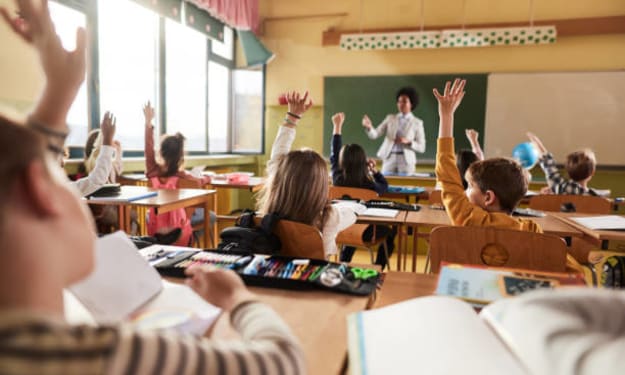
High school made less stressful; a roundup of high school horror stories and tips on asking your date to prom, preparing for college and much more.
How Music Can Be a Powerful Key to Learning English
Think back to a time when a catchy tune wormed its way into your brain, and before you knew it, you were humming along, even singing lyrics you didn't consciously try to memorize. Music has this incredible, almost magical ability to stick with us. Now, imagine harnessing that power, that inherent human connection to melody and rhythm, to unlock the complexities of the English language for learners. Integrating music into the English classroom isn't just about making lessons more fun; it's a surprisingly effective and deeply engaging way to foster language acquisition.
By Teacher Ami - Amizur Nachshoniabout a year ago in Education
The Lives Behind the Fortunes: Stories of America’s Most Famous Millionaires
1. Andrew Carnegie: The Steel King with a Generous Heart (Died August 11, 1919) Andrew Carnegie was born in 1835 in Scotland and came to America as a poor immigrant. Carnegie's family moved to Pennsylvania, where he started working as a bobbin boy in a cotton factory when he was 13 years old. He made just $1.20 a week.
By Shahidul islamabout a year ago in Education
How to Make Your First $10,000: A Step-by-Step Guide
1. Identify Your Goal and Set a Timeframe Before anything else, determine the ‘why’ behind your intended objective. “What are you saving for? Starting a new venture? Paying off a credit card debt?” Identify the purpose and assign yourself a deadline. “Setting a target like $10,000 in six months is substantial and can be monitored effectively.”
By Kazi mayaz ishfiabout a year ago in Education
"Mastering Active and Passive Voice"
In English grammar, one of the most important distinctions in sentence structure is between active voice and passive voice. Understanding the difference not only enhances your writing style but also helps you express thoughts more clearly and effectively. Whether you’re writing an academic paper, business email, or creative story, knowing when and how to use each voice can make a big difference.
By Mukhtiar Ahmadabout a year ago in Education
Wheels of Freedom: The Timeless Journey of the Bicycle
There are few inventions in history as simple, elegant, and enduring as the bicycle. With just two wheels, a frame, pedals, and a handlebar, this humble machine has rolled its way into almost every corner of the world — and every corner of the human experience. The bicycle is not just a vehicle. It is a tool of freedom, a symbol of independence, a gateway to childhood, and, for many, a lifeline to school, work, or adventure. The Birth of the Bicycle The idea of the bicycle can be traced back to 1817, when a German baron, Karl von Drais, invented the “Laufmaschine” or “running machine.” It had no pedals and was pushed along with the feet — a sort of walking aid on wheels. Then came innovations: Pedals in the 1860s. Chain drives in the 1880s. Rubber tires, gears, and brakes that gradually transformed it into the modern bicycle we recognize today. By the late 19th century, bicycles had exploded in popularity, especially in Europe and America. They were affordable, easy to maintain, and gave individuals — especially women — a new sense of freedom and mobility. A Ride Through History The bicycle has played surprising roles in history: During wars, bicycles were used by messengers and soldiers for quiet, fast travel. In the early 20th century, they became a means of protest and equality, especially in women’s rights movements. In developing countries, bicycles became the bridge to opportunity — taking children to school, farmers to markets, and healthcare workers to villages. A Machine of Simplicity and Power What makes the bicycle so powerful is its simplicity. Unlike cars or trains, it doesn’t need fuel, doesn’t create noise, and doesn't pollute. It is powered by the rider alone, converting human energy into motion with almost magical efficiency. Bicycles come in many types: Road bikes for speed and racing. Mountain bikes for off-road adventure. Hybrid bikes for city commuting. Electric bikes (e-bikes) for longer, assisted journeys. Cargo bikes for carrying goods or children. No matter the type, every bicycle is a declaration: "I move myself." More Than Just Transport Ask anyone who’s ridden a bike, and they’ll tell you — it’s not just about going from one place to another. It’s about the feeling of the wind on your face, the freedom of an open road, the childhood memory of your first solo ride, wobbly and proud. Cycling builds fitness, strengthens mental health, and reduces carbon footprints. It’s a personal act that benefits the whole planet. Bicycles in Modern Life In crowded cities, where traffic chokes and pollution soars, bicycles are becoming the smartest solution. Cities like Amsterdam, Copenhagen, and Tokyo have built entire infrastructures around bicycles — with dedicated lanes, parking zones, and even traffic lights for cyclists. Post-pandemic, people across the world turned to bicycles again — for safe transport, exercise, and peace of mind. The Bicycle as Culture and Art Over time, bicycles have become more than machines — they are icons of culture. In movies like E.T. and The Bicycle Thieves, they carry meaning beyond motion. In sports, cycling is a global spectacle — from the Tour de France to Olympic races. In art, music, and even fashion, bicycles continue to inspire. They're painted on walls, sung about in folk songs, and remembered as the first taste of independence for millions. Faces Behind the Handlebars Every cyclist has a story. A student racing the clock to make it to school. A delivery worker weaving through city traffic. A traveler exploring mountain trails. A mother taking her child on a scenic ride. A boy learning balance and bravery all at once. The bicycle is democratic — it belongs to no class, no race, no age group. It is one of the few machines that levels the road for everyone. The Future Rolls Forward With climate change concerns and urban congestion, the future of transport must be clean, compact, and efficient — exactly what bicycles offer. Innovations in cycling technology include: E-bikes with smart sensors and GPS. Foldable bikes for small apartments. Solar-powered bike lanes and charging stations. Bike-sharing programs in major cities. The bicycle may be old, but it’s more relevant today than ever. --- Conclusion The bicycle, in all its quiet glory, reminds us that sometimes, the best way forward is not faster or fancier — it’s simpler. It connects us with our environment, with our health, and with our younger selves. In a world spinning ever faster, the bicycle lets us pause, pedal, and truly experience the ride.
By Noman Afridiabout a year ago in Education
Could Subatomic Wormholes Be Responsible for Universal Expansion?
The accelerating expansion of the universe is one of the biggest mysteries in modern cosmology. Scientists attribute this expansion to dark energy, a mysterious force making up about 68% of the universe’s energy density. However, the true nature of dark energy remains unknown. One speculative but fascinating hypothesis suggests that subatomic wormholes—tiny tunnels in spacetime—could be driving cosmic expansion.
By Niranjon Chandra Royabout a year ago in Education
Oprah Winfrey: From Poverty to Power
Start writing...The Beginning Wasn’t Easy Oprah Winfrey was born in 1954 in a small town in Mississippi, USA. Her early life was full of struggle and pain. She lived with her grandmother in a tiny house that didn’t even have running water. They were so poor that little Oprah had to wear potato sacks as clothes because they couldn’t afford to buy real ones. Life was very hard for Oprah. By the age of nine, she had already faced abuse and many personal challenges. Most people would feel hopeless in such a situation, but not Oprah. Even as a young girl, she had a dream. She believed that her life could be better one day. Deep inside, she told herself, “This is not the end of my story.” A Love for Learning Despite her hard childhood, Oprah found comfort in books. She loved reading and learning. Her grandmother taught her to read at a very young age, and that became a turning point in her life. She was smart and spoke well, and this helped her do well in school. Later, Oprah won a scholarship to Tennessee State University, where she studied communication. She had a strong voice and a special way of speaking that made people want to listen to her. While still in college, she got a job at a local radio station. That was the beginning of her media journey. Climbing the Ladder After working in radio, Oprah got a job as a television news anchor. But things didn’t go smoothly at first. In fact, she was fired from one of her TV jobs because the producers thought she was "too emotional." They didn’t like that she showed feelings while reporting stories. But Oprah didn’t let that stop her. She believed in herself and didn’t give up. Instead of trying to hide her emotions, she used them to connect with people. She got a new job hosting a daytime talk show in Chicago — and that changed everything. The Oprah Winfrey Show In 1986, Oprah launched The Oprah Winfrey Show. It wasn’t just another TV program — it was something special. Oprah talked to everyday people, as well as famous guests. She covered serious topics like health, family problems, and life struggles, but also had fun, joyful episodes. People loved her honesty and kindness. The show ran for 25 years and was watched by millions around the world. Oprah didn’t just entertain people — she inspired them. She made her viewers feel heard, seen, and understood. More Than a Talk Show Host As Oprah’s fame and success grew, she began building her own business empire. She started her own company, Harpo Productions (which is “Oprah” spelled backward), and later created her own television network called OWN (Oprah Winfrey Network). She didn’t stop there. Oprah became a powerful voice in books, movies, and education. She supported many causes, including girls' education and health care. She built a school for girls in South Africa and has given millions of dollars to help people in need. A True Billionaire with a Big Heart Today, Oprah Winfrey is one of the richest and most respected women in the world. She is a billionaire, but more importantly, she is a role model. Her life story is not just about money and fame. It’s about never giving up, no matter how hard life gets. Oprah’s journey from a poor child in Mississippi to a global media queen shows what’s possible when you believe in yourself. She didn’t let her past define her future. She worked hard, stayed kind, and used her voice to help others. The Lesson We Can Learn Oprah’s story teaches us that where you start doesn’t matter as much as where you’re going. Even if you face pain, poverty, or failure, you can still succeed if you stay strong, believe in yourself, and keep going. She once said, “Turn your wounds into wisdom.” That’s exactly what she did — and that’s what we can all try to do, no matter our background. --- Final Thought: Oprah Winfrey’s life is proof that dreams can come true. She is living evidence that anyone — even a little girl in a potato sack — can grow up to change the world. All it takes is belief, hard work, and the courage to keep moving forward.
By Qaseem Ahmadzaiabout a year ago in Education