high school
High school made less stressful; a roundup of high school horror stories and tips on asking your date to prom, preparing for college and much more.
The Day She Wore Triumph
The sun was warm on Lila’s face as she stepped out into the courtyard, her black cap balanced precariously on her head and her gown flowing in the breeze. In her hands, she clutched the diploma that had been handed to her just moments earlier. She couldn’t stop smiling — a wide, almost disbelieving grin that ached in her cheeks but refused to fade. For years, she had imagined this moment. Now it was here, and it was even more radiant than her daydreams had promised.
By saqib rehmanabout a year ago in Education
Career Favor Celebrates Major Milestone, Launches New Resources to Empower Career Growth
Since launching, Career Favor has positioned itself as more than just a blog. It’s become a trusted resource for thousands of users seeking clarity in a confusing job and education landscape. Through consistent, insight-driven articles, the platform has helped students choose the right courses, guided job seekers on resume and interview prep, and supported working professionals looking to upgrade their skills or switch fields.
By Career Favorabout a year ago in Education
Spoken English Classes for Freelancers: Boost Confidence & Win More Clients. AI-Generated.
Introduction Freelancing is growing rapidly across the globe, and English is the bridge that connects freelancers to international clients. In a competitive market where clients may receive dozens of proposals for a single project, it is often your ability to communicate effectively that makes the difference. Strong spoken English skills give freelancers an edge, helping them present ideas clearly, build trust, and close deals faster.
By Ajlal Khanabout a year ago in Education
Who Actually Pays for Do My Chemistry Exam Help and Why?
In today’s digital-first world, education has advanced theatrically, and with it, the methods students use to cope with academic heaviness. Chemistry, a subject known for its complex theories, difficult equations, and wide-ranging committal to memory, continues to be a tough challenge for many. As academic opposition rises, so does the demand for online academic support — and that includes the rising trend of students seeking someone else to take their exams. The question is: who actually pays for "do my chemistry exam" help and why? The answer opens a attractive window into the modern education experience, academic challenges, and the need for practical support in high-stakes conditions.
By Lucas Lednerabout a year ago in Education
How Online Exam Help Services Are Changing Education
Introduction: The New Academic Norm Today's technologically-driven, rapid-paced learning environment lots of students face an important question: Is an online test aid worth it? With a tight schedule and challenging classes, and constantly increasing demands, students are looking for different ways of achieving success. And exam help services are now a popular issue.
By Mack Mickeyabout a year ago in Education
Lost in Lectures and Essays? Crack the Code to Humanities Assignment Success
Introduction: Are You Drowning in Humanities Assignments? You’re Not Alone University life in the UK is challenging enough. Now throw in a stack of humanities assignments—philosophy essays, literature analyses, cultural studies reflections—and suddenly, your to-do list feels like an academic marathon. Sound familiar?
By Carl Evansabout a year ago in Education
Claremont McKenna Acceptance Rate
What You Should Know About Claremont McKenna’s Acceptance Rate Claremont McKenna College (CMC) is one of those institutions that consistently appears on shortlists for students interested in political science, economics, public affairs, or leadership studies. It's part of the Claremont Colleges in California, a consortium of seven closely connected schools, and has a reputation for combining rigorous academics with real-world application.
By Unirely Study Abroadabout a year ago in Education
The Mystery of the Floating Stones
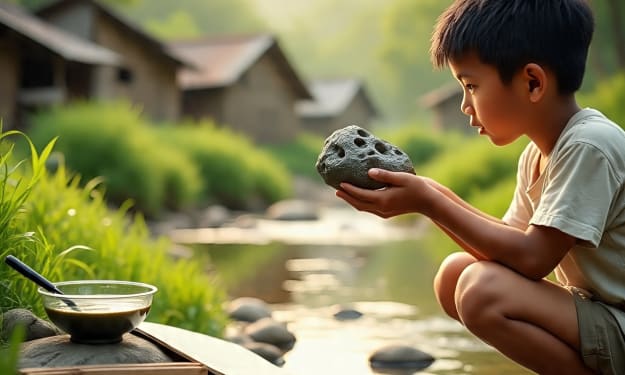
Aarib was known throughout his village for asking too many questions. "Why do stars twinkle?" "Why don’t birds get tired while flying?" "Why does cold water make my teeth hurt?" The grown-ups often laughed or sighed, but his mother would always smile and say, “Aarib, if you keep asking questions, one day you’ll know everything!” One summer afternoon, Aarib wandered down to the river that ran quietly along the edge of his village. The sun was high, the grass smelled sweet, and the river sparkled as if someone had scattered diamonds across its surface. Aarib liked coming here after school. It was his thinking place, where the water whispered secrets only curious ears could hear. That day, something unusual caught his eye. Across the bank, a boy from the neighboring village was skipping stones across the water. Aarib watched quietly from behind a tree. The boy was good at it—one, two, three skips before the stones sank. But then something strange happened. One of the stones didn’t skip—it just floated. Aarib squinted. Was that really a stone? He waited until the boy left and then rushed to the spot. The rocks near the edge looked ordinary—grey, rough, and small enough to hold in his palm. But when he picked one up and placed it on the water, it didn’t sink. It floated gently like a leaf. Aarib’s eyes widened. “This is magic!” he shouted aloud, though no one was there to hear him. He grabbed a few more and ran all the way home. “Abba!” he said breathlessly. “I found a rock that floats!” His father, a schoolteacher with a thoughtful face and kind eyes, looked up from his newspaper. “A floating rock? That’s not something you see every day. Let me see.” Aarib showed him the stone and explained everything. His father took the stone in his hand, turning it over slowly. “Hmm. This is interesting. It feels light. And see these holes? Almost like a sponge.” “Do you think it’s magical?” Aarib asked. His father smiled. “I think it’s a mystery. And mysteries are best solved with science.” That evening, Aarib sat in the small study corner of their living room. It wasn’t big—just a shelf of books, some jars, a weighing scale, a magnifying glass, and a worn notebook his father had given him. But to Aarib, it was a laboratory. He placed the strange stone on a plate and examined it closely. It was filled with tiny holes, felt rough to the touch, and was much lighter than other rocks. When he placed it in a bowl of water, it floated again—calmly and silently. He picked three more stones from his backyard—smooth ones, shiny ones, heavy ones—and dropped them in. All of them sank. “Only this one floats,” he whispered, scribbling notes in his notebook. Curious to know more, he flipped through one of his science books until a page caught his eye: “Pumice: The Floating Rock” Aarib read with wide eyes. > Pumice is a type of volcanic rock formed when hot lava cools quickly with gas bubbles trapped inside. These bubbles make it very light, so light that it can float on water! He jumped up and ran to his father. “Abba! It’s called pumice! It’s not magic—it’s science!” His father nodded proudly. “Excellent work, Aarib. You observed, asked a question, experimented, and researched. That’s how real scientists work.” The next day, Aarib asked his science teacher if he could share what he found. The teacher smiled and said yes. That morning, Aarib stood in front of the class, holding the pumice in a clear bowl of water. “This is a floating rock,” he began confidently. “It’s called pumice. It forms during volcanic eruptions when lava cools quickly and traps gases inside. That’s why it has so many holes—and why it floats instead of sinks.” His classmates were amazed. “Rocks can float?!” they asked. “Not all rocks,” Aarib explained. “Only ones like this, with lots of air inside. I found it near the river and figured it out by testing and reading.” His teacher clapped. “Aarib just taught us something important—not just about rocks, but about how to learn. Curiosity and observation are the first steps to discovery.” From that day on, the students began looking at the world more closely. Some started collecting rocks, others asked questions about trees, stars, and machines. Aarib’s discovery had lit a spark. The following week, Aarib’s father gave him a small wooden box with a note inside: “For your discoveries. Keep asking why.” Aarib still visits the river with that box, always searching, always wondering. --- Moral: Curiosity is the root of all learning. Every question is the door to a new discovery.
By Muhammad Bilalabout a year ago in Education