degree
Degrees defined: PhD, Master, Bachelor, Associate–all about that expensive piece of paper called your degree.
Let’s Get to the Fun Facts about the English Language!
Let’s Get to the Fun Facts about the English Language! English, with its rich history and global reach, is a fascinating language that continues to evolve and shape the world we live in. From its diverse vocabulary to its complex grammar rules, there are countless interesting aspects to explore. In this article, we'll delve into some fun facts about the English language that you may not know. So, let's get started!
By News Bucks3 years ago in Education
The Truth Behind Strange Marks on Food: Eat or Toss?
Introduction In our quest to reduce food waste, we often encounter peculiar marks on our food that leave us uncertain about their safety for consumption. Every year, billions of pounds of food are wasted globally, contributing to environmental and economic challenges. However, before discarding food due to strange marks, it's essential to understand their nature and potential implications. This article aims to shed light on common concerns related to marks on food and provide guidance on whether they are safe to eat or should be discarded. By making informed decisions, we can minimize waste and make the most of the food we have.
By love okere3 years ago in Education
About Artificial Intelligence AI
AI stands for artificial intelligence, which refers to the use of computers to perform tasks that typically require human-like intelligence, such as visual perception, speech recognition, decision-making, and language translation. AI is a rapidly growing field and it is used in a variety of applications, such as self-driving cars, virtual assistants, recommendation systems, fraud detection, and medical diagnosis. AI technologies include machine learning, deep learning, natural language processing, and computer vision, among others. Artificial intelligence, or AI, is the ability of machines or computer programs to perform tasks that typically require human intelligence, such as visual perception, speech recognition, decision-making, and language translation. AI is achieved through the use of algorithms and mathematical models that are designed to process and analyze large amounts of data. AI has many applications in various fields such as healthcare, finance, transportation, and entertainment, among others. AI is expected to revolutionize many industries and improve our daily lives in numerous ways. AI is an interdisciplinary field that combines computer science, engineering, mathematics, psychology, linguistics, neuroscience, and philosophy. It has rapidly progressed in recent years due to the availability of large amounts of data, improvements in machine learning algorithms, and advancements in computational power. There are many applications of AI, ranging from self-driving cars and virtual assistants to fraud detection and medical diagnosis. AI is also used in scientific research and has important implications for fields such as robotics, cybersecurity, and natural language processing. There are different types of AI, including narrow or weak AI, which is designed to perform specific tasks, and general or strong AI, which has the ability to perform any intellectual task that a human can. At present, most AI systems are narrow or weak AI, but there is ongoing research to develop more advanced forms of AI. Overall, AI has the potential to revolutionize many aspects of society, although there are also concerns about its impact on employment, privacy, and security. AI is a rapidly growing field that aims to create intelligent machines that can learn, reason, and adapt like humans. Some of the specific techniques used in AI include machine learning, natural language processing, computer vision, and robotics. Machine learning is the foundational technology of AI, which involves training algorithms with large amounts of data to identify patterns and make predictions. Natural language processing is used to process and interpret human language, allowing machines to understand and generate text or speech. Computer vision is used to interpret visual information from the world, allowing machines to perceive and react to surroundings. Robotics involves creating machines that can complete physical tasks. There are many real-world applications of AI, including virtual assistants, self-driving cars, fraud detection, medical diagnosis, and personalized marketing. As AI continues to develop and advance, it has the potential to transform many aspects of our lives. However, there are also concerns about the potential risks and ethical considerations of AI, such as bias, job displacement, and privacy concerns. Here are some more facts about AI: - AI is a rapidly growing field that aims to create intelligent machines that can learn, reason, and adapt like humans. - Some of the specific techniques used in AI include machine learning, natural language processing, computer vision, and robotics. - The development of AI has applications in a wide range of fields, including healthcare, finance, transportation, and entertainment. - AI has the potential to revolutionize society and have a profound impact on our daily lives, but there are also concerns about the ethical and societal implications of its development and use. - Some of the current challenges in AI include improving data quality and diversity, developing systems that can explain their decisions, and ensuring that AI systems are fair and unbiased.
By Moses Ainoje3 years ago in Education
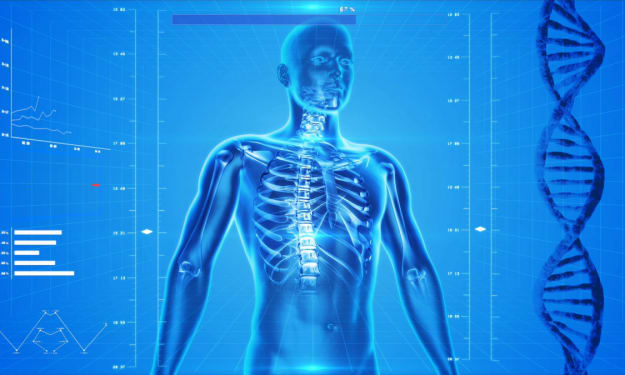
The Most Complete Computer Simulation of Human Physiology
The Most Complete Computer Simulation of Human Physiology Tom Coleman, a graduate student at the time, developed a mathematical model of the human body that demonstrated the role of the kidneys in controlling blood pressure. The model has since been updated to include over 10,000 variables and parameters. It is used to study different pathologies, such as hypertension and obesity.
By Bimal Mahagedara3 years ago in Education
Share Market
Once upon a time in the bustling city of Financia, there was a young and ambitious individual named Alex. Alex had always been fascinated by the world of finance and dreamed of making a mark in the share market. He admired the stories of successful investors who had turned small investments into great fortunes. With a burning desire to learn and excel, Alex decided to embark on a journey into the complex and ever-changing world of the share market.
By Usama Arshad3 years ago in Education
Unlocking the Power of Sleep
Introduction Sleep is an essential aspect of our lives, often undervalued in our fast-paced society. However, its significance cannot be overstated. In this article, we delve into the importance of sleep as a crucial component of our overall well-being. From its impact on physical health to its influence on cognitive function and productivity, we explore the science behind a good night's rest and provide valuable tips for achieving quality sleep.
By Brian Wagah3 years ago in Education
Anti-Nutritional Compounds in Cereals
Cereals are very healthy and nutritious due to the presence of fibers, carbohydrates, proteins, vitamins, and minerals. In Addition to these nutrients, they contain substances called antinutrients. Antinutrients prevent the digestion of nutrients. These reduce digestibility and hinder the absorption of micro and macronutrients.
By Muhammad Hassan Riaz3 years ago in Education