degree
Degrees defined: PhD, Master, Bachelor, Associate–all about that expensive piece of paper called your degree.
The Bridge of Generations
In the curious town of Willowbrook, settled between moving slopes and a delicate waterway, carried on with a dad and child who were pretty much as various as constantly. Robert, the dad, was an unemotional man of the earth, a craftsman with hands as endured as the old oak trees he created into furniture. His child, Max, was a visionary, enthralled by the world past their humble community.
By Arif zaman2 years ago in Education
A Comprehensive Research Paper On Quality Assurance In Hai Phong, Vietnam: Current Practices And Future Directions
Discussions on quality assurance are increasingly becoming crucial in the face of education and industry; one of the rapidly growing regions is Hai Phong, Vietnam. The following discussion paper will talk about the various dimensions of quality assurance, take regard to Hai Phong, and throw light on its implications for educational institutions, businesses, and the general economy. This paper shall start with an overview that shall bring the need for the present research paper on quality assurance in Hai Phong, Vietnam.
By elainpitts2 years ago in Education
A Complete Guide to SEO
If you’re wondering what SEO is all about, you’ve come to the right place! SEO, or Search Engine optimization, is the practice of improving your website’s visibility on search engines like Google. The higher you rank in search results, the more likely people will find and visit your site. In today's competitive digital landscape, SEO isn't just a nice-to-have – it's essential. But why is it so important? Because, in a world of billions of websites, how else will yours stand out?
By Technofies Institute2 years ago in Education
Exploring Quality Management Practices: A Research Paper Focused On Bien Hoa, Vietnam
The successful management and sustainability of an organization are still tied to the way it administers its quality management. Bien Hoa, Vietnam, is fast becoming an emerging economic center. For such, therefore, understanding the nuances of quality management would be paramount for local business proprietors and international investors alike. This blog explains the main elements of a research paper concerning quality management in Bien Hoa, Vietnam. A detailed description of the subject and its implications is given.
By elainpitts2 years ago in Education
Let's Smile
In today's world, we've become so engrossed in machinery and digital networks that we've forgotten how to truly laugh. We no longer spend time with our spouses, children, and loved ones, engaging in playful and joyful moments together; everything now happens on social media platforms. It seems that these platforms have eroded our genuine emotions and feelings. Nowadays, it’s not uncommon to see someone’s loved one admitted to the hospital or seriously ill, and instead of spending time with them, we take a selfie and post it on social media. This is what our modern civilization has come to.
By Nahid Mahmud Shamsuzzaman2 years ago in Education
Fundamentals of Education: Foundations, Principles, and Future Directions
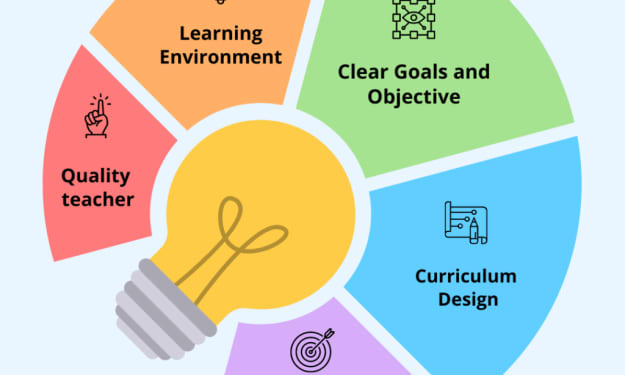
**Introduction** Education is a cornerstone of individual and societal development, serving as the primary means through which knowledge, skills, and values are transmitted across generations. This paper explores the fundamental principles of education, the core components that constitute effective educational systems, and the future directions that may shape the evolution of education. **Foundations of Education** 1. **Definition and Purpose** Education is a process of learning and teaching that aims to develop intellectual, moral, and social capabilities in individuals. Its primary purpose is to equip individuals with the necessary skills and knowledge to lead productive lives, contribute to society, and foster personal growth. Education also plays a critical role in preserving and advancing cultural heritage and societal values. 2. **Historical Perspectives** Historically, education has evolved from informal methods of knowledge transfer within families and communities to formal systems established by institutions. In ancient civilizations, education was often reserved for the elite, focusing on religious and philosophical teachings. The development of public education systems in the 19th and 20th centuries democratized access to education, emphasizing the importance of literacy and numeracy as fundamental skills. **Core Components of Effective Education** 1. **Curriculum and Instruction** The curriculum is a structured plan that outlines the content and skills to be taught. Effective curricula are designed to be comprehensive, relevant, and adaptable to the needs of students. Instructional methods, including lectures, discussions, and hands-on activities, should cater to diverse learning styles and encourage active participation. The integration of technology and multimedia tools can enhance the learning experience and facilitate better understanding. 2. **Assessment and Evaluation** Assessment is a critical component of education, providing feedback on student performance and informing instructional practices. Various assessment methods, such as formative assessments (quizzes, assignments) and summative assessments (exams, projects), help gauge student understanding and progress. Evaluation of educational outcomes ensures that teaching methods and curricula are effective and aligned with educational goals. 3. **Teacher Quality and Professional Development** Teachers are central to the educational process, and their effectiveness significantly impacts student learning. High-quality teachers possess not only subject matter expertise but also pedagogical skills and the ability to motivate and engage students. Continuous professional development is essential for teachers to stay updated with educational best practices, emerging technologies, and evolving educational standards. 4. **Learning Environment** A supportive and inclusive learning environment is crucial for effective education. This includes both physical aspects, such as well-equipped classrooms and safe facilities, and emotional aspects, such as fostering a positive classroom climate and promoting student well-being. Creating an environment that supports collaboration, respect, and a growth mindset enhances the overall learning experience. **Future Directions in Education** 1. **Technological Advancements** Technology is transforming education by offering new tools and methods for teaching and learning. Innovations such as e-learning platforms, virtual classrooms, and educational apps provide flexible and personalized learning experiences. The use of artificial intelligence and data analytics can help tailor educational content to individual student needs and improve learning outcomes. 2. **Educational Equity** Ensuring equitable access to quality education remains a significant challenge. Efforts to address disparities in educational opportunities include implementing policies that promote inclusivity, providing resources to underserved communities, and supporting initiatives that address barriers to education, such as poverty and disability. 3. **Lifelong Learning** The concept of lifelong learning emphasizes the importance of continuous education throughout an individual's life. As the job market and technological landscape evolve, individuals need to engage in ongoing learning to adapt to new skills and knowledge requirements. Educational systems are increasingly focusing on fostering skills that support lifelong learning, such as critical thinking, problem-solving, and adaptability. 4. **Global Perspectives** In an increasingly interconnected world, education systems are incorporating global perspectives to prepare students for a diverse and globalized society. This includes integrating global issues into curricula, promoting cross-cultural understanding, and preparing students to work in international contexts. **Conclusion** Education serves as a fundamental pillar of personal and societal development, with its core components including curriculum design, assessment, teacher quality, and learning environments. As education continues to evolve, embracing technological advancements, addressing equity issues, and fostering lifelong learning will be essential in shaping effective educational systems. By understanding and addressing these fundamental aspects, stakeholders can work together to create educational environments that support growth, innovation, and inclusivity.
By Habachi Habachi2 years ago in Education
Exploring The Frontier: Artificial Intelligence Research Initiatives And Outcomes In Can Tho, Vietnam
Artificial intelligence has been applied vastly in the last couple of years and affected many sectors around the world. In contrast, AI research in Can Tho City, Vietnam, only recently started to take off, reaching a greater number of high-quality papers. The post will further elaborate on the landscape of the research paper on artificial intelligence in Can Tho, Vietnam, explaining trends, key contributors, and future directions in this dynamic field.
By elainpitts2 years ago in Education
Revolutionising Agriculture: How AI is Transforming Farming Practices in 2024
Introduction: In 2024, artificial intelligence (AI) is fundamentally changing the face of agriculture. With the increasing demands of a growing global population and the challenges posed by climate change, AI is proving to be a transformative force in farming. This revolutionary technology is not only enhancing efficiency but also paving the way for a more sustainable and productive agricultural future.
By Rithvik Rithvik2 years ago in Education