degree
Degrees defined: PhD, Master, Bachelor, Associate–all about that expensive piece of paper called your degree.
The Art of Keyword Optimization: How to Naturally Integrate Keywords into Content
Table of Contents Introduction: Evolution in Keyword Optimization Understanding Keywords and Their Importance Types of Keywords: A Comprehensive Overview The Art of Natural Integration Tools and Techniques to Help with Effective Keyword Research Creating Content for Resonance Measuring the Impact of Keyword Optimization Conclusion: The Future of Keyword Optimization
By jinesh vora2 years ago in Education
Data Science for Autonomous Vehicles Safety Analysis
The fast improvements in self maintaining vehicle generation have sparked a revolution within the car industry. As those motors emerge as increasingly more giant on our roads, making sure their safety is paramount. Data technological expertise plays a pivotal function on this business enterprise, leveraging tremendous quantities of statistics to investigate, expect, and beautify the safety features of independent automobiles.
By Gour Sinha2 years ago in Education
What makes a man successful
Success for a man, like for anyone, is often defined by a combination of personal achievement, fulfillment, and the positive impact he has on the lives of others. While society might traditionally measure success by wealth, power, or status, true success is more profound and multi-dimensional. Firstly, **purpose and passion** are critical. A successful man identifies what truly drives him and aligns his actions with these passions. Whether it’s a career, a cause, or a personal mission, living with purpose gives life meaning and direction. Secondly, **resilience** is essential. Life inevitably presents challenges, setbacks, and failures. What distinguishes a successful man is his ability to learn from these experiences, adapt, and continue moving forward. Resilience not only builds character but also strengthens one’s resolve. **Integrity** also plays a crucial role. Success without principles is hollow. A man who is honest, ethical, and consistent in his actions earns the trust and respect of others, which are invaluable in both personal and professional realms. Integrity forms the foundation of strong relationships, which are often the bedrock of long-term success. Moreover, a successful man understands the importance of **balance**. He recognizes that true success is not just about professional achievements but also about maintaining strong relationships with family and friends, taking care of his health, and pursuing hobbies and interests. Balance ensures that success is sustainable and enriching. Lastly, **contribution to others** is a hallmark of real success. A man who uses his talents, resources, and influence to uplift others leaves a lasting legacy. By helping others succeed, he not only enhances his own life but also contributes positively to society. In essence, a successful man is one who lives with purpose, resilience, integrity, balance, and a commitment to making a difference in the lives of others.Start writing...Success is a multifaceted concept that varies from person to person. For some, success may mean achieving financial stability or reaching the pinnacle of a career, while for others, it could signify personal fulfillment, strong relationships, or contributing to the greater good. At its core, success is often defined by the attainment of goals. However, these goals are not universal; they are deeply personal and shaped by individual values, experiences, and aspirations. This means that what one person considers successful might not hold the same significance for another. Success, therefore, is not just about the end result but also about the journey—the efforts, learning, and growth that occur along the way. A common thread in many definitions of success is the idea of balance. True success often requires a harmony between various aspects of life: work, relationships, health, and personal growth. Focusing solely on one area, such as career advancement, at the expense of others, can lead to a skewed sense of achievement that might feel hollow in the long run. Moreover, success is not static. As people evolve, so do their definitions of what it means to succeed. What was once a marker of success might lose its significance as new priorities and challenges arise. This dynamic nature of success underscores the importance of self-reflection and adaptability in one's pursuit of it. Ultimately, success is a deeply personal and evolving concept, shaped by individual goals, values, and the balance one strives to maintain in life. It is not solely about external accomplishments but also about internal fulfillment and the continuous pursuit of growth and purpose.Success can be defined in many ways, but certain traits and practices often pave the way for achieving it. One crucial factor is perseverance. Successful individuals often face setbacks and failures, yet their resilience allows them to overcome obstacles and keep moving forward. Another key element is a strong work ethic. Dedication and commitment to one’s goals drive consistent effort and productivity, essential for achieving long-term success. Alongside this, a clear vision and goal-setting are fundamental. Establishing specific, measurable, achievable, relevant, and time-bound (SMART) goals helps maintain focus and direction. Networking and building strong relationships also play a significant role. Collaborating with others, seeking mentorship, and leveraging social connections can provide valuable opportunities and support. Adaptability is another important trait. The ability to embrace change and innovate in response to new challenges or opportunities ensures that one remains relevant and competitive. Finally, a growth mindset is vital. Believing in the capacity to learn and improve continuously fosters personal and professional development. Combining these qualities—perseverance, work ethic, goal-setting, networking, adaptability, and a growth mindset—creates a solid foundation for achieving success.
By Nnaji Moses2 years ago in Education
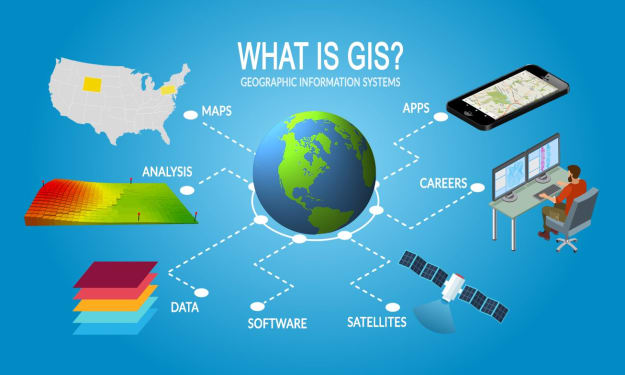
Why is a GIS needed?
A Geographic Information System (GIS) is a powerful tool that plays a crucial role in various sectors by enabling the analysis and visualization of spatial data. Its importance cannot be overstated, particularly in a world where geographic data is becoming increasingly essential for decision-making. The following discussion will delve into why a GIS is needed, highlighting its various applications, benefits, and the impact it has on modern society. 1. **Understanding Geographic Data** At its core, GIS is a system designed to capture, store, manipulate, analyze, manage, and present all types of geographical data. This data can be anything from the location of a new store to the pattern of deforestation in the Amazon. The need for GIS arises from the necessity to understand and interpret these spatial patterns and relationships. Without GIS, it would be nearly impossible to analyze large sets of geographic data effectively. Traditional methods of analyzing spatial data, such as paper maps and manual plotting, are time-consuming and prone to errors. GIS automates these processes, allowing for quicker and more accurate analysis. 2. **Improved Decision-Making** One of the primary reasons a GIS is needed is its ability to improve decision-making processes. By analyzing geographic data, GIS helps organizations and governments make informed decisions. For instance, urban planners use GIS to determine the best locations for new infrastructure, such as roads, schools, or hospitals. Environmentalists rely on GIS to track changes in ecosystems and plan conservation efforts. Emergency response teams use GIS to map disaster-prone areas and plan evacuation routes. In all these scenarios, GIS provides critical insights that lead to better outcomes. The ability to layer different types of data (such as population density, transportation networks, and natural resources) on a single map enables decision-makers to see the bigger picture and consider all relevant factors before taking action. 3. **Enhanced Efficiency and Productivity** GIS significantly enhances the efficiency and productivity of various tasks. For instance, in agriculture, GIS can be used to monitor crop conditions, predict yields, and optimize the use of resources like water and fertilizers. This not only saves time and money but also increases crop productivity and reduces environmental impact. In the transportation sector, GIS is used to manage and optimize routes for delivery trucks, reducing fuel consumption and improving delivery times. By automating the collection, analysis, and presentation of spatial data, GIS eliminates the need for labor-intensive manual processes, allowing organizations to achieve more with fewer resources. 4. **Data Integration and Management** Another critical need for GIS is its ability to integrate and manage large volumes of spatial data. In many fields, data is collected from various sources, such as satellite images, GPS devices, and field surveys. GIS provides a platform where all this data can be brought together, stored, and organized in a way that makes it easy to access and analyze. This capability is especially important in complex projects that require collaboration between different organizations or departments. For example, in urban development projects, data from different agencies (such as land use data, transportation data, and environmental data) can be integrated into a single GIS system, enabling seamless collaboration and coordination. 5. **Better Communication and Visualization** GIS is also a vital tool for communication and visualization. Maps are a universal language that can convey complex information in an easily understandable format. With GIS, data can be visualized in various ways, such as through thematic maps, 3D models, or time-series animations. This ability to present data visually is crucial for conveying information to stakeholders, such as government officials, investors, or the general public. For instance, a GIS map showing the spread of a disease can help public health officials communicate the urgency of a situation and mobilize resources effectively. In the business world, GIS-generated maps can be used in presentations to illustrate market trends or the potential impacts of a new project. 6. **Real-Time Monitoring and Analysis** The need for real-time monitoring and analysis is another reason why GIS is indispensable. In sectors such as disaster management, transportation, and environmental monitoring, having up-to-date information is crucial for effective decision-making. GIS systems can be integrated with real-time data sources, such as weather stations, traffic cameras, or IoT devices, to provide a live view of what is happening on the ground. This capability is particularly valuable in emergency situations, where quick responses are necessary to mitigate risks and save lives. For example, during a flood, GIS can be used to monitor water levels in real-time and predict which areas are at risk of flooding, allowing for timely evacuations and resource allocation. 7. **Support for Sustainable Development** GIS plays a vital role in supporting sustainable development goals. As the world grapples with challenges such as climate change, resource depletion, and population growth, GIS provides the tools needed to plan and implement sustainable solutions. For instance, GIS can be used to model the impacts of climate change on different regions, helping policymakers develop strategies for mitigation and adaptation. In urban planning, GIS can be used to design cities that are more resilient to environmental challenges and that promote sustainable practices, such as energy efficiency and waste reduction. By providing a comprehensive view of the interactions between human activities and the natural environment, GIS helps ensure that development is carried out in a way that is socially, economically, and environmentally sustainable. 8.**Risk Assessment and Management** In today’s world, where natural and human-made disasters are increasingly common, GIS is essential for risk assessment and management. By analyzing spatial data, GIS helps identify areas that are at risk of hazards such as floods, earthquakes, or industrial accidents. This information is crucial for planning and implementing risk mitigation strategies, such as building flood defenses, enforcing building codes, or planning evacuation routes. In addition to assessing risks, GIS is also used in disaster response and recovery efforts. For example, after a hurricane, GIS can be used to assess the extent of the damage, plan recovery efforts, and coordinate the delivery of aid to affected areas. 9. **Resource Management and Conservation** GIS is indispensable in the field of resource management and conservation. Natural resources such as water, minerals, and forests are finite and need to be managed sustainably. GIS provides the tools needed to monitor the use of these resources, identify areas where they are being depleted, and develop strategies for their conservation. For instance, in water resource management, GIS can be used to map water catchment areas, monitor water quality, and plan the distribution of water resources. In wildlife conservation, GIS is used to track animal populations, map their habitats, and plan conservation strategies to protect endangered species. By providing a detailed understanding of the spatial distribution and usage of natural resources, GIS plays a crucial role in ensuring that these resources are managed in a way that meets current needs without compromising the ability of future generations to meet theirs. 10. **Economic and Social Impact** Finally, the economic and social impact of GIS cannot be ignored. GIS is not just a tool for analyzing geographic data; it is a driver of innovation and economic growth. By providing insights into spatial patterns and relationships, GIS helps businesses identify new opportunities, optimize their operations, and increase their competitiveness. For example, retailers use GIS to analyze consumer demographics and market trends, helping them choose the best locations for new stores or target their marketing efforts more effectively. In the public sector, GIS is used to improve the delivery of services, such as healthcare, education, and transportation, leading to better outcomes for citizens. By enabling more efficient and effective use of resources, GIS contributes to economic growth and social well-being. Conclusion In conclusion, a GIS is needed because it provides the tools and insights necessary to understand and manage the complex spatial relationships that underlie many of the challenges we face today. Whether it’s improving decision-making, enhancing efficiency, supporting sustainable development, or managing risks, GIS is an indispensable tool that has a profound impact on modern society. As the world continues to generate more geographic data, the need for GIS will only grow, making it a vital component of our efforts to build a better and more sustainable future.
By Mohamed sha2 years ago in Education
What is Innovation in Education?
Innovation in education refers to the process of introducing new ideas, methods, and approaches to improve the teaching and learning experience. It encompasses a wide range of changes, from incorporating new technologies to developing alternative teaching strategies and curricular designs. The goal of innovation in education is to make the learning process more engaging, effective, and relevant for students in the 21st century.
By Priyangini 2 years ago in Education
cfp job opportunities
CFP Job Opportunities Introduction The Certified Financial Planner (CFP) certification is one of the most respected credentials in the financial planning industry. Earning the CFP designation opens doors to various career opportunities and significantly enhances your credibility in the financial services sector. In this article, we'll explore the job opportunities available to CFP professionals, the industries they can work in, and the potential career growth they can expect.
By FINTRAM GLOBAL2 years ago in Education
Regular Expressions in Compiler Design
Regular expressions are a fundamental concept in compiler design, serving as a bridge between human-readable text and the more abstract representation needed for computer processing. They provide a powerful way to define patterns in text, which is crucial for various stages of compiler construction. This blog will delve into how regular expressions are used in compiler design, their role in lexical analysis, and how they interact with other components of the compiler.
By Pushpendra Sharma2 years ago in Education
certified financial planning courses online
Guide to Online Certified Financial Planning (CFP) Courses Introduction In today's fast-paced financial world, gaining expertise in financial planning is more crucial than ever. Certified Financial Planner (CFP) certification is a prestigious credential that can enhance your career and provide valuable skills to help clients achieve their financial goals. With the increasing demand for flexible learning options, online CFP courses have become a popular choice for aspiring financial planners. This guide will explore the benefits of online CFP courses, what to look for, and top providers in the market.
By FINTRAM GLOBAL2 years ago in Education
CFP COURSE ONLINE
CFP Course Online: Introduction The Certified Financial Planner (CFP) designation is highly sought after by professionals in the financial planning and advisory sectors. With the rise of online education, pursuing a CFP course online has become a viable and flexible option for many aspiring financial planners. This article will explore the key aspects of online CFP courses, including their benefits, structure, and how to choose the right program.
By FINTRAM GLOBAL2 years ago in Education