degree
Degrees defined: PhD, Master, Bachelor, Associate–all about that expensive piece of paper called your degree.
Effective Revenue Cycle Management Strategies for Large Health Systems
Keeping the revenue cycle running smoothly for large health systems is crucial to financial well-being. With intricate billing requirements, a high volume of patient accounts, and shifting regulations, healthcare organizations need strong revenue cycle management (RCM) strategies to reduce errors, boost cash flow, and ensure a positive patient experience. Here’s how large health systems can strengthen RCM processes and set up for sustained success.
By Angeline Scott2 years ago in Education
The Rise of the Online MBA: A Comprehensive Guide to Virtual Business Education
As the demand for flexible, high-quality education grows, online MBA (Master of Business Administration) programs have become a popular choice for professionals around the globe. Once limited to traditional on-campus formats, these programs now offer students the chance to pursue a world-class education from anywhere, all while balancing work and family commitments. But is an online MBA the right choice for you? In this article, we’ll explore what an online MBA entails, the benefits and challenges, and how it compares to traditional programs.
By lavish matte2 years ago in Education
Top countries have the best education system
1. Finland Why It Stands Out: Finland consistently ranks high in global education rankings, especially in literacy, math, and science. Its system emphasizes equal opportunities, holistic learning, and a stress-free environment.
By Badhan Sen2 years ago in Education
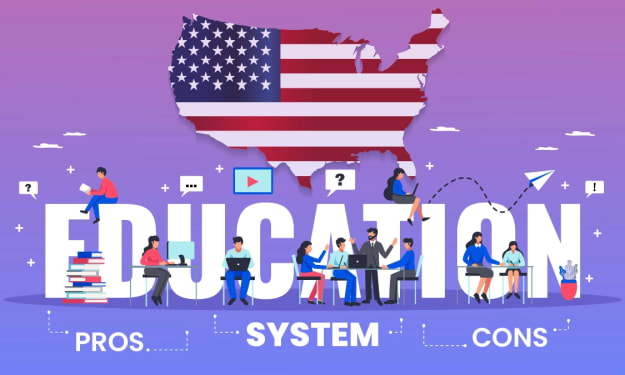
The current education system in United States
1. Inequality in Funding and Resources One of the most pervasive issues in U.S. education is funding inequality. Schools are largely funded through local property taxes, which means that wealthier areas typically have better-funded schools, while poorer areas lack resources. This disparity creates significant inequities in educational opportunities, as students in affluent districts have access to advanced coursework, extracurricular activities, and modern facilities, while those in underfunded schools often struggle with outdated materials, overcrowded classrooms, and fewer support services. This inequality exacerbates achievement gaps and limits social mobility for students from disadvantaged backgrounds.
By Badhan Sen2 years ago in Education
The main aim of education
(1)Personal Development and Self-Realization One of the primary goals of education is to aid in the personal growth and self-realization of individuals. Education provides the framework through which people can explore their interests, talents, and values. This journey begins in early childhood, as foundational skills in language, numbers, and critical thinking are established, and continues into adulthood as people gain a deeper understanding of themselves and the world. Education encourages individuals to think critically and reflectively, cultivating intellectual curiosity and fostering a lifelong passion for learning.
By Badhan Sen2 years ago in Education
What to Expect on the Duolingo Exam for Language Certification
The Duolingo Exam has become a widely accepted language proficiency test, especially popular among students planning to study abroad. This test is known for its affordability and convenience, making it a practical choice for many. Here’s a comprehensive look at what the Duolingo Exam entails and how to prepare effectively.
By Rohit Sharma2 years ago in Education
What is wrong with the Indian education system?
1. Rigid Curriculum and Lack of Practical Skills Focus on Rote Learning: Many students are encouraged to memorize information rather than truly understand concepts. This system prioritizes rote learning over critical thinking, creativity, and problem-solving skills.
By Badhan Sen2 years ago in Education
Why project-based learning has become an essential part of learning?
In today’s rapidly evolving world, the traditional model of education, which focuses on rote learning and standardized testing, is being replaced by more dynamic, engaging approaches. One is project-based learning (PBL), an innovative teaching method that encourages students to actively explore real-world problems and challenges while working on long-term projects. This shift is not merely a trend, it reflects the changing needs of students and the workforce, making PBL an essential part of modern education.
By iDigitize Infotech LLP2 years ago in Education
What is education?
Education occurs in various settings—formal (schools and universities), informal (community learning, self-study), and non-formal (workshops, online courses)—and it is fundamental for personal empowerment, social progress, and economic development.
By Badhan Sen2 years ago in Education