degree
Degrees defined: PhD, Master, Bachelor, Associate–all about that expensive piece of paper called your degree.
You Believed in Me
In life, we often find ourselves facing challenges that seem insurmountable. The weight of the world, coupled with self-doubt, can cloud our judgment and make us question our abilities. However, amid all the chaos, there is always someone who believes in us—someone who offers support, encouragement, and strength when we need it the most. The power of belief can transform our lives in ways we never imagined. I remember a time in my life when I was struggling to find direction. The road ahead seemed uncertain, and I felt overwhelmed by the expectations of others and the pressures of society. There were moments when I questioned my worth, wondering if I was capable of achieving anything significant. It was during these dark times that a single person’s belief in me made all the difference. My mentor, a person who had seen potential in me even when I couldn’t see it in myself, stood by me. They didn’t offer solutions or quick fixes; instead, they believed in my ability to figure things out on my own. This simple, yet powerful gesture gave me the confidence I needed to move forward. Their belief in me became a beacon of hope, guiding me through the darkest moments. Belief is not just about optimism; it is the recognition of someone's potential, even when they cannot see it themselves. It is about seeing beyond their mistakes, flaws, and shortcomings, and understanding that they have the power to rise above. It is this kind of belief that fosters growth, encourages resilience, and ignites the desire to push beyond one’s limits. When someone believes in us, it serves as a reminder that we are not alone. We are not defined by our failures, but by the support and encouragement of those who see us for who we truly are. Their belief in us becomes a reflection of the strength we may have forgotten we possess. It is this belief that propels us forward, even when the journey seems impossible. We all need someone to believe in us, whether it’s a parent, a friend, a teacher, or a mentor. These individuals play a crucial role in helping us realize our potential. Sometimes, a kind word, a gentle push, or a simple gesture of encouragement can change the course of our lives. It is these moments of belief that build the foundation for success, self-worth, and personal growth. Looking back, I realize how much I owe to the people who believed in me when I couldn’t believe in myself. They helped me find the strength to persevere, to take risks, and to chase my dreams. Their unwavering support reminded me that I am capable of achieving great things, even when the odds seem stacked against me. It is because of their belief that I am where I am today. Belief is a gift—a gift that can change lives, build confidence, and create lasting impacts. It is a reminder that we are worthy of success, happiness, and all the good things life has to offer. So, the next time you feel lost or unsure of yourself, remember the power of belief. Trust in the people who believe in you and, more importantly, learn to believe in yourself.
By Hridoy Hasan2 years ago in Education
India: The World’s Most Diverse Country
India's geological variety is downright tremendous, offering a stunning mix of territories that shape the lives and societies of its people. Toward the north, the powerful Himalayas stand as sentinels, their snow-covered tops protecting valleys like Kashmir, which is frequently named "Paradise on The planet." Here, peaceful lakes mirror the sky, and old sanctuaries and hallowed places murmur accounts of dedication. Voyaging west, the scene moves decisively to the tremendous Thar Desert of Rajasthan, where brilliant ridges stretch unendingly, and fortresses rise like reverberations of a magnificent past. Conversely, the fields of the Ganges in the north are rich and fruitful, filling in as the agrarian heartland of the country and supporting millions.
By Dipak Mondal2 years ago in Education
Browser
The Evolution of Web Browsers: Navigating the Digital Landscape In the vast expanse of the digital world, web browsers serve as the primary gateways through which users interact with the internet. The evolution of these software applications has been remarkable, reflecting significant advancements in technology, user experience, and online security. From their humble beginnings in the early 1990s to the sophisticated tools we use today, web browsers have continuously transformed to meet the needs of an ever-growing online community. Understanding this evolution not only highlights the technical achievements of developers but also underscores the changing expectations of users as they navigate the digital landscape. The Dawn of the Web Browser The first web browser, WorldWideWeb, was developed by Tim Berners-Lee in 1990. This rudimentary application was instrumental in popularizing the World Wide Web, as it allowed users to view and interact with HTML documents. However, it was the release of Mosaic in 1993 that truly revolutionized web browsing. Mosaic introduced a user-friendly graphical interface that included images alongside text, fundamentally changing how users experienced the web. This innovation led to a surge in internet adoption and inspired the development of other browsers. In the mid-1990s, Netscape Navigator emerged as the dominant web browser, boasting a range of features such as bookmarks, history, and cookie management. This period marked the beginning of the browser wars, characterized by intense competition between Netscape and Microsoft's Internet Explorer. The latter benefited from being bundled with the Windows operating system, which significantly bolstered its user base. By the late 1990s, Internet Explorer had overtaken Netscape as the leading browser, aided by aggressive marketing strategies and continuous improvements in performance and security. The Browser Wars: A Tale of Competition The browser wars of the late 1990s and early 2000s were marked by fierce competition, driven not only by technological advances but also by strategic business decisions. Microsoft's dominance in the operating system market allowed Internet Explorer to flourish, but this also led to legal challenges regarding monopolistic practices. In 2001, the U.S. Department of Justice filed an antitrust lawsuit against Microsoft, alleging that the company was using its monopoly power to stifle competition in the browser market. During this period, other browsers attempted to carve out niches for themselves. Opera, known for its speed and innovative features, appealed to power users, while Mozilla Firefox emerged as a response to users’ growing concerns over privacy and security. Launched in 2004, Firefox quickly gained traction due to its customizable interface, extensive library of extensions, and commitment to open-source development. Its rise signaled a shift in user expectations, placing a premium on security and user control. As the internet continued to evolve, so did web technologies. The emergence of Web 2.0 brought a new wave of interactive content, including social media, streaming services, and dynamic web applications. Browsers had to adapt rapidly to support these innovations. Standards such as HTML5, CSS3, and JavaScript frameworks transformed how developers created websites, leading to increased functionality and improved user experiences. Browsers began to implement advanced features such as tabbed browsing, extensions, and integrated search functionalities, making the browsing experience more seamless and efficient. The Rise of Chrom browsers In 2008, Google entered the browser market with the launch of Chrome, a minimalist browser designed with speed and simplicity in mind. Chrome quickly gained popularity due to its efficient performance, user-friendly interface, and robust extension ecosystem. It introduced significant innovations, such as a multi-process architecture that improved stability and security. Furthermore, Chrome's integration with Google services created a comprehensive ecosystem that incentivized users to adopt the browser. The rapid growth of Chrome marked a new phase in the browser landscape, as it quickly captured a significant market share. In response, other browsers, including Firefox and Microsoft Edge (which replaced Internet Explorer), began to adopt similar practices and philosophies. The focus on performance, security, and user customization became standard among modern web browsers. Furthermore, the rise of mobile devices prompted the development of mobile-first browsers that could provide users with a consistent experience across platforms. Modern Browsers: Features and Innovations Today, web browsers are equipped with a plethora of features designed to enhance user experience and address the growing challenges of cybersecurity. Browsers now come with built-in ad blockers, privacy browsing modes, and features such as password managers and phishing protection. This focus on security is essential, as the internet has become a prime target for cybercriminals seeking to exploit vulnerabilities in user systems. Moreover, browsers have evolved to support an ever-expanding range of technologies. Progressive Web Apps (PWAs), which combine the best of web and mobile apps, have gained traction, allowing developers to create applications that work offline and can be installed on devices like traditional software. Browsers now support rich media content, enabling seamless video streaming and interactive web applications that have redefined entertainment and communication. User customization has also become a central theme in modern browsers. Users can tailor their browsing experience through themes, extensions, and toolbars, allowing them to create a personalized environment that suits their individual needs. The introduction of features such as built-in translation and enhanced developer tools has made browsers not just tools for consumption but powerful platforms for content creation as well. Challenges and the Future of Browsers Despite the strides made in browser technology, significant challenges remain. Issues related to online privacy and data security continue to dominate discussions among users and developers alike. The rise of tracking technologies and data collection has led to demands for increased transparency and control over personal information. Regulatory frameworks, such as the General Data Protection Regulation (GDPR) in Europe, have compelled browser developers to adopt privacy-focused features and give users more control over their data. Moreover, the proliferation of misinformation and harmful content on the internet has raised ethical questions about the responsibilities of browser developers and internet platforms. As misinformation campaigns become more sophisticated, the challenge of curating trustworthy content has become paramount. Web browsers, as primary gatekeepers of information, find themselves in a position where they must balance user freedom and safety while promoting credible information sources. As we look to the future, web browsers will continue to evolve, adapting to new technologies and user behaviors. The integration of artificial intelligence and machine learning could further enhance user experiences by providing personalized recommendations and smart browsing tools. Forward-looking trends may also include deeper integration with augmented reality (AR) and virtual reality (VR) technologies, providing immersive browsing experiences that transcend current capabilities. Conclusion The evolution of web browsers is a testament to the relentless pursuit of innovation within the tech industry. From the early days of text-based interfaces to the sleek, feature-rich applications of today, browsers have transformed how we access and interact with information on the internet. As technology continues to evolve, browsers will face new challenges and opportunities, shaping the digital landscape for future generations. Ultimately, the browser remains a crucial component of our daily lives, navigating us through the vast and intricate web of information in our digitally interconnected world.
By Giri Dharan2 years ago in Education
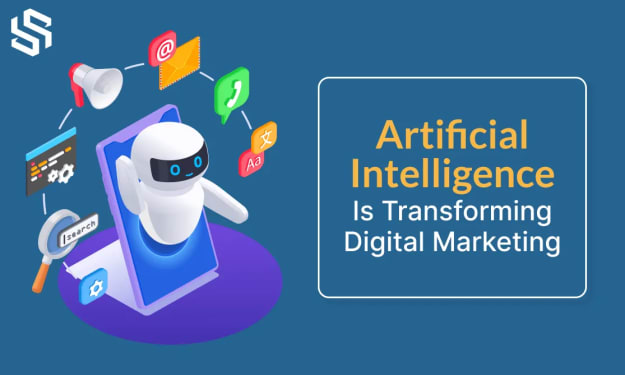
How AI is Transforming Digital Marketing: The Future of Customer Engagement. AI-Generated.
In the fast-paced world of digital marketing, staying ahead of the curve is essential for businesses looking to engage with their customers effectively. One of the most significant advancements shaping the future of marketing is the integration of artificial intelligence (AI) technologies. From personalized content recommendations to predictive analytics, AI is revolutionizing how brands interact with their audiences. This blog will explore how digital marketing is evolving with AI technologies, the benefits they bring, and what the future holds for marketers and consumers alike.
By shreyash-hexa2 years ago in Education