degree
Degrees defined: PhD, Master, Bachelor, Associate–all about that expensive piece of paper called your degree.
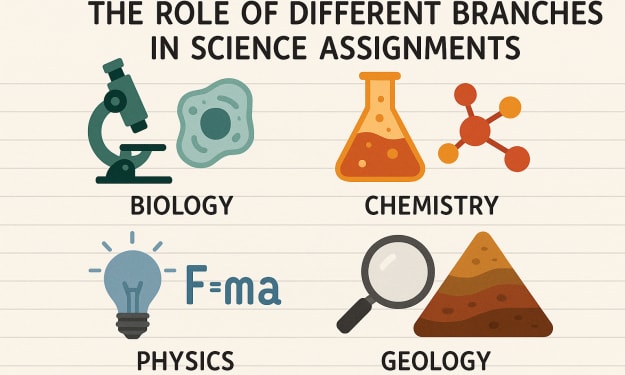
What is the Role of Different Branches in Science Assignments?
Science is one of the key fields of study that a student has to engage in. It plays a significant role not only for them but for everyone. It is due to science that our society has developed to the extent it has in the modern world. However, for students, it represents something problematic. They often face many troubles and turn over to many science assignment help services. Many of them are unsure about its importance. So, for such students, the text below targets the role of science and its branches in science projects.
By Will Smithabout a year ago in Education
Uranium: The Element That Powers The World And Threatens It Too
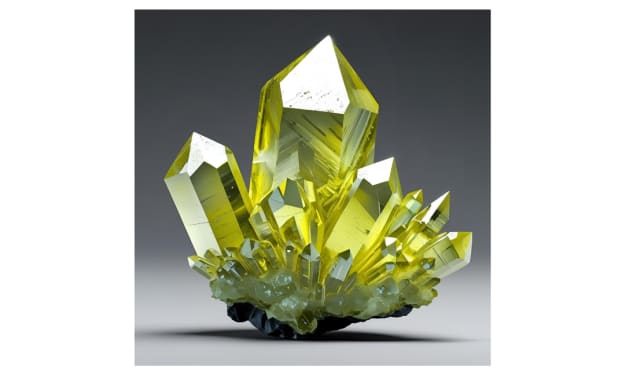
Uranium is a naturally occurring chemical element found in rocks, soil, and water. Its atomic number is 92, and it is represented by the symbol U on the periodic table. Uranium is a radioactive metal, dense and heavy, and plays a crucial role in the field of nuclear energy and weapons. It was discovered in 1789 by German chemist Martin Heinrich Klaproth. However, its true power wasn’t realized until the 20th century, when scientists unlocked its potential to produce immense energy through nuclear fission. Types of Uranium (Isotopes) Uranium exists in nature mainly in three isotopes. Isotopes are atoms of the same element with different numbers of neutrons. The most common types of uranium are: 1. Uranium-238 (U-238): Makes up over 99% of natural uranium. It is not fissile, which means it cannot sustain a nuclear chain reaction by itself. However, it can be converted into plutonium-239, a useful material for nuclear fuel and weapons. 2. Uranium-235 (U-235): Only 0.7% of natural uranium. It is fissile, meaning it can easily split in a chain reaction and release energy. This isotope is the primary fuel used in nuclear reactors and atomic bombs. 3. Uranium-234 (U-234): Present in very small amounts. It is a decay product of U-238 and plays a minor role in nuclear energy. Power of Uranium: The Science of Nuclear Fission The true power of uranium lies in its ability to undergo nuclear fission. When a U-235 atom is hit by a neutron, it splits into two smaller atoms and releases more neutrons, along with a tremendous amount of energy in the form of heat and radiation. This chain reaction can be controlled in a nuclear reactor to produce electricity or made uncontrolled in a nuclear bomb, resulting in devastating explosions. To give you an idea of its power: Just 1 gram of uranium can produce as much energy as 3 tons of coal or 5630 liters of oil when used in nuclear power plants. Uses of Uranium Uranium is not just limited to electricity or weapons; it has several applications across different industries: 1. Nuclear Power Generation This is the most important use of uranium today. Uranium fuel is used in nuclear power plants to generate electricity without emitting carbon dioxide. Countries like the USA, France, Russia, and China depend heavily on nuclear energy for their power needs. 2. Nuclear Weapons Uranium-235 and plutonium-239 are used in the making of atomic bombs. The bombs dropped on Hiroshima and Nagasaki in 1945 used uranium-based technology. Because of its destructive power, uranium is tightly controlled under international laws. 3. Medical Applications Uranium is used indirectly in the production of radioisotopes for medical imaging and cancer treatment. Nuclear reactors that use uranium help produce isotopes like cobalt-60, which are used in radiotherapy. 4. Scientific Research Uranium is used as a fuel in research reactors for scientific studies and experiments in nuclear physics. It helps in producing neutron beams for materials testing and nuclear analysis. 5. Military and Armor Depleted uranium (uranium with most of its U-235 removed) is extremely dense and is used to make armor-piercing ammunition and tank armor. However, its use has raised health and environmental concerns. 6. Space Missions Uranium-based radioisotope thermoelectric generators (RTGs) provide power to spacecraft like Voyager and Mars rovers, where solar power isn’t possible. Is Uranium Dangerous? Yes, uranium is radioactive, and prolonged exposure to it or its dust can be harmful. It poses: Health risks to humans (especially if inhaled or ingested). Environmental hazards during mining, waste disposal, and weapon testing. That’s why uranium is heavily regulated, stored in secure facilities, and used under strict safety protocols. Future of Uranium As the world searches for clean energy solutions, uranium remains a critical option. Unlike fossil fuels, it produces zero greenhouse gas emissions during power generation. Emerging technologies like small modular reactors (SMRs) and thorium reactors are being explored to make nuclear power even safer and more efficient. At the same time, nuclear disarmament and peaceful usage of uranium are key focuses in global politics to ensure that its power is used for progress—not destruction. Conclusion Uranium is a powerful and versatile element with the potential to light up cities or destroy them. Its value lies in how responsibly we use it. From electricity generation to space exploration, uranium continues to shape the world’s future. Understanding it is not just science—it’s a step toward a more responsible and energy-secure world.
By Hakman Shahabout a year ago in Education
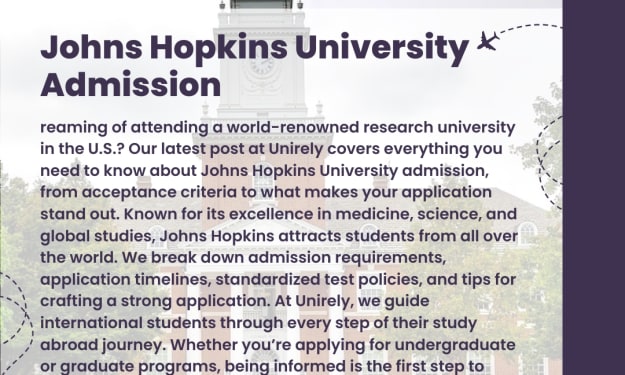
Johns Hopkins University admission
Johns Hopkins University Admission: A Guide for Indian Students Planning to Study Abroad When it comes to pursuing higher education in the United States, Johns Hopkins University is a name that stands out. Renowned globally for its research, academic rigor, and commitment to innovation, it is one of the most prestigious institutions Indian students aim for. However, understanding the Johns Hopkins University admission process and preparing financially are crucial steps to success.
By Unirely Study Abroadabout a year ago in Education
Who can benefit from dissertation writing services?
Dissertation writing is often described as one of the most intellectually demanding tasks a student faces. It requires rigorous research, critical thinking, time management, and the ability to present arguments in a structured and academically acceptable manner. As expectations grow in universities across the UK, students from all academic backgrounds are increasingly turning to dissertation help to meet their academic goals.
By Andersan Smithabout a year ago in Education
Never Too Late
On a sunny May afternoon, the campus of Hillside University buzzed with anticipation. Proud families gathered, students donned caps and gowns, and the sound of bagpipes signaled the start of the commencement procession. But one graduate stood out among the sea of twenty-somethings: Edna Taylor, an 82-year-old great-grandmother with a brilliant smile and a stride that defied her age, slowly made her way to her seat, her silver curls peeking out from under her mortarboard. Edna’s journey to that moment had been anything but conventional. Born in 1943 in rural Kentucky, Edna was the eldest of six children. Her parents were tobacco farmers, and life was a daily rhythm of chores, school, and helping to raise her younger siblings. Education, while valued, took a backseat to survival. At 16, she left school to care for her mother who had fallen ill. By 18, she was married. By 25, she had three children and a small sewing business she ran from her kitchen. “I always loved learning,” Edna would later say. “I used to sneak my brother’s algebra books after I put the kids to bed. It was like a puzzle to me, something to untangle.” Over the decades, Edna’s life followed the familiar patterns of many women of her generation. She raised her children, supported her husband’s career, became a grandmother—and eventually, a great-grandmother. She never resented her life; she found joy in family, faith, and community. But a quiet longing lingered—an unfinished dream. When her husband passed away in 2007, Edna was 64 and suddenly found herself alone in a house too big and too quiet. She started volunteering at the local library, where she was surrounded by books and young minds. That’s when the idea struck her: Why not go back to school? At first, her children thought she was joking. “College? At your age, Mom?” her daughter Carla asked with wide eyes. But Edna wasn’t joking. She applied to Hillside University’s continuing education program and began with a single class—Intro to Literature. She was terrified. “I hadn’t written a paper in over 50 years,” she chuckled. “I didn’t even know how to use a computer mouse.” With the help of her youngest grandson, Malik, she learned to navigate email, Word documents, and online discussion boards. Every Sunday evening, she sat at her kitchen table, textbooks stacked beside her laptop, typing with one finger and sipping chamomile tea. The more she learned, the hungrier she became. Two years became four. Four became ten. And Edna, bit by bit, earned enough credits for a Bachelor of Arts in History. “She was in my American Civil War seminar,” said Professor Lillian Brooks. “At first, the students didn’t know what to make of her. But soon, they were staying after class to hear her stories. Her insights were incredible. She brought history to life because, in many ways, she had lived through the repercussions of so much of it.” Indeed, Edna often enriched classroom debates with personal anecdotes—her memories of the Civil Rights Movement, the Kennedy assassination, the Vietnam War. When a younger classmate expressed frustration over systemic racism, Edna listened carefully, then recounted the first time she saw segregated water fountains as a little girl. “I think students began to see her as a living bridge between past and present,” Professor Brooks reflected. But it wasn’t always easy. Edna battled arthritis that made long walks across campus painful. She failed a math course twice before finally passing with the help of tutoring. And during the COVID-19 pandemic, she had to learn Zoom, often squinting at her screen and asking, “Can y’all hear me?” before joining a virtual lecture. There were moments she almost gave up. “I remember crying over a ten-page paper on Reconstruction,” she said. “I told my grandson I was too old for this. He looked me straight in the eye and said, ‘You’ve come too far, Grandma. Finish strong.’” And she did. On graduation day, as her name was called, the entire stadium erupted in applause. Her children, grandchildren, and great-grandchildren waved homemade signs: “Go, Grandma!” and “82 and Educated!” Some wept, others cheered. Edna rose slowly, her joints aching but her spirit soaring. She accepted her diploma with trembling hands and tears in her eyes. “I did this for me,” she said later in her commencement speech, “but I also did it to show that it’s never too late. Whether you’re 18 or 80, your dreams matter.” Her speech went viral. Within days, news outlets across the country picked up the story. She was invited on talk shows and received hundreds of letters from strangers who said she inspired them to return to school or pursue long-lost passions. One message, in particular, stood out to her: a single mother from Detroit who wrote, “I saw your story and enrolled in night school. If you could do it, I figured I had no excuse.” Edna now speaks at local high schools and community centers, encouraging others to pursue lifelong learning. She’s even considering a master’s degree in education, saying, “Well, I’ve come this far. Why not?” Her grandchildren have started calling her “Dean Grandma,” and the nickname stuck. As she looks back on her journey, Edna remains humble. “People say I’m brave, but really, I just kept showing up. I showed up every day, every class, every challenge. I believe if you show up for your life, even when it's hard, even when you’re scared, beautiful things happen.” And that’s the legacy she hopes to leave: not just a college degree, but a reminder that it’s never too late to begin again. --- Moral of the story: Age is just a number, but dreams are timeless.
By Faizan Khanabout a year ago in Education
Is Dissertation Help USA Legal? The Truth About Writing Services in 2025
Dissertation Help USA services might seem like a tempting solution when you're overwhelmed with academic pressure, but the consequences can be severe if you're caught. It's a serious violation of academic integrity that can result in course failure, expulsion, or even having your degree revoked. In some parts of the world, using dissertation writers or essay mills is actually illegal.
By Shani Pandeyabout a year ago in Education
Unlock Digital Growth: Your Essential Guide to What is Digital Marketing?
The Gateway to Modern Business: What Exactly IS Digital Marketing? Hello , aspiring marketers and business innovators! Take a moment to reflect on your last hour. You scrolled through a social media feed, searched for information online, or perhaps checked your email. In each of those moments, you were interacting with "digital marketing." It's no longer just a trend; it's the invisible force powering modern commerce, the vital bridge connecting businesses with their customers in an increasingly interconnected world.
By Waqas Ahmadabout a year ago in Education