degree
Degrees defined: PhD, Master, Bachelor, Associate–all about that expensive piece of paper called your degree.
How To Get the Best Law Assignment Help In The USA
Law students in the United States face significant academic pressure due to the complexity of legal concepts, case studies, and extensive research required for assignments. With strict deadlines and high expectations, it’s no surprise that many students search for Law Assignment Help USA to ensure top-quality work and better grades. If you’re one of them, this guide will show you how to get the best law assignment help, why expert law assignment helpers matter, and how The Student Helpline can be your ultimate academic partner.
By Ellis Jonesabout a year ago in Education
UCLA Acceptance Rate
What the UCLA Acceptance Rate Really Means — And How Indian Students Can Prepare For many students in India, studying abroad is more than just a dream — it’s a serious goal shaped by years of effort, planning, and ambition. If you’ve been researching U.S. universities, UCLA (University of California, Los Angeles) has probably caught your eye. And with good reason: it's a world-class public university, offering academic excellence and a vibrant campus experience right in the heart of Los Angeles.
By Unirely Study Abroadabout a year ago in Education
Markhor: The Majestic National Animal of Pakistan
Introduction The Markhor, scientifically known as Capra falconeri, is a wild goat species that inhabits the mountainous regions of northern and western Pakistan. It holds the honor of being the national animal of Pakistan, symbolizing bravery, resilience, and the wild beauty of the country's natural landscape. With its striking twisted horns, robust build, and noble presence, the Markhor represents not only Pakistan’s rich biodiversity but also the need to protect endangered species through conservation. --- Appearance and Characteristics Markhor is one of the most impressive wild goats in the world, primarily recognized by its spiral horns, which can grow up to 160 centimeters in males and about 25 centimeters in females. The name "Markhor" is derived from Persian words Mar (snake) and khor (eater), leading to the interpretation of “snake-eater.” This name possibly refers to the corkscrew shape of its horns or its ability to kill snakes—though it is not actually known to eat them. Markhors have a muscular body covered with a long, shaggy coat that varies in color from grayish to brown. Males are larger and heavier than females and also sport a majestic beard and longer fur around the neck and chest, especially during the winter. Their powerful hooves and keen eyesight make them excellent climbers, suited to the rugged mountainous terrain they inhabit. --- Habitat and Distribution Markhors are typically found in the remote mountain ranges of Khyber Pakhtunkhwa, Gilgit-Baltistan, and Balochistan. Their preferred habitat includes steep, rocky slopes between 600 and 3,600 meters above sea level. These areas are rich in vegetation that provides them food such as grasses, leaves, and herbs. In winter, they often move to lower altitudes to find food, while during summer, they migrate upward. While Pakistan is home to the largest population of Markhors, small populations also exist in Afghanistan, India (Kashmir), Tajikistan, Turkmenistan, and Uzbekistan. However, due to habitat loss and hunting, their numbers have dwindled significantly in many regions. --- Subspecies in Pakistan There are three main subspecies of Markhor found in Pakistan: 1. Astor Markhor (Capra falconeri falconeri) – Found in Gilgit-Baltistan, particularly in the Astor Valley. 2. Kashmir Markhor (Capra falconeri cashmiriensis) – Found in Chitral and the northern parts of Khyber Pakhtunkhwa. 3. Suleiman Markhor (Capra falconeri jerdoni) – Inhabits the Suleiman Range of northern Balochistan. Each subspecies has slight differences in horn shape, body size, and coat coloration, adapted to their specific environment. --- Conservation Status and Challenges The Markhor was once on the brink of extinction, with only about 2,500 individuals left worldwide by the early 1990s. Excessive hunting for meat, trophies, and traditional medicine, combined with habitat destruction due to deforestation and livestock grazing, greatly reduced their population. The International Union for Conservation of Nature (IUCN) had listed the Markhor as endangered, but due to conservation efforts in recent years, its status has improved to near threatened. Pakistan has played a leading role in protecting the Markhor through community-based programs, wildlife reserves, and strict anti-poaching laws. --- Community-Based Trophy Hunting Program One of the most successful initiatives in Pakistan is the community-based trophy hunting program, particularly in Chitral and Gilgit-Baltistan. Under this scheme, a limited number of Markhor hunting permits are auctioned each year to international hunters at very high prices, sometimes exceeding US $100,000 per permit. Importantly, 80% of the revenue goes directly to local communities, giving them a strong incentive to protect the species. As a result, poaching has decreased, and the Markhor population has rebounded significantly in many regions. These programs have not only helped save the Markhor but also promoted eco-tourism and awareness about wildlife conservation. --- Cultural and National Importance The Markhor is not just a wild animal in Pakistan; it is a symbol of pride and national identity. Its image is used on government logos, emblems, and currency. It represents the strength and resilience of the Pakistani people, particularly those living in the harsh mountain regions. In the military context, the Markhor is also used in the insignia of certain army units, symbolizing agility, courage, and high-altitude survival. It plays a part in traditional folklore and local storytelling as well, often seen as a guardian of the mountains. --- Conclusion The Markhor of Pakistan is a magnificent creature that stands as a testament to nature’s wonder and resilience. From being on the verge of extinction to making a remarkable comeback through conservation, it represents hope for endangered species around the world. Pakistan’s efforts to preserve this national treasure are a powerful example of how wildlife and people can coexist for mutual benefit. Protecting the Markhor is not just about saving a species—it’s about preserving the spirit of the mountains, the identity of a nation, and the delicate balance of our natural world. As long as the Markhor leaps across the cliffs of northern Pakistan, it will continue to inspire pride, respect, and responsibility in the hearts of those who cherish the wild.
By Muhammad Bilalabout a year ago in Education
What is climate Change and How are humans causing climate change?
Human activities are causing world temperatures to rise, posing serious threats to people and nature. Things are likely to worsen in the coming decades, but scientists argue urgent action can still limit the worst effects of climate change.
By Kamran Khanabout a year ago in Education
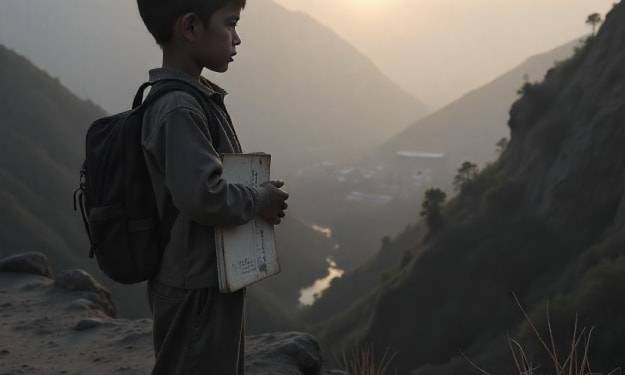
The Boy on the Hill
In a quiet mountain village, far from the roads and noise of busy towns, lived a young boy named Rahim. His village rested high on a hill surrounded by forests, steep rocky paths, and the sound of wind whistling through the trees. Life was peaceful but hard. There were no hospitals, no shops, and no school.
By khalid khanabout a year ago in Education
AI vs Human Creativity – Who Wins the destiny?
In current years, artificial intelligence (AI) has made notable strides, main to captivating debates about its position in diverse fields, from healthcare to enjoyment. Amongst these discussions, one of the maximum provocative questions is whether AI will eventually update human creativeness. Can machines, with their terrific processing electricity and gaining knowledge of competencies, create authentic works of artwork, music, literature, and thoughts? Or does true creativity stay an inherently human trait that machines can best mimic, but in no way genuinely replicate?
By Samiullah Adilabout a year ago in Education
Planning MBBS in China?
One of the biggest decisions of my life was to study MBBS in China. Many students from South Asia or Africa are drawn to the affordable tuition, good facilities, and global experience. They chose China for their education, and I was one of them. However, once I arrived in China, I discovered that the reality differed significantly from what was promised in the brochures.
By Ali Hammudaabout a year ago in Education
Conquer Your Leadership Assignment: Expert Insights and Proven Techniques
Introduction: Why Do Leadership Assignments Feel Like Climbing a Mountain? You’re sitting at your desk, staring at the blinking cursor, wondering how to start your leadership assignment. You’ve read a few definitions, maybe skimmed a chapter or two, but the ideas just aren’t connecting. Sound familiar? You’re not alone. Many UK university students face this exact challenge—decoding abstract theories, applying leadership models to real-world situations, and expressing critical thought in structured essays or reports.
By Carl Evansabout a year ago in Education