courses
Tackle that seemingly endless selection of course offerings; a roundup of helpful resources and sound advice for selecting the best courses and acing them.
Learning Beyond Grades. AI-Generated.
When we think about education, most of us picture the same familiar scene — rows of desks, students bent over notebooks, and a teacher trying to explain something that half the class pretends to understand. The smell of chalk, the ring of the lunch bell, and the slow countdown to graduation.
By shakir hamid12 months ago in Education
The Young Millionaire
This is the foundational internal work required before any practical steps. IV. Pitfalls to Avoid 1. **Wealth is a Mindset, Not an Amount:** You must see yourself as a wealth-creator first. Your beliefs about money, success, and your own capabilities dictate your financial reality.
By StoryVerse12 months ago in Education
My Brain's Stand-Up Routine. AI-Generated.
My brain is a wonderful organ. It starts working the moment I wake up and does not stop until I am formally presented with a problem. For instance, it just spent twenty minutes trying to remember the name of that actor from that movie, you know, the one with the face? But the moment I need to calculate a 20% tip, it suddenly develops a mysterious and profound need to contemplate the vastness of the universe.
By The 9x Fawdiabout a year ago in Education
Is Porn the Silent Epidemic? A Deep Dive. Content Warning. AI-Generated.
In an age of hyper-connectivity, a new public health crisis is unfolding in the silence of our screens. Unlike traditional epidemics marked by physical symptoms, this one is neurological, psychological, and relational. It’s the silent epidemic of modern, hardcore internet pornography, and its effects are only beginning to be understood.
By The 9x Fawdiabout a year ago in Education
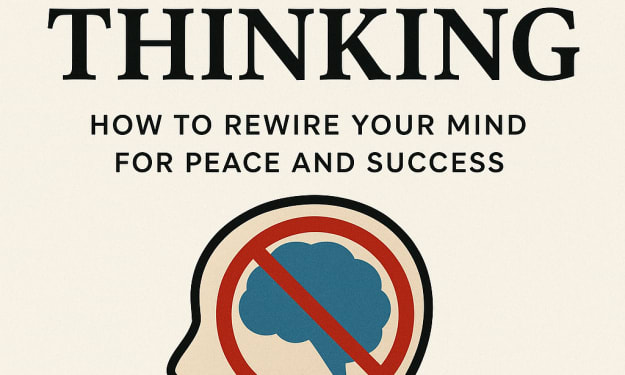
Stop Negative Thinking
Negative thinking is more than just occasional worry or stress. It’s a pattern of thoughts that focuses on failure, self-doubt, and pessimism. These thoughts can affect your decisions, emotions, and even your physical health. Exercise: Write down recurring negative thoughts for one week. Seeing them on paper helps you understand their frequency and triggers. The Root of Negativity Most negative thoughts stem from fear, past experiences, social conditioning, or low self-esteem. Identifying the source is the first step to control them. Example: If you fear public speaking due to a past embarrassing moment, acknowledging it helps reduce its power. How Negative Thinking Affects Your Life Negative thoughts influence your relationships, career, and happiness. Chronic negativity can lead to stress, anxiety, depression, and missed opportunities. Tip: Notice moments when you self-sabotage due to negative thinking and journal about them. Awareness is Power Before you can stop negative thoughts, you must recognize them. Start by pausing and asking yourself: “Is this thought helping me or hurting me?” Exercise: Practice mindfulness for 5 minutes daily, observing your thoughts without judgment. Challenge Your Thoughts Not every thought is true. Negative thinking often distorts reality. Question your assumptions: “Is this fact or my interpretation?” Example: Thinking “I always fail” is not accurate—focus on evidence of your successes. Replace Negativity with Positivity Once you identify negative thoughts, replace them with positive or neutral alternatives. This doesn’t mean ignoring problems—it means focusing on solutions. Exercise: Turn “I can’t do this” into “I will try and learn from this.” Practice Gratitude Gratitude shifts focus from what’s wrong to what’s right. Daily gratitude can rewire your brain for positivity. Exercise: List 3 things you’re grateful for every morning or night. Surround Yourself with Positivity People, media, and environments influence your thinking. Engage with uplifting content and supportive individuals. Tip: Limit time on negative news or social media accounts that trigger stress. The Power of Self-Talk Your inner dialogue shapes your reality. Speak to yourself kindly, encouragingly, and with patience. Exercise: Each time you catch yourself thinking negatively, say a positive affirmation out loud. Mindfulness and Meditation Mindfulness keeps you grounded in the present moment, reducing worry and rumination. Exercise: Meditate for 10 minutes, focusing on your breath. Let negative thoughts pass without attachment. Visualize Success Visualization helps rewire the brain. See yourself achieving goals, overcoming challenges, and handling stress calmly. Exercise: Spend 5 minutes imagining a positive outcome for a current challenge. Break the “What If” Cycle “What if” thinking fuels anxiety. Focus on what is rather than what could go wrong. Exercise: Replace “What if I fail?” with “I will do my best and learn.” Develop Resilience Challenges are inevitable. Resilience helps you bounce back instead of spiraling into negativity. Tip: Reflect on past challenges and how you overcame them. Recognize your inner strength. Limit Comparisons Comparing yourself to others fuels self-doubt. Everyone’s journey is unique. Exercise: Write your achievements and progress, however small, and celebrate them daily. Cultivate Optimism Optimism is a habit. Expect good outcomes, focus on solutions, and trust your abilities. Exercise: Start each day by writing one positive intention: “Today I will focus on…” Physical Health and Mental Clarity Exercise, sleep, and nutrition impact mental patterns. A healthy body supports a healthy mind. Tip: Daily movement—even 10 minutes—reduces stress hormones and clears mental clutter. Learn from Mistakes Mistakes are not failures—they are feedback. Negative thinking often magnifies mistakes unnecessarily. Exercise: For every mistake, write down the lesson learned and one positive takeaway. -Use Affirmations and Journaling Affirmations reinforce positive thought patterns. Journaling clarifies thinking and reduces mental chaos. Exercise: Start each day with 3 affirmations: “I am capable. I am worthy. I choose positivity.” Seek Support When Needed Sometimes, negativity is deep-rooted and requires help. Therapy, coaching, or support groups can provide guidance. Tip: Talking about your thoughts with someone you trust can lighten mental burden. Make Positivity a Lifestyle Stopping negative thinking is ongoing. Integrate habits from this book daily. Over time, positive thinking becomes second nature. Action Plan: 1. Track your thoughts. 2. Practice gratitude and mindfulness. 3. Replace negative thoughts with solutions. 4. Celebrate small victories.
By Fazal wahid about a year ago in Education
10 Online AI Certifications to Advance Your Career in the USA for 2026
Artificial Intelligence (AI) is continuously expanding across industries, driving innovation in areas such as predictive analytics, natural language processing, robotics, and autonomous systems. For those professionals who want to excel in their AI career in 2026, they can obtain a certification for credibility and practical skills. The United States is home to some of the most renowned AI programs and certifications.
By Jennifer walesabout a year ago in Education
A Year to the 11 Plus: Building Confidence Through Structure and Calm
Every September, families across the UK begin preparing for the 11 Plus exam — a journey that can feel as emotional as it is academic. For many parents, it represents opportunity and hope; for children, it’s often their first brush with real discipline and self-motivation. Over the years, I’ve seen that the difference between anxiety and success usually comes down to one thing: structure.
By Scholars Tutorial about a year ago in Education
Is Your Child's Habit Destroying Their Life? The Truth About Masturbation. Content Warning. AI-Generated.
As a parent, discovering your child is masturbating can trigger a wave of panic. Your mind might race with fears: Are they addicted? Is this harming them? Will it ruin their future? In the silence of your worry, it’s easy to imagine the worst. But before you confront them, it’s crucial to separate the normal from the problematic.
By The 9x Fawdiabout a year ago in Education
The World You See Isn’t Real-And That’s Okay
Picture this: I’m nine, sprawled on the grass in my backyard, staring at a sky so blue it feels like it’s lying to me. My dog, Rusty, is chewing on a stick nearby, oblivious to the fact that I’m wrestling with a question too big for my kid brain-what’s really out there? The clouds drift, morphing into dragons and castles, and I wonder if they’re real or just my eyes playing tricks. That moment, that childish curiosity, never left me. It’s the same spark that drove me to listen to Professor Donald Hoffman on The Diary of a CEO, where he dropped a bomb: the world we see? It’s not real. It’s a headset, a virtual reality our brains cooked up to keep us alive. And honestly? That idea feels like a lightning bolt and a warm hug all at once.
By KWAO LEARNER WINFREDabout a year ago in Education
Rich Dad Poor Dad: What the Rich Teach Their Kids About Money That the Poor and Middle Class Do
grew up with two fathers. One taught me how to work for money. The other taught me how to make money work for me. One said, “Go to school, get good grades, and find a safe job.”
By Fazal wahid about a year ago in Education
Key Concepts and Terminologies in the Era of Digital Transformation
Key Concepts and Terminologies in the Era of Digital Transformation Digital transformation has reshaped nearly every aspect of modern life—from how we work and communicate to how we learn. To navigate this evolving landscape, understanding the key terms and ideas associated with transformation has become essential, particularly in higher education. The rise of smart universities, digital learning, and distance education has made these concepts part of everyday academic and professional vocabulary.
By Vertex University P R E S Sabout a year ago in Education