courses
Tackle that seemingly endless selection of course offerings; a roundup of helpful resources and sound advice for selecting the best courses and acing them.
Proven Tricks to Solve NDA Mathematics Questions Faster
The Mathematics paper in the NDA (National Defence Academy) exam is one of the most challenging yet scoring sections. With 120 questions worth 300 marks and limited time, speed and accuracy are crucial to achieving a good score. Many students find this section intimidating, but with the right approach and practice, you can solve Mathematics questions quickly and confidently.
By Myra Sharma2 years ago in Education
10 Proven Steps to Set Achievable Goals and Transform Your Life
**How to Set Achievable Goals: A Step-by-Step Guide to Success** Goal setting is an essential part of personal and professional growth. It provides direction, boosts motivation, and helps you measure progress. However, setting goals that are too vague, unrealistic, or poorly structured can lead to frustration and failure. This article will guide you on how to set achievable goals, offering practical steps and insights to ensure your aspirations become a reality. ### **Why Setting Achievable Goals Matters**
By Nora Ariana2 years ago in Education
How To Become a Certified Medical Assistant
Becoming a certified medical assistant (CMA) is a rewarding career path that combines healthcare knowledge with administrative skills to support medical professionals and enhance patient care. If you want to enter this dynamic field, understanding the steps to certification and the role of medical assistant training programs is essential. This guide will outline everything you need to know to begin your journey toward becoming a CMA.
By Meaghan Howe2 years ago in Education
AI Writing Assistant: Revolutionizing Content Creation
In today’s fast-paced digital world, the demand for high-quality content is at an all-time high. Businesses, educators, and professionals are constantly seeking ways to communicate effectively and efficiently. Enter AI writing assistants—a groundbreaking innovation that is transforming the way we create, edit, and refine text. This article delves deep into the concept of AI writing assistants, their features, benefits, and how they are reshaping the content creation landscape.
By Knowledge War2 years ago in Education
Overcoming Procrastination: Proven Strategies to Boost Your Productivity
# Overcoming Procrastination: Tips and Tricks to Boost Your Productivity Procrastination is a common challenge that many people face in their personal and professional lives. It is the act of delaying or postponing tasks, even when we know they are essential. The consequences of procrastination can range from missed deadlines and increased stress to reduced productivity and self-esteem. However, overcoming procrastination is possible with the right strategies and mindset. This article offers practical tips and tricks to help you beat procrastination and take control of your time. ## Understanding Why We Procrastinate To effectively overcome procrastination, it's essential to understand its root causes. People procrastinate for various reasons, including: 1. **Fear of Failure:** Some individuals delay tasks because they are afraid they won't perform well. 2. **Perfectionism:** The desire to do something perfectly can lead to inaction. 3. **Overwhelming Tasks:** When a task seems too big or complicated, it can feel paralyzing. 4. **Poor Time Management:** Without proper planning, tasks can pile up, leading to procrastination. 5. **Lack of Motivation:** When we don’t find a task interesting or meaningful, it’s easy to put it off. By identifying the reason for your procrastination, you can choose the right approach to overcome it. ## Tips and Tricks to Overcome Procrastination ### 1. **Break Tasks into Smaller Steps** One of the most effective ways to overcome procrastination is to break down large tasks into smaller, more manageable steps. This approach makes the task seem less overwhelming and gives you a sense of accomplishment as you complete each step. **Example:** If you're writing a report, start by outlining the structure, gathering research, and then writing one section at a time. ### 2. **Set SMART Goals** SMART goals are Specific, Measurable, Achievable, Relevant, and Time-bound. Setting clear and realistic goals helps you stay focused and motivated. **Example:** Instead of saying, "I'll work on my project today," set a specific goal like, "I'll complete the introduction of my project by 2 PM." ### 3. **Use the Two-Minute Rule** The Two-Minute Rule suggests that if a task takes less than two minutes, do it immediately. This rule helps you handle small tasks quickly and prevents them from piling up. **Example:** Replying to a quick email or organizing your desk can be done in two minutes or less. ### 4. **Create a Schedule** Having a structured schedule helps you allocate time for specific tasks and stay organized. Use tools like calendars, planners, or digital apps to plan your day. **Tip:** Block out time for focused work and include breaks to avoid burnout. ### 5. **Eliminate Distractions** Distractions are one of the biggest culprits of procrastination. Identify and eliminate distractions to create a productive work environment. **Tips:** - Turn off notifications on your phone. - Create a dedicated workspace. - Use website blockers if you get distracted by social media. ### 6. **Practice the Pomodoro Technique** The Pomodoro Technique involves working for 25 minutes, taking a 5-minute break, and repeating the cycle four times before taking a longer break. This technique helps maintain focus and prevent mental fatigue. ### 7. **Find an Accountability Partner** Sharing your goals with a friend, colleague, or mentor can provide the motivation to stay on track. Regular check-ins with your accountability partner can help you stay committed to your tasks. ### 8. **Use Positive Reinforcement** Rewarding yourself for completing tasks can boost motivation and make the process more enjoyable. **Example:** Treat yourself to a favorite snack, a short walk, or a movie after finishing a challenging task. ### 9. **Address Negative Thoughts** Procrastination is often fueled by negative thoughts such as "I can't do this" or "This is too hard." Challenge these thoughts by focusing on your strengths and past successes. **Tip:** Replace negative thoughts with affirmations like "I am capable of completing this task" or "I will take it one step at a time." ### 10. **Visualize the End Result** Visualizing the positive outcome of completing a task can increase motivation. Imagine how accomplished and relieved you'll feel once the task is done. **Tip:** Create a vision board or write down your goals to keep your motivation high. ### 11. **Embrace Imperfection** Perfectionism can be a significant barrier to productivity. Accept that doing your best is often better than striving for perfection. **Tip:** Focus on progress, not perfection, and celebrate your efforts. ### 12. **Practice Self-Compassion** Be kind to yourself when you face setbacks. Avoid harsh self-criticism and remember that procrastination is a common challenge. **Tip:** Reflect on what went wrong, learn from the experience, and move forward with a positive attitude. ## Conclusion
By Nora Ariana2 years ago in Education
Tips for Success as a Junior Data Analyst
Starting a career as a Junior Data Analyst can be exciting yet challenging. This role is an excellent opportunity to learn, grow, and make a difference by interpreting data and offering insights that help businesses thrive. Whether you're just getting started or trying to stand out in your role, here are practical tips to help you succeed as a Junior Data Analyst.
By Harish Kumar Ajjan2 years ago in Education
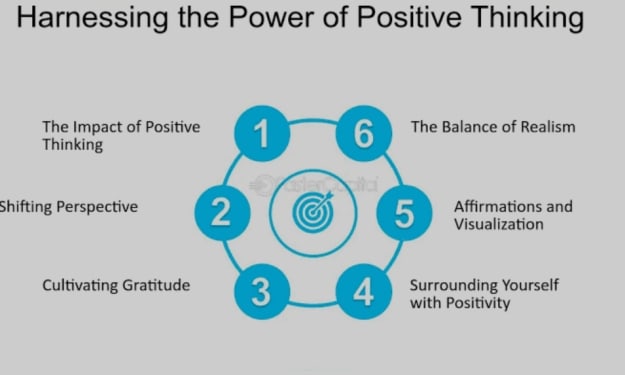
Harnessing the Power of Positive Thinking: Your Pathway to Success
# The Power of Positive Thinking for Success In today’s fast-paced and challenging world, success often feels elusive and distant. However, one crucial element that significantly contributes to achieving success is often overlooked: the power of positive thinking. Positive thinking is more than just being cheerful or ignoring life's difficulties; it's a mental attitude that focuses on possibilities, solutions, and opportunities. It empowers individuals to navigate life's challenges with resilience, confidence, and determination, ultimately leading to success. ## Understanding Positive Thinking Positive thinking is the practice of focusing on constructive thoughts and maintaining an optimistic outlook on life. It involves challenging negative thoughts, shifting your mindset toward hope and possibilities, and maintaining an attitude of gratitude regardless of circumstances. People who adopt positive thinking often experience lower stress levels, better health, stronger relationships, and greater career success. Positive thinking doesn't mean ignoring life's challenges or pretending that negative emotions don't exist. Instead, it means acknowledging obstacles and difficulties but choosing to focus on solutions and the belief that you can overcome them. This mindset creates an environment for growth and fosters success in personal and professional endeavors. --- ## How Positive Thinking Contributes to Success 1. **Enhanced Problem-Solving Skills**
By Nora Ariana2 years ago in Education
Breaking Down the CFA Program: Understanding Its Three Levels and How to Succeed
Becoming a Chartered Financial Analyst (CFA) is a prestigious achievement in the world of finance and investment management. The CFA designation is highly regarded globally, representing a deep commitment to financial expertise, ethical conduct, and professional excellence. If you're considering pursuing the CFA credential, it's important to understand the structure of the program. The CFA journey consists of three distinct levels, each progressively more challenging, that test your knowledge and skills in finance, investment management, and ethical decision-making. In this article, we’ll explore the three levels of the CFA program, what each entails, and how Boston Institute of Analytics' CFA Study Programs can guide you through this rigorous process.
By krupa prajapati2 years ago in Education