courses
Tackle that seemingly endless selection of course offerings; a roundup of helpful resources and sound advice for selecting the best courses and acing them.
Types of Engineering You Get to Learn About Through Assignments
Engineering is a big and exciting area where students can learn and build amazing things. Each kind of engineering is different and needs special skills. Through college projects, students can understand more about these different things, like making machines or helping people stay healthy.
By Ellyse hix2 years ago in Education
What Are the Top Data Science Courses in Chandigarh
Data science has become one of the most in-demand fields, with a growing need for skilled professionals across industries. Chandigarh, known for its educational and technological advancements, has become a hub for data science training. Choosing the right data science course in Chandigarh is crucial for building expertise in data analysis, machine learning, and statistical modeling. This article highlights key factors to consider when selecting a data science training institute in Chandigarh and what makes a course stand out.
By Gour Sinha2 years ago in Education
What’s the Difference Between Front-End and Back-End Development?
Web development is all about building websites and applications, and it’s divided into two main parts: front-end and back-end development. These two work together to make websites look good and function properly, but they have different tasks, tools, and skills. Let’s explore the differences in a simple way.
By SANTHIYA V2 years ago in Education
Tips for Staying Healthy
A healthy lifestyle can help you thrive throughout your life. Making healthy choices isn't always easy, however. It can be hard to find the time and energy to exercise regularly or prepare healthy meals. However, your efforts will pay off in many ways, and for the rest of your life.
By Panesh Vorman2 years ago in Education
How to Protect Your Privacy Online
Protecting your privacy online is more important than ever in today's digital age. With the rise of cyber threats, data breaches, and intrusive surveillance, maintaining control over your personal information requires proactive measures. Many individuals are unaware of the extent to which their online activities are monitored, tracked, and collected by third parties. Understanding the risks and adopting practical strategies can help you safeguard your digital presence. One of the first steps in protecting your online privacy is to use strong, unique passwords for all your accounts. Weak and repetitive passwords make it easier for hackers to gain access to your personal information. A strong password should contain a combination of upper and lowercase letters, numbers, and special characters. Using a password manager can help you generate and store complex passwords securely, reducing the temptation to reuse the same password across multiple platforms.
By Nora Ariana2 years ago in Education
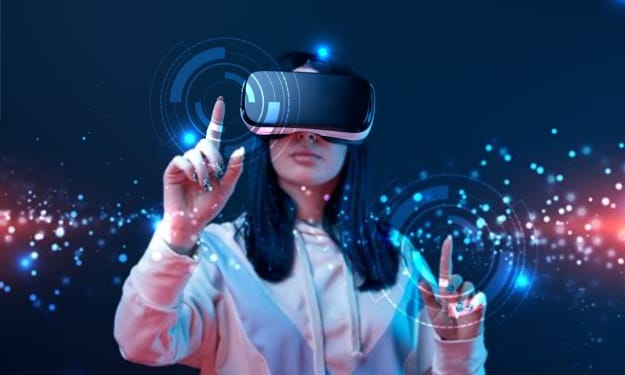
The Rise of Virtual Reality in Everyday Life
Virtual reality (VR) is no longer confined to the realm of science fiction or specialized tech communities. Over the past few years, it has steadily integrated into various aspects of everyday life, transforming the way people work, learn, play, and connect. The rise of VR technology is not just about impressive visuals and immersive experiences; it is a cultural shift that is reshaping multiple industries and redefining human interactions in the digital age. One of the most noticeable areas where VR has made an impact is in the entertainment industry. Gaming, in particular, has seen a revolutionary transformation with the introduction of VR headsets such as the Oculus Quest, PlayStation VR, and HTC Vive. These devices have elevated traditional gaming experiences by immersing players in lifelike environments where they can interact with virtual worlds in real time. Players can explore fantasy landscapes, engage in intense battles, and even participate in social gatherings without ever leaving their living rooms. Beyond gaming, VR is being used for virtual concerts, movies, and theme park experiences, offering new ways to entertain and engage audiences. Education is another field where VR has proven to be a game-changer. Schools and universities are increasingly adopting VR as a teaching tool to provide students with immersive and interactive learning experiences. Imagine a history class where students can walk through ancient Rome or a science lesson where they can explore the human body at a microscopic level. VR enables learners to grasp complex concepts through visual and experiential methods, making education more engaging and effective. Additionally, VR can bridge the gap for remote learners, allowing them to feel present in virtual classrooms alongside their peers. The healthcare industry has also embraced VR technology with remarkable results. Surgeons can now use VR simulations to practice complex procedures, improving their skills without risking patient safety. VR is also being used in therapy and rehabilitation, helping patients overcome phobias, manage pain, and regain motor functions. For example, virtual environments can be created to gradually expose patients to their fears in a controlled and safe setting, leading to desensitization and emotional healing. The potential for VR in healthcare continues to grow as research and technology advance. In the business world, VR has become a valuable tool for collaboration and training. With remote work becoming increasingly common, companies are using VR platforms to conduct meetings, workshops, and team-building activities. These virtual environments allow employees to feel connected and engaged, even when working from different locations. VR is also being used for employee training, particularly in industries such as manufacturing, aviation, and customer service. Simulated environments provide a safe space for trainees to practice skills and handle challenging scenarios without real-world consequences. The retail and e-commerce sectors are also leveraging VR to enhance the shopping experience. Virtual showrooms and fitting rooms allow customers to explore products and try on clothing without stepping into a physical store. This not only saves time but also provides a more personalized and interactive shopping experience. Some real estate companies are using VR to offer virtual property tours, enabling potential buyers to explore homes from anywhere in the world. As VR technology becomes more accessible, it is likely to become a standard feature in the retail landscape. Social interaction is another aspect of daily life that VR is transforming. Virtual social platforms such as VRChat and AltspaceVR allow users to connect with friends and strangers in virtual environments, attending events, playing games, and simply hanging out. These spaces provide a sense of presence and community that traditional online interactions often lack. As VR technology continues to evolve, it has the potential to redefine how people build and maintain relationships in a digital age. Despite its many advantages, the rise of VR is not without challenges. One of the primary concerns is the cost of VR hardware, which can be prohibitively expensive for many users. However, as technology advances and production costs decrease, more affordable options are becoming available. Another concern is the potential for addiction and social isolation, as users may become overly immersed in virtual worlds at the expense of real-world interactions. Additionally, issues related to data privacy and security need to be addressed to ensure that users' personal information is protected. Looking ahead, the future of VR is promising. As technology continues to advance, VR experiences will become more realistic, accessible, and integrated into everyday life. The development of haptic feedback devices, which simulate touch sensations, will further enhance the immersive experience. Additionally, advancements in artificial intelligence will allow virtual environments to become more dynamic and responsive, creating richer and more personalized experiences.
By Nora Ariana2 years ago in Education
How Blockchain is Changing the Way We Do Business
Blockchain technology has emerged as one of the most transformative innovations in recent years, revolutionizing the way businesses operate across various industries. Initially developed as the underlying technology for cryptocurrencies like Bitcoin, blockchain has evolved into a versatile tool that offers transparency, security, and efficiency in business transactions and operations. Its decentralized and tamper-proof nature makes it a game-changer for companies looking to enhance their processes and build trust with stakeholders. At its core, blockchain is a distributed ledger technology that records transactions across multiple computers in a way that ensures data integrity and security. Unlike traditional databases, which rely on a central authority to validate and store information, blockchain uses a network of nodes to verify and record transactions. Each block of data is linked to the previous one, forming a chain that is virtually immutable. One of the key ways blockchain is changing business operations is through the enhancement of transparency and trust. In traditional business environments, trust is often established through intermediaries such as banks, auditors, and regulatory bodies. These intermediaries add time and cost to transactions. With blockchain, all participants in a network have access to a single, transparent version of the truth, which reduces the need for intermediaries and minimizes the risk of fraud or discrepancies. Supply chain management is one area where blockchain has had a significant impact. Businesses can use blockchain to track the movement of goods from the point of origin to the final destination, ensuring transparency and accountability at every stage. This is particularly important in industries such as food and pharmaceuticals, where consumers demand greater assurance about the quality and authenticity of products. For example, Walmart has implemented a blockchain-based system to trace the origin of produce, reducing the time it takes to track contaminated products from days to seconds. Another critical application of blockchain is in financial services. Traditional financial transactions often involve multiple intermediaries and lengthy processing times. Blockchain technology streamlines this process by enabling peer-to-peer transactions that are faster, cheaper, and more secure. Smart contracts, which are self-executing contracts with predefined rules, further automate and simplify complex financial agreements. This has made blockchain a popular choice for remittances, cross-border payments, and decentralized finance (DeFi) platforms. The real estate industry is also benefiting from blockchain technology. Property transactions typically involve a lot of paperwork, legal formalities, and third-party verification processes. Blockchain can simplify and speed up these transactions by providing a transparent and tamper-proof record of property ownership and transfer. Smart contracts can automate the execution of agreements, reducing the need for intermediaries and minimizing the risk of disputes. In the realm of identity management, blockchain offers a secure and efficient way to store and verify personal information. Traditional identity verification methods are often fragmented and vulnerable to data breaches. Blockchain enables individuals to have control over their digital identities by storing encrypted information on a decentralized network. This can be particularly beneficial for industries such as banking, healthcare, and government services, where secure and reliable identity verification is crucial. One of the most promising aspects of blockchain is its potential to facilitate new business models and revenue streams. Decentralized applications (DApps) built on blockchain networks are transforming industries ranging from social media to gaming and content creation. These applications operate without a central authority, giving users greater control over their data and interactions. For instance, blockchain-based social media platforms reward users for creating and sharing content, challenging the traditional advertising-driven model of social media giants. Despite its numerous advantages, blockchain technology also faces challenges that need to be addressed for widespread adoption. Scalability is a significant concern, as many blockchain networks struggle to handle a high volume of transactions efficiently. This has led to the development of new consensus mechanisms and layer-2 solutions aimed at improving scalability without compromising security. Energy consumption is another issue, particularly for proof-of-work (PoW) blockchain networks like Bitcoin. The energy-intensive process of mining has raised environmental concerns, prompting the adoption of more sustainable alternatives such as proof-of-stake (PoS) and other consensus algorithms that require less computational power. Regulatory uncertainty is also a barrier to blockchain adoption. Governments around the world are grappling with how to regulate blockchain and cryptocurrency activities to protect consumers while fostering innovation. Clear and consistent regulations are essential to create a stable environment for businesses to leverage blockchain technology. Security is another critical concern, as blockchain networks are not immune to cyber threats. While the decentralized nature of blockchain makes it more secure than traditional systems, vulnerabilities can still be exploited, particularly in smart contracts and third-party applications. Continuous advancements in security protocols and best practices are necessary to mitigate these risks. Looking ahead, the future of blockchain in business is promising. As technology continues to evolve, businesses will find new and innovative ways to leverage blockchain to improve efficiency, reduce costs, and enhance customer experiences. Interoperability between different blockchain networks is expected to become a key focus, enabling seamless communication and data sharing across platforms. Collaboration between industry players, technology providers, and regulatory bodies will be crucial to unlock the full potential of blockchain. By addressing scalability, security, and regulatory challenges, blockchain can become a fundamental pillar of the digital economy.
By Nora Ariana2 years ago in Education