courses
Tackle that seemingly endless selection of course offerings; a roundup of helpful resources and sound advice for selecting the best courses and acing them.
7 Psychological Tricks Toppers Use to Learn Smarter (Not Harder)"
We’ve all seen them—those students who seem to effortlessly grasp concepts, always have their notes ready, and somehow manage top grades without pulling all-nighters. No, they aren’t superheroes or born geniuses. Many toppers use psychological techniques—consciously or unconsciously—to enhance their learning. These tricks are backed by cognitive science and can be adopted by anyone to learn more efficiently. Here are 7 powerful psychology-based techniques that toppers use to stay ahead of the curve: --- 1. Active Recall: The Brain’s Favorite Way to Learn Instead of passively reading or highlighting, toppers test themselves often. This method is called active recall, and it’s scientifically proven to strengthen memory. How it works: After reading a chapter, toppers close the book and try to write down or explain everything they remember. Then they check for gaps. Why it works: Every time you try to recall information, your brain reinforces those neural pathways—making it easier to retrieve later. Try it: After each study session, write down what you remember on a blank page or quiz yourself with flashcards. --- 2. Spaced Repetition: Beat Forgetting With Timing Toppers don’t cram. Instead, they review material over time using spaced repetition—revisiting content at increasing intervals. How it works: The first review happens shortly after learning, the next in a few days, then a week later, and so on. Why it works: This timing aligns with the brain’s forgetting curve, reinforcing memories just before they fade. Try it: Use tools like Anki or even a simple calendar to schedule your reviews. --- 3. Interleaving: Mixing Things Up for Better Retention Many students study one topic for hours before moving on. Toppers mix subjects and question types within the same session. This is called interleaved learning. How it works: Instead of studying all math problems, you mix algebra, geometry, and calculus in one session. Why it works: The brain is forced to constantly shift and adapt, which strengthens problem-solving and improves memory. Try it: Mix subjects or types of questions while practicing. Don’t wait to “finish” one before starting another. --- 4. Visualization: Make Learning Stick with Mental Images Toppers often turn abstract concepts into visuals—charts, diagrams, mind maps, or even silly mental images. How it works: They imagine concepts as stories or pictures that are easy to remember. Why it works: The brain processes images faster and remembers them longer than words. Try it: Turn a biology process into a comic strip or use color-coded mind maps to link concepts. --- 5. Teaching: If You Can Explain It, You Know It You’ve probably heard this: “If you can’t explain it simply, you don’t understand it well enough.” Toppers live by this rule. How it works: After studying, they try to explain the concept to someone else (or even to themselves). Why it works: Teaching forces you to organize information clearly and reveals weak spots in understanding. Try it: Use the Feynman Technique: write the topic in simple words, pretend you’re teaching it, identify gaps, and simplify again. --- 6. Goal-Oriented Studying: Focus with Purpose Instead of vague study sessions, toppers set clear, bite-sized goals: “Understand osmosis,” or “Solve 5 physics problems.” How it works: Each session has a focus, a time limit, and a target outcome. Why it works: The brain engages more deeply when it knows exactly what to achieve, and small wins boost motivation. Try it: Before you begin, write down a clear objective. Avoid generic goals like “study biology.” --- 7. Mindful Breaks: Rest Is Part of Learning Toppers know that overloading the brain leads to burnout, not brilliance. They use breaks smartly. How it works: Techniques like the Pomodoro Technique (25 minutes work, 5-minute break) or even a walk can refresh the mind. Why it works: Breaks allow your brain to consolidate information and prevent fatigue. Try it: Study in focused blocks and step away—no phone, just a real break. Your mind will thank you. --- Final Thoughts These tricks aren’t magic—they’re methods rooted in how our brains naturally work. Toppers don’t always study more; they study better. With a shift in approach and consistent practice, anyone can use these psychological techniques to level up their learning game. So next time you sit down to study, don’t just read. Recall, mix, explain, space it out, and take a smart break. You’ll be amazed how much more you retain—and how much less stressful learning becomes.
By SophiaSosoabout a year ago in Education
Agricultural Engineering: Bridging Technology and Agriculture
Agricultural engineering is a dynamic field that merges the principles of engineering with biological sciences to optimize agricultural practices. In the face of the challenges posed by climate change and a growing global population, it plays a crucial role in increasing food production, encouraging sustainable farming, and guaranteeing environmental protection.
By Tanvir Hosainabout a year ago in Education
Agriculture in Everyday Life
Farmers tending to crops and animals, fields, and tractors are frequently associated with agriculture. While that image holds true, agriculture's presence in our daily lives goes far beyond the farm. It quietly supports nearly every aspect of our routines, from the food we eat to the clothes we wear and even the fuels we use. Without agriculture, modern life would look—and feel—very different.
By Tanvir Hosainabout a year ago in Education
💸 Mastering CPA Marketing in 2025: The No-Fluff Guide to Making Real Money Online
Let’s cut through the fluff: CPA (Cost Per Action) marketing is the digital side hustle for 2025. Forget dropshipping delays, affiliate drama, or spending $300 on Facebook ads just to make $10 back. CPA flips the script.
By simanto ahmed2 years ago in Education
Boost Your Analytics Career with Practical Tableau Learning
Enrolling in a Tableau course in Gurgaon can be your best procedure if you want to become large in the field of data. Companies in the data-driven environment of today are seeking to make sense of their data in the fastest, most straightforward manner rather than only gathering it.
By 4Achievers Noida2 years ago in Education
Top 5 Most Profitable Topics to Make Money Online in 2025
In a world where remote work, automation, and digital opportunities are growing faster than ever, making money online has become not just a side hustle—but a full-time income source for millions of people worldwide. The internet gives you the tools to create scalable income streams whether you are a student, a parent who stays at home, a freelancer, or an entrepreneur. But with so many options out there, where do you even begin?
By Shahadat Hossain2 years ago in Education
The Future is Now: The Future Within the Present
In an age defined by rapid technological advancement and social evolution, the line between the present and the future is becoming increasingly blurred. The phrase “The Future is Now” is more than a slogan—it is a reflection of how the seeds of tomorrow are already germinating in today’s soil. Our actions, choices, and innovations in the present are the very elements that are shaping and defining what we call the future. This interconnectedness between now and next reveals a powerful truth: the future does not arrive suddenly—it emerges from within the present moment. The Acceleration of Change One of the most significant markers of our time is the accelerated pace of change. In the past, generational gaps spanned decades, but now, technological shifts happen within years or even months. Artificial intelligence, renewable energy, biotechnology, and space exploration—concepts that once belonged in science fiction—are now part of our daily discourse and reality. When we use AI to assist with work, or when electric cars silently glide through our streets, we are not peeking into the future; we are living it. This acceleration compels us to reconsider our perception of time. The future is no longer some distant, abstract realm. It is embedded in our daily experiences. Our smartphones, smart homes, and even our digital identities are all evidence that the future has arrived ahead of schedule. Innovation as a Bridge Innovation is the bridge that connects the present with the future. Every new idea, invention, or policy that addresses a modern challenge serves as a blueprint for the future. When scientists create lab-grown meat to combat climate change or when educators integrate virtual reality into classrooms to enhance learning, they are actively sculpting the shape of things to come. Take, for instance, the global movement toward sustainability. The decisions being made now about energy, food systems, and urban design will determine the health of our planet for future generations. In this way, the future is not waiting for us—it is already being decided by the choices we make today. Human Consciousness and the Power of Now The future is not just a technological or external concept; it is also psychological. Human beings are future-oriented by nature. We imagine, plan, worry, and dream—activities that place the mind in a constant state of projection. However, it is within the present moment that all transformation truly begins. This is why mindfulness and present-awareness have gained popularity: because they anchor us in the now, the only time from which change can be initiated. The paradox is profound yet simple: while we live in a world driven by anticipation, the only place we can ever truly act is here and now. The future exists within this very breath, this decision, this innovation. It is born from our current mindset, intentions, and behaviors. Youth and the Future Within Nowhere is the concept of “the future within the present” more vividly visible than in the younger generation. Today’s youth are growing up with tools and knowledge unimaginable just a generation ago. They are coding apps in high school, launching social movements from smartphones, and questioning outdated systems with a clarity and courage that inspire hope. The ideas and identities young people are forming today are not only shaping their own futures but also redefining entire societies. They are the living proof that the future doesn’t begin at some distant date—it is already alive and evolving through the young minds and hearts of today. Technology and Timelessness While technology often symbolizes the future, it also reveals something timeless: our unchanging desire to improve, connect, and transcend limitations. From the invention of the wheel to the development of the internet, our tools have always reflected our inner aspirations. Artificial intelligence, for example, might feel futuristic, but at its core, it reflects a deeply human desire—to extend our capacities, to think faster, to solve problems more efficiently. What we call “futuristic” is often just a mirror held up to our oldest dreams. Challenges as Catalysts Interestingly, the challenges we face today—climate change, inequality, political unrest—may feel overwhelming, but they are also opportunities in disguise. They force us to rethink, restructure, and rebuild. They remind us that the future is not just something we enter passively; it is something we must actively shape. The COVID-19 pandemic was a striking example. Overnight, the world had to adapt. Work, education, healthcare, and even social interaction transformed. These adaptations didn’t belong to some far-off future—they were immediate, present, and necessary. Out of crisis, the future was fast-tracked. Conclusion: Living the Future To say “the future is now” is not merely to highlight the marvels of technology or the urgency of our challenges. It is to recognize the incredible power of the present. Every choice we make, every innovation we support, and every value we uphold is part of the blueprint for tomorrow. Rather than waiting for the future to arrive, we must understand that we are already its architects. The future is not a destination but a direction—a path we are carving with every present moment. In this light, “The Future Within the Present” becomes not just a philosophical idea, but a call to action. We are not waiting for a better world—we are building it, moment by moment, word by word, dream by dream.
By Niranjon Chandra Roy2 years ago in Education
NAACP Sues U.S. Education Department Over DEI School Funding Cuts
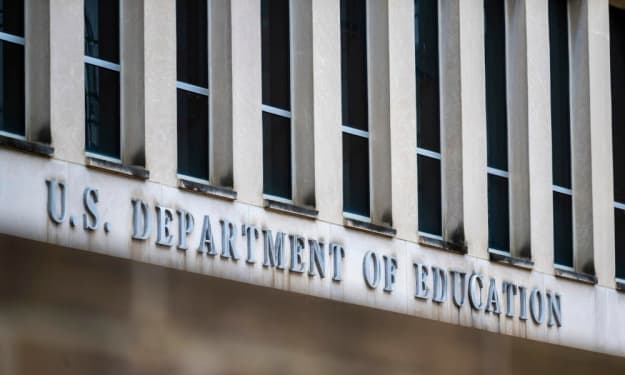
NAACP Sues U.S. Education Department Over DEI School Funding Cuts Civil Rights Group Alleges Discrimination, Threat to Black Students’ Equality --- The Core Allegations On April 15, 2025, the NAACP filed a federal lawsuit against the U.S. Department of Education, claiming that the Trump administration has been targeting schools that use diversity, equity, and inclusion (DEI) programs in an illegal manner. The lawsuit, *NAACP v. U.S. The Department of Education* contends that the administration's actions constitute a violation of civil rights laws and pose a threat to Black students' access to equal educational opportunities. The Education Department's two major actions are the focus of the complaint: 1. **The February 14 “Dear Colleague” Letter**: This warned schools that federal funding could be revoked if they consider race in admissions, hiring, scholarships, or other policies—a move the NAACP calls a “misinterpretation” of civil rights laws . 2. **April 3 Compliance Demands**: Schools were required to certify their adherence to anti-DEI policies by April 24, with threats of defunding for noncompliance. Institutions like Brown University and Harvard faced immediate financial repercussions, including frozen grants . --- Context: Trump’s Anti-DEI Agenda The lawsuit was filed in the context of President Donald Trump's larger campaign to eliminate DEI initiatives and racial preferences. The administration has framed these programs as discriminatory, leveraging Title VI of the Civil Rights Act of 1964 and a 2023 Supreme Court decision that struck down race-conscious college admissions . Critics argue this reinterpretation flips the intent of civil rights laws, prioritizing “anti-white racism” over systemic inequities . --- Effect on Students and Schools The NAACP highlighted tangible consequences of the funding threats: - Cancelled Programs The Waterloo, Iowa, school district withdrew first-grade students from the University of Northern Iowa’s annual African American Read-In, which had engaged 3,500 students across 73 schools . - Financial Pressure Brown University faced a $510 million funding freeze, while Harvard saw $2.2 billion withheld after refusing to comply . -Chilling Effect Educators fear DEI cuts will exacerbate racial disparities in underfunded, segregated schools. Black students already attend schools with declining white populations (24.5% in 2021 vs. 34.7% in 1990) and rising segregation . --- Legal and Moral Arguments The NAACP’s 52-page complaint alleges: -Constitutional Violations The policies infringe on equal protection rights and enable “viewpoint discrimination” against inclusive curricula . Misuse of Title VIThe administration weaponized anti-discrimination laws to justify defunding DEI programs, despite their role in closing opportunity gaps . -Factual Inaccuracies The Education Department’s guidelines were criticized as “broad, vague, and difficult to understand,” creating confusion among schools . NAACP President Derrick Johnson condemned the administration for “deepening harm” by denying systemic racism: > “Children of color consistently attend segregated, chronically underfunded schools where they receive less educational opportunities and more discipline. These truths will not vanish if you deny them. --- Broader Implications The lawsuit reflects a growing battle over racial equity in education: -EU Parallels Similar tensions between nationalist policies and multilateral cooperation have arisen globally, as seen in recent U.S.-EU trade conflicts [contextual link to prior analysis*]. - Political Divide The case underscores ideological clashes between Trump’s populist base—which views DEI as “woke” overreach—and civil rights advocates fighting for historical accountability . - Legal Precedent A ruling could redefine how civil rights laws are applied, potentially affecting K-12 and higher education nationwide.
By Rabbi Ahmad2 years ago in Education
The 10 professions that wouldn't exist without the internet
The world we live in today is undoubtedly influenced by the pervasive presence of the Internet. It has changed every aspect of our lives, from communication methods to work management, to the complete transformation of many professions. Some careers that today seem indispensable wouldn't exist at all without the advent of the web. Here, we will explore the ten professions that have emerged thanks to the Internet, defining new horizons for employment and entrepreneurship.
By Halina Piekarska (UltraBeauty Blog)2 years ago in Education
Unlock Your Musical Potential: Piano Lessons for Adults at Music House
Have you always dreamed of playing the piano but thought it was too late to start? At Music House School of Music, we believe that it’s never too late to begin your musical journey. Our piano lessons for adults are designed to meet you where you are, whether you're an absolute beginner or someone returning to the piano after a long break. With a strong focus on building both skill and confidence, we offer a supportive and engaging environment where you can thrive and experience the joy of making music.
By Music House School of Music2 years ago in Education