courses
Tackle that seemingly endless selection of course offerings; a roundup of helpful resources and sound advice for selecting the best courses and acing them.
"Top Mobile Apps to Help You Stay Organized"
Why Mobile Apps Matter More Than Ever The rise of remote work, hybrid lifestyles, and digital communication has increased our reliance on smartphones and mobile apps. Instead of carrying around planners, sticky notes, and to-do lists, we now have access to smarter solutions—right in our pockets. The best mobile apps offer seamless synchronization across devices, customizable reminders, smart integrations, and even AI-powered suggestions to help you work smarter, not harder.
By Shamshair Khan Hasan Zaiabout a year ago in Education
"The Evolution of E-Learning: Online Education in the Digital Age"
The Evolution of E-Learning: Online Education in the Digital Age In recent years, e-learning has emerged as a transformative force in the field of education. As technology continues to advance, the way we learn and teach has undergone a massive shift. The evolution of e-learning, from its humble beginnings to its current role as a cornerstone of modern education, has brought with it numerous innovations that have reshaped the educational landscape. Today, online education offers a dynamic, accessible, and globally connected learning environment that empowers both students and educators. This article will explore the journey of e-learning, analyze the technologies that have driven its evolution, and examine its advantages, challenges, and the future of digital education.
By Shamshair Khan Hasan Zaiabout a year ago in Education
"Cybersecurity Tips: How to Stay Safe on the Internet"
Cybersecurity Tips: How to Stay Safe on the Internet In today's digital age, ensuring online safety has become more important than ever. As we rely increasingly on the internet for work, education, shopping, and social interaction, the risks associated with cybersecurity are ever-growing. With cybercrime evolving and becoming more sophisticated, cybersecurity awareness is crucial for everyone, regardless of their digital experience. Protecting yourself online not only safeguards your personal data but also prevents potential identity theft, financial loss, and other digital threats.
By Shamshair Khan Hasan Zaiabout a year ago in Education
"The Future of Technology: Robotics and Automation"
"Revolutionizing the world as we know it, robotics and automation are no longer the future—they are the present, rapidly transforming industries, economies, and the very nature of human labor."
By Shamshair Khan Hasan Zaiabout a year ago in Education
Top 10 SEO Experts in Bellerive for 2025
Finding the right SEO professional can be the turning point for your business’s growth. The Top 10 SEO Experts in Bellerive are known for driving real results using proven SEO and digital marketing services. They’re specialists in local SEO, content strategy, and technical audits—all critical for businesses aiming to scale in the Bellerive market.
By John smithabout a year ago in Education
"Mastering Active and Passive Voice"
In English grammar, one of the most important distinctions in sentence structure is between active voice and passive voice. Understanding the difference not only enhances your writing style but also helps you express thoughts more clearly and effectively. Whether you’re writing an academic paper, business email, or creative story, knowing when and how to use each voice can make a big difference.
By Mukhtiar Ahmadabout a year ago in Education
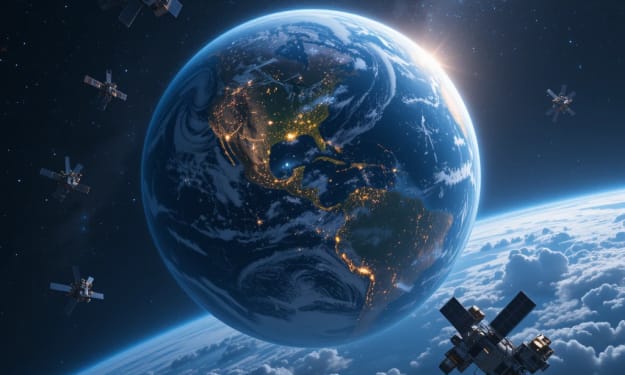
Satellites: The Silent Watchers of the Sky
Far above the blue skies, beyond the reach of birds and airplanes, silent machines float endlessly in orbit. These are satellites — one of humanity’s most powerful tools, quietly transforming life on Earth without making a sound. We rely on them more than we realize. When you check the weather, use GPS, watch international news, or make a video call — a satellite is working for you. These man-made marvels orbit the Earth 24/7, capturing data, relaying signals, and helping us understand, communicate, and survive in a fast-moving world. But what exactly is a satellite? How do they work? And why are they so vital to our lives? What Is a Satellite? In simple terms, a satellite is any object that orbits another. The Moon is Earth’s natural satellite. But in modern language, "satellite" usually refers to artificial satellites — machines launched into space by humans to serve specific purposes. The first artificial satellite was Sputnik 1, launched by the Soviet Union in 1957. It was a small, beeping metal sphere that marked the beginning of the space age. Today, there are more than 7,000 active satellites orbiting our planet, each with a unique mission — from communication and navigation to climate monitoring and military surveillance. How Satellites Work Satellites orbit Earth due to the perfect balance between gravity and speed. Once launched into space, a satellite moves fast enough to avoid falling back to Earth, but not fast enough to escape its gravity. This creates a continuous falling motion around the planet — what we call orbit. There are different types of orbits: Low Earth Orbit (LEO) for closer, faster satellites like those used for imaging; Medium Earth Orbit (MEO) for GPS satellites; and Geostationary Orbit (GEO) for communication satellites that appear stationary from the ground. Each satellite is equipped with solar panels for power, antennae for communication, and sensors or cameras to perform its tasks. Uses of Satellites: Changing Earth from Space 1. Communication: Satellites are the backbone of modern communication. Whether it's mobile networks, internet connectivity in remote areas, live television broadcasts, or long-distance phone calls — satellites transmit signals across the globe. 2. Navigation: Every time you use Google Maps or a car’s GPS, you’re connecting to a network of satellites in MEO. These satellites send timing signals, which help calculate your exact location on Earth. 3. Weather and Climate Monitoring: Satellites equipped with special sensors monitor clouds, storms, ocean temperatures, and more. They help predict weather patterns, warn about natural disasters like hurricanes and floods, and track long-term climate change. 4. Earth Observation: High-resolution cameras on satellites take images of Earth’s surface. These are used in agriculture, forestry, mining, urban planning, and environmental protection. They help us monitor deforestation, pollution, water levels, and even wildlife migration. 5. Defense and Security: Satellites play a crucial role in military operations. They are used for spying, surveillance, missile tracking, and secure communication. In modern warfare, space is the high ground. The Silent Heroes: Unseen but Essential Despite their importance, satellites are rarely noticed. They work quietly, without needing human presence, tirelessly orbiting day and night. Their benefits are vast, but their visibility is limited — and that’s part of their magic. From the farmer using satellite data to predict rainfall, to the airline pilot guided by satellite navigation — these floating machines are silently making our lives easier and safer. Challenges and Concerns With thousands of satellites in orbit, space is becoming crowded. Old, unused satellites and broken parts — known as space debris — pose a threat to active satellites and future missions. Moreover, increasing military satellites raise concerns about the weaponization of space. Global cooperation is needed to ensure that space remains peaceful and sustainable. The Future: Smarter, Smaller, Swarming The satellite industry is evolving fast. New trends include: Miniaturized satellites (CubeSats) that are cheaper and quicker to launch. Satellite constellations, like SpaceX’s Starlink, which aim to provide global internet coverage. AI-powered satellites that can analyze data in real time without sending it back to Earth. In the future, satellites will become even more embedded in our lives — helping us manage cities, protect nature, respond to disasters faster, and explore distant planets. --- Conclusion Satellites are not just machines in the sky. They are extensions of human curiosity, intelligence, and ambition. Orbiting quietly above us, they observe, connect, and protect. They are the silent guardians of Earth — watching over us, guiding us, and preparing us for the future. Every time we look up at the stars, remember: among them, man-made stars are working for you — lighting the path forward.
By Noman Afridiabout a year ago in Education
Laptop: Today’s Necessity, Tomorrow’s Weapon
In the 21st century, technology is not just a convenience — it is the backbone of our lives. Among the many digital tools we use every day, the laptop stands as a symbol of personal power and progress. From students learning online to professionals working remotely, the laptop is no longer just a machine; it is a lifeline, a companion, and a weapon of productivity. Gone are the days when desktops ruled the tech world. The world demanded mobility, and laptops answered. Lightweight, powerful, and increasingly affordable, laptops have become essential in nearly every field — education, business, healthcare, design, engineering, and even agriculture. They are shaping how we learn, work, create, and communicate. The Rise of the Laptop: From Luxury to Necessity Not too long ago, owning a laptop was considered a luxury. Only big corporations, universities, or the wealthy could afford them. But over the past two decades, the price of laptops has dropped while their power has increased dramatically. Today, even a student in a small village can access global knowledge through a basic laptop and internet connection. This change has flattened the world, giving people from every background a chance to compete, learn, and grow. Laptops are now used in every corner of life. In education, they allow online learning, research, and digital collaboration. In business, they power virtual meetings, presentations, and project management. In the creative world, writers, artists, and musicians use laptops to create content that reaches millions. Laptops in Education: The Digital Classroom Perhaps one of the greatest impacts of laptops has been in education. During the COVID-19 pandemic, millions of schools shut down globally. But learning didn’t stop. It shifted online — and laptops were the classroom. Students attended classes, gave presentations, submitted assignments, and took exams — all from their rooms. This not only kept education alive but also opened the door to new digital skills. Even now, post-pandemic, the role of laptops in education is bigger than ever. Teachers design interactive lessons, students access online libraries, and learning has become self-paced and flexible. Without laptops, such progress would have remained a dream. Remote Work and the Freedom to Create In the world of work, the laptop has become the ultimate office. Whether you’re an accountant or an artist, a coder or a content creator, a laptop enables you to work from anywhere. Coffee shops, parks, even while traveling — your office is where your laptop is. This flexibility has improved work-life balance and allowed people to explore freelance and entrepreneurial opportunities. Moreover, laptops are platforms of creativity. Video editors, graphic designers, writers, animators — all use laptops to bring their imagination to life. A song created on a laptop in a bedroom can go viral worldwide. A business idea developed on a spreadsheet can attract investors. A story written late at night can inspire thousands. Challenges and the Digital Divide However, not everything is perfect. Millions still cannot afford a laptop. In many parts of the world, students share devices, families live without reliable internet, and people are left behind in the digital race. This is the digital divide, and it is real. If laptops are the future, then the future must be made accessible for all. Governments, NGOs, and private companies must work together to make laptops affordable and available, especially in underprivileged areas. Only then can we truly empower the next generation. The Future of Laptops: Smarter, Smaller, Stronger As technology evolves, so will laptops. We are already seeing AI-powered machines, foldable screens, touchscreen hybrids, and cloud-connected devices. In the near future, laptops may become more personalized, energy-efficient, and integrated with virtual reality and AI. But no matter how advanced they become, their purpose will remain the same: to connect us, empower us, and help us build a better future. --- Conclusion A laptop is not just an electronic device. It is a modern-day tool of survival, learning, and success. It is a window to the world and a weapon of creation. Whether you’re a student dreaming big, a professional solving problems, or a creator inspiring others — the laptop is your faithful partner on the journey.
By Noman Afridiabout a year ago in Education
Shape Creative Spaces with Eduleem’s Interior Design Courses in Bangalore
Interior design is more than just decorating a room. It is about planning, designing, and creating beautiful and functional spaces. Whether it's a home, office, cafe, or showroom, good design makes a big difference. If you love art, creativity, and turning ideas into real spaces, interior design can be a great career for you. Bangalore, known as a city full of design, architecture, and innovation, is the perfect place to begin this journey. Eduleem’s interior design courses in Bangalore offer everything you need to start strong in this creative field.
By Anup kumarabout a year ago in Education