courses
Tackle that seemingly endless selection of course offerings; a roundup of helpful resources and sound advice for selecting the best courses and acing them.
Brooklyn College Cost
Understanding Brooklyn College Cost: A Smart Investment for Indian Students Studying Abroad Studying abroad is a dream for many Indian students, but it often comes with concerns about affordability. While popular destinations like the U.S. offer unmatched academic and professional opportunities, the cost of education can be daunting. However, certain institutions stand out for their academic excellence and budget-friendly tuition—and Brooklyn College is one of them.
By Unirely Study Abroadabout a year ago in Education
Why Students from Across India Prefer Bangalore for BSc MLT Studies
Relatively speaking, Bangalore has recently become a top destination for students from all over India to face quality education in many disciplines, especially in allied health sciences like Bachelor of Science in Medical Laboratory Technology (BSc MLT). The city is usually famous for its technology and IT capabilities, but it is also known for its large healthcare industry and good educational infrastructure. This essay intends to investigate the numerous reasons students from various parts of India choose to come to Bangalore to pursue their BSc MLT, in terms of academic systems, industry connections, educational infrastructure, culture and diversity, and future career prospects.
By Raksha Singhabout a year ago in Education
The Greedy Dog
Once upon a time, in a quiet village nestled between rolling green hills, there lived a dog named Bruno. Bruno was not an ordinary dog. He was known far and wide for his boundless energy, sharp eyes, and unfortunately, his insatiable greed. No matter how much he ate, Bruno always wanted more. One sunny morning, Bruno woke up particularly hungry. His stomach growled like a thunderstorm. He roamed the village streets sniffing around for something to eat. At the village bakery, the kind baker, Mr. Thomas, threw him a juicy bone with bits of meat still clinging to it. “Here you go, Bruno,” said Mr. Thomas, smiling. “That should fill you up!” Bruno wagged his tail furiously. “Thank you!” he barked and clamped the bone tightly in his jaws. His eyes gleamed with excitement. This was the tastiest bone he had seen in weeks. Determined to enjoy his prize in peace, Bruno trotted off toward the outskirts of the village. He wanted to find a quiet spot where no other dogs or animals would disturb him. His journey led him to a wooden bridge that stretched over a sparkling, clear river. As Bruno began to cross the bridge, he happened to glance down into the water. To his amazement, he saw another dog staring back at him from the surface. But in the dog’s mouth was a bone—an even bigger, juicier bone than the one he carried. Bruno stopped in his tracks. His mind raced with thoughts of greed. "That bone is bigger than mine!" he thought. "If I can get that one too, I’ll have two bones—twice the feast!" He didn’t realize he was looking at his own reflection. Without thinking, Bruno growled and barked at the “other dog,” demanding the bone. But the dog in the water only mirrored his actions. Anger and greed clouded Bruno's judgment. He lunged forward and snapped his jaws open to grab the phantom bone. At that exact moment, his own bone fell from his mouth, tumbled off the bridge, and splashed into the river below. Bruno watched in horror as the bone sank, vanishing in the rippling water. “No!” he howled, running from one side of the bridge to the other. “My bone! Come back!” But it was too late. The river had claimed his prize, and the reflection in the water—nothing more than his own foolish image—disappeared along with it. Heartbroken and hungry, Bruno sat down on the wooden planks, his head hanging low. He thought about what had just happened. In his greed to have more, he had lost what he already had. The wind whispered gently through the trees, as if nature itself was teaching him a silent lesson. An old crow, perched on a nearby branch, cawed, "Greed blinds even the wisest creatures, young one." Bruno looked up. "I was foolish," he admitted softly. "I had everything I needed, but I wanted more. And now I have nothing." The crow nodded. “The river doesn’t give back what it takes. But if you learn from this, perhaps your heart will grow wiser.” Bruno returned to the village, his stomach still empty, but his mind full of reflection. Mr. Thomas saw him approach, tail down, ears drooping. “What happened, Bruno? Where’s your bone?” the baker asked kindly. Bruno sat and barked softly, as if telling the tale of his foolishness. Though the baker didn’t understand every bark, he could sense the dog’s regret. Smiling, Mr. Thomas tossed him another, smaller bone. “Be content, little one,” the baker said gently. “Sometimes what we have is enough.” Bruno took the bone, not with the wild excitement of before, but with quiet gratitude. He lay down under a shady tree, slowly chewing on his meal. This time, as he crossed the bridge later that day, he kept his eyes straight ahead, ignoring the tempting reflection in the water. From that day forward, Bruno became known not just for his energy, but for his wisdom. Whenever another animal grew greedy or restless, Bruno would bark and lead them to the bridge, showing them the river and reminding them of the day he lost everything because of his own greed. And so, the village animals and even the humans came to understand: greed may promise more, but it often leaves us with less. --- Moral of the Story: Be content with what you have. Greed can make you lose even the blessings you already possess.
By Waseem Khan about a year ago in Education
Why Smart Students Are Using Accounting Essay Help in 2025
The academic demands on students in 2025 are greater than ever before. With competitive coursework, evolving technology, and increased pressure to maintain top grades, students are turning to smarter, more strategic ways to stay ahead. One of the most effective strategies is seeking accounting essay help Whether it’s due to tight deadlines, complex topics, or the need for high-quality submissions, smart students are leveraging professional services to gain a competitive edge. In this blog, we explore why accounting essay help has become essential in 2025, how to choose the right provider, and why The Student Helpline remains a top choice.
By Andersan Smithabout a year ago in Education
MBBS in Chechen State University: Ranking, Fees & Why It’s Ideal for Indian Students
Studying medicine in foreign countries is a trend that is escalating among Indian students. Chechen State University MBBS is one of the many international choices that are affordable, of good quality, and recognized worldwide. This university, based in Grozny, Russia, is fast catching up with the global medical admirers. This blog will cover Chechen State University ranking, the fee structure, and why it is perceived to be the best university for Indian students.
By Tanya Sharmaabout a year ago in Education
CCNA7 Exam Prep Training Course Online
CCNA7 Exam Prep Training Course Online: Your Ultimate Guide by DumpsBoss In today’s fast-paced IT landscape, Cisco’s CCNA certification remains a cornerstone credential for networking professionals worldwide. With the 2025 update to the CCNA syllabus, known as CCNA7, mastering the latest concepts is essential for career growth. At DumpsBoss, we provide comprehensive CCNA7 Exam Prep and CCNA Practice Test resources designed to help you succeed confidently in this updated certification journey.
By Study4Passabout a year ago in Education
What Is the Best Way to Get Law Essay Help Online?
Introduction: Writing law essays demands a high level of academic rigor. Precision in argument, attention to complex legal terminology, and proper application of legal citations make these essays uniquely challenging. Whether you're tackling tort law, jurisprudence, international law, or criminal justice, navigating dense statutes and judicial opinions is no small feat.
By James Hellerabout a year ago in Education
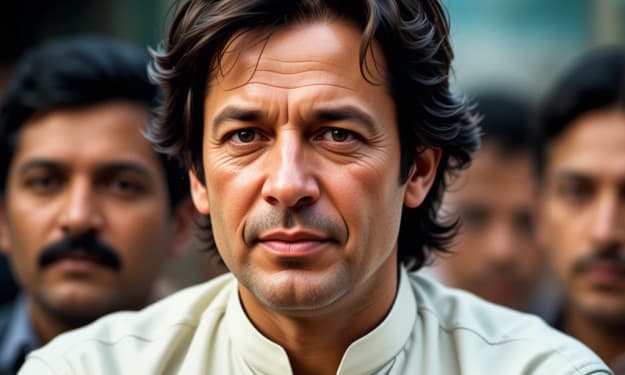
From Cricket Legend to Political Powerhouse
Imran Khan: The Rise, Fall, and Resilience of Pakistan’s Most Compelling Leader Few names stir such strong emotions in Pakistan — admiration, criticism, loyalty, and defiance — as Imran Khan. Once hailed as the golden boy of Pakistani cricket, Khan reinvented himself as a philanthropist, a political disruptor, and eventually the 22nd Prime Minister of Pakistan. His story is one of ambition, resilience, and controversy — a reflection of Pakistan itself: bold, complex, and constantly evolving. Born in 1952 in Lahore, Imran Khan belonged to a well-off Pashtun family. He was educated at Aitchison College in Pakistan and later at Oxford University in the UK, where he honed both his academic and cricketing skills. It was during the 1970s and 1980s that he truly rose to international fame as a fast bowler and all-rounder for the Pakistan national cricket team. His leadership, confidence, and tenacity on the pitch made him a household name. Khan’s crowning achievement came in 1992 when he led Pakistan to its first and only Cricket World Cup victory. More than just a sporting win, it was a national moment — uniting Pakistanis across class and regional lines. Overnight, Imran Khan became a symbol of excellence, determination, and patriotic pride. But instead of settling into retirement or celebrity life, he took a different path — one that would redefine his legacy. After his mother’s death from cancer in the mid-1980s, Khan embarked on an ambitious and deeply personal project: building Shaukat Khanum Memorial Cancer Hospital. It was Pakistan’s first modern facility of its kind, created entirely through donations and public support. Later, he would also establish Namal University in his hometown of Mianwali, offering affordable education to rural youth. These ventures significantly bolstered his reputation as a man of the people and a social reformer, not just a sports hero. But Imran Khan wanted more than philanthropy. In 1996, he founded Pakistan Tehreek-e-Insaf (PTI) — a political party built on the principles of justice (insaaf), anti-corruption, and self-reliance. His early foray into politics was rough. For over a decade, PTI failed to secure a significant presence in parliament. Critics dismissed him as naive and idealistic, arguing that charisma alone was no substitute for political experience. He was often alone in parliament and the media, seen more as a celebrity-turned-politician rather than a real contender for leadership. However, Imran Khan’s perseverance would eventually pay off. As Pakistan’s traditional political parties — primarily the Pakistan Muslim League-Nawaz (PML-N) and Pakistan Peoples Party (PPP) — became increasingly entangled in corruption scandals, Khan’s consistent message began to resonate. By the 2013 elections, PTI had grown into the country’s second-largest political force, especially among the youth and urban middle class. In 2018, after more than two decades in politics, Imran Khan led PTI to a historic victory and became Prime Minister. His supporters saw it as the beginning of a new era — the long-promised "Naya Pakistan." His government launched initiatives focused on social welfare, like the Ehsaas Program, which aimed to reduce poverty through financial aid and health services. His Naya Pakistan Housing Scheme intended to provide affordable housing for low-income citizens. Meanwhile, his emphasis on digital governance and tax reform signaled an attempt to modernize Pakistan’s institutions. On the international stage, Khan sought to reshape Pakistan’s image. His speech at the United Nations General Assembly in 2019 earned praise for highlighting key issues like Islamophobia, Kashmir’s plight, and climate change. He built stronger ties with Turkey, China, and Gulf states, while also attempting a balancing act in Pakistan’s sensitive relationship with the United States and India. But his time in office was riddled with challenges. Inflation soared, the economy struggled, and his government was often accused of relying too heavily on the military establishment. Media freedom declined, opposition leaders were jailed or intimidated, and critics began to question whether Khan’s promises had been overblown. In April 2022, Khan was ousted from power through a no-confidence motion, becoming the first prime minister in Pakistan’s history to be removed in such a manner. He immediately alleged that his removal was the result of a foreign conspiracy, with U.S. involvement — a claim that was widely debated. Whether true or not, the narrative energized his base, and Khan launched a series of massive public rallies across the country. His message shifted from governance to resistance, positioning himself as a lone warrior fighting corrupt elites and external forces trying to dominate Pakistan’s sovereignty. Despite facing dozens of legal cases, censorship, and even surviving an assassination attempt, Khan has maintained his grip on public imagination. His use of digital media platforms like Twitter, YouTube, and TikTok allowed him to bypass traditional media and speak directly to the people, especially Pakistan’s large and politically active youth population. His online addresses routinely rack up millions of views, and his supporters have become adept at spreading his message far and wide. Perhaps most remarkably, even in the face of incarceration and legal challenges in 2023–2025, Khan remained relevant and influential. His followers view him not merely as a politician, but as a movement — one representing dignity, defiance, and hope for a better Pakistan. Critics, however, argue that his populist rhetoric undermines institutions and creates divisions in an already fragile democracy. Regardless of one’s political stance, one cannot deny that Imran Khan has redefined political engagement in Pakistan. He broke the two-party dominance that ruled for decades, inspired a generation to believe in change, and introduced a level of charisma and ideological clarity rarely seen in South Asian politics. Conclusion Imran Khan’s story is far from over. Whether he returns to power or remains in opposition, his legacy will shape Pakistan’s political landscape for years to come. For many, he is still the cricketer who made them proud, the philanthropist who gave them hope, and the leader who made them believe that change was possible. As Pakistan continues to grapple with economic, political, and social challenges, voices like Khan’s — bold, uncompromising, and deeply nationalistic — will remain central to the national conversation. Love him or loathe him, Imran Khan is more than just a politician — he is a phenomenon. And Pakistan, for better or worse, is forever changed because of him.
By GoldenToneabout a year ago in Education