courses
Tackle that seemingly endless selection of course offerings; a roundup of helpful resources and sound advice for selecting the best courses and acing them.
She Sells Seashells by the Seashore – An Essay
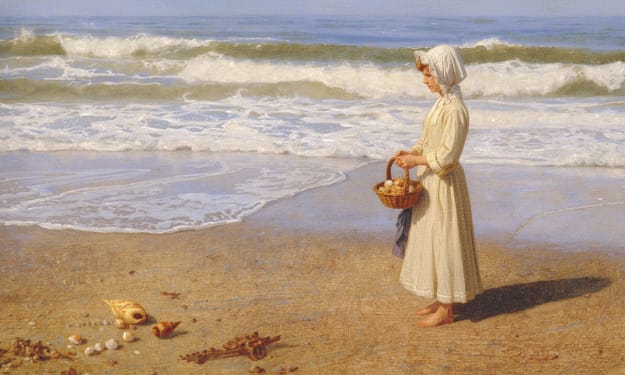
There are some phrases in the English language that seem almost timeless. They roll off the tongue in a playful way, yet they hide more depth than most people expect. “She sells seashells by the seashore” is one of those phrases. At first glance, it’s just a tongue twister, the kind you might hear in a classroom or around a campfire when someone challenges you to say it three times fast. But behind those eight little words is a fascinating mix of history, clever language, and even a story of determination that reaches back to the early 1800s. Where It All Began The exact origin of this famous tongue twister isn’t crystal clear, but many historians link it to the life of Mary Anning (1799–1847). Mary was not just any seaside vendor; she was a self-taught fossil collector and paleontologist from the town of Lyme Regis on the southern coast of England. As a child, she began scouring the cliffs and beaches for fossils — not as a hobby, but as a means to help support her family after her father’s death. It’s worth noting that Mary didn’t technically sell ordinary seashells. She sold fossilized shells and prehistoric remains — things that fascinated scientists and wealthy tourists of the time. Still, her work almost certainly inspired the popular line. In 1908, songwriters Terry Sullivan and Harry Gifford wrote a song titled “She Sells Seashells”, and it is widely believed that Mary’s remarkable life was their inspiration. Over time, that song’s chorus broke free from the sheet music and became the tongue twister we know today. Why It’s Tricky If you’ve ever tried to say “She sells seashells by the seashore” quickly, you know it’s not as easy as it looks. That’s because the phrase is packed with alliteration (repeating the same first sound in multiple words) and consonance (repeating similar consonant sounds in close proximity). The challenge here lies in switching between the “s” sound and the “sh” sound. These are produced in similar ways but require slightly different positions of the tongue and airflow. Your mouth has to adjust very quickly, and when you rush, the sounds tend to blur together. That’s why tongue twisters like this are often used by actors, singers, and public speakers to warm up their voices and sharpen their pronunciation. More Than Just a Game While most people meet this phrase as a playful challenge, it’s also a kind of miniature story about work, place, and persistence. In just eight words, you can picture a woman standing on a sunny shore, selling the treasures she’s gathered from the sea. There’s a rhythm to it, almost like the gentle lap of waves, and it’s easy to imagine the sound of shells clinking together in a basket. For Mary Anning, this wasn’t just a poetic image — it was her life. She faced storms, landslides, and the constant danger of working on unstable cliffs, yet she kept going. Her discoveries helped shape early paleontology, but because she was a woman in the early 19th century, she received little formal recognition in her lifetime. Today, though, her name is remembered alongside the tongue twister that may have been inspired by her. Educational Value Teachers often use this phrase to help students with pronunciation, especially those learning English as a second language. It’s short enough to memorize, but complex enough to require real concentration. By practicing it slowly and then speeding up, learners gain better control over their speech. It’s also a tool for developing listening skills. When students hear others attempt the phrase, they start to notice the subtle differences between “s” and “sh,” which sharpens their ear for detail. In a way, this little line is like a gym workout for the tongue and brain. A Symbol of Resourcefulness Beyond the classroom, “She sells seashells by the seashore” can be read as a tiny lesson in business and self-reliance. The “she” in the sentence is independent. She gathers her own products (seashells), chooses her marketplace (the seashore), and makes a living through her own effort. That’s entrepreneurship in its simplest form. It’s no wonder this phrase has sometimes been used in marketing or motivational contexts. It reminds us that success can come from starting with what’s right in front of us — even something as simple as shells washed up by the tide. Why It Stays With Us Many tongue twisters fade into obscurity, but this one has stayed alive for over a century. There are a few reasons for that: It’s easy to remember — only eight words. It paints a clear picture — anyone can imagine a seashore and shells. It’s playful — people of all ages enjoy trying to say it fast. It has a real story behind it — the connection to Mary Anning gives it depth. In a world where so much of our communication is typed rather than spoken, the fact that this old-fashioned phrase still pops up in classrooms, acting studios, and even social media trends says something about its enduring charm. Conclusion “She sells seashells by the seashore” may seem like a simple children’s rhyme, but it carries history, challenge, and meaning within its short structure. It’s a playful exercise in language, a nod to a remarkable woman’s determination, and a reminder of the creativity hidden in everyday life. Whether you use it to warm up before a performance, practice your English, or simply have a laugh with friends, it connects you to over a century of voices that have stumbled, laughed, and tried again. And maybe that’s the real beauty of it — just like the woman in the phrase, we keep going, one shell at a time.
By Vocal Member about a year ago in Education
Traditional vs. Modern AI-Based Education: Balancing Human Effort and Technological Guidance. AI-Generated.
Introduction Education has always been the foundation of personal growth, societal development, and economic progress. Over the centuries, the methods of education have evolved—shifting from oral traditions to printed books, from chalkboards to interactive screens, and now, from teacher-led classrooms to artificial intelligence (AI)-driven learning platforms.
By INAM ULLAHabout a year ago in Education
Master Your Mind: The Power of Effective Study Methods
Master Your Mind: The Power of Effective Study Methods Unlock Your Academic Potential with Proven Techniques for Focus, Retention, and Success When Maya entered her first year of university, she was excited—but also overwhelmed. High school had been manageable, but now, with lectures, reading assignments, projects, and exams all piling up, she began to question whether she was really cut out for it. After her first round of exams didn’t go well, Maya didn’t blame anyone else. “I know I’m smart,” she thought. “But maybe I’m just not studying the right way.” So, she started researching different study techniques. That’s when she discovered the Pomodoro Technique—a simple but powerful time management method developed in the 1980s. It sounded almost too easy: study for 25 minutes, take a 5-minute break, and repeat. After four cycles, take a longer break. Maya was skeptical. “Only 25 minutes? That’s not enough time to get into a flow,” she thought. But she decided to try it anyway. She set a timer, cleared her desk, turned off notifications, and opened her psychology textbook. To her surprise, the first 25 minutes flew by. And when the timer rang, she stood up, stretched, and made some tea. When she sat down again, she didn’t feel tired or distracted—she felt refreshed. By the end of two hours, she had completed more work than she usually did in twice the time. The structured bursts of focus were exactly what she needed. No more endless, unproductive cramming sessions. No more drifting off or scrolling through social media. The Pomodoro Technique helped her mind stay sharp, and the frequent breaks kept her energy steady. But Maya didn’t stop there. Encouraged by the success of this time method, she started layering on other strategies: 1. Active Recall Instead of just rereading notes, Maya began testing herself. She’d close her book and write down everything she could remember. Then, she’d check for gaps. This method, known as active recall, helped move information into her long-term memory. 2. Spaced Repetition She also started using a flashcard app that spaced out questions over days and weeks. It repeated tough questions more often and easy ones less, helping her brain strengthen connections over time. 3. Study Environment Maya made her study space inviting—bright lighting, a comfortable chair, and motivational quotes pinned on the wall. She even had a little plant on her desk to bring in some life. By keeping this area clean and tech-free, she associated it with focus and progress. 4. Goal Setting Each day, she wrote down 3 specific tasks. Not “study biology,” but “review 2 chapters and answer 10 practice questions.” Clear goals helped her stay focused and gave her a sense of accomplishment when she checked them off. --- Over time, Maya’s grades improved—but more importantly, her confidence grew. She no longer dreaded exams. She felt in control of her learning and actually enjoyed it. One day, her classmate Jordan asked, “How do you stay so on top of things? I’m drowning over here.” Maya smiled. “It’s all about the method. I don’t study more than anyone else—I just study better.” She showed him the Pomodoro timer on her phone and explained how she combined it with recall and spaced repetition. Jordan gave it a shot, and within a few weeks, he too saw a difference. Their little group grew. Soon, Maya and Jordan were meeting weekly with a few other students, sharing tips and encouraging one another. They called themselves the Mind Masters. What started as a simple experiment with a timer turned into a movement of motivated learners. --- By the end of the year, Maya was thriving. Not just academically, but mentally and emotionally too. She had developed a healthy rhythm and proven to herself that success wasn’t about cramming—it was about working smarter. Now in her final year, Maya often mentors new students. She tells them the same thing: “The secret isn’t magic. It’s method.” And whenever she says it, she thinks back to that first day she tried something new—to that one small decision that changed everything. --- The Takeaway: Study success isn’t about raw hours—it’s about strategy. Whether it’s the Pomodoro Technique, active recall, or setting clear goals, the right method can turn stress into structure and confusion into clarity. Like Maya, any student can master their mind—it just starts with a single step in the right direction.
By Muhammad Saad about a year ago in Education
“The Lesson I Never Taught”. AI-Generated.
I’ve been teaching high school English for fifteen years, long enough to believe I could read students like books. I thought I could tell who would work hard, who would coast, and who would vanish into the background. I was wrong. Ethan proved it. He claimed the last desk in the back row from the first day of school, hood drawn low, earbuds tucked just far enough to hide from sight. He never handed in assignments. Never raised his hand. If I called on him, he shrugged and stared at the clock. I told myself I’d seen it before — some kids simply don’t want to be helped. You focus your energy where it will matter. But there was something different about him. Every day, after the bell, he lingered for a few seconds. His eyes would drift toward the stack of novels on my desk — To Kill a Mockingbird, Of Mice and Men, The Catcher in the Rye. His gaze lingered like someone standing outside a bakery window with no money in their pocket. --- One Friday afternoon, long after the class had emptied, I was grading essays when the door creaked open. Ethan stood there, shifting from foot to foot. “Can I borrow one?” he asked, nodding toward the books. I nearly dropped my pen. “Which one?” He stepped forward and picked To Kill a Mockingbird. “This one. I’ll bring it back.” --- The next Monday, he returned the book. I expected a polite thank-you and nothing more. Instead, he asked: “Do you have more like this?” I did. And over the next few months, Ethan read Of Mice and Men, Fahrenheit 451, and The Great Gatsby. He didn’t write the essays I assigned, but he stayed after class to talk about them. His interpretations were raw and unpolished but deeply perceptive. He spoke about characters like they were people he’d met. “Why don’t you write this down?” I asked him one afternoon. “You’d ace every assignment.” He shook his head. “I can’t. Not like this.” I didn’t push. --- It wasn’t until April that I learned the truth. Parent-teacher conferences rolled around. Ethan’s slot was blank — no one came. But when I checked his file, I saw a single note buried in the system: Dyslexia. Severe. Diagnosed in middle school. No accommodations since. I sat there staring at the screen, my stomach sinking. I’d assumed he didn’t care. In reality, he’d been climbing a mountain no one saw. --- The next day, I asked him to stay after class. “I read your file,” I said gently. His shoulders tightened. “Figures.” “No, Ethan. I should’ve asked sooner. I should’ve seen it.” I slid a notebook toward him. “Here’s the deal. You talk, I’ll write. We’ll build your essays together.” He hesitated. “That’s… allowed?” “It is now,” I said. --- From then on, our after-school sessions became routine. He’d lean back in his chair, words spilling out about themes and character arcs, and I’d scribble them down. Then we’d read them together, shaping them into paragraphs. For the first time, Ethan saw his thoughts on paper — his thoughts, in his voice, without the wall of spelling and decoding standing in the way. --- By June, Ethan’s grade had climbed from failing to one of the highest discussion averages I’d ever given. He wasn’t suddenly perfect — sometimes he still forgot assignments, and reading aloud still made him self-conscious — but he was present. Engaged. Proud. On the last day of school, he stopped by my desk. He handed me a battered copy of The Great Gatsby. Inside, in careful block letters, he’d written: > “Thanks for listening when you didn’t have to. You taught me more than books — you taught me I’m not stupid.” --- I’ve taught hundreds of students over the years, but that single sentence sits heavier in my heart than any test score or award. Because I realized that education isn’t just about lesson plans, standards, or grades. It’s about seeing the person in front of you. It’s about noticing the kid who lingers after class, the one whose silence isn’t apathy but a shield. Sometimes, the most important lesson you teach is the one you never planned. And sometimes, it’s the student — not the teacher — who writes the ending. Start writing...
By Muhammad umairabout a year ago in Education
Mastering the Art of Easy Essay Writing
Emma Reynolds had always dreaded essay assignments. The blinking cursor on a blank page filled her with anxiety, not inspiration. While her classmates seemed to churn out structured, compelling essays overnight, Emma felt paralyzed at the starting line, overwhelmed by introductions, body paragraphs, and conclusions that never quite clicked. That all changed in her final year of high school, thanks to a surprising encounter—and a few simple steps that transformed her writing forever. It began in the most unlikely place: detention. Emma had been caught texting in class. It wasn’t typical for her, but she’d had a rough morning. Her English teacher, Mr. Caldwell, assigned her a one-hour detention after school—and told her to bring her most recent essay draft. When she arrived at his classroom that afternoon, she found him seated at his desk, calmly sipping tea. He gestured to a chair and said, “Let’s fix that essay of yours.” Emma sighed. “It’s hopeless. I’m just not a writer.” “Nonsense,” he replied. “Writing is like cooking. You just need the right ingredients—and to stop overcomplicating the recipe.” He handed her a printed copy of her essay, marked with comments, and then a clean sheet of paper. “Let’s start from scratch. I’ll walk you through five steps. If you can follow these, I promise essay writing will feel easy.” She raised an eyebrow. “Five steps?” “Five. That’s all you need.” --- Step 1: Understand the Prompt “Most students rush to write,” Mr. Caldwell said, “without fully understanding what the question is asking.” He had Emma read the essay prompt again. It was a simple question about whether social media does more harm than good. “So,” he asked, “what’s your opinion?” Emma shrugged. “I guess it depends…” He cut her off gently. “No ‘depends’. Take a stance. Just pick a side, and we’ll build from there.” After a moment of thinking, she said, “Okay. I think it does more harm.” “Good. That’s your thesis. That’s your purpose.” --- Step 2: Plan Before You Write Next, he drew a simple chart with three columns on the board labeled: Main Idea, Evidence, and Explanation. “Think of three reasons why social media causes harm,” he instructed. Emma filled in the chart with ideas: addiction and distraction, misinformation, and mental health issues. For each point, she added a piece of evidence from her research and a quick explanation in her own words. “Now,” Mr. Caldwell said, smiling, “you have the skeleton of your essay.” --- Step 3: Write a Clear Introduction Mr. Caldwell showed her a basic formula: hook, context, thesis. “You don’t need to sound fancy,” he said. “Start with a strong statement, give a bit of background, and then say what you believe.” Emma tried: "In today’s digital world, social media is everywhere. While it connects people, it also creates major problems. This essay argues that social media does more harm than good due to its addictive nature, spread of misinformation, and negative impact on mental health." “Clear and confident,” he nodded. “Perfect.” --- Step 4: Build Strong Body Paragraphs “Each body paragraph,” he explained, “should be like a mini-essay. Start with a topic sentence, give evidence, explain it, then link back to your thesis.” Together, they wrote one paragraph based on her first point: addiction and distraction. It came together smoothly, her ideas flowing now that she had a clear structure. “Don’t overthink your words,” he said as she typed. “Clarity beats complexity every time.” --- Step 5: End with Purpose Finally, he guided her through a conclusion: restate the thesis in different words, summarize the key points, and end with a final thought. Emma wrote: "Although social media offers connection, its drawbacks outweigh its benefits. Its addictive nature, role in spreading false information, and harm to mental health show that it causes more harm than good. To protect ourselves, we must use it more mindfully—or risk being controlled by the very tools meant to connect us." She looked up. “That… didn’t feel hard.” Mr. Caldwell grinned. “That’s the idea.” --- From that day on, Emma no longer feared the blank page. She had mastered something more important than advanced vocabulary or complex structures—she had learned to write with confidence, clarity, and purpose. By graduation, not only had she improved her grades, but she also helped friends with their writing, sharing the same five steps that changed everything for her. She even started a blog titled Easy Essay Emma, where she broke down essay tips for other students who felt stuck like she once did. Because sometimes, all it takes to become a writer—is realizing it’s not about talent, but having the right tools.
By Muhammad Saad about a year ago in Education
How to Earn Money Online
Creation The internet has transformed the manner people paintings, talk, and do enterprise. Today, being profitable on-line is no longer a distant dream; it’s a reality for tens of millions international. From freelance gigs to complete-scale virtual corporations, there are limitless opportunities for anybody willing to study and put within the attempt. Whether you’re a student, a stay-at-home discern, or in reality trying to supplement your earnings, the digital international gives a sizable market where your capabilities, creativity, and backbone can be became actual income.
By Samiullah Adilabout a year ago in Education
Best English Tutors in Milton
To help you find the perfect match for improving English skills in Milton, here’s a carefully curated list of the Best English Tutors in Milton. We’ve ranked them based on personalized support, proven track records, flexible formats, and local reputation.
By Archived Userabout a year ago in Education
Where Can You Find Reliable Physics Exam Help Online?
Physics is frequently well-defined as one of the most challenging academic subjects. Its compound concepts, intricate formulas, and plain problem-solving necessities can leave even the most loyal students feeling overcome—especially when facing an important online physics exam. With education moving progressively toward remote and digital formats, more students are turning to specialized online assistance to boost their performance.
By Lucas Lednerabout a year ago in Education
Master the Skills of Driving with Beginner Driving Lessons
Learning to drive is indeed one of the most important as well as exciting milestones in one’s life. Consider it to be your first big step toward independence and freedom on the road. But like anything new, it can feel a little overwhelming at first. So, don’t worry! Beginner driving lessons are designed to help you build confidence, learn the rules of the road, and develop safe driving habits from day one. Whether you’re nervous about your first turn behind the wheel or just curious about what to expect, this blog about beginner driving lessons near me woodford, will guide you through the basics. So buckle up, take a deep breath, and let’s hit the road toward becoming a confident, skilled driver!
By Faruk Automatic Driving Schoolabout a year ago in Education