courses
Tackle that seemingly endless selection of course offerings; a roundup of helpful resources and sound advice for selecting the best courses and acing them.
How I Turned My Free Time Into Real Online Income
The Turning Point I still remember the evening when I was scrolling endlessly through my phone, wasting hours on social media. Life felt repetitive—wake up, work, come home tired, and sleep. But one day, I asked myself: “What if I could use this free time for something meaningful, maybe even profitable?” That single thought became the seed of my journey into online earning. And honestly, I never thought small steps could lead to such steady results.
By Umar Farooqabout a year ago in Education
The Silent Power of Education
M Mehran There is something almost magical about the way education transforms lives. At first glance, it looks like nothing more than memorizing facts, passing exams, or earning certificates. But in reality, education is far more powerful than most people realize—it is a quiet revolution that starts in the mind and ripples outward, shaping entire societies. Think for a moment about a single classroom. A teacher stands at the front, perhaps with a chalkboard or a digital screen. Around them, rows of children listen, write, and imagine. On the surface, it may not look extraordinary. Yet in those very moments, futures are being written. The child who struggles with a math problem today might one day design a bridge that connects two cities. The girl scribbling in her notebook might become the author who inspires millions. Education is not just about what we learn—it is about who we become. Breaking Barriers One of the most powerful things education does is break barriers. For centuries, entire groups of people were denied access to learning. Women, minorities, and the poor were often told education wasn’t “meant” for them. But history has proven otherwise. The more inclusive education becomes, the more societies grow. Malala Yousafzai, a young girl from Pakistan, is a living example. She raised her voice for girls’ right to go to school and nearly paid with her life. Today, her message is louder than ever: when a girl learns, entire communities rise. Education is the ultimate equalizer—it does not care about your background, your gender, or the wealth you were born into. It only asks if you are willing to open your mind. More Than Degrees Unfortunately, too many people reduce education to grades and degrees. While those are important, they are not the full picture. Education is not just about passing tests; it’s about learning how to think, question, and create. The best classrooms don’t produce robots who can repeat information. They produce thinkers who challenge the world around them. Albert Einstein once said, “Education is not the learning of facts, but the training of the mind to think.” That is where the real power lies. When people learn to think critically, they stop accepting things at face value. They begin asking hard questions—about governments, about fairness, about the future. And it is these questions that lead to progress. Education Beyond the Classroom We often forget that education is not limited to schools and universities. Life itself is a classroom. The mechanic who teaches his apprentice how to fix an engine is educating. The grandmother who passes down family traditions is educating. Even failure has lessons to offer if we are willing to listen. In today’s world, education has expanded far beyond traditional boundaries. The internet has turned smartphones into libraries and online platforms into universities. A child in a small village can now access the same information as a student in a top-tier city school. Knowledge has never been so accessible—and that accessibility is rewriting the story of human potential. The Human Side of Learning At its heart, education is not only about knowledge—it is about connection. Think about your favorite teacher. Chances are, it wasn’t only what they taught you that mattered, but how they made you feel. Great educators inspire confidence, curiosity, and courage. They ignite sparks that often burn for a lifetime. I once knew a boy who hated reading. Books were a chore, and he struggled through every page. But then a teacher gave him a novel that matched his interests—a story about adventure and discovery. That single book turned him from a reluctant reader into someone who couldn’t stop exploring libraries. Years later, he became a journalist. All because one teacher chose to believe in him. This is the human side of education. It’s about more than syllabuses and exams. It’s about helping people discover their own strength. The Future of Education As we look ahead, education faces new challenges and opportunities. Artificial intelligence, online learning, and global connectivity are reshaping the way we learn. Some fear that technology will replace teachers, but the truth is more inspiring: technology will support teachers, making education more personalized and accessible. The real challenge is not whether technology will help us learn, but whether we will ensure equal access. Millions of children still grow up without books, schools, or teachers. If we want education to truly change the world, it must reach everyone—not just those who can afford it. A Call to Action Education is more than a personal journey; it is a collective responsibility. Every time we share knowledge, mentor someone younger, or fight for better schools, we are investing in the future. The ripple effect is endless. One educated child can lift a family. One educated family can strengthen a community. And one educated community can change a nation. The silent power of education is that it does not just teach us what to think—it teaches us how to dream. It gives us tools to shape the world into something better, kinder, and wiser. And perhaps that is the most important lesson of all: when we invest in education, we invest in hope.
By Muhammad Mehranabout a year ago in Education
Your Brain vs. Your Body
“The Brain Uses More Energy Than You Think” e Power-Hungry Brain: Why Your Mind Consumes So Much Energy When you think about the parts of your body that use the most energy, you might imagine your muscles during exercise or your heart pumping blood tirelessly. Surprisingly, the organ that demands the most energy is not your biceps or your lungs—it’s your brain. Even though the brain makes up only about 2% of your body weight, it consumes roughly 20% of the body’s total energy. That’s a fascinating fact of biology and one that raises an important question: why does such a small organ use so much power? A Tiny Organ with Massive Power The human brain weighs around 1.4 kilograms (3 pounds) on average, yet it contains about 86 billion neurons. These neurons are like tiny electrical circuits, constantly communicating with one another. To send signals, neurons rely on rapid electrical impulses, and they also need chemical messengers called neurotransmitters to pass messages between them. All of this activity requires an enormous amount of energy. In fact, most of the energy consumed by the brain is used not for thinking hard or solving problems, but for simply keeping its communication system running. Neurons are “on duty” all the time, even when you’re asleep. That’s why your brain never truly rests. The Fuel That Keeps You Thinking The brain’s favorite fuel is glucose, a type of sugar found in the foods we eat. When you consume carbohydrates, your body breaks them down into glucose, which then travels through your bloodstream. The brain absorbs this glucose and uses it to produce energy. Without a steady supply of glucose, your brain cannot function properly, which is why you might feel dizzy, confused, or irritable if you skip meals. What’s even more fascinating is that your brain is picky about its fuel. While your muscles can use fats and proteins in addition to glucose, your brain mostly sticks to sugar. In extreme situations, like fasting or starvation, the brain can adapt and use ketones (produced when the body burns fat), but glucose remains its primary and preferred source. Thinking vs. Resting: Does Mental Work Burn Calories? Many people wonder: if the brain uses so much energy, does thinking harder burn more calories? The short answer is—only a little. While doing complex math problems or concentrating on a puzzle might increase brain activity slightly, the difference in calorie burn is tiny compared to what your brain already uses at rest. For example, even when you’re relaxing, daydreaming, or sleeping, your brain is still busy controlling breathing, regulating temperature, processing memories, and more. That’s why the brain’s baseline energy consumption is already so high. The Evolutionary Advantage Why did human brains evolve to be so energy-hungry? Scientists believe it’s because our brains are what set us apart as a species. The human brain is incredibly advanced, capable of language, abstract thinking, planning, creativity, and problem-solving. These abilities gave early humans a survival edge. However, there was a trade-off: growing such a powerful brain required more calories. That’s one reason why our ancestors developed hunting, cooking, and farming—to meet the high energy demands of their brains. Taking Care of Your Brain’s Energy Needs Since the brain relies so heavily on glucose and oxygen, maintaining good overall health is essential for keeping it in top condition. Eating a balanced diet rich in whole grains, fruits, and vegetables provides steady fuel. Exercise improves blood flow to the brain, ensuring it gets enough oxygen and nutrients. Even staying hydrated matters, as dehydration can make it harder for your brain to think clearly. A Final Thought The next time you feel mentally drained after a long day of work or study, remember this: your brain is a small but mighty energy powerhouse, quietly burning through calories to keep you alive, alert, and capable of amazing thought. It may weigh just a fraction of your body, but in terms of energy demand, it’s the true champion.
By Muhammad Shahramabout a year ago in Education
1:57
Three electric fans stir the air to keep the staleness at bay. A radio squawks at my left elbow, "Dorm 1 to Moulton," and I lose interest in the mundane conversation. Behind filing cabinets and covered windows, a TV bleeps out expletives for whatever afternoon talk show the inmates are watching or left playing for background noise. 1:57 is that time of day when I find out if my next two hours will be spent teaching or waiting for my day to end.
By Mack D. Amesabout a year ago in Education
Guide to Study at Northeastern University for Noida Students
Noida is a fast growing city that is also showing a rise in the number of study abroad aspirants. There are many college options, one such being the venture to study at Northeastern University. So, in this article, you will learn the process to apply to this college. Along with that, you will also find the papers and records that you need to study here. Lastly, it discusses the reasons to study here, such as Northeastern University acceptance rate, and more.
By Vanshika Khandelwalabout a year ago in Education
Looking for Someone to Do My Assignment for Me? Here’s the 2025 Reality Check
Yes, you can pay someone to do your assignment — but in 2025, the reality is that not all services are equal, and choosing the wrong one can harm your grades, credibility, and even your academic record.
By Suraj Baloniabout a year ago in Education
Why AAERT Certification Is a Smart Career Move
When you’re looking to grow in your career, one of the smartest things you can do is invest in yourself. For those working in legal transcription or digital court reporting, one powerful way to do this is by earning AAERT certification.
By Mahesh Kumarabout a year ago in Education
The Hidden Light of Education
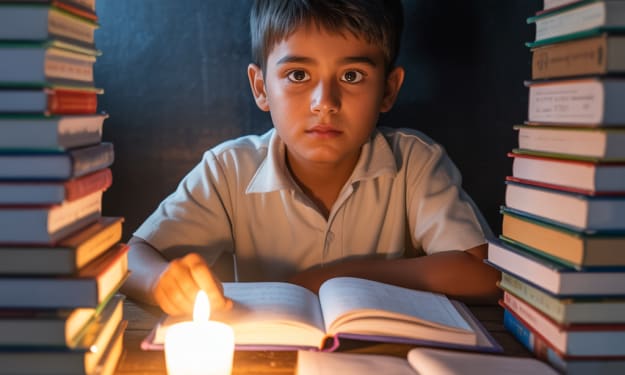
The Hidden Light of Education In a small village surrounded by mountains, there lived a boy named Adeel. His father was a farmer who worked tirelessly in the fields, and his mother stitched clothes for neighbors to add a little to the family income. Life in the village was simple but hard, and most children joined their parents in work as soon as they could walk properly. For many, the idea of school was a luxury. Adeel, however, was different. His eyes always sparkled with curiosity. He loved to ask questions—sometimes so many that the elders would grow tired of answering. One evening, while helping his father water the crops, he asked, “Baba, why does the sun rise from one side and set on the other?” His father, with no books or knowledge to guide him, only smiled and said, “That’s the way God made it, son.” But Adeel wanted more than just simple answers. He wanted explanations. He wanted to explore the mysteries of life. The village did have a small school, but it was poorly equipped. Broken benches, no electricity, and only one teacher for many classes. Still, Adeel begged his parents to let him go. His father hesitated, thinking of the lost pair of hands in the fields, but his mother insisted, “Let him learn. Maybe one day he will lift us from this life of hardship.” And so, Adeel began his journey. At first, school was overwhelming. The other boys teased him for his ragged clothes and worn-out shoes. Some dropped out after a few months, but Adeel stayed. He sat in the front row, absorbing every word, no matter how difficult. He developed a friendship with his teacher, Mr. Rahman, who noticed the boy’s hunger for learning. One day, Mr. Rahman gave him an old science book. Adeel clutched it as though it was a treasure chest filled with gold. Nights in the village were dark, and Adeel had no lamp. He would sit by the dim flame of a kerosene lantern, reading until his eyes ached. His mother often scolded him, worried he would ruin his eyesight, but secretly she admired his dedication. As years passed, Adeel’s knowledge grew. He became the first student in the village to top the district exams. The villagers were astonished. “This boy will bring pride to us all,” they said. But success did not come without struggles. When Adeel wished to continue his studies in the city, money became a barrier. His father sold two goats to pay for his admission, while his mother gave him the small amount she had saved from stitching clothes. With their sacrifice in his heart, Adeel promised, “I will not let you down.” City life was a new world. Modern classrooms, libraries filled with thousands of books, and students from wealthy families surrounded him. At times, he felt small and unworthy. Yet, whenever doubt entered his mind, he remembered the sacrifices his parents made, and his determination returned stronger than ever. Through perseverance, Adeel earned a scholarship. He studied engineering and graduated with honors. Years later, he returned to his village—not as the farmer’s boy in ragged clothes, but as an educated man ready to bring change. He built a new school with proper facilities, making sure no child would have to study in the dim light of a kerosene lantern again. Standing in front of the first batch of students, Adeel said, “Education is not only about books. It is about opening your mind, discovering yourself, and lifting others with the light you find.” The children listened with wide eyes, perhaps recognizing in him the same spark of curiosity that once burned in their own hearts. And so, the village that once treated education as a luxury began to see it as a necessity. Adeel’s story became a reminder that knowledge, once gained, does not remain with one person—it spreads like light, breaking the chains of ignorance and showing the path to a better future.
By Article Master about a year ago in Education
Transforming Online CPA CPE Credits With AI-Powered Learning
Most accounting professionals view earning CPA CPE credits as just another box to check rather than a path to growth. The practice of picking random courses to meet basic requirements doesn't work for modern accountants anymore. Tax laws change faster than ever, new technologies emerge daily, and client expectations keep shifting. The time spent on manual tracking across jurisdictions creates extra work that could be better spent serving clients and developing professional skills.
By Parth Shah, CPAabout a year ago in Education