college
Maximize your university experience with these tips for all things collegiate–how to achieve a perfect GPA, select the right major, finance your college education and more.
Outrage, dissatisfaction as FG, non-public schools increment educational expenses in the midst of difficulty
As Nigerians conform to the present financial reality, the Central Government and non-public school proprietors in certain pieces of the country, particularly the Bureaucratic Capital Region, FCT, Abuja and Lagos State have declared vertical survey of educational expenses.
By Audu Yusuf3 years ago in Education
Writing an Impressive Research Proposal
Introduction Are you planning to apply for a PhD program and have no idea how to start writing an impressive research proposal? If so, you’ve come to the right place! Writing an effective research proposal is essential when applying for a PhD research program. A well-crafted research proposal can provide the admissions committee with insight into your research capabilities and potential to make a meaningful contribution to the field. In this blog post, we will provide a comprehensive guide on how to write an impressive research proposal from scratch.
By Laban Joash3 years ago in Education
Dissertation Success
Introduction Writing a dissertation can be an intimidating and arduous task, but it doesn't have to be. The key to successful dissertation writing is having a strong foundation in qualitative research. By familiarizing yourself with the different stages of a qualitative research project, you can ensure that your dissertation will be as successful as possible. In this blog post, we'll explore the key steps for crafting a quality qualitative research project for your dissertation. We'll discuss the importance of defining your research question, developing a data collection plan, and analyzing your results. By following these steps, you'll be able to produce a successful dissertation that meets your academic goals.
By Laban Joash3 years ago in Education
Universe, Universe is Bigger Than You Think
You live here on Earth somewhere, and everything you've ever known is located right here. But just how small is Earth compared to the size of the whole universe? Let's begin by zooming out to where we can see our nearest cosmic neighbor, the Moon. Despite appearing close in our night skies, the Moon is actually about 384,400 kilometers away from Earth on average. You could fit 30 entire Earths in between this distance, and if you were to drive a car at a steady 100 km/h speed, it would take you about 160 days to cover the entire distance. Nevertheless, 12 humans have achieved the incredible feat of setting foot on the Moon, representing one of humanity's greatest achievements.
By Majid khan3 years ago in Education
Capitalism and monopolies
Vice espn and the history channel what do these three media outlets have in common despite their different target audiences they're all owned by the same company disney what about these three same story they're all owned by comcast if you were to pick a bunch of media operations from a hat odds are the vast majority of them are owned and operated by one of just five mega corporations since the early 1980s the number of media companies controlling the bulk of us media has shrunk from 50 to just five we've gone from a media landscape operated by a reasonable number of controlling interests to a reality dominated by near monopolies just barely sneaking under the enforcement of anti-trust laws in this episode we're going to talk about the consolidation of american media in the hands of a few ultra powerful companies and what that means in a time when the very wealthy have outsized influence over public policy before we begin it's worth noting that corporate deals acquisitions and mergers happen all the time often with little to no coverage it's quite possible that by the time you watch this video some of these data points will have changed but unless something truly cataclysmic happens the vast majority of us media will still be under the thumb of one or more of the five super corporations we're about to discuss so without further ado let's meet the big five comcast disney national amusements news corp and at t taking the spot from time warner which it acquired in 2018 for 109 billion dollars you probably guessed that disney was on the list since they've had some seriously high profile acquisitions in recent years most notably marvel and lucasfilm but i'd be surprised if you've ever heard of national amusements or news corp these incredibly bland names and their lack of public-facing operations are intentional why draw attention to yourself as one of a tiny number of corporate behemoths when people only care about a select few of your properties whether you're watching cbs news scrolling through gamespot or reading a book published by simon schuster you're patting the enormous wallet of national amusements and you'd never suspect that these three very different operations are run by the same company the same goes for news corp they own national geographic fox news and harpercollins altogether the big five are worth over 400 billion dollars controlling something like 90 percent of all u.s media including news networks hollywood movie studios and print publications and they reach nearly 100 of all u.s households and fun fact much of the remaining 10 is owned by only slightly less giant multi-billion dollar corporations like sinclair which as you may remember got itself into hot water by blasting out a propaganda broadcast over hundreds of local us news channels so how exactly are they allowed to do this surely having just five companies dominate the nation's media is considered monopolizing right well no but just barely let's look at what it takes to be considered a monopoly in order to be considered a pure monopoly a single company has to have complete control over a market containing a good or service with no close substitutes so there you go since there are five large corporations that share the us media market none of them qualify as a monopoly but you don't have to be classified as a pure monopoly in order to wield monopolistic power with such a massive concentration of wealth and power in the hands of so few it all but ensures that smaller operations never have the chance to succeed unless you count the very american concept of success which is building a company just large enough to get bought out by one of the big players what we see in the u.s media landscape is more of an oligopoly complete control spread across just a handful of powerful groups there's so much interplay and deal-making within these five mega-corporations that in effect they are a monopoly in every sense but the legal one for example it's not uncommon to see one of the big five hold a massive stake in a property owned by another of the big five but if there were so many more media corporations as recently as the 1980s how did we get to the dystopian all-powerful corporate landscape we see today to make a long story short it all boils down to the passing of the 1996 telecommunications act this piece of legislation was supposedly intended to deregulate the increasingly tangled broadcast and telecommunications markets allowing anyone to enter and compete in the industry whatever the intended result was the actual outcome was simply the rapid consolidation of power in the hands of fewer and fewer massive corporations in the 2003 edition of howard zinn's a people's history of the united states he notes the telecommunications act of 1996 enabled the handful of corporations dominating the airwaves to expand their power further mergers enabled tighter control of information he was right and it only got worse the decade before the telecommunications act 50 companies controlled the majority of the media landscape by 1992 that number had fallen by 50 percent and after the passage of the new tv and broadcast legislation the number quickly shrank even further to just six in the year 2000 and that's roughly where it stayed to this day not because these giant companies wouldn't love to own more of the market but because they physically can't without triggering anti-trust lawsuits to put in perspective just how much of the market the big five control let's have a look at some of the media operations they own we'll start with news corp rupert murdoch's empire owns fox including all of its branches like fox sports and 20th century fox it owns fx gq the wall street journal sky news harpercollins publishing the new york post national geographic zondervan market watch and countless others national amusements owns cbs and its branches it owns paramount nickelodeon mtv bet gamespot vh1 comedy central the smithsonian channel spike showtime simon schuster game faqs cnet and viacom once a major player in the media world itself before being consumed a t the newest member of the big five after acquiring the massive time warner controls cnn hbo cartoon network warner brothers dc tbs truetv cinemax tnt adult swim part of hulu turner classic movies time magazine rocksteady games and time warner cable to name just a few comcast which has a well-deserved reputation as a thoroughly evil corporation owns nbc msnbc usa network sci-fi fandango universal pictures focus features working title films rotten tomatoes bravo oxygen big idea part of hulu mlb network nhl network and dozens of internet ventures and finally everyone's favorite family-friendly corporate overlord disney disney owns abc pixar dreamworks espn lifetime the history channel marvel lucasfilm hollywood records touchstone pictures vice plus a giant swath of the comic book industry thanks to their acquisition of marvel and of course these are only a small sample of the media operations owned by the big five odds are if you can think of a network you watch you'll find it's owned by one of them the one main exception you may have noticed is netflix netflix while not outright owned by any of the big five is owned in part by a number of large interests some of them very shady like the well-known blackrock the world's largest shadow bank so really no matter what your network preferences you're only being offered the illusion of choice in reality almost everything we watch or read whether on tv online in theaters or on the pages of a book newspaper or magazine is just a tentacle of the enormous kraken that is the corporate media landscape no matter what perspectives these outlets offer remember that they're all owned by the same ultra wealthy business interests and they have their own agenda the big five own all the major news networks and the messages they put out are designed to reinforce the status quo peddling minor aesthetic disagreements and diverting attention away from serious societal problems this is simply the natural conclusion of the hyper-capitalist system we have in the united states powerful companies will grow larger and larger consuming smaller companies that can't compete acquiring more and more properties until they've reached the very limit of what could be considered legal thereby dodging anti-trust laws and maintaining the maximum amount of power profit and cultural significance and this is only one area of the american market every other aspect of american life is becoming similarly consolidated from pharmaceuticals to energy to manufacturing the threat of the monopolization of every area of modern life is real and its consequences could be disastrous and far-reaching except for those pulling the strings at the very top
By Christian Banza3 years ago in Education
how does upside make money
Presentation: Development is the way to many organizations' progress in the present high speed professional workplace. One such standout is Upside, a company that has managed to not only disrupt but also thrive in its industry. But how does Upside make money? In this blog post, we will delve into the strategies and avenues that have propelled Upside to profitability. From its inception to its current standing, we will explore the fascinating journey of this innovative firm. Understanding the Vision: At the core of Upside's success lies a clear vision of empowering customers through technology-driven solutions. Upside was founded with the belief that travelers deserved a better way to plan and book their trips. Instead of just being another online travel agency, Upside aimed to create a platform that could cater to the needs of both individual and business travelers in a unique manner. Tailored Solutions for Business Travelers: One of the main revenue streams for Upside is its focus on providing tailored travel solutions for businesses. Recognizing that corporate travel is a massive industry, Upside seized the opportunity to streamline the booking process and make it more cost-effective for companies. By negotiating deals with airlines, hotels, and other travel service providers, Upside offers exclusive packages that attract business clients seeking efficient travel solutions. Dynamic Packaging: Upside's innovative approach to dynamic packaging has also significantly contributed to its revenue generation. Traditional travel agencies would often book components like flights, accommodation, and car rentals separately, making it a tedious process for customers. Upside revolutionized this by creating dynamic packages that bundle all the necessary components for a trip, offering better prices and a seamless booking experience. Loyalty Program: Building customer loyalty is crucial in any business, and Upside recognized this early on. To incentivize repeat business, Upside introduced a robust loyalty program that rewards customers for their continued support. These rewards include exclusive discounts, free upgrades, and even complimentary experiences, creating a win-win situation for both Upside and its customers. Business Model Innovation: In addition to its customer-focused revenue streams, Upside has also explored creative business models to further boost its profitability. For instance, Upside collaborates with travel-related companies to offer co-branded products, expanding its market reach while benefiting from shared revenues. Data-Driven Decisions: Upside's commitment to harnessing the power of data cannot be overlooked. By analyzing customer behavior, travel trends, and spending patterns, Upside can make data-driven decisions to optimize its offerings and maximize revenue opportunities. Diversification into New Markets: As Upside cemented its position in the corporate travel sector, it continued to diversify its offerings. Branching out into leisure travel and other niche segments allowed Upside to tap into new markets, widening its revenue streams and solidifying its position as a comprehensive travel platform. Embracing Technological Advancements: Upside's relentless pursuit of innovation doesn't stop at customer-centric solutions. It has also been quick to embrace technological advancements to enhance its services and operational efficiency. Upside's strategy heavily relies on artificial intelligence (AI) and machine learning (ML), which enable personalised suggestions, the prediction of client preferences, and real-time pricing optimisation. By leveraging big data and cutting-edge technology, Upside maintains a competitive edge, delivering an unmatched user experience that keeps customers coming back. Excellent Customer Service: Upside understands that exceptional customer service is the cornerstone of any successful business. While technology plays a significant role in streamlining processes, Upside never loses sight of the human touch. The association makes an interest in a serious client service group that is prepared nonstop to assist voyagers with any inquiries or issues they could have. This commitment to personalized assistance ensures that customers feel valued and supported throughout their journey, fostering loyalty and positive word-of-mouth referrals. Global Expansion: To solidify its position as a global player, Upside has made strategic moves towards international expansion. By venturing into new markets, Upside taps into diverse consumer bases and diversifies its revenue sources. Expanding its services to cater to international travelers and partnering with local travel providers enables Upside to establish a strong foothold in different regions, further propelling its growth trajectory.
By shahabuddin aalm3 years ago in Education
Is Capitalism Actually efficient
if you live in what's commonly called the western world especially in the united states you've no doubt heard the claim that capitalism is the most efficient system for the distribution of products and that this is thanks to the miracle of the free market a completely organic system by which the true value of goods and services are determined as i've mentioned in recent videos american faith in the economic structure of capitalism is on the decline but arguments for the effectiveness of the system are still very common in this episode we're going to take a look at one of the more common ones the assertion that capitalism is efficient let's start with that word efficient what is efficiency the dictionary definition is effective operation as measured by a comparison of production with cost as in energy time and money the capitalist understanding of that definition is where we get into trouble capitalism is driven by the profit motive the pursuit of ever greater financial gain regardless of actual economic performance with that vision in mind efficiency can be defined as making the smallest possible investment or expending the least amount of energy or resources to ensure increasing profits and minimum acceptable function or quality this capitalist translation of efficiency causes some serious problems which we'll explore later but first we need to address some misconceptions espoused by the type of person who tends to claim capitalism is efficient first and foremost there is a common misconception that capitalism is defined by markets that if a system has markets it's capitalism that is not the case take feudalism for example as a system that existed well before the birth of capitalism it cannot be claimed that feudalism was capitalist and yet feudalism had markets serfs produced goods which they handed over to their lords and which those lords then sold in markets sometimes even the serfs had access to markets okay but if capitalism isn't defined by markets if markets existed long before capitalism what does define it opinions can vary but if you ask me i would say capitalism is defined by three core philosophies first the drive for short-term profits over long-term stability second the rigid stratification of the owner class and the working class and third a devotion to imperialist expansion and infinite growth as socialists have correctly pointed out for well over a century the tendencies of capitalism do not lend themselves to market efficiency but rather towards military oppression of foreign populations over-exploitation of workers and natural resources and increasingly frequent economic crises all of these observations have proven their accuracy many times over capitalism relies on the exploitation of workers at home and abroad and this working class is entirely at the mercy of those who own the companies which put them to work in reality these workers are often more excluded from capitalist markets than even feudal surfs because the modern worker does not own any of the goods or services they produce okay why does that matter it matters because if the workers are excluded from the market system that means only a tiny minority of wealthy and powerful people the owner class has access to the so-called free market but the selling of products on the market is only half the equation the other half is production similar to the sale of products by the owner class the production of those products is also controlled by the wealthy and powerful those who own the means of production a factory a pharmaceutical lab a supermarket chain decide what is produced how it is produced when it is produced and so on these people who do not perform any of the actual labor dictate the terms to those who do and when the demanded products are finished they own them in this way the owner class the capitalists have complete control of the free market system from production to sale okay but that's just the creation and sale of the actual products right doesn't the free market still determine the final price and dictate how and what companies produce misguided defenders of capitalism will say of course the market is beholden to the law of supply and demand companies have to produce what the market demands or they won't make a profit this belief in a supposed economic law is not reflected in reality like everything else under capitalism supply and demand is manipulated by those with money and power let's look at one recent example this is one of amazon's biggest uk warehouses in dunfermline scotland and from inside where millions of perfectly good products each year are sent to be destroyed secret footage captured in what's known as the destruction zone and that calls into question the company's environmental and ethical practices an itv news investigation reveals unsold laptops scanned not for delivery but instead marked destroy boxes full of electrical items such as drills shavers headphones even smart tvs the list goes on brand new books still in their wrappers or jewelry or steel cutlery with that same instruction destroyed one former employee who wishes to remain anonymous reveals the scale of what they're asked to do so from a friday to a friday our target was approximately 130 000 items a week the target to destroy from one centre was 130 000 items yes there's no rhyme or reason to what gets destroyed dyson fans hoover's the occasional macbook or ipad or the other day 20 bins filled with thousands of covered masks still in their plastic wrappers separately we followed another lorry as it headed out carrying non-electrical items the destination a landfill and recycling site only a few miles from where they've been stored and in the main still perfectly usable what's going on here why are these items being destroyed the answer is simple it makes amazon more money to dump perfectly good laptops tvs and silverware into a landfill as opposed to selling it at a loss or donating it to charity too much product availability drives prices down and it's more profitable to keep demand high by artificially limiting product availability when there's no demand for a product on the market companies destroy their stock to create fake demand take car companies for example when a new model is coming out the old ones quietly disappear they haven't all been bought the ones they can't sell to rental companies have been destroyed same with amazon and their mountains of unopened ppe mask use is dropping so in order to maintain profitable prices they simply destroy excess stock and by destroy i mean dump truckloads of non-biodegradable waste in landfills where it will remain forever further polluting the planet for the sake of short-term profits and it's not just consumer goods either look at the food industry during the pandemic american dairy farmers dumped 3.7 million gallons of milk per day and potato farmers destroyed 1.5 billion tons of their crop why because it wouldn't be profitable to find ways to give it all away to their credit some potato farmers put out a call to have anyone come and take as many potatoes as they wanted which is certainly better than nothing but the fact that we have exactly zero infrastructure in place for the emergency distribution of food products is a damning indictment of the soulless for-profit capitalist system and farmers aren't even close to the worst offenders you've probably seen the video of the young dunkin donuts worker who instead of throwing away excess donuts according to company policy bagged them up and donated them to the homeless and his local firefighters for this act of kindness which cost the company nothing this person was fired let's do a little napkin math it's not uncommon for a single dunkin donut store to throw away 5 dozen donuts or more per night that's 60 donuts as of june 1st 2021 there are 9291 dunkin donuts locations in the u.s if we figure 60 donuts per store per night that's 557 460 donuts every night 203 million donuts per year four billion pounds of donuts just thrown away okay but donuts are junk food it's not like they're keeping healthy meals from people well let's look at grocery stores grocery stores throw away over 43 billion pounds of food every year and that's not just expired food according to a recent study a full 50 of the discarded food is still perfectly edible when it's thrown away this is an unconscionable practice when over 23 million americans are food insecure to further hammer home the dystopian nature of our for-profit system during the pandemic we saw armed guards blocking people from retrieving food from dumpsters outside grocery stores think about that for a minute people are desperate enough to dig food out of a dumpster during the worst pandemic in our lifetime and those in power decide not to help distribute food but to defend our corporate waste with the threat of violence the us is not the only country at fault here other capitalist nations act similarly we produce enough food to feed every human on earth with plenty to spare but the inherent traits of capitalism disincentivize a common sense allocation of resources in favor of maximizing profit these tendencies the tendencies to cut corners generate tons of waste and neglect long-term stability exist in every sector we've recently seen the consequences of supposed capitalist efficiency in my home state of texas and in florida during last winter's cold snap millions of texans were left without power or clean drinking water many for days or even weeks on end this was the direct result of the reckless privatization of our electrical grid in order to cut costs and maximize profits ercot neglected to weatherproof our electrical infrastructure the result was catastrophic and future failures will only get worse as the effects of climate change intensify florida is another prime candidate for truly dystopian climate fallout as we speak the florida coast is becoming increasingly unsafe thanks to erosion and rising sea levels and yet luxury accommodations continue to spring up all over miami on june 24th champlain towers south a condo building and surfside collapsed killing and as yet undetermined number of people likely over 100 for years the developers had known about critical flaws in the integrity of the building which would have cost them an estimated 9 million dollars to rectify common sense and a concern for safety would have prompted them to make the repairs the profit motive disincentivized that action and no repairs were made the end result was the entirely preventable collapse of a 13-story building and the loss of dozens of innocent lives florida is one of the more obvious cases of at-risk infrastructure but the rest of the country isn't far behind the pacific northwest has been experiencing temperatures never before seen in that region the heat literally melting electrical wires and buckling roads the efficient thing to do would be to invest the money to repair and weatherproof our infrastructure thereby preventing future shipping shutdowns traffic problems and catastrophic failures like bridge collapses the capitalist notion of efficiency will result in us doing the absolute bare minimum to restore the lowest possible level of adequate function to maintain our precarious operation so what are the takeaways here capitalism's vision of efficiency is predicated not on ensuring the long-term function or sustainability of our systems or the common sense allocation of resources labor or products but on minimizing costs and maximizing profits efficiency is just a euphemism for cost cutting destructive wasteful practices short-sightedness and criminal negligence it removes the human factor from the equation and centers capital instead actual efficiency has to take into account the longevity of systems and the sustainability of practices and products it's not efficient to overproduce and then dump millions of tons of unopened products into landfills it's tremendously wasteful it takes labor power raw materials and carbon emissions to produce those goods which are then discarded and add to the ever-increasing human toll on the environment it's not efficient to let mountains of perfectly good food rot in dumpsters when millions of americans don't have enough to eat even if you take a capitalist approach wouldn't it make more sense to ensure that your workers are properly nourished so that they can work at full performance what about making accommodations for future pandemics or other crises it will be much more expensive to come up with emergency distribution methods during a crisis than to plan ahead and implement those systems slowly same with infrastructure it's not efficient to build high-rises that will collapse into the sea in 10 years or to neglect weatherizing electrical grids roads or bridges nothing this country does is efficient in any real sense it's wasteful short-sighted and inhumane the capitalist notion of efficiency is a sham it exists only as an excuse for the genocidal adherence to the profit motive so no capitalism is not the most efficient system it doesn't deserve to be called efficient at all people are slowly coming around to that fact let's hope it doesn't take many more collapsed buildings statewide power outages or breadlines to put the final nail in the coffin i mentioned climate change a number of times in this video it's a prime example of capitalism's short-sightedness and how we fail to take into account enormous consequences even a handful of years in the future if you'd like to see how climate change and capitalist inefficiency are affecting coastal cities like the one i mentioned earlier i highly recommend you check out miami beach underwater on curiosity stream curiosity stream is an established streaming platform with a solid track record of caring about great educational content and the financial security of those who produce it they've got thousands of non-fiction titles from some of the best filmmakers in the game
By Christian Banza3 years ago in Education
We Bid Farewell to "Center Stage": A Journey of Talent, Connections, and Gratitude
As we embark on this final chapter of our remarkable journey, we, the creators of "Center Stage," stand humbled and filled with gratitude. Our mission to uplift talented writers on Vocal, who, like us, have yearned for recognition, has been a profound experience. In this heartfelt article, we express our deepest appreciation to everyone who has been a part of this extraordinary adventure.
By SHORTS DIGITAL3 years ago in Education
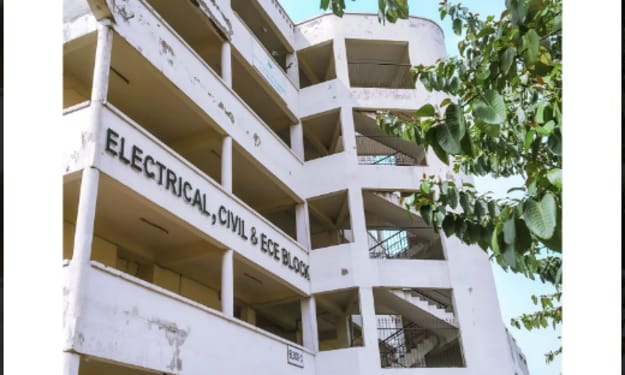
SVIET: Unleashing Excellence in M-Tech Electronics and Communications Engineering in Chandigarh
Introduction: When it comes to shaping a successful career in the field of Electronics and Communications Engineering (ECE), choosing the right college is crucial. In the
By HARSHVARDHAN YADAV3 years ago in Education
Green Living at Home: Embrace Sustainability for a Greener Future
As our world faces increasing environmental challenges, adopting eco-friendly practices in our daily lives has become more crucial than ever. Green living, also known as sustainable living, involves making conscious choices to reduce our ecological footprint and minimize the impact on the planet. While there are various ways to embrace eco-friendly practices, the home is an excellent place to start. In this article, we will explore a comprehensive guide to incorporating sustainable living practices into your home, promoting a greener and healthier lifestyle for you and the planet.
By Wildfire Empire3 years ago in Education