college
Maximize your university experience with these tips for all things collegiate–how to achieve a perfect GPA, select the right major, finance your college education and more.
How Can Online Platforms Support Students With Finance Projects?
Finance is one of the most demanding academic disciplines, requiring students to master complex theories, calculations, and real-world applications. From corporate finance assignment help strategies, projects often demand in-depth analysis and critical thinking. Unfortunately, many students face challenges balancing coursework, deadlines, and exams.
By Alinaharvardabout a year ago in Education
The Glucose Paradox: Fueling Hope for Cancer Cures
Cancer is still one of the world’s biggest health challenges, claiming millions of lives each year. Scientists continue to search for better treatments, and surprisingly, a simple sugar glucose has become a key focus. Glucose is our body’s main source of energy, but in the case of cancer, it plays a double role. It can feed tumors, making them grow faster, but it can also strengthen the immune system’s ability to fight back. This paradox has researchers asking an important question: if we learn how to control glucose in the body, could we create more effective treatments?
By Muzamil khanabout a year ago in Education
How to Write Engineering Assignment for Academics in One Day?
Writing any project work at the last moment is a panic situation for every student in their academic life. The most important thing you should do is read the assignment instructions carefully, including the deadline date. So that you will build a strict plan by dividing the parts according to the length.
By Will Smithabout a year ago in Education
NVQS Assignment Help vs. Self-Study: Which Works Better?
Introduction Education today offers students multiple ways to achieve their goals, whether by relying on structured guidance or through independent learning. Among vocational qualifications, the NVQ (National Vocational Qualification) system is popular in the UK for practical skills development, especially in areas such as health and social care, engineering, construction, and business management. Many learners find themselves caught between two approaches: taking advantage of NVQS Assignment Help or relying solely on self-study. Both have their advantages and drawbacks, and knowing which works better depends on an individual’s learning style, time availability, and career aspirations.
By Tracy Scottabout a year ago in Education
UC Riverside Cost
Studying at UC Riverside: Costs, Scholarships, and How to Plan Your Journey For many Indian students dreaming of pursuing higher education in the U.S., the University of California, Riverside (UC Riverside) stands out as an attractive option. Known for its strong academic programs, diverse campus culture, and research-driven learning environment, UC Riverside has gained a reputation as a student-friendly university.
By Unirely Study Abroadabout a year ago in Education
How Difficult Is the FNSACC524 Student Assessment Task for Learners?
If you are pursuing accounting or finance studies in Australia, chances are you’ve already come across the FNSACC524 Student Assessment Task. This particular unit—Prepare Financial Reports for Corporate Entities—is considered one of the more challenging components of accounting programs. Many learners struggle to navigate its detailed requirements, complex calculations, and strict adherence to accounting standards.
By Shani Pandeyabout a year ago in Education
Lessons Beyond the Classroom
M Mehran For many students, school is a place of lessons in math, science, and literature. But for Jasmine Torres, it became a place where she learned about resilience, courage, and the power of mentorship. Jasmine grew up in a neighborhood where resources were scarce and opportunities were limited. Her parents worked long hours to keep the household running, and after-school programs were rare. Despite these challenges, Jasmine had a hunger for learning. She devoured books from the small library near her apartment, stayed after class to ask teachers questions, and wrote long essays in her notebook, imagining a future she wasn’t sure she could reach. Her passion didn’t go unnoticed. Mrs. Larkin, her tenth-grade English teacher, saw the spark in Jasmine’s eyes and encouraged her to apply for a national writing competition. At first, Jasmine hesitated. She feared rejection, feared her words weren’t good enough. But Mrs. Larkin gently pushed her: “Education isn’t just about grades or tests, Jasmine. It’s about giving yourself a chance to grow, to challenge what you think is possible.” With trembling hands, Jasmine submitted her essay. Weeks later, she received the news: she had won. The recognition was more than an award—it was validation. For the first time, she realized that her effort, her curiosity, and her perseverance mattered. This experience changed Jasmine’s approach to learning. She began seeking knowledge beyond the textbooks, reading about history, science, and philosophy. She asked questions that other students overlooked, exploring the “why” behind the “what.” Her teachers noticed her evolving curiosity and encouraged her to participate in debates, science fairs, and community projects. Each opportunity was a stepping stone, teaching her skills no classroom could fully encompass. Yet education was never just about achievements for Jasmine. She quickly understood the importance of helping others. She tutored younger students in math, assisted peers struggling with writing, and volunteered at local literacy programs. She discovered that teaching someone else wasn’t just about transferring knowledge—it was about patience, empathy, and the ability to see challenges through another person’s eyes. Her dedication caught the attention of the school board. Jasmine was invited to speak at an educational conference for young leaders. Nervous but determined, she stood before hundreds of educators and students. She shared her story, emphasizing that education is a tool, not a guarantee. “It’s what you do with what you learn,” she said, “that shapes your life and the lives of those around you.” The applause that followed wasn’t just for her achievements—it was for her vision, her willingness to act on the lessons she had received. College applications came next, and Jasmine felt the familiar mix of hope and doubt. She wanted to study education, to inspire others the way Mrs. Larkin had inspired her. But the financial hurdles were daunting. Scholarships were competitive, and her family could contribute little. Once again, persistence paid off. With strong recommendations, personal essays, and a record of community service, Jasmine earned a full scholarship to a prestigious university. At college, the lessons continued—this time in a new setting with students from all walks of life. Jasmine realized that education was not just about what you knew, but how you engaged with the world. Group projects taught collaboration, internships showed her real-world applications, and discussions with professors expanded her perspective. She discovered that education is a living process, constantly evolving and shaped by curiosity and commitment. By her senior year, Jasmine had developed a project that combined her love for writing and her dedication to education. She created a mentorship program for at-risk youth, pairing them with college students who could guide them through academics, career planning, and personal growth. The program’s success confirmed what she had learned years ago: knowledge is powerful, but knowledge shared is transformative. Jasmine graduated with honors, but she didn’t stop there. She returned to her old neighborhood, taking a teaching position at the very school where her journey had begun. Her classroom became a place where curiosity was celebrated, questions were encouraged, and mistakes were viewed as stepping stones rather than failures. She shared her story openly, letting students see that perseverance, hard work, and guidance could lead to possibilities they might have never imagined. Education, Jasmine realized, isn’t confined to the walls of a classroom. It’s in every conversation, every book, every opportunity to challenge oneself or help another. It’s about growth, resilience, and the courage to dream even when circumstances make it difficult. Through her journey, Jasmine learned that true education goes beyond memorization—it shapes character, inspires community, and leaves a lasting impact on the world. Standing in front of her students one afternoon, she paused to look at the eager faces before her. Each child represented potential, stories yet to be written, and dreams waiting to take flight. She smiled, remembering Mrs. Larkin’s words and the path that had brought her here. “Education,” she said softly, “is not just about what you learn—it’s about who you become, and how you use that knowledge to lift others.” In that moment, Jasmine understood fully that she wasn’t just a teacher. She was a student of life, learning with each heartbeat, each challenge, and each new opportunity to make a difference. And that was the lesson she hoped her students would carry forward.
By Muhammad Mehranabout a year ago in Education
How Does Depression Influence the Body?
Introduction Depression is usually called an "invisible illness" because its primary symptoms—sadness, hopelessness, and loss of interest in activities—might not at all be visible to the outside world. Depression is not just a mental disease, though; it has a strong influence on the body as well. There is ample evidence that depression can weaken the immune system, disrupt sleep, cause chronic pain, and even result in fatal diseases like heart disease and diabetes.
By Naveen Gargabout a year ago in Education
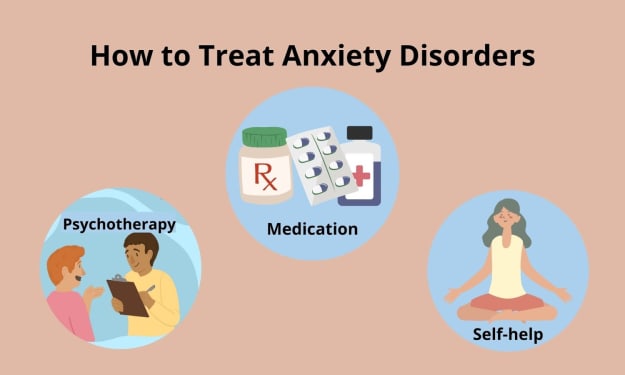
What Are the Long-Term Effects of Untreated Anxiety?
Introduction Anxiety is one of the most common mental health disorders worldwide, affecting millions of individuals from all walks of life. While normal anxiety is a natural human response to stress, continuous anxiety that goes unchecked can greatly impact daily life, interpersonal relationships, and overall well-being. The majority of individuals do not recognize anxiety as "excessive worrying" or believe that it will pass on its own, but unchecked anxiety—when left untreated—has long-term dire consequences.
By Naveen Gargabout a year ago in Education