college
Maximize your university experience with these tips for all things collegiate–how to achieve a perfect GPA, select the right major, finance your college education and more.
How Asian American Students Can Stand Out in the Competitive College Application Process
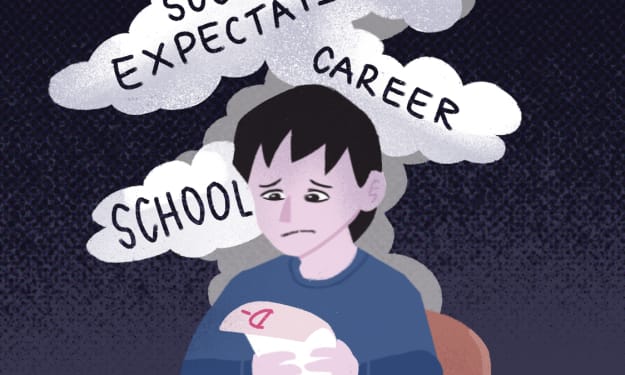
As an Asian American student, you may feel the pressure to excel academically, participate in extracurricular activities, and demonstrate leadership skills in order to stand out during the college application process. With so many applicants vying for limited spots at top universities, it's important to showcase your unique qualities and experiences in order to distinguish yourself from the competition. Here are some expert tips to help you stand out during the college application process:
By Robbie Shanky3 years ago in Education
Medicine
There is a problem with medicine. I'm missing something. This means that not only is it more difficult to find the cause of some diseases and find effective ways to treat them, some diseases are overlooked entirely. You may be the one missing, but we'll get to that in a moment. Because it's a story first. 8 billion stories to be exact. Indeed, our DNA is our body's instruction manual. But it is also a history book that chronicles our own unique genetic history. Our story all begins about 300,000 years ago when humans emerged in Africa. Some genetic stories tell of leaving for Europe, East Asia, or the Americas after hundreds of thousands of years. Some hereditary stories tell of the expansion of empires. Other diseases are diseases that we have evolved to prevent, and other diseases are the simple act of settling down and raising cows and drinking their milk. Each of us has a different genetic history, but perhaps not as different as you might expect. We share 99.9% of each other's DNA. Our story is 99.9% identical to her, but that 0.1% difference in her is incredibly powerful. This small difference in our genetic history has the potential to develop better treatments for disease, treatments that work for everyone. But medicine is not currently reading all these stories. To illustrate this, I would like to describe how researchers study the causes of disease and develop and test the efficacy and safety of new treatments. To figure out what causes a particular disease, researchers look for large numbers of people suffering from that disease and comb through their genetic histories. They look for small variations they share, small parts of the DNA story written differently. If they find something they will try all sorts of ways to deal with the effects. And when we find something that looks promising, we run clinical trials to see if it's real. In Phase 1, a small group of volunteers will attempt treatment. Well, often only half of them work and the other half get a placebo that doesn't work at all. If there are no significant side effects at the target dose, the treatment is approved and can proceed to the next stage of clinical trials. The second phase, this time with more participants, all suffer from ailments the researchers hope the drug can treat. If the drug seems to work, move on to Phase 3, where more participants will try the drug longer. Only then will new treatments be reviewed and hopefully approved for use by our general public. However, there is a problem with that. Here is the ethnicity of so many people that these days are used to find the cause of various diseases. And it can be compared with the ethnic diversity of the world's population. See the difference? The genetic histories investigated by researchers skew heavily toward those of people of European descent. This is because reading stories of people of mostly European descent in search of the causative pieces of DNA to target diseases for new drugs misses key parts of the stories told by various other groups. It means that there is a possibility. For example, it can change the risk of a disease or even reveal how the disease develops. For example, if scientists had only studied the stories of people of European descent, they might not have discovered the mutation that causes sickle cell aneFrom the early stages of research, the drug development process, to clinical studies. The good news is that more and more people are thinking about it. For example, cancer researchers at University College London studying genetic markers for cancer analyzed tissue samples from a wide range of ethnicities to ensure that the cancer biomarkers they identified were relevant to people of as many ethnicities as possible. I want to Conclusion:
By finky perly3 years ago in Education
Top 10 Benefits of Keto Meal Plan
Get the ultimate Keto Diet Plan here Here are 10 benefits of keto meal plan: 1. Weight loss: A keto meal plan can help with weight loss by reducing hunger and increasing satiety. This is because a high-fat, low-carb diet can help regulate hormones that control appetite. Additionally, the body is forced to burn fat for fuel instead of carbohydrates, which can lead to weight loss. Several studies have shown that a keto meal plan can be effective for weight loss, particularly in the short term.
By Syafiq Sabre3 years ago in Education
Revenue Cycle Management for Home Care Agencies - Addressing Staffing Challenges - Part 1
Overview The number of Americans in the age group of 64 years and older will reach 80 million by 2040. In the next 40 years, this number is likely to double. The number of adults in the age group of 85 years and older will also increase exponentially. America is aging. We anticipate that the need for personal care services and what are now called Home and Community-based services will grow manifold in the next 20 years, as most Americans will like to age at home.
By Carevoyant3 years ago in Education
Clinical Documentation for Home Health Care Agencies – Addressing Staffing Challenges - Part 3
Third Article in the Series: Address Staffing Challenges In the third article in the series on how home care agencies can navigate staffing challenges, we look at how scheduling, communications, clinical documentation, alerts and validations at the point of care must integrate on one platform to help you utilize resources optimally.
By Carevoyant3 years ago in Education
Home Health OASIS-E Changes – A Primer
Overview On October 6, 2014, the Improving Medicare Post-Acute Care Transformation Act of 2014 (the IMPACT Act) was signed into law. The Act requires the submission of standardized data by post-acute providers, including Home Health Agencies. The Outcome and Assessment Information Set (OASIS) will collect standardized data for Home Health Agencies.
By Carevoyant3 years ago in Education
Home Health OASIS-E Changes – Is Your Software Ready?
On October 6, 2014, the Improving Medicare Post-Acute Care Transformation Act of 2014 (the IMPACT Act) was signed into law. The Act requires the submission of standardized data by post-acute providers, including Home Health Agencies. The Outcome and Assessment Information Set (OASIS) prescribes standardized data for Home Health Agencies.
By Carevoyant3 years ago in Education
Benefits of Documenting Care at Patients' Home for Home Health Care Agencies
The quote "If it is not written down, it did not happen" applies to medical records and clinical documentation. If caregivers do not complete the documentation when they deliver care at the patient's home, the accuracy and completeness of the documentation can decline significantly due to the decrease in the ability of the brain to retain memory over time.
By Carevoyant3 years ago in Education
Home Health Value-Based Purchasing (HHVBP) – A Primer
In January 2016, the Centers for Medicare & Medicaid Services (CMS) rolled out the Home Health Value-Based Purchasing (HHVBP) model in nine randomly selected states (Arizona, Florida, Iowa, Maryland, Massachusetts, Nebraska, North Carolina, Tennessee, and Washington).
By Carevoyant3 years ago in Education
Home Health Value-Based Purchasing (HHVBP) – Is Your Software Ready?
In January 2016, the Centers for Medicare & Medicaid Services (CMS) rolled out the Home Health Value-Based Purchasing (HHVBP) model in nine randomly selected states (Arizona, Florida, Iowa, Maryland, Massachusetts, Nebraska, North Carolina, Tennessee, and Washington).
By Carevoyant3 years ago in Education