college
Maximize your university experience with these tips for all things collegiate–how to achieve a perfect GPA, select the right major, finance your college education and more.
Where to Get Trusted Help with the FNSACC524 Student Assessment Task?
The FNSACC524 Student Assessment Task is one of the most important units in the financial services training package, requiring learners to prepare financial reports for corporate entities in compliance with the Australian Accounting Standards (AASB). For many accounting students, this assessment feels overwhelming. From understanding regulatory requirements to ensuring accuracy in balance sheets and income statements, the complexity can easily create stress.
By Shani Pandeyabout a year ago in Education
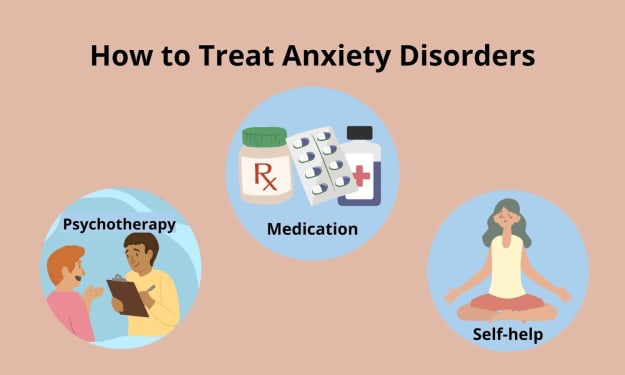
How does anxiety affect daily life, and what are the proper ways of dealing with it?
Answer: Anxiety is a normal human response designed to alert us to danger and prepare us for action. In limited amounts, it may be useful—for example, pushing us to prepare for an exam or stay alert when confronted with danger. But when anxiety is excessive, persistent, or out of proportion to the situation, it ceases to be a helpful survival response and instead becomes a crippling mental illness. For many individuals, anxiety is not a transient worry but a chronic struggle that infiltrates work, relationships, physical health, and general quality of life.
By Naveen Gargabout a year ago in Education
What are the warning signs of depression, and how can early intervention make a difference?
Answer: Depression is one of the most common mental illnesses worldwide, yet it goes unrecognized and untreated for long periods of time. Depression is more than a temporary mood, unlike the day-to-day sadness that occurs so frequently—it is a serious disease that gets in the way of how a person thinks, feels, and carries out daily functions. The earlier depression is identified and addressed, the greater the likelihood of recovery and the prevention of long-term consequences. Unfortunately, stigma, confusion, and ignorance often lead people to postpone getting help.
By Naveen Gargabout a year ago in Education
What is the role of social support in mental health recovery?
Human beings are social creatures. From the day we were born, our sense of safety, identity, and purpose has been defined by relationships. Just as much as trauma, loneliness, or conflict have injured us so deeply, so too do understanding, care, and community heal us deeply. Social support is the most important—and least understood—ingredient in recovery from mental illness. Whether someone is suffering from depression, anxiety, trauma, bipolar disorder, or something else, the people who are close to them have a powerful influence on how they adjust, recover, and thrive.
By Naveen Gargabout a year ago in Education
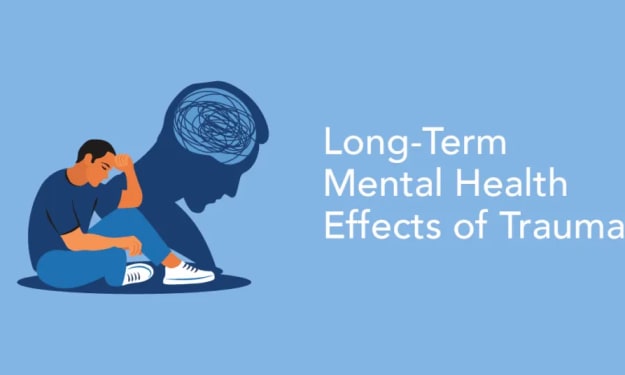
How does trauma affect mental health, and through what mechanisms can healing take place?
Answer: Trauma is perhaps the most forceful influence affecting a person's emotional and mental well-being. Not only is it limited to those devastating occurrences—e.g., natural disasters, violence, accidents—but to those more insidious, chronic experiences, e.g., repeated exposure to instability, chronic stress, neglect. The effect of trauma is not a one-size-fits-all situation; it is different based on many factors including the nature of the event, the age of the individual, the support network, and available resources. Yet, what unites traumatic events is the way they can overtake our resilience and alter our perception of ourselves, others, and the world. Having an understanding of how trauma impacts mental health, and the way to become on the road to recovery, is essential to foster resilience and healing.
By Naveen Gargabout a year ago in Education
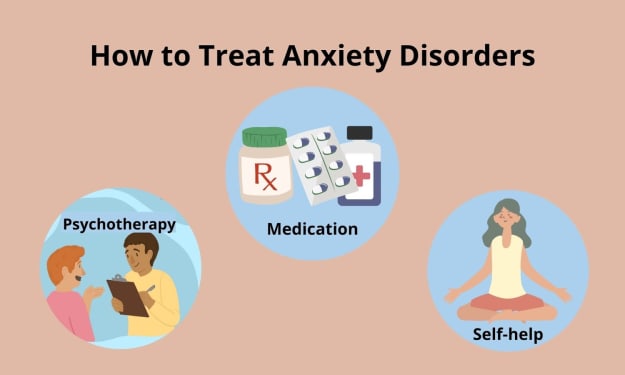
What are effective strategies for managing chronic anxiety in daily life?
Chronic anxiety can feel like a constant companion—always present, sometimes overwhelming, and often exhausting. Yet, many individuals have found that a combination of tailored strategies can help reduce its hold and restore a sense of balance, control, and peace. Managing chronic anxiety is not about a single “fix” but rather about developing a toolkit of approaches that address mind, body, lifestyle, and support systems. Below, I’ll outline several evidence-informed and compassionate strategies to help navigate and soothe anxiety in daily life.
By Naveen Gargabout a year ago in Education
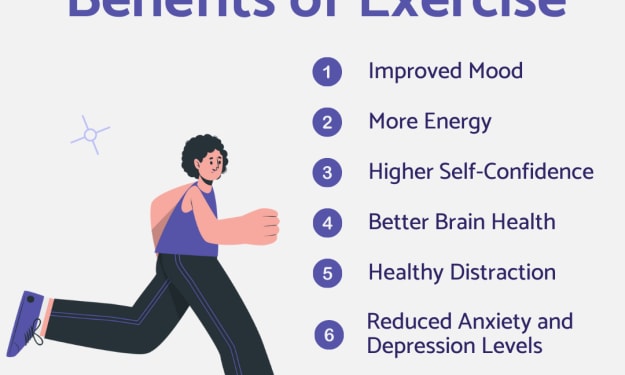
What's the Role of Exercise in Mental Health?
Introduction The majority of individuals who consider exercise tie it to physical improvements like weight, strength, or heart. However, research over the last couple of decades has consistently highlighted that exercise also plays an important role in mental health. Body exercise doesn't just shape the body—it profoundly affects the brain, emotions, and overall psychological health.
By Naveen Gargabout a year ago in Education
Class Groups in the Digital Classroom: What Works Best
The rise of online education has transformed how students collaborate and interact. One of the most significant changes is the shift from traditional group work to online class group collaborations. In virtual settings, organizing effective class groups is essential to ensure students benefit from the collective learning experience.
By Explain Learningabout a year ago in Education
The Universe as a Quantum Process
When we gaze at the night sky, the cosmos feels infinite, majestic, and timeless. Stars shine steadily, galaxies stretch out across unimaginable distances, and everything appears stable. Yet modern science suggests a surprising truth: behind this apparent permanence lies a world ruled by uncertainty, probabilities, and fluctuations. More and more physicists are exploring the idea that the universe itself may be a quantum process — a vast system unfolding according to the laws of quantum mechanics.
By Holianyk Ihorabout a year ago in Education
Humanity as a Galactic Civilization
The idea of humanity becoming a galactic civilization sounds like something out of a science fiction novel. Yet if we take a step back and look at the history of our species, it feels less like fantasy and more like the natural continuation of a pattern. Humans have always been explorers. From the moment our ancestors ventured out of caves to sail oceans, climb mountains, and eventually reach the skies, we have expanded the boundaries of the known world. Our next frontier isn’t just another continent or even another planet — it’s the stars themselves.
By Holianyk Ihorabout a year ago in Education