college
Maximize your university experience with these tips for all things collegiate–how to achieve a perfect GPA, select the right major, finance your college education and more.
Know How to Advocate for Inclusive Education Under Disability Laws
As you know, inclusive instruction means that all of you, yet of your abilities or disabilities, learn jointly in the same climate. Further, disability law plays a vital role, as it makes it likely by making sure that your colleagues provide equal access, support and chances for students with disabilities. However, if you still find yourself stuck in these laws, feel free to get aid from services like law assignment help. These laws help clear snags, promote fairness, and create learning spaces where everyone can thrive. In this guide, we will explore how various legal steps impact education and also highlight the importance of these protections in shaping a fair and supportive scholarly system. The following is a resume of the various impacts of disability law.
By Will Smith 01about a year ago in Education
Comprehensive Guide for Chandigarh Students on MIT University
Chandigarh is a well-known city in India, famous for being one of India’s first planned cities, popular for its modern art, food, villages and more. Many students dream of studying in the USA in one of the renowned institutions, such as MIT University. MIT is just like IIT in India, but a more premier institution for technical education. However, getting admission here is no less than winning a marathon, as the MIT acceptance rate is very low, 4.5%. Hence, students struggle to get a seat here, but luckily, one got the entrance. Therefore, in this article, you will explore the key aspects and steps to get enrolled in MIT in detail. So, let’s start.
By Vanshika Khandelwalabout a year ago in Education
The Clockmaker Who Stopped Time for Love
The clock in the center of Orlan Square never stopped. Through wars, fires, and the crumbling of empires, it had ticked its relentless rhythm — a heartbeat for a city that forgot it had one. Locals said the clockmaker was buried inside its brass frame, trapped by his own obsession with time. They also whispered another story: if you stood beneath the tower at midnight and made a wish, you could freeze a single moment forever.
By Alexander Mindabout a year ago in Education
The Girl Who Refused to Stop Learning
M Mehran In a quiet village surrounded by rice fields, there lived a girl named Lila who carried books the way other children carried toys. Every morning, she walked three miles to school with her satchel swinging against her side. She loved the sound of chalk scratching the board, the thrill of answering questions, the smell of ink on paper. Education, to her, was not just learning — it was breathing. But one day, her world shifted. --- The Day the Doors Closed At thirteen, Lila’s parents told her she would no longer attend school. “You’re old enough to help at home,” her father said. “Books don’t feed families. Education is for boys, not girls.” Her mother looked down, silent. The next morning, Lila stayed behind as her brothers left for school. She watched the dust rise behind their footsteps and felt something heavy press against her chest. It wasn’t just the loss of school — it was the loss of possibility. --- A Secret Classroom But Lila was not ready to surrender her dreams. At night, after chores were done, she lit a small oil lamp and opened her notebooks. She whispered lessons to herself, repeating multiplication tables, sketching maps, reading every word she remembered. Soon, other girls from the village joined her. They came quietly, carrying scraps of paper and borrowed pencils. In the corner of Lila’s home, under the dim light of a lamp, a secret classroom was born. There were no desks, no blackboards, no teachers. But there was hunger — hunger for knowledge, for freedom, for futures not yet imagined. --- The Unexpected Teacher One evening, a woman named Ayesha, who had once been a teacher in the city, heard about the secret class. She arrived with a bundle of old textbooks and a smile that made the girls sit up straighter. “Education is not a privilege,” she told them. “It is your right. And no one can take it from you as long as you keep learning.” With Ayesha’s guidance, the girls studied science, history, and literature. They learned not only facts but also courage. Education became their rebellion — a quiet, powerful act of resistance. --- The Village Divides News of the secret classroom spread. Some parents were furious, saying girls had no business wasting time on books. Others, however, began to notice changes. Their daughters spoke with more confidence, helped siblings with homework, and dreamed of becoming doctors, teachers, engineers. The village was divided. But the seed had already been planted. Once a child learns to read, she cannot unlearn it. Once she tastes knowledge, she cannot go back to silence. --- Lila’s Turning Point One afternoon, her father caught her teaching younger girls how to write. He demanded, “Why do you persist when I’ve forbidden it?” With trembling hands, Lila held out her notebook. On its cover she had written a single word: Future. “Because I want one,” she said. Her father stood in silence. He saw not just defiance in his daughter’s eyes but also determination, intelligence, and hope. For the first time, he realized that her education was not stealing from the family — it was investing in it. --- The First Graduation Years later, with Ayesha’s help, the girls of the secret classroom applied for scholarships to continue their studies. Against all odds, some were accepted. On the day of her own graduation, Lila walked across a small stage wearing a cap and gown. She looked out at the crowd and saw her father in the front row, clapping with tears in his eyes. That night, he told her, “I was wrong. Your education has brought more to this family than I ever imagined.” --- Why Her Story Matters Lila’s story is not unique. Around the world, millions of girls are still denied education because of poverty, tradition, or gender. Yet time and again, when girls are given the chance to learn, entire communities change. Educated girls marry later, earn more, and ensure their children go to school. Education is not just personal progress. It is generational transformation. --- The Lesson Today, Lila is a teacher. She returns to her village each week, carrying a bag filled with books. She teaches girls under the same tree where she once dreamed of returning to school. Her message is simple: “No matter who you are, or where you begin, knowledge is your power. And once you claim it, no one can take it away.” Her story reminds us that education is not fragile. It may be delayed, hidden, or resisted — but it cannot be destroyed. Because once a child dares to dream of learning, the world will never be the same.
By Muhammad Mehranabout a year ago in Education
The Night School
M Mehran By day, the city’s old community center was quiet. Dusty chairs stacked against the walls, faded posters curling at the edges, a basketball court echoing with silence. But when the sun dipped below the skyline, the lights flickered on and the doors opened to a different kind of classroom: the night school. Here, students weren’t children. They were parents, taxi drivers, factory workers, janitors—people who had once walked away from education but were now walking back. --- The Woman with the Red Notebook Among them was Maria, a mother of two who carried a small red notebook everywhere she went. She worked at a diner all day, then rushed to class in the evenings, her hands smelling faintly of coffee and soap. Maria had dropped out of high school at sixteen to help her family. For years, she told herself it was too late. But the night school gave her another chance. On the first day, the teacher asked, “Why are you here?” Maria’s voice cracked as she whispered, “I want to show my kids that it’s never too late.” She opened her red notebook, wrote the alphabet across the page, and smiled like she had discovered treasure. --- The Retired Teacher The night school was run by Mr. Singh, a retired teacher who could have enjoyed quiet evenings at home but instead chose to spend them in classrooms filled with people chasing unfinished dreams. He often said, “Education is not a clock you can run out of. It is a flame you can relight.” His students weren’t easy to teach. They came exhausted from long shifts, some embarrassed to admit how much they had forgotten. But Mr. Singh’s patience was infinite. He broke lessons into steps, celebrated small victories, and reminded them, “Every page you turn is proof that you’re moving forward.” --- The Struggles The night school wasn’t glamorous. There were no smartboards or shiny textbooks. Sometimes the heating broke. Sometimes students fell asleep at their desks, not because they didn’t care, but because their bodies had already given everything during the day. Yet they returned. The single father who balanced homework and child care. The immigrant who wanted to improve her English so she could open a small business. The teenager who had once been expelled but realized he wanted more than dead-end jobs. Each student carried a story of loss and a hope for renewal. --- Maria’s Turning Point For Maria, math was the hardest subject. Numbers slipped through her fingers like water. One night, after a long shift, she sat staring at fractions until tears blurred the page. “I can’t do this,” she muttered. Mr. Singh pulled up a chair beside her. “Maria, do you know why fractions matter?” She shook her head. “They matter because they remind us that even something broken can be whole again.” Maria looked at him, startled, then back at her notebook. Slowly, she began solving the problem. That night, she got her first answer right. --- Graduation Months turned into years. Students dropped out, new ones joined, but Maria never missed a class. Her children would wait at the diner after school, cheering her on as she finished assignments. Finally, the night came: graduation. The community center was packed, folding chairs lined in crooked rows, balloons tied to the old basketball hoops. When Maria’s name was called, her children leapt to their feet, clapping and shouting, “That’s our mom!” She walked across the stage, holding her red notebook in one hand and her diploma in the other. For her, it wasn’t just a certificate. It was proof that she had turned broken pieces into something whole. --- Beyond the Classroom Education is often seen as something that belongs to youth. We picture backpacks, playgrounds, exams, and lockers. But education belongs to everyone. It belongs to the mother who returns to school after decades, the grandfather learning to read for the first time, the refugee writing English words with trembling hands. The night school in the old community center was proof. It showed that learning doesn’t end with age, circumstance, or failure. It ends only when we stop believing in possibility. --- A Lesson for All of Us Maria now helps her children with their homework at the kitchen table, guiding them through math problems with the patience she once needed for herself. She tells them, “Dreams don’t have expiration dates. They only expire when you give up.” Her story is a reminder that education is not linear. Some journeys take detours, pauses, or years of waiting. But when given a second chance, education can transform not just individuals, but entire families. The night school is still there, its lights glowing each evening like a beacon for anyone searching for another shot. And inside, the sound of pencils scratching, pages turning, and voices reading aloud tells a simple truth: It’s never too late to learn.
By Muhammad Mehranabout a year ago in Education
The Day the Library Opened
M Mehran In the small town of Maplewood, the most ordinary building became the most extraordinary gift: a library. It wasn’t big. Just a renovated post office with peeling paint and mismatched chairs. But the day it opened, children pressed their noses against the glass doors, parents peeked in with quiet curiosity, and teachers whispered with relief. For years, Maplewood had survived without one. Now, they finally had a place where education lived beyond the classroom. --- The Curious Boy Among the crowd was eleven-year-old Diego. He had never owned a book. His family moved often, and school was the only place he encountered words beyond billboards and grocery lists. When the librarian, Mrs. Taylor, handed him a library card, he held it like a golden ticket. Diego wandered between shelves, fingers brushing over the spines of stories, science books, and atlases. He picked up a book about planets and whispered, “I didn’t know Saturn had rings.” In that moment, education stopped being something that happened only at school. It became an adventure he could carry home. --- The Teacher Who Knew Education thrives when curiosity meets guidance. Ms. Reynolds, Diego’s teacher, knew this well. She had been fighting to keep her students engaged in a school where budgets cut art programs, outdated textbooks fell apart at the seams, and internet access was patchy at best. When she saw the library open, she exhaled in relief. “Finally,” she said. “Finally, a place where learning can breathe.” She began assigning “library challenges.” Students had to find a book, read a chapter, and share something surprising with the class. Suddenly, math lessons were interrupted by fun facts from history, and science class buzzed with discoveries about volcanoes, space, and ecosystems. Education spilled beyond the walls of the classroom, growing roots in imagination. --- A Town Transformed At first, the library was just for students. But soon, parents came too. Some borrowed cookbooks and tried new recipes. Others picked up manuals on fixing cars, sewing clothes, or improving their English. Grandparents came for newspapers and stayed for poetry. Maplewood began to change. The town that once closed its eyes after work hours now buzzed with evening book clubs, homework help sessions, and free Wi-Fi that allowed teenagers to research careers. Education had moved from something children endured to something families embraced. --- The Struggle Behind the Shelves But the library wasn’t built without struggle. Behind the bright lights and smiling faces were years of petitions, town meetings, and fundraising bake sales. There were arguments: Why spend money on books when there were roads to fix? Why build a library when everyone could “just Google it”? The truth was that not everyone could. Many families didn’t have reliable internet or laptops at home. For them, the library wasn’t a luxury; it was a lifeline. Education, after all, isn’t just about schools. It’s about access. And without access, curiosity dies quietly. --- Diego’s Dream Weeks after the library opened, Diego checked out a thick book on astronomy. Every night, he sat by the window with a flashlight, tracing constellations on the page and then finding them in the night sky. One morning, he stood in front of his class and declared, “I want to be an astronaut.” The class laughed—not unkindly, but with the disbelief of children who thought astronauts lived in other worlds, not in Maplewood. But Ms. Reynolds didn’t laugh. She placed a hand on his shoulder and said, “Then we’ll learn everything we can about space.” In that moment, Diego realized education wasn’t just about memorizing facts. It was about building bridges between dreams and possibilities. --- The Bigger Picture Maplewood’s library story mirrors a global truth: education is never just about classrooms, grades, or tests. It’s about environments that spark learning—libraries, community centers, mentorships, online resources, even conversations at the dinner table. Too often, education is measured by numbers: literacy rates, graduation percentages, test scores. Those matter, yes. But behind every number is a Diego, an Amina, a child with a library card or a tablet under a baobab tree, waiting for their world to expand. Education is both fragile and powerful. Without support, it withers. With investment, it transforms lives and towns. --- Full Circle Months later, Diego returned a stack of books and asked Mrs. Taylor if the library had anything about rockets. She smiled and guided him to a new section funded by a local donation. That night, Diego drew a rocket ship in his notebook. At the top, he wrote, “One day, I will see the stars up close.” And somewhere between the peeling paint and mismatched chairs of Maplewood’s library, his dream felt possible. --- Why It Matters Education is not just about what we teach; it’s about the spaces we create, the curiosity we nurture, and the doors we unlock. A classroom teaches discipline and basics, but a library, a mentor, or even a single inspiring teacher can ignite a lifelong fire. The story of Maplewood is a reminder: when communities invest in education, even in the simplest forms, they change not only children’s futures but also their own. Because every library card, every lesson under a tree, every digital tablet in a village is more than a tool—it’s a promise. And promises, when kept, can send a child from a small town all the way to the stars.
By Muhammad Mehranabout a year ago in Education
The Ultimate Guide to Learning Programming in 2025
What is Programming? Programming is the process of giving instructions to a computer so it can perform specific tasks. These instructions are written in a programming language, which acts as a bridge between human logic and machine execution.
By PositivePulseabout a year ago in Education
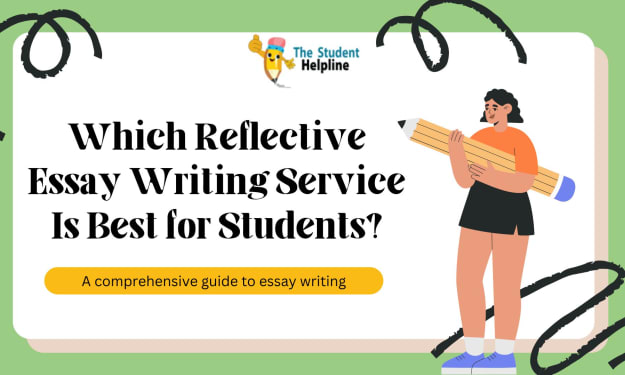
Which Reflective Essay Writing Service Is Best for Students?. AI-Generated.
Reflective essays are one of the most personal yet academically challenging assignments students face. Whether you are in college or university, you are often asked to write a reflective essay to showcase your ability to analyze experiences, apply theoretical knowledge, and express growth in your learning journey. But let’s be honest — crafting a compelling reflective essay is not easy.
By Martin Jackabout a year ago in Education
Why Students Prefer Experts to Do Their Online Exams
Modern educational platforms have revolutionized learning by providing students with both flexibility and extended course options. Most students face difficulties with online courses and frequently use experts to obtain better help. Students turn to expert help because they need to handle various responsibilities and maintain good grades for multiple reasons. These students prefer experts to take responsibility for their online exams for the following reasons.
By Lucas Lednerabout a year ago in Education