college
Maximize your university experience with these tips for all things collegiate–how to achieve a perfect GPA, select the right major, finance your college education and more.
What is the role of psychologists in helping to combat workplace stress and burnout?
Workplace stress and burnout are serious issues in contemporary work settings. With mounting workloads, close deadlines, lofty expectations, and round-the-clock connectivity, workers often experience pressure that can impact their mental well-being, work performance, and overall quality of life. Burnout, a chronic state of workplace stress, is marked by emotional exhaustion, depersonalization, and a decline in personal accomplishment. Its impact extends from individuals to organizations, brushing against productivity, workplace culture, and team dynamics. Psychologists play a pivotal role in helping individuals and organizations recognize, manage, and prevent workplace stress and burnout, implementing evidence-based strategies to improve mental health and professional satisfaction.
By Naveen Gargabout a year ago in Education
How are psychologists assisting children and adolescents with mental health issues?
Childhood and adolescence are critical developmental periods, with increasing physical, emotional, social, and intellectual growth. During these years, youth face challenges like academic expectations, identity formation, peer relations, and family relationships. While these circumstances are normative, some adolescents and children suffer from mental health issues such as anxiety, depression, ADHD, learning disorders, or issues involving trauma.
By Naveen Gargabout a year ago in Education
How do psychologists help individuals cope with grief and loss?
Grief is one of the most profound human experiences, arising after the death of a loved one, the end of a relationship, the loss of health, or other significant life changes. While grief is a natural response to loss, it can be emotionally overwhelming, disrupting daily functioning, relationships, and one’s sense of meaning in life. For some, grief resolves gradually over time, but for others, it may become prolonged, complicated, or intertwined with depression and anxiety.
By Naveen Gargabout a year ago in Education
How are psychologists helping people with chronic illness and mental health issues?
Chronic diseases like diabetes, heart disease, arthritis, asthma, autoimmune disorders, and cancer influence not only the physical health of individuals but also their mental well-being, causing them immense distress. Coping with a long-term condition is all about round-the-clock medical attention, lifestyle changes, and no end in sight to worry about the future. This can also result in emotional challenges like depression, anxiety, stress, or hopelessness. For most individuals, the psychological impact of chronic illness is as difficult to handle as the disease itself.
By Naveen Gargabout a year ago in Education
How I Turned My Free Time Into Real Online Income
The Turning Point I still remember the evening when I was scrolling endlessly through my phone, wasting hours on social media. Life felt repetitive—wake up, work, come home tired, and sleep. But one day, I asked myself: “What if I could use this free time for something meaningful, maybe even profitable?” That single thought became the seed of my journey into online earning. And honestly, I never thought small steps could lead to such steady results.
By Umar Farooqabout a year ago in Education
Why Are Students Turning to Assessment Helpers for Academic Support?
Students are increasingly turning to assessment helpers for academic support because these services offer reliable, time-saving, and personalized solutions to manage coursework, meet deadlines, and improve learning outcomes. With rising academic pressure, many are seeking assessment help online to stay on track without compromising quality or integrity.
By James Hellerabout a year ago in Education
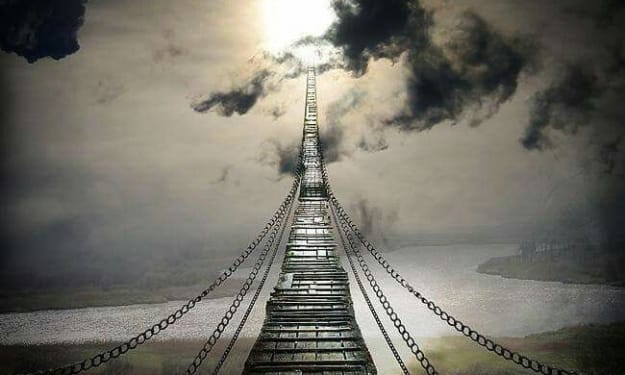
The Bridge Between Dreams and Reality
M Mehran Every human being is born with a spark. Some sparks are easy to see—like the child who paints beautiful pictures before even learning to write. Others are hidden, waiting for the right moment to be discovered. What decides whether these sparks fade or ignite into flames? More often than not, the answer is education. The Seed of Possibility Imagine planting a seed in the ground. Left alone, it may grow wild or not at all. But if given water, sunlight, and care, it transforms into something beautiful—a tree that offers fruit and shade. Education works the same way. Children are seeds filled with potential, and learning is the sunlight that helps them grow. But unlike nature, where rain and sun are free, education often comes with barriers—poverty, inequality, lack of access. And yet, when someone breaks through these barriers, the transformation is breathtaking. A child who once walked barefoot to school can grow up to become a doctor saving hundreds of lives. A girl who once studied by candlelight can grow into a leader who changes her community. Education is the bridge between what is and what could be. Stories That Inspire History is filled with stories that prove this truth. Take Dr. Ben Carson, who grew up in poverty in Detroit. His mother, who couldn’t read herself, insisted he spend time with books instead of television. Those books unlocked his curiosity and later carried him into the world of medicine, where he became one of the most celebrated neurosurgeons. Or think of Malala Yousafzai, who faced violence for daring to attend school. Instead of silencing her, the attack turned her into a global voice for education. She reminds us every day that education is not just about personal success—it is about the right to dream. These stories echo a simple truth: education transforms not just individuals, but entire generations. More Than Textbooks When people hear the word “education,” many think of textbooks, exams, and grades. But real education is much bigger. It is the process of learning how to think, solve problems, and connect with others. A person who memorizes every fact in a book but never learns empathy is not truly educated. Education teaches us to look beyond ourselves. It helps us understand history so we don’t repeat mistakes. It shows us science so we can improve lives. It introduces us to literature and art so we can see the beauty in human experience. It is not about filling our minds with information—it is about shaping our character, our choices, and our future. The Role of Teachers Behind every educated person, there is almost always a teacher who believed in them. Teachers are more than instructors; they are architects of the future. They build not with bricks, but with encouragement. They design not with blueprints, but with inspiration. I once met a teacher who used to say, “I don’t just teach math, I teach confidence.” For her, equations were not just numbers—they were lessons in persistence and problem-solving. Many of her students went on to careers they never imagined possible, all because she taught them to believe in themselves. That is the beauty of education: it is not just about what we learn, but about who helps us along the way. The Changing World of Learning Today, education is evolving faster than ever. Technology has turned the world into one big classroom. You no longer need to sit inside four walls to learn. With a phone in your hand, you can attend lectures from world-class universities, practice languages with people across the globe, or watch tutorials that teach you everything from coding to cooking. But this progress also comes with responsibility. We must ensure that access to technology does not deepen the divide between the privileged and the poor. True progress will only happen when every child, no matter where they live, has the same opportunity to learn. Why It Matters Education matters because it is the foundation of freedom. An educated person is harder to deceive, harder to manipulate, and more capable of standing up for justice. A nation filled with educated citizens is a nation equipped to solve problems, innovate, and grow. When we invest in schools, teachers, and learning opportunities, we are not just building classrooms—we are building stronger families, healthier communities, and brighter futures. Education is not charity; it is the smartest investment any society can make. Closing Thought At its core, education is hope. It is the hope that a child in a remote village can one day lead a company. It is the hope that a teenager who struggles today can rise tomorrow. It is the hope that every spark inside us can grow into something extraordinary. Dreams alone cannot change the world. But dreams, combined with education, can. And that is why education will always remain humanity’s greatest bridge between possibility and real
By Muhammad Mehranabout a year ago in Education
The Silent Power of Education
M Mehran There is something almost magical about the way education transforms lives. At first glance, it looks like nothing more than memorizing facts, passing exams, or earning certificates. But in reality, education is far more powerful than most people realize—it is a quiet revolution that starts in the mind and ripples outward, shaping entire societies. Think for a moment about a single classroom. A teacher stands at the front, perhaps with a chalkboard or a digital screen. Around them, rows of children listen, write, and imagine. On the surface, it may not look extraordinary. Yet in those very moments, futures are being written. The child who struggles with a math problem today might one day design a bridge that connects two cities. The girl scribbling in her notebook might become the author who inspires millions. Education is not just about what we learn—it is about who we become. Breaking Barriers One of the most powerful things education does is break barriers. For centuries, entire groups of people were denied access to learning. Women, minorities, and the poor were often told education wasn’t “meant” for them. But history has proven otherwise. The more inclusive education becomes, the more societies grow. Malala Yousafzai, a young girl from Pakistan, is a living example. She raised her voice for girls’ right to go to school and nearly paid with her life. Today, her message is louder than ever: when a girl learns, entire communities rise. Education is the ultimate equalizer—it does not care about your background, your gender, or the wealth you were born into. It only asks if you are willing to open your mind. More Than Degrees Unfortunately, too many people reduce education to grades and degrees. While those are important, they are not the full picture. Education is not just about passing tests; it’s about learning how to think, question, and create. The best classrooms don’t produce robots who can repeat information. They produce thinkers who challenge the world around them. Albert Einstein once said, “Education is not the learning of facts, but the training of the mind to think.” That is where the real power lies. When people learn to think critically, they stop accepting things at face value. They begin asking hard questions—about governments, about fairness, about the future. And it is these questions that lead to progress. Education Beyond the Classroom We often forget that education is not limited to schools and universities. Life itself is a classroom. The mechanic who teaches his apprentice how to fix an engine is educating. The grandmother who passes down family traditions is educating. Even failure has lessons to offer if we are willing to listen. In today’s world, education has expanded far beyond traditional boundaries. The internet has turned smartphones into libraries and online platforms into universities. A child in a small village can now access the same information as a student in a top-tier city school. Knowledge has never been so accessible—and that accessibility is rewriting the story of human potential. The Human Side of Learning At its heart, education is not only about knowledge—it is about connection. Think about your favorite teacher. Chances are, it wasn’t only what they taught you that mattered, but how they made you feel. Great educators inspire confidence, curiosity, and courage. They ignite sparks that often burn for a lifetime. I once knew a boy who hated reading. Books were a chore, and he struggled through every page. But then a teacher gave him a novel that matched his interests—a story about adventure and discovery. That single book turned him from a reluctant reader into someone who couldn’t stop exploring libraries. Years later, he became a journalist. All because one teacher chose to believe in him. This is the human side of education. It’s about more than syllabuses and exams. It’s about helping people discover their own strength. The Future of Education As we look ahead, education faces new challenges and opportunities. Artificial intelligence, online learning, and global connectivity are reshaping the way we learn. Some fear that technology will replace teachers, but the truth is more inspiring: technology will support teachers, making education more personalized and accessible. The real challenge is not whether technology will help us learn, but whether we will ensure equal access. Millions of children still grow up without books, schools, or teachers. If we want education to truly change the world, it must reach everyone—not just those who can afford it. A Call to Action Education is more than a personal journey; it is a collective responsibility. Every time we share knowledge, mentor someone younger, or fight for better schools, we are investing in the future. The ripple effect is endless. One educated child can lift a family. One educated family can strengthen a community. And one educated community can change a nation. The silent power of education is that it does not just teach us what to think—it teaches us how to dream. It gives us tools to shape the world into something better, kinder, and wiser. And perhaps that is the most important lesson of all: when we invest in education, we invest in hope.
By Muhammad Mehranabout a year ago in Education
Your Brain vs. Your Body
“The Brain Uses More Energy Than You Think” e Power-Hungry Brain: Why Your Mind Consumes So Much Energy When you think about the parts of your body that use the most energy, you might imagine your muscles during exercise or your heart pumping blood tirelessly. Surprisingly, the organ that demands the most energy is not your biceps or your lungs—it’s your brain. Even though the brain makes up only about 2% of your body weight, it consumes roughly 20% of the body’s total energy. That’s a fascinating fact of biology and one that raises an important question: why does such a small organ use so much power? A Tiny Organ with Massive Power The human brain weighs around 1.4 kilograms (3 pounds) on average, yet it contains about 86 billion neurons. These neurons are like tiny electrical circuits, constantly communicating with one another. To send signals, neurons rely on rapid electrical impulses, and they also need chemical messengers called neurotransmitters to pass messages between them. All of this activity requires an enormous amount of energy. In fact, most of the energy consumed by the brain is used not for thinking hard or solving problems, but for simply keeping its communication system running. Neurons are “on duty” all the time, even when you’re asleep. That’s why your brain never truly rests. The Fuel That Keeps You Thinking The brain’s favorite fuel is glucose, a type of sugar found in the foods we eat. When you consume carbohydrates, your body breaks them down into glucose, which then travels through your bloodstream. The brain absorbs this glucose and uses it to produce energy. Without a steady supply of glucose, your brain cannot function properly, which is why you might feel dizzy, confused, or irritable if you skip meals. What’s even more fascinating is that your brain is picky about its fuel. While your muscles can use fats and proteins in addition to glucose, your brain mostly sticks to sugar. In extreme situations, like fasting or starvation, the brain can adapt and use ketones (produced when the body burns fat), but glucose remains its primary and preferred source. Thinking vs. Resting: Does Mental Work Burn Calories? Many people wonder: if the brain uses so much energy, does thinking harder burn more calories? The short answer is—only a little. While doing complex math problems or concentrating on a puzzle might increase brain activity slightly, the difference in calorie burn is tiny compared to what your brain already uses at rest. For example, even when you’re relaxing, daydreaming, or sleeping, your brain is still busy controlling breathing, regulating temperature, processing memories, and more. That’s why the brain’s baseline energy consumption is already so high. The Evolutionary Advantage Why did human brains evolve to be so energy-hungry? Scientists believe it’s because our brains are what set us apart as a species. The human brain is incredibly advanced, capable of language, abstract thinking, planning, creativity, and problem-solving. These abilities gave early humans a survival edge. However, there was a trade-off: growing such a powerful brain required more calories. That’s one reason why our ancestors developed hunting, cooking, and farming—to meet the high energy demands of their brains. Taking Care of Your Brain’s Energy Needs Since the brain relies so heavily on glucose and oxygen, maintaining good overall health is essential for keeping it in top condition. Eating a balanced diet rich in whole grains, fruits, and vegetables provides steady fuel. Exercise improves blood flow to the brain, ensuring it gets enough oxygen and nutrients. Even staying hydrated matters, as dehydration can make it harder for your brain to think clearly. A Final Thought The next time you feel mentally drained after a long day of work or study, remember this: your brain is a small but mighty energy powerhouse, quietly burning through calories to keep you alive, alert, and capable of amazing thought. It may weigh just a fraction of your body, but in terms of energy demand, it’s the true champion.
By Muhammad Shahramabout a year ago in Education
Looking for Someone to Do My Assignment for Me? Here’s the 2025 Reality Check
Yes, you can pay someone to do your assignment — but in 2025, the reality is that not all services are equal, and choosing the wrong one can harm your grades, credibility, and even your academic record.
By Suraj Baloniabout a year ago in Education