bullying
Padang food indonesia
The Flavors of Padang: A Culinary Journey Introduction Located on the western coast of Sumatra, Padang is not only known for its breathtaking landscapes but also for its rich and flavorful cuisine. Padang food, or Minangkabau cuisine, is famous throughout Indonesia and the world for its spicy, bold flavors and unique dining style. This is the story of a culinary adventure in the heart of Padang.
By m habibullah2 years ago in Education
Climb up the mountain
The Summit of Determination: Emily's Ascent In a small village nestled at the base of the towering Atlas Mountains, lived a young woman named Emily. Emily had always been captivated by the mountains that loomed over her village. Their snow-capped peaks called to her, promising adventure and challenges. Her father, a seasoned mountaineer, had often regaled her with stories of his own climbs, planting the seeds of a dream within her to one day reach the summit.
By m habibullah2 years ago in Education
in a relationship
A Journey of Love The Meeting In a bustling city filled with the constant hum of life, there was a quaint little café named Serendipity. It was a haven for those seeking a moment of peace amidst the chaos. It was here, one rainy afternoon, that Emma and Jake's paths crossed.
By m habibullah2 years ago in Education
The Legend of Miyamoto Musashi
The Legend of Miyamoto Musashi A Warrior's Beginning In the late 16th century, amidst the tumultuous Sengoku period of Japan, a boy named Bennosuke was born in the Harima Province. This boy would grow up to be the legendary samurai Miyamoto Musashi. Raised in a country torn by war and conflict, Musashi’s early life was shaped by the constant need for strength and survival.
By m habibullah2 years ago in Education
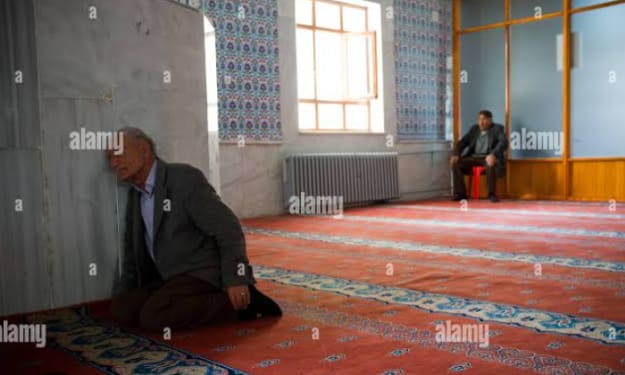
*☆Al-Qari problems☆* Salary standard of Imamate Question
*☆Al-Qari problems☆* Salary standard of Imamate Question On what basis should the salary of the imam of the mosque be determined? That is, by looking at their ability and academic services or by looking at the mosque fund or on the basis of alias? Likewise, at what rate should the salaries of the mosque's muezzin and imam be increased and what should be the standard in it? Reply The role of both mosques and imams in the society has been very important, the responsibility of shaping the society in the right direction has been carried out by the imams through mosques. Therefore, both mosques and imams are among the important religious needs of Muslims. The appointment of talented people in mosques. And their skills, economic needs and life needsIt is the collective responsibility of Muslims to fix a reasonable stipend for them taking into account the fluctuations of prices. The stipends of mosque imams, muezzins and khudams must be increased from time to time with the rate of inflation and their needs. While determining the stipends of the people connected to the mosques, these stipends should not be seen in the context of a mere salary of a wage earner, but the basis should be put forward that these people are fulfilling an important religious need of the society, regardless of the difference in weather and conditions. Regardless, we always try hard to fulfill our responsibilityTherefore, this sentiment related to them should also be kept in front, as well as setting reasonable stipends for these people and increasing them. This publication is equivalent to contributing to religion. In this regard, the matter of the fund of the mosque is not of much importance, because the mosques are generally run with the support of the people and religious people, no funds are allocated for them by the governments, but the appropriateness of the mosque. People participate fully in the donation of mosques, meeting the needs related to mosquesThey consider it their religious duty, so if there is a problem with the fund of the mosque, if the needs of the mosque are put in front of the people in a proper way, then this problem will be solved easily. The result is that the stipends of imams, muezzins and khudams of mosques should be determined keeping in mind their abilities, economic needs and the rate of inflation, and keeping these issues in mind, these stipends should also be reasonably increased from time to time. In response to a similar question, Mufti Abdul Rahim Lajpuri, may Allah have mercy on him, writes in Fatawi Rahimiya: "Salary of Imamate and its standard:" Al-Jawab) The position of Imamate is of great importance in Islam, it is an honorable, dignified and important religious department. The one who is the best should be made Imam, it is in the hadith: If you like itIf your prayers reach the level of popularity, then the best and most virtuous among you should lead you, for he is a messenger between you and your Lord: "In Sarkam in Taqbal Salutkam Fliu Mukum Ulama Kum Fanham Wafd Kum Fima Bankum Wabin Rabkum, Ruah al-Tabarani wafi Ruayat al-Hakam Fliu Mukum Khyarkum Waskat Anhu" (Sharh al-Naqayyah 1/86 and Wali Bala Bala Ma'am al-Khal) In the second hadith, it is said that whoever is best among you, make him the imam, because he is the messenger between you and your Lord (reference above). In the famous book of jurisprudence Noor al-Yazah: "For the knowledge of rights is above motherhood, then without reading, then with awrah, then without hearing, then without good appearance, then without good appearance, then for respectability, secondly, without good voice, then without clean clothing." (83, 84 Chapter of Imamate The most entitled to Imamat is the one who is more knowledgeable about the affairs of religion (especially the most familiar with the issues related to prayer), then the person who is more skilled in reciting Tajweed, then the one who is more pious and pious. Then he who is older, then he who has good morals, then he who is beautiful and intelligent,Then the one who is more noble, then the one who has a good voice, then the one who wears the purest clothes. This responsibility belongs to the custodians of the mosques and the influential people of the neighborhood, it is very important for them to pay attention to this important issue. Yes, the imams of the mosques should deal with honor and respect, they are their religious leaders and chiefsUnderstand, treating them like other employees and servants is a severe insult to the position of Imamate, it is a very important religious position, there is no job like profession and duties, protecting the respect, dignity, honor and greatness of this great position from outsiders. It is necessary. If the imam of the mosque lives without a really necessary and reasonable consultationIf it is difficult, the trustees can also present their demand to the influential people of the mosque and the neighborhood in a proper manner, and it is also important to pay attention to the responsible mosques and influential people with compassion and compassion, in this case, the imams should It is not permissible to adopt a method which necessitates insulting the office of ImamateIt will not happen, the Imam is the protector and trustee of the dignity and value of the office of Imamate, such a way that humiliates the office of Imamate is necessary and cannot be allowed...etc. Only God knows what is right. Ahaqr al-Naam Syed Abdul Rahim La Japuri then Randiri Ghafarla’ 1 Shawwal al-Mukarram 1415 AH. Also, in response to another question, he writes: What are the responsibilities of an imam and how much should his salary be? (Al-Jawb) I say and God bless you. It is in the hadith Sharif: Atwa al-Jeer Qib in Yajaf Irqa (Ibn Majah, Mishkwat Sharif, p. 258, Chapter Al-Ijarah). That is, pay the laborer's wages before his sweat dries up. The Prophet (PBUH) said, "On the Day of Resurrection, I will be sued against the three men, one of them is ``Rajal Istajrajiraah Fastufi Minh Walam Yata Wajara'' is the person who hire him as a laborer and take a loan from him but do not pay the wages in full (Bukhari Sharif, with reference to Mishkut Sharif p. 258 also). Failure to pay full wages does not only mean that he kills and does not pay full wages, but it also includes not giving him the wages he should get and taking advantage of his compulsion to pay at least Take work for wages. The jurists, may Allah have mercy on us, have said, "We give as much as Hajja, Fiqh, and Fadl in Qasr Kaan."That is, the custodians and madrasas are required to give stipends and stipends (salaries) to the servants of mosques and madrasas according to their needs and keeping in mind their academic ability and piety. It is a bad thing to give, and the trustees will be accountable to God. Only Allah knows best". Fatwa No. : 144010200555 Darul Ifta: Jamia Uloom Islamia Allama Muhammad Yusuf Banuri Town *☆Al-Qari News☆* 03002987952
By Muhammad Tariq2 years ago in Education
TV advertising revenue
The Early Days In the early days of television, advertising was a fledgling industry, much like TV itself. The first TV commercial aired in 1941, when the Bulova Watch Company paid $9 for a 10-second spot during a baseball game broadcast on WNBT in New York. This simple black-and-white ad marked the beginning of a new era in advertising, where moving images and sound could be used to promote products and services directly to consumers in their homes.
By m habibullah2 years ago in Education
The beginning of TV
The Birth of Television The Seeds of Innovation In the early 20th century, the world was abuzz with new technological advancements. The invention of the radio had revolutionized communication, and now, scientists and inventors were dreaming of a way to transmit moving images to accompany the sound. The concept of television, a device that could bring visual entertainment and information directly into people's homes, was born from this dream.
By m habibullah2 years ago in Education
"Empowering Women in Education"
In the realm of education, the quest for gender equality has been both a journey and a destination. Across the globe, efforts to empower women in education have aimed not only to close the gender gap but also to foster a more inclusive and equitable society. From grassroots initiatives to policy reforms, various approaches have been employed to ensure that women and girls have equal access to educational opportunities and are encouraged to pursue their academic and professional aspirations without barriers. In many parts of the world, traditional cultural norms and economic disparities have historically restricted women's access to education. However, over the past few decades, significant strides have been made to challenge these barriers and create pathways for women to thrive academically. One such initiative is the promotion of girls' education at the primary and secondary levels. By investing in programs that prioritize girls' enrollment and retention in schools, communities can break the cycle of generational poverty and promote economic independence among women. Moreover, initiatives focused on higher education have also played a pivotal role in empowering women. Scholarships, grants, and mentorship programs aimed specifically at women have provided them with the necessary resources and support to pursue degrees in fields traditionally dominated by men, such as science, technology, engineering, and mathematics (STEM). These efforts not only empower women to pursue their passions but also contribute to diversifying the talent pool in these critical sectors. In addition to access, the quality of education received by women is equally crucial in closing the gender gap. Reforming curricula to be more inclusive of women's contributions to history, science, and literature helps challenge stereotypes and biases from an early age. By presenting diverse role models and narratives, educators can inspire young girls to envision themselves as leaders and change-makers, paving the way for future generations of empowered women. Beyond academics, extracurricular activities and leadership opportunities are instrumental in fostering confidence and leadership skills among young women. Programs that encourage girls to participate in sports, arts, debate clubs, and student government not only enhance their overall educational experience but also prepare them for future challenges in their personal and professional lives. Through these activities, girls learn important skills such as teamwork, resilience, and critical thinking, which are essential for success in any field. On a global scale, international organizations and partnerships have been instrumental in advocating for women's rights to education. Initiatives like the United Nations Sustainable Development Goals (SDGs), specifically Goal 4 (Quality Education) and Goal 5 (Gender Equality), have provided a framework for countries to prioritize gender-responsive education policies and programs. By aligning national agendas with these global commitments, governments can accelerate progress towards closing the gender gap in education and ensuring equal opportunities for all. Despite these advancements, challenges remain in achieving full gender equality in education. Socioeconomic factors, cultural norms, and political instability continue to pose significant barriers to girls' education in many regions. Addressing these challenges requires a coordinated effort involving governments, civil society organizations, and the private sector to implement sustainable solutions and ensure that no girl is left behind. Looking ahead, the journey towards empowering women in education must continue to evolve. It requires ongoing investment in educational infrastructure, teacher training, and community engagement to create supportive environments where girls can thrive academically and socially. It also calls for policies that protect girls from discrimination, violence, and early marriage, ensuring their right to a safe and inclusive learning environment. In conclusion, empowering women in education is not just about closing the gender gap; it is about creating a more just and equitable world where every individual has the opportunity to reach their full potential. By investing in girls' education and supporting their aspirations, we can build a future where women are leaders, innovators, and changemakers in their communities and beyond.
By Dharanidharan T 2 years ago in Education
Karate
The Karate Kid A New Beginning In the bustling city of Kyoto, Japan, lived a young boy named Hiro. At twelve years old, Hiro was small for his age, often overlooked by his classmates and occasionally bullied for his quiet demeanor. He spent most of his time alone, dreaming of becoming strong and confident like the heroes he read about in his favorite comic books.
By m habibullah2 years ago in Education
Samsung story
The Visionary Journey of Samsung Humble Beginnings In the bustling port city of Busan, South Korea, a young entrepreneur named Lee Byung-chul founded a small trading company in 1938. He named it Samsung, which means "three stars" in Korean, symbolizing greatness and prosperity. Initially, Samsung dealt in dried-fish, locally-grown groceries, and noodles. Lee’s vision was to create a company that would become a cornerstone of the Korean economy.
By m habibullah2 years ago in Education
Disney world
A Magical Adventure at Disney World The Big Surprise Samantha, an eight-year-old girl with a wild imagination and a heart full of dreams, lived in a cozy suburban house with her parents and her younger brother, Max. For years, Samantha had dreamed of visiting Disney World, the land of magic and wonder where all her favorite characters came to life.
By m habibullah2 years ago in Education
Into the Forest
Into the Forest In the quiet village of Greenbrook, bordered by dense, mysterious woods, lived a boy named Leo. Leo was a curious and adventurous twelve-year-old, always dreaming of exploring the unknown. The village elders often told tales of the enchanted forest that lay just beyond the village boundaries, filled with magical creatures, hidden treasures, and untold dangers.
By m habibullah2 years ago in Education