bullying
When Luck Runs Out: A Collection of Everyday Mishaps. Content Warning.
**Unlucky Days: A Series of Mishaps** Imagine waking up and glancing at the clock to see it's 9:15. You're terribly late. In a rush, you make a cup of coffee, only to realize you’ve added salt instead of sugar. As you sip the awful concoction, you try to shrug it off, thinking the day can't get worse. But life has other plans. While sprinting to catch the bus, it pulls away just as you arrive. Frustrated, you believe this is the worst day ever—but you’d be wrong. Let’s consider someone else. He wakes up in a good mood, heading to the bathroom to wash up. But to his shock, the mirror has been replaced. Worse still, the new one is crooked, making grooming a nightmare. If that's not bad enough, another individual forgets to reattach the guard on their hair trimmer, accidentally shaving off a significant chunk of hair. Moving on, imagine being locked out by your own dog. Perhaps this pet was upset because their breakfast was delayed. But even when breakfast is served, it can go awry. One person discovered their refrigerator had frozen an egg solid. Another accidentally seasoned their food with heaps of salt instead of sugar. In the workplace, disasters can strike too. Picture a coffee shop worker dealing with a burst container of beans, spilling seven pounds of coffee. Meanwhile, at home, someone's sister’s makeup bag was crushed after their father sat on it, leaving a chaotic mess. Then there’s the world of gadgets. A man trying to microwave his lunch sees the appliance burst into flames. Another breaks a knife trying to slice butter. One person even lost their phone while attempting to feed birds, accidentally tossing it into the water instead of bread. Transportation issues also top the list of unlucky events. Someone gets their bike stuck in wet cement, while another finds their car buried under snow. And yet another individual, mid-camping trip, discovers their car key won’t work, leaving them stranded miles from home. Sometimes, even celebrations go wrong. A person baking brownies ruins them by placing candles on the still-hot dessert, causing the wax to melt. Another orders a birthday cake resembling their pet, but the result looks nothing like the animal, leaving even the cat unimpressed. And then there are structural mishaps. One homeowner trying to install shelves accidentally shatters their toilet when everything falls off the wall. In another case, a man drills into a hot water pipe instead of the intended wall spot, creating a plumbing disaster. Even leisure activities aren’t immune. Someone enjoying a puzzle watches in horror as their pets knock the finished piece onto the floor, scattering 1,000 pieces everywhere. Meanwhile, another person at a trampoline park mistakenly takes someone else’s shoes home, leaving the original owner shoeless. If you thought your day was bad, consider this: a person lands a new job after months of unemployment, only to trip on a carpet and break their leg five minutes into their first day. Or the traveler who opens their luggage after a flight to find it completely destroyed. Despite all these mishaps, there’s a silver lining. Studies show that staying positive makes you more productive and happier overall. So next time something goes wrong, remember that the rest of your day can still turn around—it’s all about your perspective.
By Nora Ariana2 years ago in Education
The Mythological Roots of Katniss Everdeen: Unveiling the Ancient Heroes Behind The Hunger Games
Let’s start by discussing our protagonist, Katniss Everdeen. She represents many heroic traits, but also taps into a deeper, mythological connection. Katniss's character parallels the ancient Roman goddess Diana, the goddess of the moon, hunting, and the wilderness. Like Diana, Katniss possesses exceptional skills in archery and a fierce independence that defines much of her journey. One of the most iconic moments from *The Hunger Games* is Katniss’s decision to volunteer as tribute, a self-sacrifice that embodies her desire to protect those she loves. The moment, "I volunteer as tribute," has become synonymous with her resilience and determination. But underneath her bravery lies an intriguing mythological connection. In *The Hunger Games*, Katniss is frequently seen wielding her bow and arrow. The scene where she hunts with her bow draws a strong visual connection to Diana, who was often depicted with a bow, hunting wild animals, especially deer. In fact, Katniss’s skill in archery, paired with her bravery, mirrors Diana’s traits as a protector and fierce warrior. Beyond her physical attributes, Katniss's attitude toward love and romance further reflects Diana’s qualities. Diana was known for her independence, rejecting the idea of romantic attachments. Similarly, Katniss remains focused on survival and protecting those she loves, rather than pursuing romantic relationships. Her reluctance to engage in romance with either Gale or Peeta is a significant part of her character arc, echoing Diana's self-sufficiency. The mythological influence doesn’t stop with Katniss. One of the most well-known myths involving Diana is the story of the hunter Actaeon, who accidentally witnessed her bathing and was transformed into a stag, hunted by his own dogs. This transformation mirrors a key moment in *The Hunger Games*, where genetically engineered mutts, resembling fallen tributes, are unleashed to hunt the final contestants in the Games. This disturbing scene parallels Diana’s punishment of Actaeon, where the hunter becomes the hunted. Suzanne Collins, the author of *The Hunger Games*, has acknowledged that classical myths, including the story of Theseus and the Minotaur, heavily influenced her work. In this myth, young tributes are sent to Crete to face the Minotaur. Theseus volunteers as one of the tributes, and with the help of Princess Ariadne, he navigates the Labyrinth, defeats the Minotaur, and escapes. This idea of young people being sacrificed for a greater political or societal purpose is mirrored in the *Hunger Games*, where children from each district are selected to fight in a deadly game to maintain the Capitol's control. The setting of *The Hunger Games* also draws from historical references, particularly Ancient Rome. The name "Panem," derived from the Latin phrase *panem et circenses* (bread and circuses), was a tactic used by Roman emperors to appease and distract the masses with free food and entertainment. In *The Hunger Games*, this tactic is mirrored by the Games themselves, where the Capitol uses the Games to keep the districts subdued and distracted. The brutal violence serves as both entertainment for the Capitol and a reminder to the districts that rebellion will be met with violence. The Capitol itself, with its opulence and decadent lifestyle, reflects the excesses of ancient imperial powers. Its design, with its Roman-inspired architecture and lavish parades, reinforces the theme of control and distraction. The people of the Capitol are kept happy and entertained while the districts struggle, much like the citizens of ancient Rome, who were kept pacified with spectacles like gladiatorial games. However, Collins also drew inspiration from more contemporary sources. In interviews, she mentioned that reality TV shows, news footage, and her father’s experiences in the Vietnam War influenced her depiction of Panem. The districts are each modeled after different regions of the United States, highlighting the stark contrasts between the Capitol’s excesses and the poverty of the districts. Before I conclude, let me share an interesting Easter egg from the upcoming *The Hunger Games: Ballad of Songbirds and Snakes* movie. If you watch the trailer closely, you’ll notice a scene where Lucy Gray, President Snow’s love interest, curtsies to the authorities. This gesture echoes Katniss’s own sarcastic curtsy during her Games. While the connection may seem subtle, it’s a fascinating nod to the events of the original trilogy, showing how history may repeat itself in unexpected ways. In the grand narrative of *The Hunger Games*, Katniss represents both a modern hero and an embodiment of ancient myth. Through her, the story explores timeless themes of sacrifice, survival, and rebellion, woven together with rich mythological and historical influences.
By Nora Ariana2 years ago in Education
Social Media Web Application Project: Expert Tips
Innovation distinguishes between a leader and a follower." - Steve Jobs' timeless quote perfectly encapsulates the dynamic world of social media web application projects. Creating a successful social media web application needs careful planning, technical skills, and knowing how users will experience it.
By Mukul Khan2 years ago in Education
Why Crying Isn’t a Sign of Weakness
There’s a powerful misconception that shedding tears makes us fragile, but nothing could be further from the truth. Crying is not a flaw in our design—it’s a feature. It’s a way our bodies, hearts, and minds come together to process life’s profound highs and devastating lows. Far from being a sign of weakness, crying is an act of courage and resilience. It’s about letting ourselves feel deeply, which is essential for growth and connection. Let’s explore why crying is not something to be ashamed of, but rather an extraordinary testament to human strength and authenticity. 1. Crying Is a Release for Emotional Buildup Life often hands us more than we can carry. Stress, grief, frustration—they weigh us down, sometimes without us even realizing it. Crying acts as a release valve, giving us an outlet for those pent-up emotions. When we cry, it’s as though we’re saying to ourselves, I can’t hold this in anymore. And that’s not a failure—it’s a form of self-care. Crying allows us to acknowledge what we’re feeling and let it out in a way that’s both healthy and healing. It’s a necessary step toward regaining clarity and balance. 2. Tears Are a Language of Connection When we cry, we send a message—not only to ourselves but to those around us. Tears communicate vulnerability, and vulnerability fosters connection. It tells others, I trust you enough to share this part of me. Think about how deeply moved we feel when someone cries in front of us. It’s an unspoken reminder of our shared humanity. By showing emotion, we invite others to respond with compassion and empathy, creating bonds that are more authentic and meaningful. 3. Crying Has Real Physical Benefits Tears are more than just water—they carry stress hormones and toxins that build up during emotional strain. When we cry, our bodies literally cleanse themselves. This isn’t just poetic; it’s biological. Studies have shown that crying can reduce stress and lower blood pressure. It releases endorphins, our body’s natural painkillers, helping us feel a little lighter, a little freer. So the next time you feel a lump in your throat, don’t fight it. Your body is telling you it’s time to heal. 4. Tears Are a Sign of Strength, Not Weakness There’s a quiet bravery in allowing ourselves to cry. It takes strength to face our feelings instead of burying them. Society often tells us to “stay strong” by hiding our emotions, but true strength comes from confronting them head-on. Crying isn’t about giving up—it’s about processing what’s happening so we can move forward. It’s about being honest with ourselves, no matter how uncomfortable that honesty might feel. And in a world that sometimes equates stoicism with success, letting yourself cry is a radical act of self-acceptance. 5. Crying Helps Us Grow Emotionally Every tear carries a lesson. Whether we’re crying from heartbreak, frustration, or even joy, tears remind us of what matters most. They help us identify what’s hurting, what’s healing, and what’s worth holding onto. When we cry, we allow ourselves to process complex emotions, which in turn makes us more emotionally intelligent. We learn to navigate the nuances of our feelings, to understand not just what we’re experiencing but why. And that understanding is a powerful tool for personal growth. Reclaiming the Power of Tears It’s time to challenge the outdated narrative that crying is something to hide. Tears are not a sign of weakness; they’re a reflection of our humanity. They show that we’re alive, that we care deeply, and that we’re brave enough to feel what needs to be felt. The next time you feel the urge to cry, don’t suppress it. Let it flow. Let it remind you of your strength, your resilience, and your capacity to heal. Tears don’t make you weak—they make you human.
By Seymour Soza2 years ago in Education
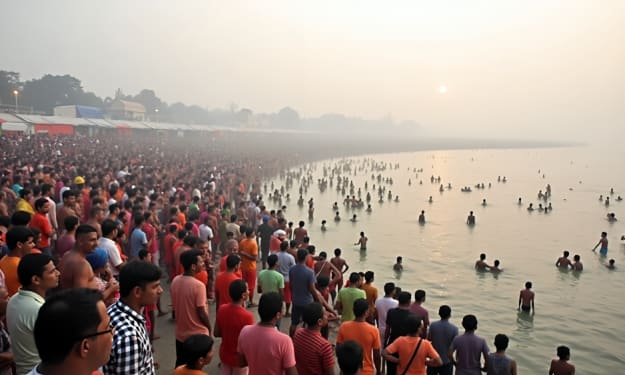
"The Eternal Call of Faith: Devotion and Divinity at the Maha Kumbh Mela". Content Warning. AI-Generated.
Maha Kumbh Mela: A Pilgrimage of Faith, Tradition, and Devotion Introduction: The Spiritual Pulse of India - A general description of the Maha Kumbh Mela as one of the largest religious congregations in the world.
By Prateek Malatwadkar2 years ago in Education
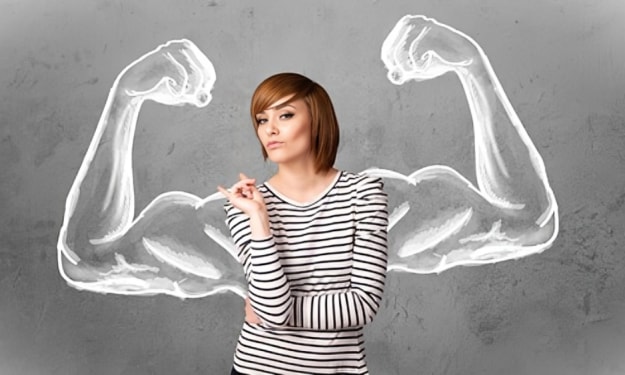
8 Silent Indications of an Emotionally Strong Person and According to Psychology
Cold-heartedness includes qualities such as being unemotional, distant, and not sympathetic. Although these characteristics may be conspicuous, psychology offers a more subtle understanding of what it means to be cold-hearted. While most signs are straightforward, there are few signs that are not that well known that actually make a huge difference between the cold-hearted types and the rest. Being often masked it gets us twice to excuse as such personalities topple the table unless one changes the view. Here are eight little-known characteristics of cold-hearted people:
By Aarti Kumari2 years ago in Education
The Psychology of Money: Timeless Lessons on Wealth, Greed, and Happiness
Money, however, is not just numbers — it has a very human aspect and is a large part of human behavior, human emotion and indeed human psychology. The intertwining of human nature and money — and the repercussions from that — is explored in great detail in Morgan Housel’s The Psychology of Money: Timeless Lessons on Wealth, Greed, and Happiness, a book that offers insight that flies in the face of conventional financial wisdom.
By Aarti Kumari2 years ago in Education