bullying
The Success of Science: Transforming Human Civilization
### How Science Made a Difference in Human Civilization The way we live, think, and interact with the world has been revolutionized by science, which has been the foundation of human progress. Science has always pushed the limits of what is possible, from the discovery of fire to the exploration of outer space. Its success is due not only to advancements in technology but also to its capacity to enhance quality of life, resolve difficult issues, and pique curiosity about the universe. The remarkable accomplishments of science in a variety of fields and its profound impact on human civilization are the subject of this essay.
By Niranjon Chandra Roy2 years ago in Education
The Apple Tree and the Farmer
Once upon a time, there lived a farmer in a village, beside a forest. He had a big garden that had an old apple tree and other plants, trees and beautiful flowers. When the farmer was a little boy, he spent much of his time playing with the apple tree. Those days, the apple tree had given the choicest of apples to him. However, as time passed, the apple tree became old and stopped bearing fruits.
By Md Sakibul islam2 years ago in Education
"The Rime of the Ancient Mariner" by Samuel Taylor Coleridge
"The Rime of the Ancient Mariner" by Samuel Taylor Coleridge is an evidence poetic genius depicting reality of life. It highlights how people suffer for committing sine in the barren earth. It introduce perfect melody, meter, mechanism and supernatural realm . It is unique among Coleridge’s important works— unique in its intentionally archaic language (“Eftsoons his hand drops he”), its length, its bizarre moral narrative, its strange scholarly notes printed in small type in the margins, its thematic ambiguity, and the long Latin epigraph that begins it, concerning the multitude of unclassifiable “invisible creatures” that inhabit the world. Its peculiarities make it quite atypical of its era; it has little in common with other Romantic works. Rather, the scholarly notes, the epigraph, and the archaic language combine to produce the impression (intended by Coleridge, no doubt) that the “Rime” is a ballad of ancient times (like “Sir Patrick Spence,” which appears in “Dejection: An Ode”), reprinted with explanatory notes for a new audience.
By Tusher Enam2 years ago in Education
Science and Humanity: A Journey Towards Progress
The relationship between science and humanity is one of the most profound and dynamic aspects of human civilization. From the earliest discoveries of fire and the wheel to the modern advancements in artificial intelligence and space exploration, science has been the driving force behind humanity's progress. This journey, marked by curiosity, innovation, and collaboration, has not only transformed the way we live but also deepened our understanding of the universe and our place within it. In this essay, we will explore how science and humanity have evolved together, the challenges they face, and the potential for a future where both continue to thrive in harmony. ### The Historical Intersection of Science and Humanity The history of science is deeply intertwined with the history of humanity. Early humans relied on observation and experimentation to survive and thrive. The discovery of fire, for instance, was a pivotal moment that allowed humans to cook food, stay warm, and protect themselves from predators. Similarly, the invention of the wheel revolutionized transportation and trade, laying the foundation for complex societies. As civilizations grew, so did the pursuit of knowledge. Ancient cultures such as the Greeks, Egyptians, and Indians made significant contributions to mathematics, astronomy, and medicine. Figures like Aristotle, Archimedes, and Hippocrates laid the groundwork for scientific inquiry, emphasizing the importance of observation, logic, and evidence. These early efforts were not just about survival but also about understanding the world and humanity's place within it. The Scientific Revolution of the 16th and 17th centuries marked a turning point in the relationship between science and humanity. Thinkers like Galileo Galilei, Isaac Newton, and René Descartes challenged traditional beliefs and introduced new ways of thinking about the natural world. The development of the scientific method provided a systematic approach to inquiry, enabling humanity to uncover the laws governing the universe. This period also saw the rise of institutions like the Royal Society, which fostered collaboration and the sharing of knowledge. ### Science as a Tool for Human Progress Throughout history, science has been a powerful tool for improving the human condition. The Industrial Revolution of the 18th and 19th centuries, driven by scientific and technological advancements, transformed societies by increasing productivity, improving living standards, and creating new opportunities. Innovations like the steam engine, electricity, and the telegraph revolutionized industries and connected people across the globe. In the 20th century, science continued to drive progress in unprecedented ways. Medical breakthroughs, such as the discovery of antibiotics and the development of vaccines, eradicated deadly diseases and extended human lifespans. The Green Revolution, fueled by advancements in agricultural science, helped alleviate hunger and poverty for millions. Meanwhile, the advent of computers and the internet ushered in the Information Age, transforming how we communicate, work, and access information. Today, science remains at the forefront of addressing some of humanity's most pressing challenges. Climate change, for instance, is a global crisis that requires scientific innovation and international cooperation. Renewable energy technologies, such as solar and wind power, offer hope for a sustainable future. Similarly, advancements in biotechnology and artificial intelligence hold the potential to revolutionize healthcare, education, and industry. ### The Ethical Dimensions of Science While science has brought immense benefits to humanity, it also raises important ethical questions. The power of scientific knowledge can be used for both good and harm, and humanity must grapple with the moral implications of its discoveries. The development of nuclear weapons, for example, demonstrated the destructive potential of science when divorced from ethical considerations. Similarly, issues like genetic engineering, data privacy, and artificial intelligence require careful thought and regulation to ensure that scientific progress aligns with human values. The ethical dimensions of science also extend to issues of equity and access. While scientific advancements have improved lives, they have not always been distributed equally. Disparities in healthcare, education, and technology persist, both within and between nations. Bridging these gaps requires not only scientific innovation but also a commitment to social justice and inclusivity. ### The Role of Humanity in Shaping Science Science is not an autonomous force; it is shaped by human values, priorities, and decisions. The direction of scientific research is influenced by societal needs, cultural contexts, and political agendas. For example, the space race of the mid-20th century was driven by geopolitical competition, while today's focus on climate science reflects growing awareness of environmental challenges. Humanity also plays a crucial role in fostering a culture of curiosity, critical thinking, and collaboration. Education is key to nurturing the next generation of scientists and ensuring that scientific literacy is accessible to all. Public engagement with science, through initiatives like citizen science and science communication, helps bridge the gap between researchers and the broader community. Moreover, humanity's diversity is a strength that enriches scientific inquiry. Different perspectives and experiences can lead to innovative solutions and a more comprehensive understanding of complex issues. Encouraging inclusivity in science, particularly for underrepresented groups, is essential for realizing its full potential. ### Challenges and Opportunities Ahead As we look to the future, the relationship between science and humanity faces both challenges and opportunities. One of the most significant challenges is ensuring that scientific progress is sustainable and equitable. The rapid pace of technological change can outstrip our ability to adapt, leading to unintended consequences. For instance, the rise of automation and artificial intelligence has sparked concerns about job displacement and economic inequality. At the same time, science offers unprecedented opportunities to address global challenges and improve the human condition. Advances in renewable energy, biotechnology, and artificial intelligence have the potential to create a more sustainable, healthy, and prosperous world. However, realizing this potential requires not only scientific innovation but also ethical leadership, international cooperation, and a commitment to the common good. ### Conclusion The journey of science and humanity is one of shared progress and mutual enrichment. From the earliest discoveries to the cutting-edge technologies of today, science has been a driving force behind humanity's advancement. Yet, this journey is not without its challenges. As we navigate the complexities of the modern world, we must ensure that scientific progress is guided by ethical principles and a commitment to the well-being of all. Ultimately, the relationship between science and humanity is a testament to our capacity for curiosity, creativity, and collaboration. By working together, we can harness the power of science to build a brighter future for ourselves and generations to come. In this journey, science and humanity are not separate entities but partners in the quest for knowledge, understanding, and progress.
By Niranjon Chandra Roy2 years ago in Education
5 Surprising Health Benefits of Dates - Delicious & Nutritious!
Let's face it, we all have those moments where we crave something sweet. But reaching for a candy bar or a sugary drink can leave us feeling guilty and sluggish. Enter the humble date, a nature-made treat that's not only delicious but also a powerhouse of nutrients. Dates are like the superheroes of the fruit world, packed with vitamins, minerals, and fiber. They're a great way to satisfy your sweet tooth without the guilt, and they can even boost your overall health in some surprising ways. 1. Dates Are Fiber Powerhouses Dates are like the fiber champions of the snack world. A single serving packs a whopping 6.7 grams of fiber, which is more than 20% of your daily recommended intake. Fiber is like the superhero of your digestive system, helping things move smoothly and keeping you feeling full for longer. Think of fiber as the bouncer at your digestive system's club. It keeps the good stuff in and the bad stuff out. It also helps regulate blood sugar levels, which is great news for anyone trying to manage diabetes or avoid weight gain. 2. Dates Are Nature's Sweetener Dates are like the natural sugar ninjas of the fruit world. They're naturally sweet, making them a perfect alternative to refined sugars. But that's not all. Dates are also packed with antioxidants, which are like tiny warriors that fight off free radicals, those pesky molecules that can damage your cells. Dates are like the ultimate guilt-free treat. They satisfy your sweet cravings without the extra calories, fat, and sugar that come with processed sweets. Plus, they're a good source of minerals like magnesium, potassium, and manganese, which are essential for a healthy body. 3. Dates Give You Energy Boost Dates are like the energy drink of the fruit world. They're packed with natural sugars like fructose, glucose, and sucrose, which are released slowly into your bloodstream, providing a steady stream of energy without the dreaded sugar crash. Think of dates as a slow-burning energy source, keeping you going throughout the day. They're also a great source of B vitamins, which are essential for converting food into energy. So, if you're feeling sluggish, grab a handful of dates and feel the energy surge! 4. Dates May Help Reduce Cancer Risk Dates are like the cancer-fighting ninjas of the fruit world. They're high in antioxidants, which can help fight off free radicals that can cause oxidative stress and increase cancer risk. One study even found that dates had the highest antioxidant content among other dried fruits. Eating dates regularly can help reduce the risk of developing certain types of cancer, like colorectal and breast cancer. Dates may even offer protection against certain types of cancer caused by lifestyle factors, like skin cancer. 5. Dates Help Regulate Blood Sugar Levels Dates are like the blood sugar regulators of the fruit world. They contain natural sugar that's released slowly into your bloodstream, helping to prevent spikes and drops in blood sugar levels. This is especially beneficial for individuals with diabetes, as it allows them to maintain a healthy balance of sugar in their bodies. Dates also contain fiber, which helps slow digestion and sugar absorption into the bloodstream. So, if you're looking for a healthy way to manage your blood sugar levels, dates are a great option. In conclusion, dates are a delicious and nutritious fruit that can provide numerous health benefits. They're high in antioxidants and fiber, and they have anti-inflammatory properties. Dates can help reduce the risk of heart disease, stroke, diabetes, and other chronic conditions. They can also help boost your energy levels and improve digestion. So, next time you're craving something sweet, reach for a date instead of a candy bar. Your body will thank you for it!
By Shafiq Urrehman2 years ago in Education
French revolution
In eighteen century French people reveled against the autocrat ruler Louise that led to French revolution. The political upheaval due to autocracy of ruler raised the public sentiment. Democracy, suffrage, liberty and equality of common people prevailed and the chain of autocracy had broken. The French Revolution (1789–1799) was a pivotal period in world history, marking the transition from absolute monarchy to a republic grounded in principles of liberty, equality, and fraternity. Its profound impact reshaped not only France but also influenced political thought and systems globally.
By Tusher Enam2 years ago in Education
AI and the Climate Crisis: Revolutionizing Industries While Saving the Planet
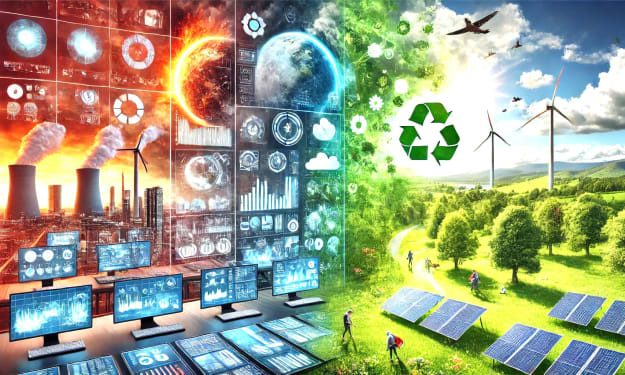
A Tale of Two Revolutions Subtitle: How Artificial Intelligence Is Transforming Industries and Dealing with the Growing Climate Crisis at the Same Time The world is at a crossroads in 2025 as two significant revolutions, one sparked by AI and the other by urgent climate change action, take place. Both have a lot of potential, but the way they affect businesses, governments, and social groups causes heated debate. Is the Rise of AI a Good Thing or a Bad Thing? Industries all over the world have been changed by the AI revolution. In order to predict market trends, personalize customer experiences, and increase productivity, businesses are increasingly relying on AI-driven automation. From advanced chatbots to autonomous vehicles, AI continues to reshape our daily lives.
By Rocky Brahma2 years ago in Education
MI vs RCB Highlights, WPL 2025: Royal Challengers Bengaluru beats Mumbai Indians by 11 runs
WPL 2025: Royal Challengers Bengaluru Stun Mumbai Indians in a Thrilling Finale The Women’s Premier League (WPL) 2025 came to a dramatic close as Royal Challengers Bengaluru (RCB) pulled off a stunning 11-run victory over Mumbai Indians (MI) in the final league match. Played at the iconic Brabourne Stadium in Mumbai, the match was a rollercoaster of emotions, filled with big hits, brilliant catches, and nail-biting moments. RCB, already out of playoff contention, played the role of party spoilers, denying MI a direct spot in the final and forcing them into an Eliminator against Gujarat Giants.
By Lucky Gupta2 years ago in Education
The Silent Revolution: How Vocal Media is Redefining Storytelling in the Digital Age
The Silent Revolution: How Vocal Media is Redefining Storytelling in the Digital Age" is the title of this article. Vocal Media is a new platform that is emerging as the voice of the digital generation in a world where people's attention spans are decreasing and content is consumed at lightning speed. This innovative platform is a movement, a revolution, and a global stage for storytellers, thinkers, and creators—not just another social media or blogging hub. Additionally, it is altering the ways in which we relate to, share, and consume stories. But what specifically distinguishes Vocal Media? Why is it trending worldwide, and why should you care? Let’s dive in.
By Rocky Brahma2 years ago in Education