bullying
The Rise of AI Agents
How Generative AI Is Becoming Your Next Digital Coworker. You have display agent: As the generator becomes your next digital partner For the past 444 years, the artificial intelligence went by the touch line of the technology speech in the center of life and everyday work. Although the automation instruments and automation users become common to all, another evolution quickly develops - the emergency of agents. These smart digital colleges, provided by a generator, are no longer only futurist ideas but are Turn our work mode, production and interaction.
By shoaib khan2 years ago in Education
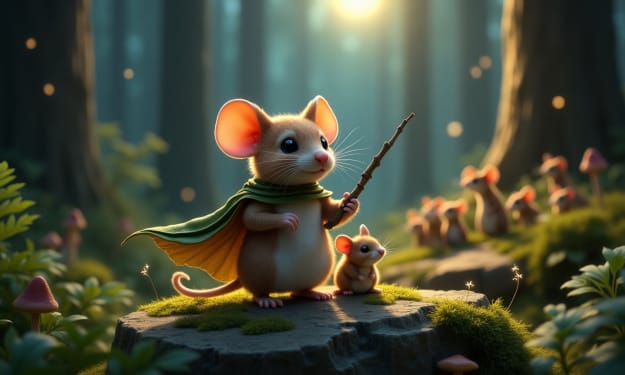
The Brave Little Mouse
The Brave Little Mouse Once upon a time, in a quiet little village nestled between rolling green hills, there lived a small mouse named Milo. Unlike the other mice in his colony, Milo was not content with simply hiding in the shadows and scavenging for crumbs. He dreamed of being brave, of standing up for others, and of making a difference—no matter how small he was.
By Shahzad Khan2 years ago in Education
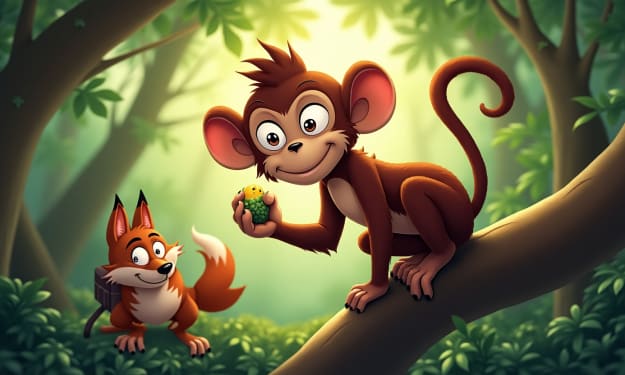
The Cunning Monkey
The Cunning Monkey Deep in the heart of a vast, vibrant jungle, where sunlight filtered through thick canopies and the air buzzed with the songs of birds, there lived a monkey named Miko. Unlike the other monkeys who spent their days swinging from branches and playing together, Miko was different. He was clever—too clever. His sharp mind often led him to mischief, and while some animals admired his intelligence, many others distrusted him.
By Shahzad Khan2 years ago in Education
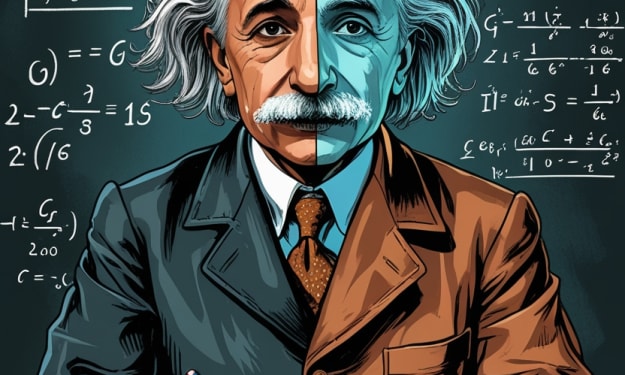
The Man Who Changed the World with His Mind. AI-Generated.
In the small town of Ulm, Germany, in 1879, a baby boy was born who would one day redefine the way we understand the universe. His name was Albert Einstein—a name that would come to symbolize genius itself.
By zakaria khan2 years ago in Education
Silence Has a Name
In a small, quiet town nestled between rolling hills, everyone knew everyone. It was the kind of place where secrets were hard to keep, and life moved slowly, like the winding river that cut through the valley. People lived simple lives, greeting each other with smiles and small talk. But when a new boy named Naveed arrived at the local school, things began to change.
By Majeed Ullah2 years ago in Education
Scars Before Six: The Silent Battle Every Child Fights
A Memory from When I Was Five: I still remember the time when I was just five years old. It might seem strange to remember things from such a young age, but some memories stay with us forever. Especially the ones that touched our hearts deeply. At that age, I was a quiet child. I didn’t talk a lot, but I noticed everything. I saw how people looked at me, how they spoke, and the kind of words they used. I could feel if someone was being kind or not, even if I didn’t fully understand why. The Kind Words That Made Me Strong: There were some people who made me feel special. I remember those who smiled warmly at me. They bent down, looked into my eyes, and said things like, “You’re so smart,” or “You can do anything.” Some even said, “I believe in you.” These words weren’t just simple sentences they were like little seeds of courage planted in my heart. Whenever someone treated me nicely, it made me feel important and loved. I still remember our neighbor, Auntie Shaista. She once called me her “little scientist” because I told her how rain happens. She laughed, not to make fun of me, but with joy. I used to run to her whenever I learned something new. Then there was my kindergarten teacher, Miss Nida. She clapped for me even when I could only remember half of a poem. She made me feel seen, like I mattered. The Words That Hurt: But not all memories were sweet. I also remember those who hurt me with their words or actions. Some people frowned when I asked questions. Some ignored me completely. One uncle called me “useless” in front of guests just because I couldn’t say an English word properly. An older cousin laughed at me when I cried after a loud noise scared me. Even some teachers looked at my mistakes like I was dumb instead of just learning. At that age, I felt everything very strongly. Every insult felt like fire. Every laugh at my pain stayed in my heart for a long time. I was just a child brave and full of questions but every harsh word made me smaller inside. Words Leave a Mark: Experts say that a child’s mind is like soft clay whatever falls on it leaves a mark. Dr. Bruce Perry, a famous doctor, said that the brain of a child is shaped by the emotions they feel often. The stronger the emotion, the deeper the mark. Erik Erikson, another expert, believed that the early years are very important. This is when children build their self-confidence. But if they are always scolded, laughed at, or ignored, they start to feel like they are not good enough. I didn’t know these theories back then, but I felt their truth. When Doubt Started Growing: As time passed, I started to doubt myself. I stopped asking questions. I didn’t want to speak in class anymore. I was afraid of making mistakes not because I didn’t want to learn, but because I didn’t want to be laughed at again. The confident child that I once was, slowly became quiet and unsure. The bright part of me started to hide. Later Understanding: Years later, I studied psychology and child development. I learned something important: I wasn’t weak I was hurt. My personality wasn’t born broken—it was slowly broken by people who should have supported me. What I Carry Today: Today, I carry both types of memories. I remember the ones who gave me hope. Their kind words helped the flower of confidence grow in my heart. I also remember those who hurt me. Their harsh words became wounds wounds that nobody could see, but I could always feel. But those tough experiences also made me stronger. I learned to understand the pain. Now, when I speak to a child, I choose my words carefully. Because I know that one sentence can change a child’s world. What I Know Now? Now I know one clear truth: Children are born brave, smart, and full of dreams. But the people around them their parents, teachers, relatives can either help them grow or break their spirit. Children are not empty inside. They reflect what we show them. If we show love, they reflect confidence. If we show doubt, they reflect fear. A Message to Adults and Children: So, if you’re a parent, teacher, or even just an adult who talks to children remember this: Your words become their thoughts. Your actions shape their future. And to the child reading this or the grown-up who still feels like a hurt child inside: You are not what they said about you. You are what you choose to become: brave, strong, and worthy. Disclaimer: The following content has been automatically generated by an AI system and should be used for informational purposes only. We cannot guarantee the accuracy, completeness, or timeliness of the information provided. Any actions taken based on this content are at your own risk. We recommend seeking qualified expertise or conducting further research to validate and supplement the information provided.
By Taj Muhammad 2 years ago in Education
Walk the Plank
It had rained all night in the city of Fairview. The streets still shimmered under the morning haze, the scent of wet asphalt hanging in the air. At precisely 6:47 AM, the body of Terrence Hall—a respected community leader and activist—was discovered lying face-down near the old shipyard, a rotting plank from a cargo crate splintered beside him. His skull had been crushed. No signs of a struggle. No weapon in sight.
By Abdurrahman Abdurrahman2 years ago in Education
7 Psychological Tricks Toppers Use to Learn Smarter (Not Harder)"
We’ve all seen them—those students who seem to effortlessly grasp concepts, always have their notes ready, and somehow manage top grades without pulling all-nighters. No, they aren’t superheroes or born geniuses. Many toppers use psychological techniques—consciously or unconsciously—to enhance their learning. These tricks are backed by cognitive science and can be adopted by anyone to learn more efficiently. Here are 7 powerful psychology-based techniques that toppers use to stay ahead of the curve: --- 1. Active Recall: The Brain’s Favorite Way to Learn Instead of passively reading or highlighting, toppers test themselves often. This method is called active recall, and it’s scientifically proven to strengthen memory. How it works: After reading a chapter, toppers close the book and try to write down or explain everything they remember. Then they check for gaps. Why it works: Every time you try to recall information, your brain reinforces those neural pathways—making it easier to retrieve later. Try it: After each study session, write down what you remember on a blank page or quiz yourself with flashcards. --- 2. Spaced Repetition: Beat Forgetting With Timing Toppers don’t cram. Instead, they review material over time using spaced repetition—revisiting content at increasing intervals. How it works: The first review happens shortly after learning, the next in a few days, then a week later, and so on. Why it works: This timing aligns with the brain’s forgetting curve, reinforcing memories just before they fade. Try it: Use tools like Anki or even a simple calendar to schedule your reviews. --- 3. Interleaving: Mixing Things Up for Better Retention Many students study one topic for hours before moving on. Toppers mix subjects and question types within the same session. This is called interleaved learning. How it works: Instead of studying all math problems, you mix algebra, geometry, and calculus in one session. Why it works: The brain is forced to constantly shift and adapt, which strengthens problem-solving and improves memory. Try it: Mix subjects or types of questions while practicing. Don’t wait to “finish” one before starting another. --- 4. Visualization: Make Learning Stick with Mental Images Toppers often turn abstract concepts into visuals—charts, diagrams, mind maps, or even silly mental images. How it works: They imagine concepts as stories or pictures that are easy to remember. Why it works: The brain processes images faster and remembers them longer than words. Try it: Turn a biology process into a comic strip or use color-coded mind maps to link concepts. --- 5. Teaching: If You Can Explain It, You Know It You’ve probably heard this: “If you can’t explain it simply, you don’t understand it well enough.” Toppers live by this rule. How it works: After studying, they try to explain the concept to someone else (or even to themselves). Why it works: Teaching forces you to organize information clearly and reveals weak spots in understanding. Try it: Use the Feynman Technique: write the topic in simple words, pretend you’re teaching it, identify gaps, and simplify again. --- 6. Goal-Oriented Studying: Focus with Purpose Instead of vague study sessions, toppers set clear, bite-sized goals: “Understand osmosis,” or “Solve 5 physics problems.” How it works: Each session has a focus, a time limit, and a target outcome. Why it works: The brain engages more deeply when it knows exactly what to achieve, and small wins boost motivation. Try it: Before you begin, write down a clear objective. Avoid generic goals like “study biology.” --- 7. Mindful Breaks: Rest Is Part of Learning Toppers know that overloading the brain leads to burnout, not brilliance. They use breaks smartly. How it works: Techniques like the Pomodoro Technique (25 minutes work, 5-minute break) or even a walk can refresh the mind. Why it works: Breaks allow your brain to consolidate information and prevent fatigue. Try it: Study in focused blocks and step away—no phone, just a real break. Your mind will thank you. --- Final Thoughts These tricks aren’t magic—they’re methods rooted in how our brains naturally work. Toppers don’t always study more; they study better. With a shift in approach and consistent practice, anyone can use these psychological techniques to level up their learning game. So next time you sit down to study, don’t just read. Recall, mix, explain, space it out, and take a smart break. You’ll be amazed how much more you retain—and how much less stressful learning becomes.
By SophiaSoso2 years ago in Education
The Future is Now: The Future Within the Present
In an age defined by rapid technological advancement and social evolution, the line between the present and the future is becoming increasingly blurred. The phrase “The Future is Now” is more than a slogan—it is a reflection of how the seeds of tomorrow are already germinating in today’s soil. Our actions, choices, and innovations in the present are the very elements that are shaping and defining what we call the future. This interconnectedness between now and next reveals a powerful truth: the future does not arrive suddenly—it emerges from within the present moment. The Acceleration of Change One of the most significant markers of our time is the accelerated pace of change. In the past, generational gaps spanned decades, but now, technological shifts happen within years or even months. Artificial intelligence, renewable energy, biotechnology, and space exploration—concepts that once belonged in science fiction—are now part of our daily discourse and reality. When we use AI to assist with work, or when electric cars silently glide through our streets, we are not peeking into the future; we are living it. This acceleration compels us to reconsider our perception of time. The future is no longer some distant, abstract realm. It is embedded in our daily experiences. Our smartphones, smart homes, and even our digital identities are all evidence that the future has arrived ahead of schedule. Innovation as a Bridge Innovation is the bridge that connects the present with the future. Every new idea, invention, or policy that addresses a modern challenge serves as a blueprint for the future. When scientists create lab-grown meat to combat climate change or when educators integrate virtual reality into classrooms to enhance learning, they are actively sculpting the shape of things to come. Take, for instance, the global movement toward sustainability. The decisions being made now about energy, food systems, and urban design will determine the health of our planet for future generations. In this way, the future is not waiting for us—it is already being decided by the choices we make today. Human Consciousness and the Power of Now The future is not just a technological or external concept; it is also psychological. Human beings are future-oriented by nature. We imagine, plan, worry, and dream—activities that place the mind in a constant state of projection. However, it is within the present moment that all transformation truly begins. This is why mindfulness and present-awareness have gained popularity: because they anchor us in the now, the only time from which change can be initiated. The paradox is profound yet simple: while we live in a world driven by anticipation, the only place we can ever truly act is here and now. The future exists within this very breath, this decision, this innovation. It is born from our current mindset, intentions, and behaviors. Youth and the Future Within Nowhere is the concept of “the future within the present” more vividly visible than in the younger generation. Today’s youth are growing up with tools and knowledge unimaginable just a generation ago. They are coding apps in high school, launching social movements from smartphones, and questioning outdated systems with a clarity and courage that inspire hope. The ideas and identities young people are forming today are not only shaping their own futures but also redefining entire societies. They are the living proof that the future doesn’t begin at some distant date—it is already alive and evolving through the young minds and hearts of today. Technology and Timelessness While technology often symbolizes the future, it also reveals something timeless: our unchanging desire to improve, connect, and transcend limitations. From the invention of the wheel to the development of the internet, our tools have always reflected our inner aspirations. Artificial intelligence, for example, might feel futuristic, but at its core, it reflects a deeply human desire—to extend our capacities, to think faster, to solve problems more efficiently. What we call “futuristic” is often just a mirror held up to our oldest dreams. Challenges as Catalysts Interestingly, the challenges we face today—climate change, inequality, political unrest—may feel overwhelming, but they are also opportunities in disguise. They force us to rethink, restructure, and rebuild. They remind us that the future is not just something we enter passively; it is something we must actively shape. The COVID-19 pandemic was a striking example. Overnight, the world had to adapt. Work, education, healthcare, and even social interaction transformed. These adaptations didn’t belong to some far-off future—they were immediate, present, and necessary. Out of crisis, the future was fast-tracked. Conclusion: Living the Future To say “the future is now” is not merely to highlight the marvels of technology or the urgency of our challenges. It is to recognize the incredible power of the present. Every choice we make, every innovation we support, and every value we uphold is part of the blueprint for tomorrow. Rather than waiting for the future to arrive, we must understand that we are already its architects. The future is not a destination but a direction—a path we are carving with every present moment. In this light, “The Future Within the Present” becomes not just a philosophical idea, but a call to action. We are not waiting for a better world—we are building it, moment by moment, word by word, dream by dream.
By Niranjon Chandra Roy2 years ago in Education
Aliens Exist? Scientists Discover Evidence of Life on Planet 8X Larger Than Earth, 124 Light-Years Away
Aliens Exist? Scientists Discover Evidence of Life on Planet 8X Larger Than Earth, 124 Light-Years Away Scientists have discovered compelling evidence indicating the possibility of alien life on a massive exoplanet located 124 light-years from Earth in a groundbreaking discovery that could reshape our understanding of life in the universe. The planet, identified as K2-18b, is approximately eight times larger than Earth and orbits a star within the habitable zone — the sweet spot where conditions might allow for liquid water. A Giant Leap for Exoplanet Research K2-18b has been on astronomers' radar since its initial discovery by NASA’s Kepler Space Telescope, but recent observations from the James Webb Space Telescope (JWST) have uncovered something far more intriguing: signs of potential biosignatures in the planet's atmosphere. Dimethyl sulfide (DMS), a molecule produced almost exclusively by life on Earth, as well as carbon dioxide and methane are among these. Lead researchers from the University of Cambridge and NASA have expressed cautious excitement, noting that while these gases can form through non-biological processes, their presence together in a hydrogen-rich atmosphere points to something potentially extraordinary. > “We’re not saying we’ve found aliens,” said Dr. Nikku Madhusudhan, an astrophysicist involved in the study. “But this is the first time we've detected possible signs of biological activity on a planet that could support life.” What Makes K2-18b Special? K2-18b is classified as a Hycean world — a type of exoplanet theorized to have vast oceans and hydrogen-rich atmospheres. These worlds could offer environments more favorable to life than Earth-like rocky planets, especially around red dwarf stars. The planet lies within the Leo constellation, and while 124 light-years sounds distant, it’s relatively close in cosmic terms. Its large size and thick atmosphere make it easier for telescopes to analyze compared to smaller, Earth-sized planets. Could We Ever Visit? Currently, travel to K2-18b is science fiction — even the fastest spacecraft would take tens of thousands of years to get there. However, the discovery fuels the hope that life could exist elsewhere in the universe and that we are inching closer to answering one of humanity’s biggest questions: Are we alone? What Comes Next? Scientists emphasize the need for further observations and more data before making any definitive claims. The James Webb Space Telescope will continue monitoring K2-18b and similar planets, searching for consistent patterns and deeper atmospheric clues. As technology advances and our ability to explore distant worlds improves, this discovery may be remembered as the first real hint that life could exist beyond Earth — not in distant galaxies, but in our own cosmic neighborhood. --- Bottom Line: While definitive proof remains elusive, the detection of potential biosignatures on K2-18b marks a thrilling chapter in the search for extraterrestrial life — and a powerful reminder that the universe may be far more alive than we ever imagined.
By Soumyadeep Bar 2 years ago in Education