bullying
"Deforestation and the Future of the Amazon: A Wake-Up Call for Humanity"
Introduction The Amazon rainforest, sprawling across over 6.7 million square kilometers in nine South American countries, is the world’s largest tropical forest and a vital component of Earth’s ecological system. Often called the "lungs of the Earth," this vast forest produces about 20% of the planet’s oxygen and absorbs enormous amounts of carbon dioxide, helping regulate the global climate. Home to an estimated 10% of all known species and over 400 indigenous communities, the Amazon is a hotspot of biodiversity and cultural heritage. However, ongoing deforestation in the Amazon threatens to unravel this delicate balance, risking devastating consequences for local ecosystems and global climate alike.
By Shamshair Khan Hasan Zaiabout a year ago in Education
Hazrat Khalid ibn al-Walid (RA) – The Sword of Allah, A Legendary Military Commander
🕌 Introduction Islamic history is full of heroic figures who devoted their lives to the spread of Islam, justice, and truth. Among these remarkable personalities, one name shines with unmatched glory – Hazrat Khalid ibn al-Walid (RA), whom the Prophet Muhammad (PBUH) honored with the title “Saifullah” – The Sword of Allah. He was a military genius who never lost a single battle in his lifetime.
By Anees Khanabout a year ago in Education
The Sentinel of the Shore
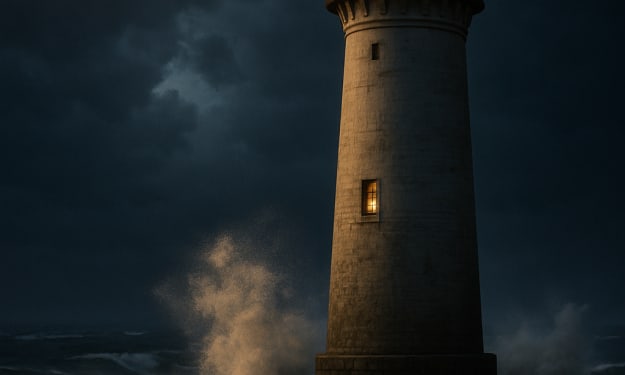
The Sentinel of the Shore: A Tribute to the Lighthouse In a world increasingly dominated by the fleeting glow of digital screens, there stands a symbol of enduring vigilance, a steadfast sentinel against the unforgiving might of the sea: the lighthouse. More than just a structure of brick and mortar, glass and light, a lighthouse embodies hope, guidance, and unwavering commitment. It is a silent guardian, a beacon of civilization at the treacherous edge of the unknown. --- A Guiding Light Through the Ages The concept of a guiding light for mariners is as old as seafaring itself. From ancient bonfires lit on headlands to the colossal Lighthouse of Alexandria, one of the Seven Wonders of the Ancient World, humans have sought to conquer the darkness of the sea. However, the modern lighthouse, as we know it, began to truly evolve with advancements in optics and engineering. By the 18th and 19th centuries, lighthouses became sophisticated structures, often built in perilous locations—on remote islands, rocky shoals, or treacherous cliffs. Each one was a testament to human ingenuity and perseverance. Engineers and builders battled relentless storms, powerful tides, and the sheer isolation of their chosen sites to erect these towers, ensuring a safe passage for ships laden with cargo and human lives. The life of a lighthouse keeper was one of immense dedication and solitude. These brave men and sometimes women, often accompanied only by their families, lived isolated lives, their days and nights dictated by the rhythmic flash of the lamp. Their primary duty was to maintain the light, cleaning the lenses, fueling the lamps (initially oil, then kerosene, and later electricity), and ensuring the complex clockwork mechanisms that rotated the beam operated flawlessly. They were the eyes and ears of the shore, observing weather patterns and sometimes even serving as emergency responders. Their vigilance was the thin line between life and death for countless sailors. --- The Anatomy of a Beacon A lighthouse is typically comprised of several key elements, each serving a vital purpose. The tower itself, varying in height and design, is engineered to withstand the harshest elements. Its robust construction, whether of stone, brick, or steel, speaks of defiance against nature’s fury. At the pinnacle of the tower resides the lantern room, a glass-enclosed space housing the light source and its intricate optical system. This system is the heart of the lighthouse, often featuring a powerful lamp coupled with a series of Fresnel lenses. These specially designed lenses, invented by Augustin-Jean Fresnel in the early 19th century, could concentrate and amplify the light, projecting a powerful, focused beam far out to sea. The unique flash pattern—a sequence of flashes and eclipses—served as a navigational signature, allowing mariners to identify their location. Below the lantern room, the watch room or service room provided a space for the keeper to monitor the light and weather conditions. Living quarters, if part of the tower, were usually located at the base or within the tower itself. --- More Than Just a Light: A Symbol Beyond their practical function, lighthouses have long held a powerful symbolic meaning. They represent: Hope and Safety: For a sailor lost in a storm or navigating treacherous waters, the sight of a lighthouse beam cutting through the darkness is a visceral promise of safety, a guiding hand leading them home. Vigilance and Dedication: The unwavering, rhythmic flash symbolizes constant watchfulness and the tireless efforts of those who dedicate their lives to protecting others. Solitude and Resilience: Standing alone against the vastness of the ocean, lighthouses are a testament to endurance, their stoic presence inspiring a sense of quiet strength. A Bridge Between Worlds: They mark the transition between the known land and the mysterious, often perilous, expanse of the sea. --- The Fading Glow in a Digital Age In the 21st century, the role of traditional lighthouses has evolved dramatically. With the advent of advanced navigation technologies like GPS (Global Positioning System), radar, and satellite communication, the need for human-operated lighthouses has significantly diminished. Many have been automated, their intricate mechanisms now controlled remotely. Some have been decommissioned entirely, while others have been preserved as historical landmarks, museums, or even unique holiday rentals. While their primary function may have been largely superseded by technology, the emotional and symbolic resonance of the lighthouse remains undiminished. They continue to capture our imagination, reminding us of a time when human courage and a simple, powerful light were the sole guardians against the ocean's unforgiving might. --- Final Tribute The lighthouse stands as a silent monument to human ingenuity, a beacon of hope against the darkness, and a timeless reminder that even in an age of blinding progress, there is an enduring beauty in the steadfast, guiding light. It reminds us that sometimes, the most profound comfort comes from a simple, unwavering presence, shining brightly through the darkest of nights.
By Noman Afridiabout a year ago in Education
RMS Titanic: The Unsinkable Dream and Its Tragic End
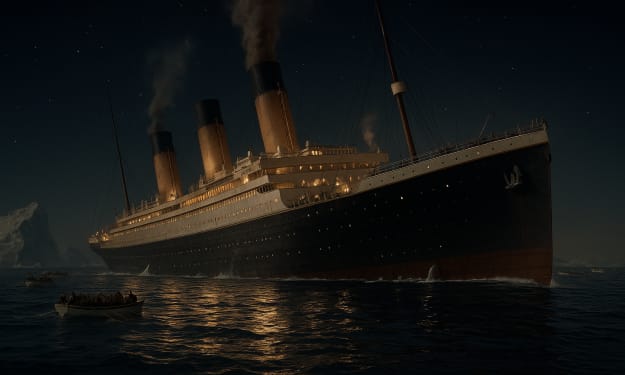
RMS Titanic: The Unsinkable Dream and Its Tragic End — A Journey of Glory, Hubris, and Heartbreak The year was 1912, a time defined by industrial greatness and a firm belief in mankind’s unstoppable progress. At the peak of this golden era stood the RMS Titanic — an engineering marvel, a beacon of opulence, and a vessel deemed “unsinkable” by its creators. Built by Harland and Wolff and operated by the White Star Line, the Titanic represented not just a ship, but the culmination of ambition, technology, and dreams. A Giant Born of Steel and Dreams Stretching 882 feet long and weighing over 46,000 tons, the Titanic was awe-inspiring. Its three massive propellers, powered by colossal steam engines, were capable of cutting across the Atlantic with speed and grace. But beyond its mechanical prowess lay its unmatched interior. Designed to rival the finest hotels, the ship’s first-class section included a grand staircase, opulent dining halls, a pool, gym, and even a squash court. Each fixture and finish whispered extravagance. Yet, the Titanic wasn’t only for the elite. Thousands of second- and third-class passengers, many of them immigrants chasing the American dream, found comfort aboard this steel city at sea. It was a moving portrait of society itself — rich and poor, hopeful and weary — sailing towards a shared destiny. On April 10, 1912, the Titanic began its maiden voyage from Southampton, England, to New York City. Onboard were the wealthy, the prominent, the dreamers, and the hopeful. None could foresee that within days, the world would change forever. The Fatal Encounter: Ice and Hubris The voyage began without incident. The ship cut through calm seas, unbothered by the iceberg warnings sent by wireless operators along the Atlantic route. Overconfidence, schedule pressure, and belief in the ship's invincibility led to crucial missteps. Then, late at night on April 14, 1912, the unthinkable happened. Traveling at 22 knots, the crew spotted an iceberg dead ahead. Despite efforts to avoid it, the ship's starboard side scraped the ice, rupturing five of its watertight compartments. Though initially underestimated, the damage was fatal. The ship’s famed “unsinkable” design could withstand only four compromised compartments. A Night of Chaos and Courage As panic spread, Captain Edward Smith and designer Thomas Andrews acknowledged the grim reality — the Titanic was going down. Lifeboats for just over 1,100 people were not enough for the more than 2,200 onboard. The chaos that followed was both heartbreaking and heroic. Some lifeboats left half empty. The “women and children first” order was unevenly applied. Yet, there were moments of profound bravery. Musicians played on, calming the terrified. Officers and crew fought to save lives till the end. Captain Smith went down with his ship. At 2:20 AM on April 15, the Titanic broke in two and sank beneath the frigid waters. Over 1,500 lives were lost. The ocean, once a road to opportunity, became a grave. The Aftermath: Lessons and Legacy The world reeled. The Titanic’s sinking exposed humanity’s overconfidence in machines and underestimation of nature. But it also inspired sweeping change. The 1914 International Convention for the Safety of Life at Sea (SOLAS) revolutionized maritime safety: mandatory lifeboats, continuous radio watch, and ice patrols became standard. In 1985, Dr. Robert Ballard discovered the wreck, lying over 12,000 feet below the surface. Since then, the Titanic has been studied, memorialized, and respected — not just as a ship, but as a symbol. Today, the Titanic is more than a maritime disaster. It is a cultural touchstone — a haunting reminder of ambition, class divides, technological pride, and human fragility. Its tale lives on in books, films, and memories, ensuring that those lost are never forgotten. The “unsinkable” ship now eternally sails the tides of history.
By Noman Afridiabout a year ago in Education
The Wi-Fi Dream. AI-Generated.
In the bustling streets of Lahore, where horns echoed and chai stalls never slept, lived 24-year-old Hammad—a dreamer with an empty wallet. After graduating with a degree in IT, he searched for a stable job for nearly a year. Rejection after rejection left him feeling worthless.
By Ibrar Khanabout a year ago in Education
"Climate Tipping Point: Polar Ice Sheets Could Melt Irreversibly Even at 1.5°C"
The Paris Climate Understanding, received in 2015, set a driven objective to restrain worldwide warming to well underneath 2°C, in a perfect world 1.5°C, over pre-industrial levels. In any case, a developing body of logical inquiry about cautions that indeed these targets may not be adequate to anticipate disastrous softening of polar ice sheets in Greenland and Antarctica. In case current patterns proceed, the world may confront irreversible ice misfortune, driving to obliterating sea-level rise that would debilitate coastal cities and biological systems around the world.
By Niranjon Chandra Royabout a year ago in Education
The Lie That Grew Too Big
I was eleven when I told the lie. I still remember the way my heart pounded in my chest and how my tongue felt like sandpaper when I said it. It was supposed to be harmless—a quick fix to avoid a little embarrassment. But lies, as I learned, are never small. They grow, feed on fear, and eventually, they swallow you whole.
By Ahmad Malikabout a year ago in Education
Earning 800 Worlds. AI-Generated.
In the small village of Kaarim, surrounded by dust roads and dying crops, lived a boy named Zayyan. He had nothing—not wealth, not influence, not even proper shoes. What he had, however, was a heart full of questions and a mind that refused to give up.
By Ibrar Khanabout a year ago in Education
Honda Rebel 500 Review: Style, Performance & Affordability
Honda Rebel 500: A Perfect Entry-Level Cruiser When it comes to entry-level cruisers, the Honda Rebel 500 is a standout amongst the best choices for both experienced riders and newbies. With its sleek design, accessible power and comfortable handling, the Rebel 500 offers a nice balance of style and performance. Whether you're a beginner looking for your first bike or an experienced rider looking for a lightweight and fun cruiser, the Rebel 500 deserves serious consideration.
By Abu Taher Ali about a year ago in Education