bullying
The Hidden Language of Colors Around Us
M Mehran Colors are everywhere, yet most of us barely notice their subtle influence on our lives. From the red stop signs that command our attention to the soothing blue of hospital walls, colors aren’t just decorative—they speak a language all their own. FYI, colors affect our emotions, decisions, and even our health. Take red, for example. It’s bold, attention-grabbing, and associated with urgency. Marketers use it to encourage quick decisions, while athletes wearing red are statistically more likely to win certain competitions because it subconsciously signals dominance. Meanwhile, blue evokes calmness and trust. Tech giants like Facebook and Twitter chose blue for their logos because it inspires reliability and connection. FYI, studies even show that students perform better in blue-colored rooms, thanks to increased concentration. Yellow, often linked with happiness, can stimulate creativity—but too much can cause anxiety. Green, the color of nature, reduces stress and promotes relaxation, which is why hospitals and schools often incorporate it into walls and furniture. Purple historically symbolized royalty, luxury, and wisdom, a perception that continues to influence fashion and design today. FYI, the psychological impact of color is so strong that it can even influence appetite, motivation, and social behavior. Colors also carry cultural significance. In Western cultures, white symbolizes purity and weddings, while in some Eastern cultures, white is associated with mourning. Red is considered lucky in China but a warning in traffic signs worldwide. FYI, understanding these cultural differences is crucial in global communication, design, and marketing. The science behind color perception is equally fascinating. Our eyes detect light wavelengths, which our brains interpret as colors. But perception isn’t universal. Some people experience color differently due to conditions like color blindness, while others perceive colors more vividly—a phenomenon called tetrachromacy. FYI, this means the “same” red you see might be slightly different for someone else. Beyond psychology, colors influence technology, environment, and safety. Road signs, emergency exits, and warning labels rely on precise color choices to communicate quickly and clearly. Even in nature, colors serve as survival tools—camouflage, mating displays, and warning signals for predators. FYI, the patterns on a butterfly or the plumage of a peacock are not just beautiful; they’re biological messages encoded in color. Next time you walk into a room, scroll through an app, or shop online, pay attention to colors. They are more than decoration—they’re guiding your thoughts, choices, and feelings. FYI, the hidden language of colors shapes your world in ways you might never realize, silently influencing your decisions and mood every single day.
By Muhammad Mehranabout a year ago in Education
The Night School
M Mehran By day, the city’s old community center was quiet. Dusty chairs stacked against the walls, faded posters curling at the edges, a basketball court echoing with silence. But when the sun dipped below the skyline, the lights flickered on and the doors opened to a different kind of classroom: the night school. Here, students weren’t children. They were parents, taxi drivers, factory workers, janitors—people who had once walked away from education but were now walking back. --- The Woman with the Red Notebook Among them was Maria, a mother of two who carried a small red notebook everywhere she went. She worked at a diner all day, then rushed to class in the evenings, her hands smelling faintly of coffee and soap. Maria had dropped out of high school at sixteen to help her family. For years, she told herself it was too late. But the night school gave her another chance. On the first day, the teacher asked, “Why are you here?” Maria’s voice cracked as she whispered, “I want to show my kids that it’s never too late.” She opened her red notebook, wrote the alphabet across the page, and smiled like she had discovered treasure. --- The Retired Teacher The night school was run by Mr. Singh, a retired teacher who could have enjoyed quiet evenings at home but instead chose to spend them in classrooms filled with people chasing unfinished dreams. He often said, “Education is not a clock you can run out of. It is a flame you can relight.” His students weren’t easy to teach. They came exhausted from long shifts, some embarrassed to admit how much they had forgotten. But Mr. Singh’s patience was infinite. He broke lessons into steps, celebrated small victories, and reminded them, “Every page you turn is proof that you’re moving forward.” --- The Struggles The night school wasn’t glamorous. There were no smartboards or shiny textbooks. Sometimes the heating broke. Sometimes students fell asleep at their desks, not because they didn’t care, but because their bodies had already given everything during the day. Yet they returned. The single father who balanced homework and child care. The immigrant who wanted to improve her English so she could open a small business. The teenager who had once been expelled but realized he wanted more than dead-end jobs. Each student carried a story of loss and a hope for renewal. --- Maria’s Turning Point For Maria, math was the hardest subject. Numbers slipped through her fingers like water. One night, after a long shift, she sat staring at fractions until tears blurred the page. “I can’t do this,” she muttered. Mr. Singh pulled up a chair beside her. “Maria, do you know why fractions matter?” She shook her head. “They matter because they remind us that even something broken can be whole again.” Maria looked at him, startled, then back at her notebook. Slowly, she began solving the problem. That night, she got her first answer right. --- Graduation Months turned into years. Students dropped out, new ones joined, but Maria never missed a class. Her children would wait at the diner after school, cheering her on as she finished assignments. Finally, the night came: graduation. The community center was packed, folding chairs lined in crooked rows, balloons tied to the old basketball hoops. When Maria’s name was called, her children leapt to their feet, clapping and shouting, “That’s our mom!” She walked across the stage, holding her red notebook in one hand and her diploma in the other. For her, it wasn’t just a certificate. It was proof that she had turned broken pieces into something whole. --- Beyond the Classroom Education is often seen as something that belongs to youth. We picture backpacks, playgrounds, exams, and lockers. But education belongs to everyone. It belongs to the mother who returns to school after decades, the grandfather learning to read for the first time, the refugee writing English words with trembling hands. The night school in the old community center was proof. It showed that learning doesn’t end with age, circumstance, or failure. It ends only when we stop believing in possibility. --- A Lesson for All of Us Maria now helps her children with their homework at the kitchen table, guiding them through math problems with the patience she once needed for herself. She tells them, “Dreams don’t have expiration dates. They only expire when you give up.” Her story is a reminder that education is not linear. Some journeys take detours, pauses, or years of waiting. But when given a second chance, education can transform not just individuals, but entire families. The night school is still there, its lights glowing each evening like a beacon for anyone searching for another shot. And inside, the sound of pencils scratching, pages turning, and voices reading aloud tells a simple truth: It’s never too late to learn.
By Muhammad Mehranabout a year ago in Education
The Day the Library Opened
M Mehran In the small town of Maplewood, the most ordinary building became the most extraordinary gift: a library. It wasn’t big. Just a renovated post office with peeling paint and mismatched chairs. But the day it opened, children pressed their noses against the glass doors, parents peeked in with quiet curiosity, and teachers whispered with relief. For years, Maplewood had survived without one. Now, they finally had a place where education lived beyond the classroom. --- The Curious Boy Among the crowd was eleven-year-old Diego. He had never owned a book. His family moved often, and school was the only place he encountered words beyond billboards and grocery lists. When the librarian, Mrs. Taylor, handed him a library card, he held it like a golden ticket. Diego wandered between shelves, fingers brushing over the spines of stories, science books, and atlases. He picked up a book about planets and whispered, “I didn’t know Saturn had rings.” In that moment, education stopped being something that happened only at school. It became an adventure he could carry home. --- The Teacher Who Knew Education thrives when curiosity meets guidance. Ms. Reynolds, Diego’s teacher, knew this well. She had been fighting to keep her students engaged in a school where budgets cut art programs, outdated textbooks fell apart at the seams, and internet access was patchy at best. When she saw the library open, she exhaled in relief. “Finally,” she said. “Finally, a place where learning can breathe.” She began assigning “library challenges.” Students had to find a book, read a chapter, and share something surprising with the class. Suddenly, math lessons were interrupted by fun facts from history, and science class buzzed with discoveries about volcanoes, space, and ecosystems. Education spilled beyond the walls of the classroom, growing roots in imagination. --- A Town Transformed At first, the library was just for students. But soon, parents came too. Some borrowed cookbooks and tried new recipes. Others picked up manuals on fixing cars, sewing clothes, or improving their English. Grandparents came for newspapers and stayed for poetry. Maplewood began to change. The town that once closed its eyes after work hours now buzzed with evening book clubs, homework help sessions, and free Wi-Fi that allowed teenagers to research careers. Education had moved from something children endured to something families embraced. --- The Struggle Behind the Shelves But the library wasn’t built without struggle. Behind the bright lights and smiling faces were years of petitions, town meetings, and fundraising bake sales. There were arguments: Why spend money on books when there were roads to fix? Why build a library when everyone could “just Google it”? The truth was that not everyone could. Many families didn’t have reliable internet or laptops at home. For them, the library wasn’t a luxury; it was a lifeline. Education, after all, isn’t just about schools. It’s about access. And without access, curiosity dies quietly. --- Diego’s Dream Weeks after the library opened, Diego checked out a thick book on astronomy. Every night, he sat by the window with a flashlight, tracing constellations on the page and then finding them in the night sky. One morning, he stood in front of his class and declared, “I want to be an astronaut.” The class laughed—not unkindly, but with the disbelief of children who thought astronauts lived in other worlds, not in Maplewood. But Ms. Reynolds didn’t laugh. She placed a hand on his shoulder and said, “Then we’ll learn everything we can about space.” In that moment, Diego realized education wasn’t just about memorizing facts. It was about building bridges between dreams and possibilities. --- The Bigger Picture Maplewood’s library story mirrors a global truth: education is never just about classrooms, grades, or tests. It’s about environments that spark learning—libraries, community centers, mentorships, online resources, even conversations at the dinner table. Too often, education is measured by numbers: literacy rates, graduation percentages, test scores. Those matter, yes. But behind every number is a Diego, an Amina, a child with a library card or a tablet under a baobab tree, waiting for their world to expand. Education is both fragile and powerful. Without support, it withers. With investment, it transforms lives and towns. --- Full Circle Months later, Diego returned a stack of books and asked Mrs. Taylor if the library had anything about rockets. She smiled and guided him to a new section funded by a local donation. That night, Diego drew a rocket ship in his notebook. At the top, he wrote, “One day, I will see the stars up close.” And somewhere between the peeling paint and mismatched chairs of Maplewood’s library, his dream felt possible. --- Why It Matters Education is not just about what we teach; it’s about the spaces we create, the curiosity we nurture, and the doors we unlock. A classroom teaches discipline and basics, but a library, a mentor, or even a single inspiring teacher can ignite a lifelong fire. The story of Maplewood is a reminder: when communities invest in education, even in the simplest forms, they change not only children’s futures but also their own. Because every library card, every lesson under a tree, every digital tablet in a village is more than a tool—it’s a promise. And promises, when kept, can send a child from a small town all the way to the stars.
By Muhammad Mehranabout a year ago in Education
Charlie Kirk and the danger of selective empathy
Conservative political activist Charlie Kirk was shot and killed on Wednesday. His suspected killer, identified by law enforcement as 22-year-old Tyler Robinson, was taken into custody after a substantial manhunt, based on information from people close to Robinson’s family. Utah Governor Spencer Cox said a family member of Robinson had reached out to a friend, who then contacted the authorities, and that friends and relatives interviewed by investigators described Robinson as “full of hate” when speaking about Kirk at a recent gathering. Robinson’s exact motivations for allegedly carrying out the shooting are still being explored.
By MUHAMMAD Abbasabout a year ago in Education
The Importance of Education in Modern Society
Education is one of the most powerful tools that shape human life and society. It is not limited to reading books or passing examinations but extends to the overall development of an individual’s character, skills, and understanding of the world. In today’s globalized world, education plays a vital role in personal growth, career advancement, and the progress of nations. This article explains the importance of education in detail, exploring its impact on individuals and society as a whole. What is Education? Education can be defined as the process of acquiring knowledge, skills, values, and attitudes through learning and experience. It begins at home, continues in schools and universities, and never truly ends, as lifelong learning is essential in the modern age. Formal education includes structured systems like primary, secondary, and higher education, while informal education occurs through daily life experiences, interactions, and personal exploration. Personal Development Through Education One of the most significant roles of education is personal development. A well-educated person gains self-confidence, critical thinking abilities, and problem-solving skills. For example, learning languages improves communication, while studying science and technology sharpens analytical thinking. Education also teaches discipline, patience, and time management, which are necessary for achieving goals. Moreover, it shapes moral values, making individuals more responsible and respectful in society. Education and Career Opportunities In the competitive job market of the 21st century, education is the foundation of career success. Employers prefer candidates who are skilled, knowledgeable, and adaptable. Higher education opens doors to professional careers in medicine, engineering, law, business, and technology. Vocational education, on the other hand, provides practical training for specific jobs, helping people gain financial independence. Thus, education is directly linked to economic stability and a better standard of living. Education as a Social Equalizer Education reduces the gap between rich and poor by giving everyone equal opportunities to succeed. In many countries, scholarships and free education programs help underprivileged children break the cycle of poverty. Through education, people learn about social justice, equality, and human rights. Educated societies are less likely to fall into discrimination, gender inequality, or racial prejudice, as knowledge promotes tolerance and understanding. National Development and Education No nation can progress without education. It provides skilled professionals, innovative thinkers, and responsible citizens. Countries with high literacy rates often enjoy better economic growth, political stability, and advanced technology. For instance, developed nations like Japan and Germany have invested heavily in education, which has contributed to their global leadership in science, industry, and innovation. Education also builds national unity by teaching cultural heritage, history, and civic responsibility. The Role of Technology in Education In the modern world, technology has revolutionized the education sector. Online learning platforms, digital libraries, and virtual classrooms make education accessible to millions worldwide. Students can now attend lectures from top universities without leaving their homes. Artificial Intelligence, smart classrooms, and e-learning tools have made education more interactive and effective. Technology also encourages self-learning, creativity, and innovation, preparing students for the digital future. Challenges in Education Despite its importance, education faces several challenges across the globe. Poverty, lack of resources, outdated teaching methods, and gender inequality prevent millions of children from accessing quality education. In some regions, political instability and conflicts destroy schools and disrupt learning. Moreover, the rising cost of higher education makes it difficult for many students to pursue their dreams. Addressing these challenges requires global cooperation, government support, and community participation. Conclusion In conclusion, education is the backbone of human development and societal progress. It empowers individuals, opens career opportunities, reduces inequality, and strengthens nations. With the rapid growth of technology and globalization, the value of education has become even greater. Therefore, governments, institutions, and individuals must work together to make education accessible, affordable, and effective for everyone. An educated society is not only a successful society but also a peaceful, progressive, and prosperous one.
By Article Master about a year ago in Education
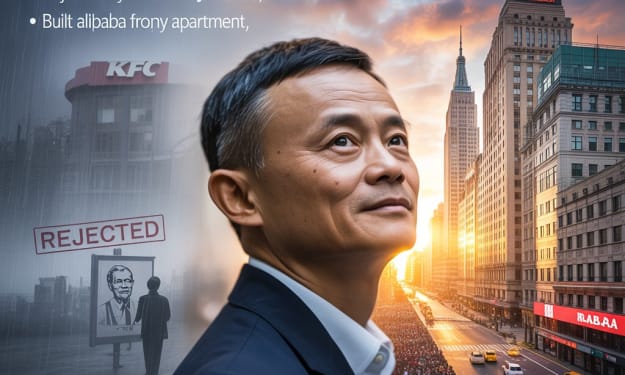
Rise Of Jack Ma, Alibaba Rise
In every corner of the world, people struggle with rejection, disappointment, and failure. Dreams are crushed, and many give up too soon. But there are rare individuals who take those very failures and transform them into stepping stones toward greatness. One of the most inspiring examples is Jack Ma, the founder of Alibaba. His story is not just about creating a business empire; it is about belief, resilience, and the courage to keep moving forward when the world says no.
By Life Hopesabout a year ago in Education
Engineering Materials in Saudi Pipeline Projects Explained
Engineering Materials in Saudi Pipeline Projects Saudi Arabia’s pipeline networks are among the most extensive and demanding in the world. These systems transport oil, gas, and water across thousands of kilometers, cutting through deserts, mountains, and coastal zones. To ensure performance and reliability, engineers must select materials that can withstand extreme pressures, high temperatures, salinity, and soil aggressiveness. The choice of materials is not just a technical decision—it directly affects pipeline lifespan, safety, and overall project economics.
By Sayed Zewayedabout a year ago in Education
Organic Clothing.
Introduction Organic clothing has emerged as a beacon of sustainable fashion, offering an eco-friendly alternative to conventionally made garments. It refers to apparel made from organically grown fibers (such as cotton, hemp, or wool) produced without synthetic pesticides, fertilizers, or genetically modified seeds. Over the past few decades, this niche has grown from a grassroots idea to a global market segment. Major brands – from boutique eco-labels to retail giants – now tout “organic” lines as part of their environmental responsibility pledges. Although organic textiles still account for only around 1% of worldwide fiber production, production has risen for consecutive years to meet increasing demand. In the 2020/21 season alone, farmers grew about 342,000 tons of certified organic cotton fiber – roughly 1.4% of global cotton output – a 37% jump from the prior year. This growth reflects a broader shift in consumer values toward sustainability and health. Shoppers are drawn to organic clothes as a way to avoid harmful chemicals and reduce their wardrobe’s environmental footprint. At the same time, companies see organic fiber as a key part of their sustainability strategies, responding to calls for greener, more ethically made products.
By Sayed Zewayedabout a year ago in Education
How Storytelling Skills in High School Set Students Apart in Life and Admissions
High school is not just about the grades and extracurriculars, it is also where students learn and mold their narratives about what they value, who they are and what direction they are headed to. In this era full of digital content and highly competitive college admissions, storytelling skills become powerful differentiators. From making compelling essays to delivering presentations in your class that echo to many, storytelling transforms experiences into messages. Let’s explore how mastering storytelling elevates students both in school life and beyond.
By Abbasi Publisherabout a year ago in Education