book reviews
Book reviews for scholastic growth; read material from the world's top educators with our collection of novels, memoirs, biographies, philosophical texts and textbooks.
The World's Most Beautiful Roads and Routes
The World's Most Beautiful Roads and Routes When the journey itself is as breathtaking as the destination, hitting the open road has a magical quality to it. From coastal highways winding along dramatic cliffs to mountain passes cutting through snow-capped peaks, the world is filled with roads that are more than just a means of travel—they are destinations in their own right. Here, we explore some of the most stunning routes across the globe, each offering unforgettable views and thrilling driving experiences.
By parves mosharafabout a year ago in Education
Lessons in the Heart of Life
In a quiet village nestled between green hills and a winding river stood a weathered tamarind tree. The villagers called it “The Whispering Tree,” not just because of the sound the wind made through its leaves, but because it had watched over generations — births, deaths, laughter, heartbreak — in the same patient silence.
By Muhammad Atifabout a year ago in Education
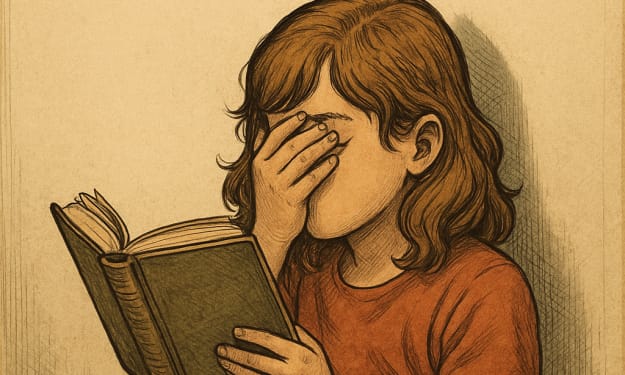
The Unseen Reader
The Unseen Reader: A Kid's Rebellion Against the Banned The owner of our little corner house stepped out one morning and, to their immediate chagrin, landed squarely in a fresh pile of—well, let’s just say—a dog’s opinion of lawn decor. A mundane mishap, yet a perfectly absurd prologue to a day that spiraled into something wildly unexpected and surprisingly profound. The catalyst? A sharp-witted, disarmingly charming ten-year-old—let’s call her #1—whose take on stories, rules, and grown-up logic turned a casual chat into something delightfully rebellious. It all started with a leftover question from family movie night: “Does Loki ever learn to be good?” She answered without hesitation, wearing a smirk far too knowing for her age: “Not really.” The blunt honesty was refreshing—a clean break from the usual adult filters. Our conversation drifted naturally toward books. I asked how she chose a good one. “I just start reading,” she said brightly. “If it has a good hook, I get it. I like it when it starts off in the middle and tells you how it got there.” She had a discerning reader’s instinct, unapologetically clear. Flashbacks in books? “Confusing,” she scoffed. “But they’re good in shows.” A perfectly valid distinction. I dared to bring up book-to-film adaptations. “Harry Potter?” I suggested. Her dramatic rejection was swift. “Not at all!” My eyebrows hit the ceiling. “Okay, then what’s better?” She leaned forward as if delivering a state secret. “Wild Robot. Very animal heavy.” And there it was—her core literary law: “If there are no animals in the book, I’m not going to read it.” This wasn’t a preference. It was doctrine. The movie adaptation? Pure emotional chaos. “Book was good. Movie was better. It made me cry so much!” she said with squeaks of enthusiasm that needed no translation. Then, the conversation took a sharp turn—from preferences to protest. “What about books for school?” I asked. Her tone shifted. “Hate ‘em. I don’t do forced reading.” The conviction was absolute. Curious, I tested deeper waters. “What do you think about restrictions? Like book bans?” Gone was the playfulness. She sat straighter, eyes fierce. “I hate them. I hate that people can’t read what they want. People can’t learn. Evil people want to make everyone stupid so they can’t rebel.” She had taken the complex mechanics of censorship and distilled it into one perfectly loaded sentence. “Have you read any banned books?” I asked. She pondered. “No… I don’t think so.” Ah, but she had. And it was time for the reveal. A quick search gave us the list. I read the names aloud. “Harry Potter. Charlotte’s Web. Winnie the Pooh. Chronicles of Narnia.” Her jaw dropped. “Woah.” We dove into the absurd reasoning behind their bans—witchcraft, talking animals, socialist metaphors. She read over my shoulder, stunned by the logic’s absurdity. But then came the moment of pure comedic gold: “GREEN EGGS AND HAM WAS BANNED?!” Her shriek rang through the room. We both doubled over in laughter. According to reports, it was banned in China from 1965 to 1991, accused of subtle Marxist undertones. Apparently, the green breakfast was a metaphor for Soviet socialism—rejected at first, then accepted after “trying” it. “Seems like a stretch,” I admitted. “Yeah,” she replied. “Governments like to ban things that make people question stuff.” As we wrapped up, I asked for her top recommendation for another ten-year-old reader. Her answer was immediate: “Diary of a Wimpy Kid. It’s funny and realistic fiction. Like it technically could happen, but it’s pretty unlikely.” She valued stories that blended realism and fantasy, but the relatable absurdity of real life? That was the sweet spot. And with that, she vanished, the joyful chaos of video games following her departure. Left behind was something powerful. Her rebellion wasn’t loud. It wasn’t grand. It was quiet and instinctive. She read what she loved. She questioned what she was told. She refused to be forced. And in doing so, this unseen reader—this animal-loving, flashback-doubting, censorship-defying ten-year-old—had declared the kind of rebellion no law could truly contain.
By Noman Afridiabout a year ago in Education
The Role of React Native App Development Companies in Cross-Platform Success
In today’s mobile-first world, the demand for cross-platform applications is rapidly growing, with Statista reporting that the global mobile app market revenue is projected to reach $935 billion by 2023. Additionally, apps developed using React Native can reduce development costs by up to 40% compared to native apps, making it a highly cost-effective choice for businesses. React Native App Development Companies play a pivotal role in achieving this goal by offering efficient solutions for building cross-platform mobile applications.
By George Brownabout a year ago in Education
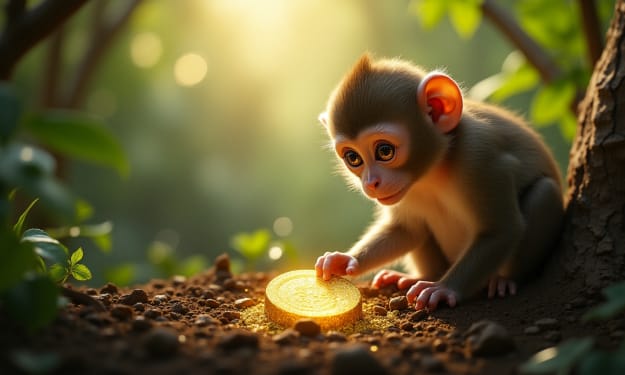
The Curious Monkey
Deep in the lush green forest, there lived a mischievous and curious little monkey named Milo. Milo loved exploring new things, swinging from tree to tree, and poking his nose into every little mystery the jungle had to offer. His mother often warned him, "Milo, curiosity is good, but remember—not everything that glitters is gold." But Milo, being young and playful, never really understood what she meant.
By Shahzad Khanabout a year ago in Education
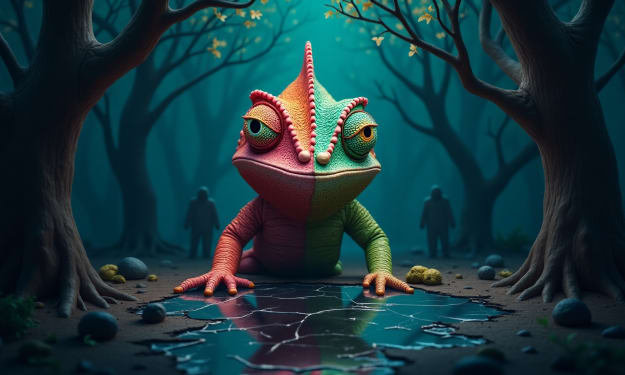
The Two-Faced Chameleon
Deep in the heart of the lush green jungle, there lived a chameleon named Kizo. Unlike other chameleons who changed colors to blend in with their surroundings for safety, Kizo had a different habit—he changed his personality depending on who he was with.
By Shahzad Khanabout a year ago in Education