book reviews
Book reviews for scholastic growth; read material from the world's top educators with our collection of novels, memoirs, biographies, philosophical texts and textbooks.
My First Month on Vocal Media: A Journey of Growth, Challenges, and New Beginnings
Discovering a New Beginning in Writing When I first stepped into the world of Vocal Media, I didn’t fully know what to expect. It was a mix of curiosity, excitement, and a little fear of the unknown.
By Be The Bestabout a year ago in Education
Why It Sucks to Be a Brothel Boy (in Qing Dynasty)
When people think of the Qing Dynasty, they often imagine ornate palaces, mighty emperors, or the rigid Confucian order that dictated society. But hidden behind those golden screens and silken robes were countless lives of hardship.
By Be The Bestabout a year ago in Education
The Fundamentals of Corrosion
Corrosion is the spontaneous tendency of metals to revert to lower-energy, oxidized states. This tendency provides the thermodynamic driving force for corrosion; whether corrosion actually proceeds—and how fast—depends on kinetics and environment. Engineers need a firm grip on both to select materials, design protection, and predict service life.
By Sayed Zewayedabout a year ago in Education
The Marvel Within: Unlocking the Wonders of Human Biology
The Marvel Within: Unlocking the Wonders of Human Biology From the moment we take our first breath, an intricate symphony of biological processes begins, playing in perfect harmony to sustain life. The human body is not merely a vessel we inhabit—it is a masterpiece of engineering, intelligence, and adaptability. Every heartbeat, every thought, and every step we take is powered by a network of systems that work together with astounding precision. At the center of it all is the brain, often referred to as the command center of the body. This three-pound organ contains about 86 billion neurons, each forming thousands of connections. These connections shape our thoughts, store our memories, and control everything from our movements to our emotions. The brain constantly rewires itself in response to experience, a phenomenon known as neuroplasticity—a testament to our incredible ability to learn and adapt. Flowing through us is the cardiovascular system, a vast network of arteries and veins powered by the heart. This powerful muscle beats more than 100,000 times a day, pumping blood to deliver oxygen and nutrients to every cell. The blood also carries away waste products, keeping our internal environment balanced. It’s not just circulation—it’s life in motion, a quiet engine that never stops. Supporting our survival in the face of invisible threats is the immune system. A vast army of cells and proteins works tirelessly to identify and neutralize harmful invaders like viruses and bacteria. When we get a cut or catch a cold, this system springs into action. It remembers past invaders, making us stronger and more resistant over time. This biological memory is what makes vaccines effective and healing possible. The lungs, expanding and contracting without conscious thought, bring in oxygen and expel carbon dioxide with every breath. We inhale over 20,000 times a day, and each breath fuels cellular energy. Tiny structures in the lungs, called alveoli, are where this gas exchange takes place—millions of microscopic miracles happening silently, moment by moment
By Muhammad Saad about a year ago in Education
From Paperboy to Billionaire: The Warren Buffett Story”
The Oracle of Omaha: Warren Buffett’s Journey to Timeless Success How Discipline, Patience, and Value Investing Built a Legacy Warren Buffett, often called the “Oracle of Omaha,” is one of the most admired and successful investors in history. His journey from a small-town boy delivering newspapers to becoming one of the world’s richest men is not only a financial success story but also a lesson in patience, discipline, and lifelong learning. Born in 1930 in Omaha, Nebraska, Buffett displayed a fascination with numbers and money at an early age. As a child, he memorized stock prices and read every book on investing he could find at the local library. By the time most children his age were focused on toys, Buffett was already experimenting with ways to make money. He bought six-packs of Coca-Cola and sold each bottle for a profit, set up pinball machines in barber shops, and worked as a paperboy. These small ventures taught him the power of business and the value of hard work. But what made Buffett extraordinary was not just his ability to earn money — it was his mindset. At the age of 11, he made his first stock purchase, buying three shares of Cities Service Preferred for himself and his sister. When the price dropped shortly after, he panicked but later sold the stock at a small profit. Not long after, the stock skyrocketed to a much higher price, and Buffett realized a vital lesson: true wealth comes from patience, not panic. As he grew older, Buffett continued to sharpen his investment skills. He studied under Benjamin Graham, the legendary investor known as the “father of value investing,” at Columbia Business School. Graham’s teachings about buying undervalued companies and focusing on long-term value deeply influenced Buffett’s philosophy. Unlike many investors who chased quick profits, Buffett embraced the idea of waiting for the right pitch — investing only when he found businesses that were fundamentally strong, undervalued, and easy to understand. In the 1950s, Buffett began building his own investment partnerships, delivering remarkable returns for his early investors. By reinvesting profits and avoiding unnecessary risks, his wealth grew steadily. In 1965, Buffett took control of a struggling textile company called Berkshire Hathaway. Over time, he transformed it into one of the most successful conglomerates in the world. Today, Berkshire Hathaway owns or holds significant stakes in global giants like Coca-Cola, American Express, Apple, and many more. What sets Buffett apart is not just his business acumen but also his simple lifestyle and humility. Despite his billions, he still lives in the same modest house in Omaha that he bought in 1958. He enjoys simple pleasures like reading, playing bridge, and drinking Coca-Cola. He often says, “Success is not measured by money but by the people who truly love you.” His grounded personality makes him a role model not just for aspiring investors, but for anyone striving for a balanced and meaningful life. Buffett’s philosophy is built around a few timeless principles: Live below your means. Wealth is not about how much you make, but how much you keep and grow. Be patient. Successful investing is a marathon, not a sprint. Invest in what you understand. Buffett avoids businesses that are too complex or unpredictable. Value relationships. He often emphasizes honesty, trust, and choosing the right partners in life and business. Beyond his financial empire, Buffett is also one of the world’s greatest philanthropists. Along with his close friend Bill Gates, he launched the Giving Pledge, encouraging billionaires to donate most of their wealth to charity. True to his word, Buffett has pledged to give away more than 99% of his fortune to causes that improve education, health, and opportunities for the underprivileged. Warren Buffett’s life story proves that success is not about luck or quick wins. It is about discipline, vision, and the courage to stay consistent over decades. His journey from a curious young boy in Omaha to the most respected investor in the world demonstrates the power of patience and the magic of compounding — not just of money, but of knowledge, character, and goodwill. As Buffett himself once said, “Someone is sitting in the shade today because someone planted a tree a long time ago.” His life is that shade — a shelter of wisdom and inspiration for generations of dreamers, investors, and entrepreneurs to come.
By Kashif Khanabout a year ago in Education
The Story of the Lost Pen
In a small village, where children would run out to play in the open fields as soon as the evening fell, there lived a boy named Arsalan. Arsalan seemed like an ordinary child, but his dreams were big. He loved studying so much that whenever he found time, he would turn to books. He had a blue pen that his father had given him as a gift on Eid. While handing him the pen, his father had said: “Son! This pen is the key to your knowledge, always keep it safe.”
By Muhammad yarabout a year ago in Education
Mark Zuckerberg: From Dorm Room to Global Empire"
Mark Zuckerberg’s journey from a Harvard student to the CEO of one of the most influential companies in the world is nothing short of remarkable. His story is not only about creating Facebook but also about transforming the way billions of people connect, share, and communicate across the globe. It is a tale of vision, determination, and innovation that continues to inspire entrepreneurs everywhere. Born in White Plains, New York, in 1984, Mark showed an early fascination with computers. His father, a dentist, introduced him to programming by hiring a tutor to nurture his curiosity. By the time most kids were still playing video games, Mark was building them. He created small applications and even a messaging program for his father’s dental office. This early exposure shaped his passion for technology and problem-solving. In 2002, Zuckerberg entered Harvard University, where he studied psychology and computer science. It was at Harvard that his life would take a dramatic turn. Known as a prodigy among his peers, he built projects like CourseMatch, which helped students select classes, and Facemash, a website comparing student photos. While Facemash sparked controversy, it revealed his ability to create platforms that captured people’s attention. The real breakthrough came in 2004, when Zuckerberg launched “Thefacebook” from his dorm room with friends Eduardo Saverin, Dustin Moskovitz, Chris Hughes, and Andrew McCollum. Initially meant only for Harvard students, the platform spread like wildfire to other Ivy League schools, then universities across the U.S., and eventually the entire world. The speed of its adoption was staggering. What started as a campus tool became a digital revolution. However, Zuckerberg’s journey wasn’t without challenges. As Facebook grew, he faced lawsuits, criticisms, and stiff competition. The most notable legal battle came from the Winklevoss twins, who claimed he stole their idea. Despite the controversy, Zuckerberg remained focused on his vision of creating a platform that connected people. His persistence in the face of obstacles became one of his defining traits. By 2005, Facebook had attracted major investments, allowing the company to expand rapidly. Within a few years, it moved beyond colleges, opening to anyone over the age of 13. Features like the News Feed, Groups, and Pages turned Facebook into not just a social network but a digital ecosystem. Businesses, organizations, and communities all began using the platform to share their stories and reach audiences worldwide. In 2012, Zuckerberg made history when Facebook went public,
By Kashif Khanabout a year ago in Education
The Rise of Artificial Intelligence: Shaping Our Future
The Rise of Artificial Intelligence: Shaping Our Future In today’s fast-changing digital world, one of the most talked-about trends is Artificial Intelligence (AI). From social media platforms to healthcare systems, AI is transforming how we live, work, and communicate. What was once a futuristic idea is now a daily reality, influencing industries and shaping the future of humanity.
By Article Master about a year ago in Education
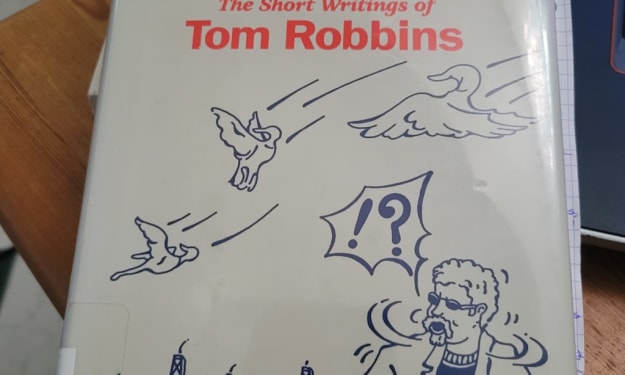
And what do you think, Mr. Robbins?
When I picked up Wild Ducks Flying Backwards, I had no clue what the title meant. I wasn’t an ardent fan of Tom Robbins, nor did I have much knowledge of his works outside of the occasional book cover that caught my eye. I knew his name, though, and that was enough to intrigue me, especially after hearing of his passing. I’d also heard rumors about the absurdity of Even Cowgirls Get the Blues, which had been turned into a film starring Uma Thurman, and that alone made me wary. The thought of books centered on hippies, the failed counterculture, and the empty promises of psychedelics didn’t exactly call to me.
By Dear Lottery about a year ago in Education
Pros and Cons That Every PTE Test Taker Should Know
English is a primary language that is spoken in so many countries. If you are heading towards the UK, USA, Australia, Germany, New Zealand, France, Italy, or other country, you must have a good knowledge of this language. There are some ways in which you can use them and evaluate how well you speak English and how much you need improvement. Among the best options, the PTE test is very popular and recognized by hundreds of colleges. This exam allows you to test your skills, but there are still some benefits and drawbacks that you should know if you are going to take this test. You must be aware of the PTE exam dates, format, pattern, etc. Besides this, here is a detailed overview of the pros and cons of taking the PTE for test takers.
By Prashant Tiwariabout a year ago in Education