book reviews
Book reviews for scholastic growth; read material from the world's top educators with our collection of novels, memoirs, biographies, philosophical texts and textbooks.
THE SECRETS OF NATURE
Originating from East and South Asia, the tiger is a type of predator and prey animal. The larger subspecies of tiger can reach a length of 3.3 meters and weigh 300 kilograms. Apart from its size and strength, the most important feature of the tiger is the black, vertically striped pattern that covers its whitish or orange-red fur.
By Syed sobri2 years ago in Education
Tooth Decay (Cavities): A Hidden Nightmare
In the tranquil town of Kerala, surrounded by gentle hills and serene lakes, an unsettling fear began to weave through the community. This fear was not born from nature’s fury or ancient curses, but from an invisible menace that threatened their smiles—cavities. It all began with Manha, a cheerful young girl celebrated for her radiant smile. One day, she started complaining about a persistent toothache. Initially, her parents dismissed her discomfort as a minor issue, but the pain soon intensified. Manha’s once bright teeth began to darken, marred by ominous shadows that seemed to grow with each passing day. Manha’s worsening condition prompted a visit to Dr. Sana, the town’s trusted dentist. Dr. Sana’s examination revealed a troubling diagnosis: cavities. She explained that these cavities were not just a minor inconvenience but a significant health concern. They were the result of bacteria feeding on sugar, which eroded the tooth’s enamel—the natural shield that protects against decay. As the enamel wore away, the bacteria burrowed deeper, causing painful damage. What began with Manha quickly escalated. Other residents started to experience similar symptoms—constant pain, sensitivity to sweets, and darkening spots on their teeth. The town’s once cheerful ambiance was overshadowed by a growing fear of this insidious issue. The sight of people wincing at their meals or hesitating to smile became increasingly common. Dr. Sana’s office was soon inundated with patients. Each visit uncovered more severe cases of decay, reflecting a troubling pattern. The emotional toll on families was as profound as the physical pain; untreated cavities brought not only discomfort but also financial strain from mounting dental bills. The once vibrant community faced a collective struggle as they grappled with the unseen adversary of oral health. This crisis became a wake-up call for Kerala. The town rallied to address the epidemic, learning that the solution lay not in avoiding sweets entirely but in embracing rigorous dental hygiene practices. Dr. Sana began organizing workshops on proper brushing and flossing techniques, emphasizing the importance of regular check-ups. Families learned to balance their diets, opting for healthier snacks and minimizing sugary indulgences. As the town adapted, they began to see improvements. The frequency of dental issues decreased, and the residents' smiles gradually returned to their former brightness. Kerala's experience with tooth decay transformed from a fearful ordeal into a powerful lesson. The community's proactive approach to dental health highlighted the crucial role of vigilance and preventative care. Kerala's story became a testament to resilience and adaptability. The town learned to face the hidden nightmare of cavities with newfound knowledge and an unwavering commitment to oral hygiene. They discovered that with the right practices, even the most subtle threats could be managed and overcome. In the end, Kerala’s tale of tooth decay was not just about overcoming a health crisis but also about the strength of a community united in the face of adversity. By embracing the lessons learned and adopting a culture of proactive care, they ensured that their smiles would remain not only beautiful but also healthy for years to come.
By Dr. Sana Shaikh 2 years ago in Education
Alvin J. Clark
In today’s world, where the realms of science and spirituality often seem to be at odds, the journey of Alvin J. Clark offers a powerful narrative of integration, harmony, and profound discovery. From his early days as a pioneering molecular biologist at UC Berkeley to his spiritual awakening and deep immersion in Siddha Yoga, Clark’s life exemplifies the potential to unite scientific inquiry with spiritual wisdom. This fusion of intellect and intuition is not only rare but also deeply inspiring, showing us that the quest for knowledge and the search for meaning are not mutually exclusive endeavors.
By Alvin J. Clark2 years ago in Education
The Bridge of Generations
In the curious town of Willowbrook, settled between moving slopes and a delicate waterway, carried on with a dad and child who were pretty much as various as constantly. Robert, the dad, was an unemotional man of the earth, a craftsman with hands as endured as the old oak trees he created into furniture. His child, Max, was a visionary, enthralled by the world past their humble community.
By Arif zaman2 years ago in Education
How Artificial Intelligence is Transforming the Future of Healthcare in 2024.
Revolutionizing Healthcare: The Role of AI in Modern Day Medicine: In 2024, artificial intelligence (AI) is revolutionising healthcare, transforming the landscape of modern medicine. The integration of AI into healthcare systems is not just a technological advancement; it represents a fundamental shift in how we approach medical care. From enhancing diagnostic accuracy to personalising treatment plans, AI is playing a pivotal role in shaping the future of healthcare.
By Rithvik Rithvik2 years ago in Education
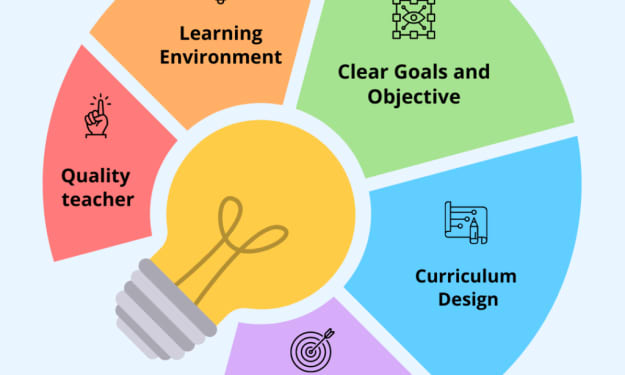
Fundamentals of Education: Foundations, Principles, and Future Directions
**Introduction** Education is a cornerstone of individual and societal development, serving as the primary means through which knowledge, skills, and values are transmitted across generations. This paper explores the fundamental principles of education, the core components that constitute effective educational systems, and the future directions that may shape the evolution of education. **Foundations of Education** 1. **Definition and Purpose** Education is a process of learning and teaching that aims to develop intellectual, moral, and social capabilities in individuals. Its primary purpose is to equip individuals with the necessary skills and knowledge to lead productive lives, contribute to society, and foster personal growth. Education also plays a critical role in preserving and advancing cultural heritage and societal values. 2. **Historical Perspectives** Historically, education has evolved from informal methods of knowledge transfer within families and communities to formal systems established by institutions. In ancient civilizations, education was often reserved for the elite, focusing on religious and philosophical teachings. The development of public education systems in the 19th and 20th centuries democratized access to education, emphasizing the importance of literacy and numeracy as fundamental skills. **Core Components of Effective Education** 1. **Curriculum and Instruction** The curriculum is a structured plan that outlines the content and skills to be taught. Effective curricula are designed to be comprehensive, relevant, and adaptable to the needs of students. Instructional methods, including lectures, discussions, and hands-on activities, should cater to diverse learning styles and encourage active participation. The integration of technology and multimedia tools can enhance the learning experience and facilitate better understanding. 2. **Assessment and Evaluation** Assessment is a critical component of education, providing feedback on student performance and informing instructional practices. Various assessment methods, such as formative assessments (quizzes, assignments) and summative assessments (exams, projects), help gauge student understanding and progress. Evaluation of educational outcomes ensures that teaching methods and curricula are effective and aligned with educational goals. 3. **Teacher Quality and Professional Development** Teachers are central to the educational process, and their effectiveness significantly impacts student learning. High-quality teachers possess not only subject matter expertise but also pedagogical skills and the ability to motivate and engage students. Continuous professional development is essential for teachers to stay updated with educational best practices, emerging technologies, and evolving educational standards. 4. **Learning Environment** A supportive and inclusive learning environment is crucial for effective education. This includes both physical aspects, such as well-equipped classrooms and safe facilities, and emotional aspects, such as fostering a positive classroom climate and promoting student well-being. Creating an environment that supports collaboration, respect, and a growth mindset enhances the overall learning experience. **Future Directions in Education** 1. **Technological Advancements** Technology is transforming education by offering new tools and methods for teaching and learning. Innovations such as e-learning platforms, virtual classrooms, and educational apps provide flexible and personalized learning experiences. The use of artificial intelligence and data analytics can help tailor educational content to individual student needs and improve learning outcomes. 2. **Educational Equity** Ensuring equitable access to quality education remains a significant challenge. Efforts to address disparities in educational opportunities include implementing policies that promote inclusivity, providing resources to underserved communities, and supporting initiatives that address barriers to education, such as poverty and disability. 3. **Lifelong Learning** The concept of lifelong learning emphasizes the importance of continuous education throughout an individual's life. As the job market and technological landscape evolve, individuals need to engage in ongoing learning to adapt to new skills and knowledge requirements. Educational systems are increasingly focusing on fostering skills that support lifelong learning, such as critical thinking, problem-solving, and adaptability. 4. **Global Perspectives** In an increasingly interconnected world, education systems are incorporating global perspectives to prepare students for a diverse and globalized society. This includes integrating global issues into curricula, promoting cross-cultural understanding, and preparing students to work in international contexts. **Conclusion** Education serves as a fundamental pillar of personal and societal development, with its core components including curriculum design, assessment, teacher quality, and learning environments. As education continues to evolve, embracing technological advancements, addressing equity issues, and fostering lifelong learning will be essential in shaping effective educational systems. By understanding and addressing these fundamental aspects, stakeholders can work together to create educational environments that support growth, innovation, and inclusivity.
By Habachi Habachi2 years ago in Education
Higher Education: Drivers of Growth and Future Challenges
**Introduction** Higher education is a fundamental pillar that contributes to shaping societies and enhancing personal and professional development. It follows basic and secondary education, providing students with the opportunity to expand their knowledge and develop skills across various fields. This article explores the importance of higher education, the challenges it faces, and how the sector is evolving to meet future changes. **Importance of Higher Education** 1. **Skill and Knowledge Development** Higher education offers students the chance to specialize in fields that reflect their interests and career aspirations. Through advanced study programs, students gain in-depth knowledge in their chosen disciplines and develop skills tailored to the demands of the job market. These skills include critical thinking, research capabilities, and creative problem-solving, which are essential for success in various professions. Additionally, higher education fosters an environment that encourages independence and self-directed learning, enhancing individuals' ability to tackle complex challenges. 2. **Contribution to Innovation** Higher educational institutions play a pivotal role in driving innovation through their research and studies. Universities and research institutes are not just educational centers but hubs of innovation and technological advancement. Research conducted in these institutions contributes to developing new technologies and solutions for various problems, supporting economic and social progress. These innovations can lead to improvements in health, environment, and technology, thereby positively impacting individuals' quality of life. 3. **Employment Opportunities** University degrees are often a prerequisite for obtaining well-paying jobs and positions with higher levels of responsibility. Individuals who have completed higher education gain a competitive edge in the job market, which enhances their chances of securing prestigious roles and leadership positions. Higher education not only provides academic qualifications but also equips individuals with professional networks that can open new career opportunities. 4. **Personal Development** Beyond academics, higher education plays a significant role in personal growth. Through interactions with peers and participation in extracurricular activities, individuals develop social skills and educational experiences that enhance critical thinking and decision-making abilities. These experiences contribute to building self-confidence and improving communication and teamwork skills, which are fundamental for personal and professional development. **Challenges Facing Higher Education** 1. **Cost of Education** The financial costs associated with higher education represent a significant barrier for many students and families. These costs include tuition fees, textbooks, and living expenses, which can be a substantial burden. Many families struggle to bear these costs, necessitating solutions for financing education, such as scholarships, educational loans, and financial support programs. Educational institutions and governments need to work together to provide adequate financial assistance to ensure that higher education remains accessible to all. 2. **Keeping Up with Rapid Changes** The fast-paced evolution of technology and job market requirements demands that educational institutions regularly update their programs. Universities and colleges must develop curricula that align with modern market needs and provide students with the necessary technical and cognitive skills. This also involves training faculty members to effectively use modern technologies and adopt new teaching methods that align with current developments. 3. **Access Inequality** Some social and economic groups face challenges accessing higher education due to financial and social disparities. This inequality can limit educational opportunities for individuals from less privileged backgrounds. It is essential to work on providing equal educational opportunities through financial support, special educational programs, and strategies to improve access to higher education in underprivileged areas. **Future Outlook** With advancements in technology and the emergence of new educational models such as online learning and self-directed study, the landscape of higher education is expected to change significantly. Digital education and modern technologies will enable educational institutions to offer more flexible programs and reach a broader audience. Universities will continue to adapt to these changes to meet evolving student needs and job market requirements. This will lead to enhanced use of technology in education and the development of innovative educational programs that cater to individuals' academic and professional aspirations. **Conclusion** Higher education is a cornerstone in building strong individuals and communities. Despite the challenges it faces, its role in enhancing knowledge, fostering innovation, and providing career opportunities is crucial. By adapting to ongoing changes and offering innovative solutions, higher education can continue to achieve its objectives and play its part in shaping a bright and sustainable future for societies.
By Habachi Habachi2 years ago in Education
Harry Potter and the Sorcerer's Stone
Introduction "Harry Potter and the Sorcerer's Stone," written by J.K. Rowling, is the first book in the globally popular Harry Potter series. This novel introduces readers to the magical world of Hogwarts School of Witchcraft and Wizardry and follows the journey of Harry Potter, an orphaned boy who discovers on his eleventh birthday that he is a wizard. The book combines elements of fantasy, adventure, and mystery, creating a compelling story that has captivated millions of readers worldwide. Below is a detailed summary of each chapter, highlighting key plot points and character developments.
By Ermelita T. Engracio2 years ago in Education