book reviews
Book reviews for scholastic growth; read material from the world's top educators with our collection of novels, memoirs, biographies, philosophical texts and textbooks.
TIPS ON HOW TO STUDY
Medical residents learn a variety of techniques, surgeries, and procedures during their training, which they use to save lives later on. Mastering and retaining these skills can literally mean life or death. Recognizing this, a 2006 study concentrated on a group of surgical residents learning to suture arteries. The residents were placed into two groups, each using the same study materials but differing in one critical feature of their training strategy. When evaluated a month later, one group outperformed the other dramatically.
By Owobo Steven Abiodun2 years ago in Education
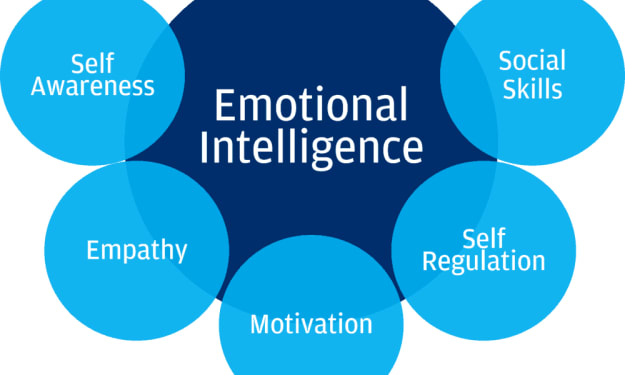
Emotional Intelligence and Mind Mastery: Managing Thoughts and Feelings
In the dynamic world we live in, success and happiness are no longer solely dependent on technical skills or knowledge. Emotional intelligence (EI), which involves understanding and managing our emotions and those of others, has emerged as a critical skill in personal and professional growth. Coupled with the art of mind mastery, the ability to regulate thoughts and feelings can lead to greater emotional resilience, healthier relationships, and a balanced life.
By joyosi93982 years ago in Education
Who Should Move from a Long-Distance Relationship: An Adventure of Love and Sacrifice. Content Warning. AI-Generated.
**Who Must Move in LDR? Key Determinants** Deciding who should move in a long-distance relationship is not a purely practical choice; it is an emotionally charged decision that will profoundly change the relationship. The idea of putting two lives into one place holds hopes, dreams, and sometimes fears. When you are making this important decision with each other, open hearts and honest conversations are crucial. Here's a closer look at those factors to guide your choice:.
By Abhay kumar chauhan2 years ago in Education
Rewriting the Rules: The Case for a Better English Alphabet. Content Warning. AI-Generated.
A Case for an Improved English Alphabet The Need for Change The English alphabet we use today comes from a long line of changes, starting with the Phoenicians and moving through Greek and Roman writing systems. While this history is fascinating, it has left us with an alphabet that doesn't always make sense. Our current system has too many ways English could improve and rules that make learning English harder than it needs to be. Benjamin Franklin saw these problems clearly. He suggested removing several letters and adding new letters for reform to make writing more logical. Thomas Spence joined him in pushing for change, showing that even centuries ago, smart people knew our alphabet needed work. Key Changes We Need We can start by removing letters that don't pull their weight. Letters like C, J, Q, W, X, and Y often do jobs that other letters can handle just fine. For example, we could write "kwilt" instead of "quilt" and still say it the same way. It's simpler and makes more sense. We also need new letters for sounds that come up all the time in English. The "th" sound needs its own letter - ancient English actually had one called "thorn" that worked perfectly. We should bring that back. We also need a single letter for the "sh" sound, like the symbol "š" that many languages already use. The "ng" sound in "ring" deserves its own letter too. Each letter should stand for just one sound. Right now, many letters make different sounds in different words, which confuses everyone. By giving each letter one job to do, we can make reading and writing much clearer. Why These Changes Matter Better spelling would help everyone, but especially people learning English. Think about how much time students spend memorizing spelling reform rules that don't make sense. With a more logical alphabet, they could learn faster and make fewer mistakes. Reading and writing would speed up too. When words look exactly like they sound, we don't have to stop and think about spelling. This makes communication faster and clearer for everyone. The new system would match how we actually talk today. Our current alphabet comes from hundreds of years ago, but language changes. Our writing system should keep up with how we speak now. Real Challenges to Consider People don't like change, especially with something they use every day. Past attempts to fix English spelling have faced strong pushback. Even Mark Twain wrote about how hard it would be to change the way we write. Changing every book, sign, and computer system would take enormous effort. Schools would need new materials, and everyone would need to learn the new system. These practical problems can't be ignored. We also need to think about how changes would affect our culture. Old books would become harder to read, and some worry we'd lose touch with our written heritage. Looking Forward Technology could help us make this change. Digital systems can be updated, and apps could help people learn the new letters. But we need to plan carefully to make sure all our devices can handle the new system. These changes could influence how other languages develop. A more logical English alphabet might inspire other languages to improve their writing systems too. William Thornton once dreamed of a universal alphabet - while that's a big goal, starting with English could point the way. Teaching the new system would take time and effort. We'd need training programs for teachers, students, and professionals. But the long-term benefits could make this investment worthwhile. Making the Case for Change The journey to an improved English alphabet won't be easy, but the potential benefits make it worth exploring. With modern technology and careful planning, we can overcome the practical challenges of implementing these changes. The transition period might be complex, but the long-term advantages of a more logical writing system could transform how we communicate. Looking ahead, an improved English alphabet could do more than just simplify spelling and reading. It could pave the way for better literacy rates, faster learning, and more efficient communication across the globe. The question isn't whether we should improve our alphabet, but how and when we'll take this important step forward.
By Bablu Chaudhary 2 years ago in Education
Love Across Miles: 7 The Psychological Effects of Long-Distance Relationships (LDRs). Content Warning. AI-Generated.
Psychological Effects and Facts of Long-Distance Relationships (LDRs) 7 LDRs are not just love across miles but an emotional roller coaster that tests the strength, patience, and depth of the connections between a couple. When two hearts beat for each other despite the miles, the journey is all about deep emotions: beautiful and painful. Let's take a closer look at the seven psychological effects of LDRs on relationships. 1. The Dance of Incertitude In LDRs, uncertainty is a constant companion. In most cases, partners are chased by questions that effectively tug at the heart: Does my partner miss me as much as I miss him or her? Will our love survive the distance? That dance of hope and doubt seems to drain you emotionally. Any delayed message or misinterpreted word could spiral into overthinking for both partners, leaving them open to fear. But uncertainty also holds a lovely flavor of its own. It makes couples remember how much they love each other and urges them to discuss their feelings very openly and honestly. When there is uncertainty, and it is faced together, that familiarity does help strengthen trust; doubt turns into a joint quest for understanding and reassurance. 2. Lack of Intimacy The most aggravating thing of LDRs is the miss for physical intimacy. Sometimes, a simple embrace to put away the worries, a kiss to let someone know how much you love them, even holding hands during bad times-all these moments seriously pass through your way with pain. Not being able to physically touch your loved one creates an unbearable ache that spreads the distance between two persons. But in this absence, it was emotion that could be found at the forefront. Couples poured their hearts into words, video calls, and simple things like a handwritten letter or a surprise gift. Hard as it could be to deprive oneself of touch, it did teach the partners to cherish moments they would someday share together-and learn new ways of showing love . 3. The Emotional Cost The weight of loneliness can become too much in an LDR. There are days that distance becomes unbearable-you miss seeing your partner smile or hearing his laughter. Celebrating milestones apart or facing challenges alone takes one through sad, frustrating, or hopeless moments. However, it's in this moment of emotional vulnerability that most couples discover their actual strength. Lapses make the appreciation for each other more sharp. Every small gesture, every "I love you" said, is felt more. The separation pain becomes a reminder of how much the relationship matters. 4. The Jealousy Factor Of course, jealousy in LDRs can stem not from a lack of trust but from a deep fear of losing the person you love. Perceived maybe when the person is appreciating more moments with other people but you are miles away. The imagination starts running wild, becoming convinced that it's saying something along the lines of "what if they find someone closer?" These thoughts are painful yet understandable, because love runs pretty deep. However, jealousy can also present an opportunity for improvement. It can be shared fears as well as a reassurance between partners, giving the basis for trust. Eventually, even such feelings can become something much deeper and more secure. 5. Confrontation of Commitment Being in an LDR goes beyond mere loyalty; it has to do with showing up day after day for the other person in different ways and miles. It is for example, finding time for that late-night call after a long day or when your love one is down, sending some encouragement from you via some message. Commitment in LDR becomes tested every day and gives people emotional limits while working on with each other. Yet, those who endure these challenges often find their love deepened. The sacrifices made for each other become a testament to the strength of their bond, proving that true love doesn’t falter in the face of adversity. 6. Time Management Test Coordinating schedules in an LDR is not easy, especially when there's a different time zone or a busy schedule for either of the parties. The work schedule, family obligations, and one's personal schedule often conflict with being able to schedule quality time for your partner. Unanswered calls or uncoordinated schedules can leave both lovers feeling neglected. But with the times when couples get to spend time with each other, that speaks so much about commitment. No matter if it's for a short period of time, it is all something that will be remembered. The teaming effort speaks volumes of what the relationship means and all the other noises around in life. 7. Reunion Rush The most magical part of an LDR is the reunion. It could be weeks or months since you last saw each other; it might even make you feel that if time were to stop once you see each other again, it wouldn't be a bad thing. The relief, love, and unutterable torrents of emotions in the first embrace after a long time apart cannot be put into words. These reunions remind the couple of exactly why they put up with the anguish and pain that a distance relationship brings along. With each reunion, they are rejuvenated, and every sacrifice made during those times is worth all the pain because romance simply springs back into life. On the other hand, these moments also have a bitter undertone to them: soon lies another goodbye. The strength to keep on going, though strengthened by each reunion, comes from the knowledge that each tear, each fight, and each argument is bringing them closer to tomorrow together. Conclusion : Long-distance relationships are not just trials for love. Rather, they are emotional journeys of depth and strength. It trains couples on developing ways of communication between them, having profound trust in each other, and loving each other more intensely. While the psychological effects of LDRs are really tough, they also produce possibilities for growth and connection, which very few experiences can offer in return. True love proves that distance is just a physical boundary and not a boundary in the heart. This is what true love demonstrates through LDRs-that it is not about being inseparable but about choosing each other every day, regardless of the distance.
By Misbah uddin2 years ago in Education