book reviews
Book reviews for scholastic growth; read material from the world's top educators with our collection of novels, memoirs, biographies, philosophical texts and textbooks.
People Aren’t “Using” ChatGPT Anymore — They’re Quietly Making Money With It
Intro: Nobody wakes up one day planning to “monetize AI.” Most people stumble into it. Someone experiments with ChatGPT late at night. Maybe they’re bored. Maybe curious. They ask it to rewrite a paragraph, fix a caption, or explain something confusing. And then it hits them — this thing just saved me an hour.
By David John9 months ago in Education
Chest Pain ICD-10 Code R07.9 – Your Complete Guide
ICD-10 stands for the International Classification of Diseases, 10th Revision. Created by the World Health Organization (WHO), it is the global standard for recording health conditions. Doctors and insurance companies use these specific codes to ensure everyone understands exactly what a patient is experiencing.
By khabe laim10 months ago in Education
I Tried Studying Without Music for One Week — Here’s What Actually Happened
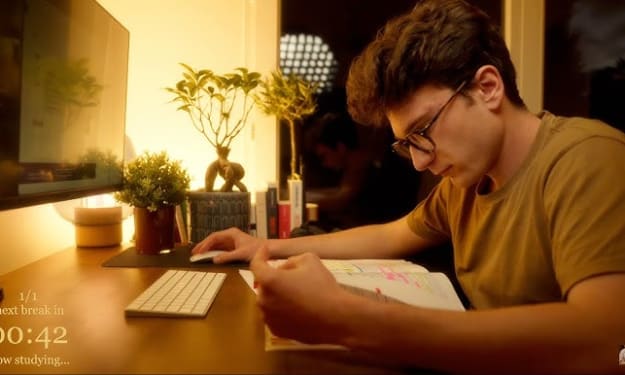
For years, I believed music made me more productive. Lo-fi beats while studying. Instrumentals while reading. Playlists carefully curated to help me “focus.” If there was silence, I filled it immediately. Silence felt empty. Uncomfortable. So when someone suggested studying without music, it sounded almost cruel. Still, curiosity won. I decided to study in complete silence for one full week. What happened surprised me. The First Day Felt Unbearable The silence was loud. Without music, every thought echoed. I became aware of the smallest sounds—the ticking clock, my breathing, the hum of electronics. My mind wandered constantly, searching for stimulation. I kept reaching for my phone out of habit. It felt like something was missing. But maybe what was missing wasn’t music. It was distraction. Music Was Hiding My Lack of Focus With music, I felt productive. Without it, I realized how scattered my attention really was. I noticed how often my mind drifted. How frequently I reread sentences. How quickly boredom appeared when there was nothing filling the gaps. Music wasn’t helping me focus. It was masking my inability to sit with one task. By Day Three, Something Shifted Around the third day, silence stopped feeling hostile. My thoughts slowed down. Reading felt smoother. I didn’t rush to escape boredom. Instead, my brain began to settle into the task in front of me. Studying felt… deeper. I wasn’t just consuming information. I was engaging with it. My Memory Improved Without Me Trying One unexpected change was memory. Without music occupying part of my attention, information stuck longer. I recalled concepts more easily. I spent less time reviewing and more time understanding. Silence created space. And in that space, learning actually happened. The Myth of “Productive Noise” Music isn’t bad. But we often use it to avoid discomfort. Silence forces us to confront: Boredom Mental restlessness Lack of clarity And those moments are where focus is built. Noise feels productive. Silence feels slow. But slow is where depth lives. The Biggest Lesson I Learned The problem wasn’t music. The problem was my dependence on constant stimulation. When I removed it, my brain didn’t collapse. It adapted. Focus isn’t something you add. It’s something you protect. What I Do Now I didn’t quit studying with music forever. But now, I choose silence when: Learning something complex Reading deeply Writing or thinking critically Music became a tool—not a crutch. Why This Matters In a world full of noise, silence feels unnatural. But focus doesn’t grow in chaos. It grows where there is space to think. Sometimes, the most powerful productivity hack isn’t an app, a playlist, or a system. It’s turning everything off.
By Waqas Ahmad10 months ago in Education
How Constant Notifications Are Rewiring Our Brains
The vibration is subtle. So subtle you don’t even realize you’ve reached for your phone. A notification. Then another. Then one more, just in case you missed something important. By the end of the day, you can’t remember what you were doing before the interruptions began. This isn’t a personal weakness. It’s neuroscience. Your Brain Wasn’t Built for This Much Noise For most of human history, attention was a survival tool. The brain evolved to notice rare, meaningful signals—a sound in the dark, a sudden movement, a change in the environment. Notifications hijack that system. Every buzz, ping, and banner alert triggers the brain’s orienting response—a reflex that forces your attention to shift. The brain treats each notification as potentially important, even when it isn’t. Over time, this constant switching changes how we think. The Dopamine Loop You Didn’t Sign Up For Notifications don’t just interrupt you—they reward you. Each alert delivers a small dose of dopamine, the neurotransmitter associated with anticipation and motivation. The brain begins to crave the possibility of something new, interesting, or validating. Not the message itself. The chance of the message. This creates a loop: Notification Check Temporary satisfaction Repeat Eventually, the brain becomes less comfortable with silence. Why Focus Feels Harder Than It Used to Every time you switch tasks, your brain pays a cost. This is known as attention residue. Part of your mind stays stuck on the previous task while you attempt to focus on the next one. Now multiply that by: Emails Messages App alerts Social media notifications The result is shallow focus and mental fatigue—even on days when you “didn’t do much.” Your brain is exhausted from constantly resetting itself. The Illusion of Multitasking We like to believe we’re good at multitasking. In reality, the brain can only focus on one cognitively demanding task at a time. What we call multitasking is actually rapid task-switching, and notifications force that switch whether you want it or not. The more often this happens, the harder it becomes to: Read deeply Think critically Learn complex material Stay present How Notifications Change Learning Learning requires sustained attention. When notifications interrupt that process, information struggles to move from short-term memory into long-term storage. This is why: Studying takes longer Reading feels harder Retention feels weaker It’s not because you’re less capable. It’s because your attention is fragmented. The Brain Adapts — For Better or Worse The brain is plastic. It changes based on how we use it. When we train it to expect constant stimulation, stillness begins to feel uncomfortable. Silence feels boring. Deep work feels heavy. But the opposite is also true. When notifications are reduced, focus slowly returns. Reclaiming Your Attention You don’t need to quit technology to fix this. You need to change the signal-to-noise ratio. Small changes matter: Turn off non-essential notifications Schedule notification-free study or work blocks Keep your phone out of sight during focused tasks Allow boredom to exist without immediately filling it At first, your brain will resist. That’s normal. Then something shifts. What Happens When the Noise Fades Without constant interruptions: Thoughts become clearer Tasks feel lighter Learning becomes easier Time feels less fragmented You remember what you read. You finish what you start. You feel less mentally drained. Not because you did more—but because your brain finally had space to think. Attention Is the New Literacy In a world designed to distract, the ability to focus is no longer natural—it’s a skill. And like any skill, it can be rebuilt. The notifications will keep coming. The question is whether they get to decide how your brain works.
By Waqas Ahmad10 months ago in Education
Top Amazon Book Niches 2025-2026: Profitable Categories Authors Can’t Ignore
Ever feel like the book market is just too crowded? You’re not alone. With millions of titles on Amazon, breaking through can seem like an impossible dream. But here’s the secret: the most successful authors aren’t always writing in the biggest categories. Instead, they’re tapping into rising Amazon book niches—specialized, hungry audiences looking for exactly what they have to offer.
By Epic Vibes10 months ago in Education
Why We’re All Tired Even When We Do Nothing. Content Warning. AI-Generated.
Why We’re All Tired Even When We Do Nothing I used to believe exhaustion was earned. You worked hard, stayed busy, ran yourself into the ground—and then you were allowed to feel tired. That was the rule. Or at least, that’s what I told myself every time I woke up exhausted despite having done absolutely nothing the day before. No heavy labor. No long shifts. No dramatic events. Just tired. Bone-deep, unexplainable tired. At first, I blamed my sleep. Maybe I wasn’t getting enough. Or maybe I was getting too much. I blamed my diet, my lack of exercise, my screen time, my age—anything that felt concrete enough to explain why I felt like I needed a nap after checking my email. But the truth took much longer to understand. We’re not tired because we’re doing too much. We’re tired because we’re never off. The Illusion of Rest One evening, after what I called a “lazy day,” I caught myself sighing like I had just finished a marathon. I had spent hours scrolling, switching between apps, watching short videos, responding to messages, and absorbing other people’s thoughts. I hadn’t moved much. But my mind had run everywhere. That’s when it clicked: what we call “doing nothing” today isn’t actually nothing. It’s constant consumption. Constant awareness. Constant reaction. We are always available. Always reachable. Always one notification away from stress. Even rest has become productive. We listen to podcasts while relaxing. We scroll while eating. We check emails while lying in bed. There is no space for stillness anymore—only quieter noise. Mental Exhaustion Wears a Disguise The most dangerous part of modern exhaustion is that it doesn’t look like exhaustion. It looks like procrastination. Like lack of motivation. Like laziness. So we shame ourselves. “Why can’t I focus?” “Why am I so unproductive?” “Why do I feel drained when I didn’t even do anything today?” But our brains are processing more information in a single day than previous generations did in weeks. News cycles never stop. Social media never sleeps. Comparison is constant, subtle, and relentless. You don’t need to run to be tired. You just need to care about too many things at once. The Pressure to Be “On” Somewhere along the way, being tired became normal. We joke about it. We bond over it. We wear it like a badge of honor. “I’m exhausted.” “Same.” And we move on. There’s an unspoken pressure to always be alert, informed, responsive, improving. If you’re not busy, you feel guilty. If you rest, you feel behind. Even when we’re doing nothing, we’re thinking about what we should be doing. That mental load never clocks out. When I Stopped Blaming Myself The shift happened when I stopped asking, “What’s wrong with me?” and started asking, “What’s wrong with the way we live?” I experimented with small changes. No phone for the first hour of the morning. Silence instead of background noise. Doing one thing at a time—even if it felt uncomfortable. At first, it was unsettling. Without constant stimulation, my thoughts felt louder. But slowly, something softened. I wasn’t magically energetic. But I was less drained. For the first time in a long time, my tiredness made sense. We Don’t Need More Motivation — We Need Permission Permission to rest without earning it. Permission to be bored. Permission to disconnect without explaining ourselves. We are tired because we are overloaded—not physically, but mentally and emotionally. Because the world demands our attention at all times and punishes us when we can’t give it. Doing nothing isn’t the problem. Never truly resting is. The Kind of Rest That Actually Works Real rest isn’t scrolling. It isn’t “half-relaxing.” It isn’t numbing yourself with noise. Real rest is presence. Silence. Letting your mind wander without interruption. It feels strange at first because we’ve forgotten how to do it. But it’s the only kind that works. --- So if you’re tired today—despite doing nothing—know this: You’re not broken. You’re not lazy. You’re not weak. You’re human in a world that never lets you stop. And maybe the bravest thing you can do is rest anyway.
By Waqas Ahmad10 months ago in Education