book reviews
Book reviews for scholastic growth; read material from the world's top educators with our collection of novels, memoirs, biographies, philosophical texts and textbooks.
How I Passed the Microsoft Azure Developer Associate Exam in 60 Days
Preparing for a professional certification exam can be an exciting yet demanding experience. For me, successfully passing the Microsoft Azure Developer Associate Exam in just 60 days was a fulfilling achievement that opened up new career opportunities. Here’s how I tackled the process, the resources I utilized, and why I believe this certification was worth the effort.
By Danial William2 years ago in Education
Everything You Need to Know About Pico Laser Aftercare
Pico laser treatments have quickly gained popularity due to their ability to effectively target a variety of skin concerns, such as pigmentation, wrinkles, acne scars, and tattoo removal. However, while the procedure itself is minimally invasive, proper aftercare is essential to ensure the best results and to minimize any risks or complications. In this article, we will explore everything you need to know about Pico Laser Treatment Dubai aftercare, helping you protect your skin and achieve the glowing complexion you desire.
By Anousha syed2 years ago in Education
Cheap vs Expensive Ear Piercing: What’s the Difference in Dubai?
Ear piercings are a popular form of self-expression and have been for centuries. Whether for fashion, tradition, or simply a personal choice, people from all over the world are getting their ears pierced. In Dubai, a city known for its modernity and luxury, the choice between a cheap and expensive ear piercing can seem overwhelming. The price difference isn’t just about the monetary aspect; there are various factors that contribute to the experience, and understanding them can help you make an informed decision. This article will delve into what sets cheap and expensive Ear Piercing Cost Dubai and help you decide which option suits your needs.
By Anousha syed2 years ago in Education
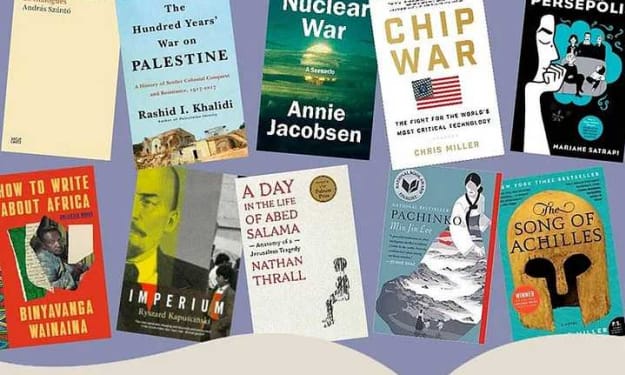
My 2024 Book list: Challenging Book for Challenging Time
I read 44 books in 2024, extensively sampled throughout history, technology, society, and current events. That’s reflected in the first and end portions of my post, which spotlight my favorite nonfiction and fiction novels.
By jaklin genie2 years ago in Education
How I Made My First $10,000 on YouTube: My Journey
Turning a passion for creating videos into a source of income is a dream for many YouTubers. When I first started my channel, I never imagined that I would one day make my first $10,000. It was a journey filled with learning, challenges, and incredible growth. Here’s a breakdown of how I achieved this milestone and the lessons I learned along the way.
By Abdulrahman Adamu2 years ago in Education
Global Economic Outlook in 2025: Key Trends and Predictions. AI-Generated.
Introduction: A Year of Transition As the world enters 2025, economies worldwide are adjusting to the impacts of previous global crises, political shifts, and technological advancements. Experts are predicting a year of transition, where nations will focus on rebuilding and reshaping economic strategies. In this article, we explore key trends and predictions that will define the global economic outlook in 2025.
By Bross Bertin2 years ago in Education
10 Proven Strategies to Achieve Financial Independence Before 40. Content Warning.
It would almost seem to be a pipe dream to want to become completely financially independent before 40, but by applying the guidance outlined here and taking consistent action, this would be entirely possible. Follow the ten strategies proven for thousands of people who have taken the reins and lived life on their own terms by controlling finances.
By Biltu Chakraborty2 years ago in Education
Understanding the Cost of Complex Tooth Extractions in Dubai
Tooth extraction is often considered a last resort when all other treatments for a damaged or decayed tooth fail. For individuals Tooth Extraction Cost Dubai, the process of extracting a tooth can be more complex than a standard removal, especially in cases involving wisdom teeth, impacted teeth, or teeth with severe infections. Understanding the financial aspect of complex tooth extractions in Dubai is essential for anyone facing this dental procedure.
By Anousha syed2 years ago in Education
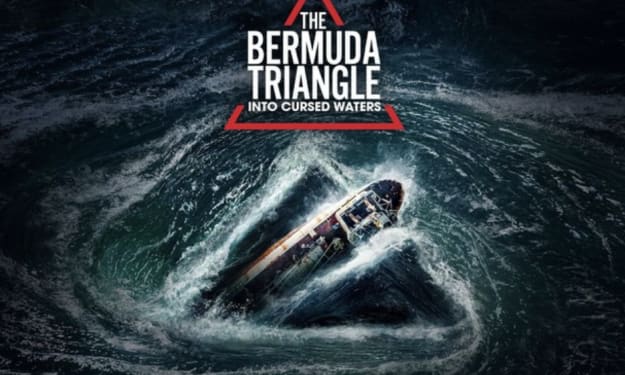
The Mystery of the Bermuda Triangle
The Mystery of the Bermuda Triangle: Fact or Fiction? The Bermuda Triangle, a region of the North Atlantic Ocean, has captured the imagination of countless people for decades. Famous for its reputation as a “danger zone,” it spans an area roughly defined by points in Florida, Bermuda, and Puerto Rico. Over the years, the Triangle has been linked to eerie disappearances, particularly of ships and planes, leading to a flood of myths and speculation about what could be causing such inexplicable events. You’ve probably seen viral videos where YouTubers claim to have found treasure within the Bermuda Triangle, with one particular story of a man who risked it all for a $10,000 bounty. But when it comes down to it, his most significant win was simply surviving the ordeal. Is the Bermuda Triangle truly a place of danger, or is it just another mystery that can be explained through science? Let's dive deeper into the facts and theories surrounding this infamous area. The Bermuda Triangle’s Chilling Reputation The Bermuda Triangle is infamous for its long history of unexplained disappearances. It's said that over 50 ships and 20 airplanes have mysteriously vanished within its boundaries, contributing to its ominous reputation. The tales of these incidents often invoke ideas of mystical powers, vortexes, or even portals to other dimensions. But what if the truth is more straightforward? Enter Australian scientist Carl Cruciński, who may have cracked the code behind the Bermuda Triangle’s long-standing mystery. According to Cruciński, the most popular explanations for the Bermuda Triangle's strange occurrences can be traced back to two main factors: human error and bad weather. Human Error: The Case of Flight 19 One of the most famous incidents in Bermuda Triangle lore is the disappearance of Flight 19 in 1945. This group of five US Navy bombers was on a routine training mission from Florida when they vanished without a trace. The incident remains shrouded in mystery, largely due to the fact that the weather was calm, and no distress signals were sent. Cruciński’s research suggests that the key to understanding the disappearance of Flight 19 lies in the incompetence of the flight leader. Despite having over 2,000 hours of flight time, the commander of Flight 19 was known to be a poor navigator. In fact, he had gotten lost at sea on multiple occasions before. On the fateful day of the disappearance, after completing their training exercise, the pilots’ compasses stopped working. In a panic, the flight leader mistakenly thought they were flying over the Florida Keys, despite having passed over the Bahamas just an hour earlier. This misjudgment led the group further into the Atlantic Ocean, running out of fuel and eventually crashing. The idea that the Bermuda Triangle is somehow “cursed” is not supported by Cruciński’s findings. The real culprit, he argues, was human error—specifically, a navigator’s mistake that led to a fatal outcome. While some conspiracy theorists may argue that malevolent forces were responsible for the failure of the compasses, Cruciński contends that it was simply poor navigation skills that led to this tragedy. Bad Weather: A Natural Explanation While human error plays a significant role in some Bermuda Triangle incidents, natural weather conditions are another critical factor. The region is notorious for its unpredictable weather patterns, particularly during the hurricane season. Tropical storms and hurricanes frequently pass through the Bermuda Triangle, making it a hazardous area for both ships and planes. One particularly mysterious disappearance was the USS Cyclops, a massive cargo ship that vanished in 1918 without a trace. The Cyclops was carrying 11,000 tons of manganese and 309 people when it disappeared. No distress signals were received, and no wreckage was ever found. Theories about the Cyclops’s disappearance range from a violent storm that capsized the ship to underwater events like rogue waves or oceanic landslides. According to Cruciński, the deep ocean floor in the Bermuda Triangle, which plunges nearly 30,000 feet deep, contributes to these mysterious disappearances. The extreme depth of the water allows for ships and planes to disappear without a trace, making it a perfect location for these kinds of incidents to remain unsolved. Additionally, the Gulf Stream, a powerful ocean current, passes through the area, often causing rapid weather changes that can catch unsuspecting vessels off guard. The Role of Methane Clathrate There’s another potential explanation for the Bermuda Triangle's mysterious disappearances, one that involves methane clathrate—a type of ice-like substance that forms underwater in cold regions. Methane gas is trapped inside these ice structures, and occasionally, they can break free, releasing gas bubbles that rapidly rise to the surface. This sudden release of bubbles could have catastrophic effects on ships. Experiments with model ships have shown that if enough bubbles rise in a concentrated area, they can reduce the water’s density. This loss of buoyancy could cause a ship to sink or capsize. While the chances of such an event happening are minimal, it’s still a plausible theory that could explain some of the Bermuda Triangle’s unexplained disappearances. The Bermuda Triangle: Not All It's Cracked Up to Be? While the Bermuda Triangle is undoubtedly a region of intrigue, Cruciński’s theories suggest that it might not be as dangerous or mysterious as people believe. The truth is, incidents in the Bermuda Triangle are not as extraordinary as they seem. Ships and planes disappear all over the world, and the Bermuda Triangle is simply a high-traffic area where these incidents are more likely to be noticed and sensationalized. Interestingly, the exact boundaries of the Bermuda Triangle are not even officially defined. Over the years, people have expanded the area to include any incident that occurs near the region, regardless of its actual location. For example, the famous mystery of the Mary Celeste, a ship found abandoned in 1872, is often cited as part of the Bermuda Triangle lore. However, the ship was found far to the east of the Triangle, near the Azores, making it geographically irrelevant to the area. Moreover, while the Bermuda Triangle may experience slightly more incidents than other regions, the frequency of these occurrences is not out of line with global averages. In fact, according to experts, the number of incidents in the Bermuda Triangle is statistically no higher than in other heavily trafficked regions of the world. Conclusion: The End of the Bermuda Triangle Myth? After years of speculation and wild theories, it seems that the Bermuda Triangle is not as sinister as many believe. Human error, bad weather, and natural oceanic forces are more than enough to explain the majority of the mysterious disappearances in the region. So, while the Bermuda Triangle remains a fascinating topic, it’s time to debunk the myths and move beyond the wild theories. That said, who knows? A new mystery may emerge tomorrow to renew interest in the Bermuda Triangle, keeping it as one of the most captivating subjects for both conspiracy theorists and curious minds alike.
By Jatia Pradhan2 years ago in Education
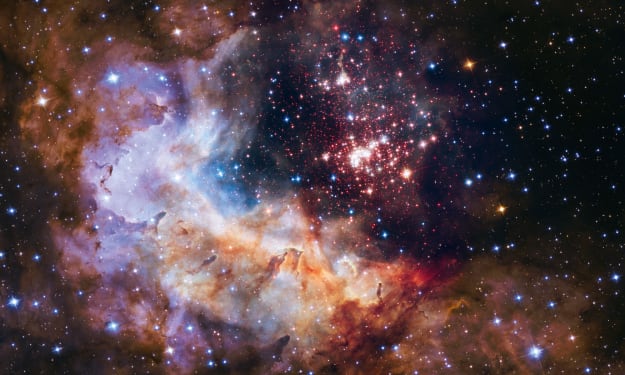
How Was Our Universe Born?
How Was Our Universe Born? Exploring the Biggest Questions in Cosmology The origin of the universe is one of the most profound mysteries humanity has ever grappled with. How was our universe born? And if we could somehow answer that, a follow-up question emerges: What existed before the universe? Scientists have been investigating these mind-boggling questions for decades, and while we don't have definitive answers, we've made remarkable progress in uncovering clues about the birth and evolution of the cosmos. Edwin Hubble and the Expanding Universe In the 20th century, a monumental discovery changed our understanding of the universe forever. Edwin Hubble, using his telescope on Mount Wilson in Southern California, revealed that those random "clouds" in the sky weren’t clouds at all—they were galaxies, each filled with billions of stars. Moreover, Hubble discovered that these galaxies were moving away from each other, meaning the universe was expanding. This revelation led scientists to a groundbreaking conclusion: if the universe is expanding, it must have started somewhere. By "rewinding" cosmic time, they began to theorize about the universe's origins. This culminated in the Big Bang Theory, which remains the leading explanation for the birth of the universe. The Big Bang Theory: How It All Began According to the Big Bang Theory, there was a time when neither space nor time existed. The universe was compressed into an infinitely small, dense, and hot state called the "cosmic singularity." Imagine our entire universe squashed into a tiny, unimaginable point. The pressure and temperature were so intense that they became unsustainable, leading to the "Big Bang"—a colossal explosion of energy that created time, space, and the basic building blocks of matter. As the universe expanded and cooled, quarks (the smallest particles known) began to bond, forming atoms and molecules. Gravity then pulled these molecules together, giving rise to stars, galaxies, and eventually, everything we see today. This entire process occurred approximately 13.8 billion years ago. But while the Big Bang Theory explains the universe's origin, it raises another question: what came before the Big Bang? The Theory of Inflation: Evening Out the Universe In the 1980s, physicist Alan Guth introduced the theory of inflation to address some inconsistencies in the Big Bang Theory. For example, the early universe appears remarkably uniform and evenly distributed, which shouldn't have been the case. To understand inflation, imagine a balloon filled with paint hanging from the ceiling. When it bursts, the paint scatters randomly across the floor, creating chaos. But the early universe didn't resemble this chaotic spread. Instead, it looked more like a perfectly uniform circle gradually expanding in size. Guth’s theory of inflation suggests that, even before the Big Bang, an unknown force rapidly expanded the universe, smoothing out irregularities and distributing matter evenly. This inflationary period, lasting just fractions of a second, provided the necessary conditions for the Big Bang to occur. Today, most scientists accept this theory as a critical part of our understanding of the universe's birth. The Cyclic Universe: An Endless Cycle Not everyone agrees that the universe started with the Big Bang. German physicist Martin Bojowald proposed an alternative idea: the cyclic universe. According to this theory, the Big Bang wasn't the beginning but merely part of an endless cycle of expansion and contraction. Bojowald draws a parallel between time and a pendulum, which moves back and forth in a continuous loop. In this view, our universe will eventually stop expanding, begin to contract, and return to a dense state—the cosmic singularity. From this state, a new Big Bang could occur, giving birth to a new universe. In other words, each universe is born from the remnants of a previous one, and this cycle has been repeating for eternity. Parallel Universes and Brain Collisions Some theories go even further, suggesting that our universe isn’t the only one. Neil Turok and Paul Steinhardt, two prominent physicists, developed a concept involving "branes" (short for membranes). According to their theory, our universe exists on a giant, elastic surface in a higher-dimensional space. Parallel universes could exist on neighboring branes, separated by a small gap. Occasionally, these branes may collide, triggering a massive release of energy—the Big Bang. Each collision creates new universes, meaning ours is just one of countless universes in an infinite multiverse. This idea, rooted in string theory and M-theory, is both fascinating and mind-bending. If true, it could explain the mysterious force behind inflation and provide answers to questions we haven’t even thought to ask yet. However, this theory remains highly speculative, as we lack the tools to test it. The Search for Answers Continues Theories about the universe's origins are constantly evolving as new discoveries reshape our understanding of space and time. While the Big Bang Theory, inflation, and cyclic universe ideas are all compelling, none have provided definitive answers. For now, these ideas remain theories—educated guesses based on the evidence we currently have. Scientists like Guth, Bojowald, Turok, and Steinhardt have dedicated their lives to exploring these mysteries. Their work reminds us that science is an ongoing process, requiring creativity, courage, and a willingness to question long-held beliefs. --- As we continue to develop new technologies and probe deeper into the cosmos, we may one day uncover the ultimate truth about our universe's origin. Until then, the question remains one of the most exciting and humbling challenges in human history.
By Jatia Pradhan2 years ago in Education
Fascinating Food Fact
Fascinating Food Facts That Will Change How You See Your Kitchen Food is more than just nourishment—it’s full of surprises, quirks, and science. From garlic’s unexpected trick to Oreos’ not-so-double stuffing, here’s a deep dive into some fascinating food facts that might just blow your mind. Taste Garlic Without Eating It Did you know you don’t need to actually eat garlic to taste it? If you rub a clove of garlic on your feet, you might taste it within 15 minutes. While there’s no definitive explanation for this phenomenon, it could be linked to allicin, a compound in garlic that travels through your body. Placebo effect or not, it’s a fun experiment to try! Juicier Lemons with a Microwave Hack Warming lemons in a microwave can make them juicier. The heat softens the membranes inside the fruit, making it easier for the juice to flow freely. Next time you need lemon juice for your recipe, give this simple trick a try. Keppel Fruit: Nature’s Perfume Ever heard of the keppel fruit? It’s a rare fruit with a unique superpower: it can make your sweat smell like violets. While uncommon, it’s a fascinating example of how nature can surprise us in unexpected ways. The First Vegetable Grown in Space The first vegetable grown in space was a potato. NASA successfully grew five small potatoes from tubers, proving that space travelers might one day enjoy fresh (or fried!) food on their journeys. Foods Full of Water We know watermelons, tomatoes, and celery are mostly water, but did you know potatoes are about 80% water too? Their water content plays a role in helping them absorb and reflect Wi-Fi signals, just like humans do. Still, potato juice might not be the best drink idea—roasting them is a far tastier option. Oranges That Aren’t Orange Not all oranges are orange. In subtropical regions, the climate doesn’t get cold enough to break down chlorophyll, leaving the fruit peel yellow or greenish. To make them orange, growers often treat the fruit with ethylene gas. Cranberries: The Bouncing Berry Want to check the quality of cranberries? Drop them! Good cranberries bounce because of tiny air pockets inside. The higher they bounce, the better their quality. Plus, this same air makes them float in water. Dogs and Veggies While many dogs enjoy vegetables like carrots and cucumbers, never feed them grapes. Grapes are toxic to dogs and can lead to serious health issues. Stick to dog-friendly veggies for your furry friend. Pumpkin Seeds: A Protein Powerhouse Think meat is the only great source of protein? Think again. Pumpkin seeds and broccoli have more protein per calorie than beef, making them excellent choices for vegetarians or anyone looking to diversify their diet. Almonds Are Not Nuts Despite popular belief, almonds are not true nuts. A nut should be dry, but almonds grow inside a fruity layer. On the tree, they look like small peaches, and you have to crack open the fruit to get to the almond seed. Coffee: A Berry-Based Brew Your morning coffee isn’t just a caffeine kick—it’s technically stewed fruit! Coffee beans are actually seeds inside a berry, making your cup of joe a berry-infused drink. Onions and Tears Not all onions make you cry. Onions grown in sulfur-poor soil taste sweeter and don’t irritate your eyes. If you’re dealing with a tear-inducing onion, try chilling it or rinsing your knife with cold water to reduce the tearful effects. Baby Carrots: A Marketing Trick Not all baby carrots are naturally tiny. Some are regular-sized carrots trimmed down to make them marketable. This clever trick turns carrots with no market value into a sellable product. No Negative-Calorie Foods Lettuce, celery, and kale are often touted as “negative-calorie” foods, but this is a myth. While they’re very low in calories (about 10 per serving), digesting them only burns half a calorie—not enough to put you in the negative. The Truth About Grated Cheese If you buy pre-grated cheese, check the label for cellulose. This digestible wood pulp is added to prevent clumping. While it’s safe to eat, it’s a surprising addition to your cheese! Fake Wasabi Most wasabi sold in supermarkets isn’t real wasabi. True wasabi is hard to cultivate and expensive, so it’s often replaced with horseradish, flavorings, and colorants. White Chocolate Isn’t Chocolate White chocolate isn’t real chocolate. It’s made from sugar, milk, vanilla, and cocoa butter, but lacks the cocoa solids needed to classify it as chocolate. The Everlasting Honey Honey is the only food that never expires. Its low pH and high sugar content make it inhospitable for bacteria and organisms that cause spoilage. Even ancient jars of honey are still edible! Diamonds from Peanut Butter Peanut butter and engagement rings have something in common: diamonds. Scientists have figured out how to extract carbon from peanut butter, put it under intense pressure, and create diamonds. Who knew? Fruit Candies and Car Wax That shiny coating on fruit candies comes from carnauba wax, the same substance used to polish cars. Many fruits, especially apples, also have a thin layer of this wax to give them a glossy appearance. Ketchup as Medicine In the 1800s, ketchup was used as medicine. Doctors believed tomatoes had medicinal properties, so ketchup became a health remedy. While its medical claims didn’t hold up, it remains a beloved condiment today. The Color of Plates Matters Did you know the color of your plate can influence how you perceive food? Studies show that red plates can help reduce portion sizes, while drinks in orange cups are perceived as tastier. The Quirks of Bananas Bananas, technically berries, can ripen faster if placed in a bag with apples or tomatoes. These fruits release ethylene gas, which speeds up ripening. Fun fact: the bananas you buy may have been stored for up to a year before hitting supermarket shelves. Farm-Raised Salmon Farm-raised salmon are naturally white. To mimic the pink hue of wild salmon, which eat shrimp, farmed salmon are fed artificial dyes. Decades ago, a company marketed white salmon as “guaranteed not to turn pink in the can.” Talk about creative advertising! From garlic’s strange tricks to ketchup’s medicinal past, the world of food is full of surprises. The next time you step into your kitchen, you might just see your ingredients in a whole new light!
By Jatia Pradhan2 years ago in Education
The World's Hidden Wonder
The World’s Hidden Wonders: Mysterious Islands, Unclimbed Peaks, and Secret Worlds The Earth is filled with fascinating stories of hidden wonders and mysterious places. From disappearing islands to untouched mountain peaks, the world continues to surprise us, challenging what we think we know. Let's dive into these stories, where the lines between fact and fiction blur. --- Schrödinger's Island: Sandy Island’s Game of Hide and Seek Imagine an island that exists and doesn’t exist simultaneously. This is the tale of Sandy Island, often likened to Schrödinger’s cat. Officially recognized on maps in the past, Sandy Island has eluded discovery in real life. The mystery dates back to 1876 when a whaling ship reported an island measuring over 15 miles long and 3 miles wide, about the size of Manhattan. Yet, every subsequent expedition found nothing but endless blue waves. In 1974, a mission declared the island non-existent, and it was erased from maps. However, in 2012, Google Earth reignited the mystery by displaying a black blob at Sandy Island’s coordinates. Scientists hypothesize the "island" could have been a volcanic raft mistaken for land by early explorers. The story of Sandy Island reminds us how much of our planet remains a puzzle. --- Mount Lico: A Hidden Rainforest in a Volcano In northern Mozambique, Mount Lico revealed a secret: a rainforest thriving inside a volcanic crater. Scientists first spotted the hidden ecosystem on Google Earth. Six years of planning and preparation culminated in an arduous vertical climb to reach the site. What they found was extraordinary: a pristine forest teeming with unique species and untouched by human activity. Among the discoveries were giant caterpillars and ancient artifacts, hinting at a forgotten human presence. Mount Lico stands as a reminder that some secrets lie hidden in plain sight, waiting for the right moment to be uncovered. --- The Mysteries Beneath Antarctica Beneath Antarctica's frozen surface lies an enigmatic world of canyons, waterways, and ancient lakes. One such wonder is Lake Vostok, buried beneath 2.5 miles of ice. Spanning 4,800 square miles, this hidden lake has likely existed for 15 million years. Advanced technologies, like seismic soundings and ice-penetrating radar, have made its discovery possible. Scientists believe its liquid state is due to the Earth’s warm interior. As we explore these subglacial wonders, we edge closer to unraveling the mysteries of Earth’s least accessible regions. --- Kunar Punum: The Untouched Mountain of Bhutan Nestled in the Himalayan Mountains, Kunar Punum remains one of the world’s tallest unclimbed peaks. Bhutan, known for its emphasis on happiness and spiritual traditions, has kept this peak sacred and off-limits. Unlike Western climbing traditions that prioritize reaching summits, Bhutanese culture values the journey and connection with the mountain itself. This philosophy has preserved Kunar Punum’s mystique, leaving it a symbol of the uncharted and unexplored. --- Paper Towns: The Story of Agloe Unlike Sandy Island, Agloe, New York, was intentionally fabricated. Mapmakers in the mid-20th century created "paper towns" to catch copyright violators. But Agloe took on a life of its own when someone opened a store named "Agloe General Store" at the fictitious location. Though the store didn’t last long, Agloe became a national curiosity, drawing visitors eager to capture the essence of a place that was never meant to exist. --- The Disappearing Vera Island Vera Island, also known as Bermeja, appeared on maps for centuries, only to vanish entirely. Its last recorded appearance was on a 1921 Mexican map. Three official investigations in 2009, equipped with advanced technology, found no trace of it. Some speculate the island sank, while others suggest it was a deliberate hoax by early explorers to mislead rivals. Bermeja’s story serves as a testament to the ever-changing nature of exploration and the limits of human understanding. --- Rio de Janeiro’s Hidden Cities Not all mysteries are islands or mountains. In Rio de Janeiro, favelas—informal settlements—represent another kind of enigma. These sprawling urban areas, often overlooked in official city planning, are a testament to human resilience and ingenuity. Rocinha, one of the largest favelas, was only officially recognized as a neighborhood in the 1990s. The stories of these communities highlight the gaps in modern urban planning and the creative ways people adapt to their circumstances. --- The Uncharted Ocean Floor Our oceans remain one of Earth’s greatest mysteries. Despite technological advances, 95% of the ocean floor is unexplored. Using sonar technology, scientists are mapping underwater landscapes to uncover hidden marine life, seismic hazards, and volcanic activity. The uncharted depths of the ocean promise countless discoveries, reminding us how much we still have to learn about our planet. --- From vanishing islands to unexplored rainforests and sacred mountains, the world is full of wonders waiting to be uncovered. These stories inspire curiosity and remind us that even in the age of technology, the Earth holds secrets that continue to elude us. --- Now, let's create an artistic image reflecting these hidden wonders.
By Jatia Pradhan2 years ago in Education