book reviews
Book reviews for scholastic growth; read material from the world's top educators with our collection of novels, memoirs, biographies, philosophical texts and textbooks.
The Third Man Syndrome: Surviving the Impossible
In August 1914, the British Imperial Trans-Antarctic Expedition set sail from England on the ship *Endurance*, led by Ernest Shackleton. Their mission was to cross the Antarctic continent and establish a base on the Weddell Sea coast. The crew, consisting of 27 men, 69 dogs, and even a tomcat, sailed through harsh pack ice. By January 18th, the ship was trapped in the ice, unable to move forward or backward. Faced with this dire situation, Shackleton and his crew set up camp, waiting for the ice to thaw. But as the days passed, they realized their predicament was worsening. The ice gradually consumed the ship, which was slowly sinking into the freezing ocean. With no other option, the crew salvaged what they could and discarded everything that weighed them down, including books, clothes, tools, and even keepsakes. Initially, they believed they could walk their way to safety, but after barely covering 7 and a half miles in seven days, it became clear that this plan wasn’t working. Shackleton made the difficult decision to remain stationary and wait for a better opportunity. On April 7th, 1916, a glimmer of hope appeared when the crew spotted the snow-capped peaks of Clarence and Elephant Islands. After six grueling days, they finally reached dry land. However, the real challenge had only just begun. They were far from civilization, and the chances of rescue were slim. Shackleton and five crew members then embarked on a perilous journey to find help. The crew made the daring decision to sail 800 miles over 16 days in a small lifeboat named *James Caird*. Battling freezing waters and treacherous waves, they finally landed on the wrong side of South Georgia Island. Three of the men climbed mountains and navigated glaciers, following a path no human had ever taken. After 36 hours of grueling hiking, they reached the whaling station at Stromness Bay. Their survival was nothing short of miraculous. In his journal, Shackleton later wrote that he felt a "guardian spirit" had been with them during the journey, guiding them through their trials. This mysterious sense of support in extreme conditions has been coined the "Third Man Syndrome." It refers to the experience of feeling an unseen presence offering comfort during intense stress or danger. Psychologist John Guyer spent five years collecting stories from adventurers, sailors, and pilots who had similar experiences of an invisible companion. In his book *The Third Man Factor*, he discusses this phenomenon, suggesting several potential explanations. One theory is that the brain, under extreme stress, creates a comforting presence to help the individual cope. Another theory involves a neural switch that activates during pivotal moments of crisis. Interestingly, this sense of an unseen presence is not just a psychological oddity. Scientists have replicated the sensation in lab settings by using neural stimulation. However, those experiences don’t quite match the depth and comfort felt during real-life encounters. The concept of the "Third Man" has also inspired literature and films. T.S. Eliot’s *The Waste Land* is often interpreted as a poetic reference to such mysterious apparitions. Even Hollywood films, like *Cast Away*, where Tom Hanks' character forms a bond with a volleyball named Wilson, depict this phenomenon. Another example of the Third Man Syndrome comes from an incident involving Frank Smith, a mountaineer who almost reached the summit of Mount Everest. Facing worsening conditions, Frank’s climbing group members gave up one by one. Despite their hardships, Frank pressed on, but at 1,000 feet from the summit, he had to turn back. On his descent, he instinctively offered a mint cake to his hiking companion—only to realize there was no one there. Frank had been alone for hours but felt an overwhelming presence of a companion by his side. The sensation was so real that it kept him from feeling any loneliness. James Svy, a mountaineer in the Canadian Rockies, had a similar experience. After being swept 2,000 feet down by an avalanche, James regained consciousness, severely injured and struggling to survive. Just when he thought all hope was lost, he felt the presence of someone urging him to live.
By Nora Ariana2 years ago in Education
Unveiling the Sun's Secrets: How Spectroscopy Reveals the Composition of Our Star
### What is the Sun Made Of? Unveiling the Secrets Through Spectroscopy We can’t travel to the Sun and grab samples like we did with the Moon, but there is a clever way to uncover its composition without having to venture out so far: **spectroscopy**. It works because of light. The rainbow we see after a rainstorm isn't the exact tool we need, but **the spectrum of light** – more precisely, the **Fraunhofer lines** – can reveal a lot. In 1802, English physicist **William Hyde Wollaston** first noticed these mysterious dark lines in a star's spectrum. However, it was German physicist **Joseph von Fraunhofer** who truly explored and mapped over 500 lines, even assigning letters (A to G) to the brightest ones. These lines still carry Fraunhofer's name today. The Sun's spectrum contains over 25,000 such lines. These dark lines occur because various gas elements in the Sun's atmosphere absorb specific wavelengths of light. The pattern created by these absorption lines provides essential clues about the Sun's composition. ### Spectra: The Three Types Before we dive deeper, it’s important to understand three types of spectra: 1. **Continuous Spectrum**: This spectrum includes all the colors of the visible light rainbow. If you spread white light through a prism, you get a smooth spectrum with no gaps. 2. **Emission Spectrum**: This occurs when atoms are excited and emit light. Each element has a unique "signature" color – like sodium glowing yellow, neon showing red and orange, or mercury emitting blue-green. 3. **Absorption Spectrum**: If light passes through a gas, some of the colors are absorbed by the gas. The result is a continuous spectrum but with dark lines where certain colors have been removed. These absorption lines correspond to the wavelengths absorbed by atoms in the gas, which is the key to identifying what those gases are. ### How Spectroscopy Unlocks the Sun's Secrets By using spectroscopy, scientists can gather information about distant objects, including stars, planets, and other celestial bodies, by analyzing their light. **Spectroscopic tools** like **spectroscopes** and **spectrographs** measure the intensity and wavelength of light, helping us understand a vast range of characteristics. The intensity of the absorption lines in the Sun’s spectrum indicates the abundance of different elements, while the specific wavelengths point to which elements are present. In 1870, scientist **Norman Lockyer** noticed a mysterious bright yellow line in the Sun's spectrum that didn’t match any known element. He proposed that it might be a new element, naming it **helium**, after the Sun god Helios. In 1895, helium was discovered on Earth, proving that spectroscopy can reveal elements beyond what we see in our daily environment. ### How Light and Matter Interact Light behaves as both a **wave** and a **particle**, which is essential for understanding how spectroscopy works. Unlike mechanical waves, such as water or sound waves, light waves consist of fluctuating **electric** and **magnetic fields** that move perpendicular to each other. These waves don’t need a medium to travel through, so they can pass through a vacuum, like outer space. **Wavelength** refers to the distance between the peaks of a light wave. The **color** of light is determined by its wavelength: shorter wavelengths appear blue, while longer wavelengths are redder. When light interacts with matter, like the gases in the Sun's atmosphere, certain wavelengths are absorbed, leaving absorption lines. ### Continuous, Emission, and Absorption Spectra Explained 1. **Continuous Spectrum**: When an object like the Sun emits light, it emits across a range of wavelengths. A **black body curve** shows this, revealing the range of colors based on the object's temperature. Hotter objects emit more blue light, and cooler ones emit redder light. The continuous spectrum is a good starting point for the other two types of spectra. 2. **Emission Spectrum**: When atoms in a hot gas emit light, they produce bright lines at specific wavelengths. These emission lines are like a fingerprint for each element. By analyzing these lines, we can identify the elements present in the gas. For example, sodium glows yellow, and neon emits red-orange light. 3. **Absorption Spectrum**: This happens when light from a star or the Sun passes through a cooler gas. The gas absorbs certain wavelengths of light, creating dark lines in the spectrum. These lines tell us what elements are present in the gas and give us insight into the temperature and density of the gas. ### Understanding the Sun’s Composition The Sun is made of many elements, primarily **hydrogen** and **helium**. The absorption spectrum we observe helps us figure out the abundance of these elements. The **Fraunhofer lines** in the Sun’s spectrum are the result of atoms in the outer layers of the Sun absorbing light at specific wavelengths. By examining these lines, we can learn about the gases present in the Sun’s atmosphere. Scientists measure the wavelengths of these absorption lines and compare them with known wavelengths from elements on Earth. This process is like assembling a cosmic puzzle, where each piece reveals a different part of the Sun's composition. ### The Power of Spectroscopy in Astronomy Thanks to **spectroscopy**, scientists can measure properties of objects that are light-years away without ever needing to touch them. Light emitted by stars and other celestial objects tells us about their temperature, chemical composition, and even their motion through space. Not only does this technique reveal the composition of the Sun, but it also allows scientists to analyze distant stars, galaxies, and even exoplanets. Spectroscopy is a powerful tool that connects us to the far reaches of the universe, helping us explore the stars and uncover their secrets. ### The Role of the Electromagnetic Spectrum The electromagnetic spectrum is a range of all the different wavelengths of light. It includes: - **Gamma rays** - **X-rays** - **Ultraviolet light** - **Visible light** - **Infrared light** - **Microwaves** - **Radio waves** These waves have various properties, but they all help in spectroscopic analysis. For example, **x-rays** reveal high-energy environments, while **radio waves** help us study cooler objects in space. By observing how light interacts with matter, we can study everything from the Sun’s composition to the farthest galaxies in the universe. **Spectroscopy** remains one of the most essential tools in astronomy, providing insights into the universe that we would otherwise never know.
By Nora Ariana2 years ago in Education
The Quest for the Theory of Everything: Uniting the Universe’s Mysteries
Understanding how everything in the universe works is one of the most profound challenges humanity faces. From the smallest ants to the largest galaxies, there’s a deep desire to uncover why things function the way they do. If we think of the universe as a massive puzzle, scientists have already discovered several important pieces—electromagnetism, gravity, subatomic particles, and more. However, despite this progress, the full picture remains elusive. What we are trying to uncover is the Theory of Everything, a comprehensive framework that could tie all aspects of our world together. The concept of a Theory of Everything is not a new one. Great minds like Isaac Newton, Albert Einstein, and Niels Bohr dedicated their lives to finding a unified theory, but this quest is no simple task. Einstein, in particular, came close to solving part of the puzzle during his lifetime. His famous equation, E=mc², illustrates the relationship between energy and mass, showing that energy can transform into matter and vice versa. But even with that understanding, the search was far from over. Einstein’s theories of relativity—special and general—revolutionized how we see the universe. His theory of special relativity proposed that nothing can travel faster than light, and that time can stretch or shrink depending on how fast something is moving. He then expanded this idea with general relativity, introducing gravity as the bending of space-time caused by mass. For Einstein, gravity wasn’t just a force but a curvature in the fabric of space and time itself. The more massive an object, the more it warps space-time, leading to the gravitational effects we observe. However, Einstein wasn't satisfied with just explaining gravity. He wanted to link gravity with electromagnetism, two of the fundamental forces of nature, into a unified theory. In the 1920s, physicists Theodor Kaluza and Oscar Klein came up with an intriguing idea—what if there were additional dimensions beyond the ones we can observe? While we typically experience three dimensions of space (length, width, and height) and one dimension of time, Kaluza and Klein proposed that the universe might have a fifth dimension, hidden from our senses. This additional dimension could help bring gravity and electromagnetism together into a single framework. The fifth dimension, though tiny and undetectable in daily life, led to a more complete understanding of the universe. This concept brought scientists closer to the Theory of Everything, and some believed that Einstein had found it. But, as is often the case in science, the story didn’t end there. The true challenge came when quantum mechanics entered the scene. Quantum mechanics, which deals with the behavior of tiny particles, introduced a whole new level of complexity. At the quantum level, particles can exist in multiple states at once, or disappear and reappear without explanation. Einstein, who preferred a universe governed by clear rules and predictability, struggled with these strange phenomena. He famously referred to the randomness of quantum mechanics as "spooky action at a distance," unable to accept that the universe could behave in such an unpredictable way. Despite this, Einstein’s work still laid the foundation for future advancements. Today, scientists are continuing his legacy, exploring ideas like String Theory. This theory emerged in the 1980s and proposed an exciting possibility: what if the smallest particles in the universe are not particles at all, but tiny, vibrating strings? These strings would be so small that they would appear as dots to us, but under a powerful microscope, they would reveal themselves as loops vibrating in different ways. String theory suggests that everything in the universe, from particles like electrons to forces like gravity, is made up of these vibrating strings. Just as different vibrations of a guitar string produce different musical notes, the various vibrations of strings could create the particles we observe in nature. But there’s more. String theory also proposes the existence of additional dimensions—more than the four we’re familiar with. Some theorists suggest there could be 10 or even 11 dimensions, which are hidden from our senses. At first, String Theory was celebrated as a potential Theory of Everything. However, just as it seemed scientists were close to an answer, new complications arose. String theory failed to reconcile with Einstein’s theory of relativity. This meant it couldn’t fully explain gravity, a fundamental force that Einstein’s general relativity had already described in detail. The puzzle was still incomplete. String theory also gave rise to the Multiverse Theory, which posits that there might be an infinite number of parallel universes. Each of these universes could have different physical laws, constants, or properties. Imagine, in one universe, you bake chocolate chip cookies, while in another, you make oatmeal raisin cookies. The Multiverse theory suggests that for every choice or action, a new universe might branch off, each with its own set of outcomes. However, the Multiverse theory is still speculative. It’s a fascinating concept, but there’s currently no way to test it with existing technology. Even if parallel universes do exist, they are far beyond our reach. Another advanced concept related to string theory is M-theory. Proposed by physicist Edward Witten in the 1990s, M-theory attempts to unify all the versions of string theory into one comprehensive framework. It also incorporates higher-dimensional objects called “branes” (short for membranes), which exist in dimensions we cannot perceive but may interact with strings in important ways. Despite these advances, we are still far from solving the ultimate mystery. The most significant challenge remains uniting quantum mechanics, which governs the smallest scales of nature, with general relativity, which explains the behavior of massive objects. So far, no theory has successfully combined both. The search for the Theory of Everything continues, and though we have made great strides in understanding the universe, many pieces of the puzzle remain missing. As technology advances and new discoveries are made, scientists are hopeful that one day, we will finally find a way to explain all the mysteries of the universe. But for now, the Theory of Everything remains just out of reach, waiting for the brilliant mind that will unlock the final piece.
By Nora Ariana2 years ago in Education
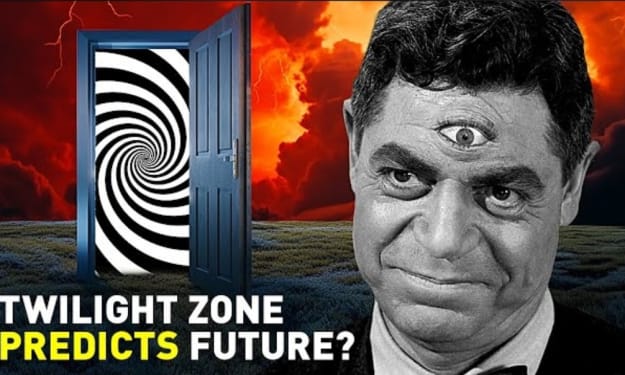
The Twilight Zone: A Timeless Legacy of Sci-Fi, Horror, and Social Commentary
There’s a TV show from the 1960s that still holds immense influence today, inspiring everything from *Final Destination* to *Black Mirror*. This show, *The Twilight Zone*, created by Rod Serling, became a cornerstone in sci-fi and horror television. Its impact is so strong that it still ranks among the TV guide’s 50 greatest TV shows, decades after its original run. *The Twilight Zone* was not just another anthology series—it became a cultural phenomenon. Each episode presented a new story where ordinary people were confronted with strange, often unsettling events, and the signature twist ending always left viewers with something to ponder. Serling, the mastermind behind it all, was the executive producer, head writer, and narrator of the show. His voice delivered the chilling intros and outros that framed the bizarre happenings, often explaining how characters ended up in “The Twilight Zone.” Interestingly, the term “Twilight Zone” entered the lexicon in the 1990s as a way to describe situations where reality seemed to blur with the unreal, a feeling of being stuck between two worlds. Over time, it even came to represent the deepest, most mysterious parts of the ocean, where no sunlight reaches. The name perfectly matched the surreal, otherworldly feel of the series. The show attracted a wide range of actors, many of whom went on to have significant careers in Hollywood. It was also a launching pad for younger stars. Icons like Buster Keaton even made appearances—Keaton starred in season 3, episode 13, an example of the kind of cross-generational appeal the show had. Though *The Twilight Zone* aired originally in the late 1950s and early 1960s, its influence stretched far beyond its time. For Halloween, it became synonymous with spooky TV marathons, with people gathering to watch the show’s eerie episodes. It also offered up plenty of costume inspiration, as characters like the frightening “Talking Tina” from season 5, episode 6, prefigured the likes of Chucky and Annabelle in later horror films. One of the most unsettling episodes is “Eye of the Beholder” from season 2, episode 6, which keeps viewers on the edge of their seats, wondering what lies beneath the bandages of Miss Janet Tyler. The darkness and suspense of the episode continue to be a classic choice for Halloween viewing. The show even inspired official holidays, such as National Twilight Zone Day on May 11th, a day to celebrate its lasting cultural influence. It’s not just TV shows that owe a debt to *The Twilight Zone*—films and other media took inspiration from its themes. For instance, *The Simpsons* often parodied the show, and George R.R. Martin, the creator of *Game of Thrones*, began his writing career by contributing to the *Twilight Zone* revival in the 1980s. While the revival didn’t have the same level of success as the original, it helped launch his career. This experience provided him with valuable lessons in TV writing. The series also influenced blockbuster films like *The Truman Show* and *Final Destination*, which built upon *The Twilight Zone’s* themes of predestination, fate, and the strange intersection between the real and the imaginary. The episode “The Monsters Are Due on Maple Street” centers around a neighborhood that falls apart after rumors of an alien presence, which directly inspired the 2007 film *The Mist*, directed by Frank Darabont. Another episode, “Mirror Image,” about a woman encountering her doppelganger at a bus station, clearly inspired Jordan Peele’s 2019 horror masterpiece *Us*. Even *The Sixth Sense* and *Jacob’s Ladder* trace their roots to *The Twilight Zone*, particularly the story “An Occurrence at Owl Creek Bridge,” which featured a twist ending that made waves in the world of psychological horror. In the episode “Five Characters in Search of an Exit,” five people find themselves in a strange room with no memory of how they got there. This premise, which plays with the concept of being trapped in an inexplicable space, shares similarities with the 2007 movie *Cube*, where strangers are confined to a deadly maze. While the director of *Cube* never confirmed the inspiration, fans have often drawn parallels between the two. Some of the *Twilight Zone’s* episodes were groundbreaking and ahead of their time. One such episode, “The Encounter,” was banned for 50 years. This episode, which tackled themes of war, hidden biases, and racial tension, made a bold statement about social issues—something that *The Twilight Zone* was known for. Interestingly, sci-fi allowed the show to address these deeper societal problems, as TV networks were more willing to air stories about extraterrestrials and the unknown than straightforward drama series. What made the show stand out was its format: each episode was a self-contained story. Unlike most TV shows of the time, which followed ongoing story arcs, *The Twilight Zone* presented a new tale each week. These stories were usually about ordinary people in extraordinary circumstances, often with a moral lesson or a twist that left viewers questioning the nature of reality. Despite its massive success, the show was canceled in 1962, just before the start of season 4. It had been facing difficulties—finding a sponsor was a struggle, and CBS changed its schedule, replacing the show with a comedy series, *Fair Exchange*. Though *Fair Exchange* failed to gain traction, and CBS sought to bring Serling back, by that point, he had burned out. The show’s move to a full hour in season 4 also didn’t sit well with audiences, and ratings began to decline. Serling’s daughter, Anne, had an interesting relationship with the show. When she was younger, she didn’t understand her father’s role in creating such strange and eerie stories. One day, a schoolmate asked her where her father got his ideas, leaving her puzzled. Years later, after her father’s death, Anne began watching the show as a way to feel closer to him. The surreal nature of *The Twilight Zone* took on new meaning for her, offering a connection to the father she had lost. Rod Serling’s role as the narrator was initially offered to Orson Welles, but the latter’s high fee made him unaffordable. Serling, however, stepped in and became synonymous with the show’s tone and atmosphere. Today, *The Twilight Zone* is available on streaming platforms, and its legacy continues to captivate new generations. If you decide to watch the series, you’re diving into one of the most influential shows in TV history—a series that blurred the lines between reality and imagination, sparking creativity in TV, film, and beyond.
By Nora Ariana2 years ago in Education
When Luck Runs Out: A Collection of Everyday Mishaps. Content Warning.
**Unlucky Days: A Series of Mishaps** Imagine waking up and glancing at the clock to see it's 9:15. You're terribly late. In a rush, you make a cup of coffee, only to realize you’ve added salt instead of sugar. As you sip the awful concoction, you try to shrug it off, thinking the day can't get worse. But life has other plans. While sprinting to catch the bus, it pulls away just as you arrive. Frustrated, you believe this is the worst day ever—but you’d be wrong. Let’s consider someone else. He wakes up in a good mood, heading to the bathroom to wash up. But to his shock, the mirror has been replaced. Worse still, the new one is crooked, making grooming a nightmare. If that's not bad enough, another individual forgets to reattach the guard on their hair trimmer, accidentally shaving off a significant chunk of hair. Moving on, imagine being locked out by your own dog. Perhaps this pet was upset because their breakfast was delayed. But even when breakfast is served, it can go awry. One person discovered their refrigerator had frozen an egg solid. Another accidentally seasoned their food with heaps of salt instead of sugar. In the workplace, disasters can strike too. Picture a coffee shop worker dealing with a burst container of beans, spilling seven pounds of coffee. Meanwhile, at home, someone's sister’s makeup bag was crushed after their father sat on it, leaving a chaotic mess. Then there’s the world of gadgets. A man trying to microwave his lunch sees the appliance burst into flames. Another breaks a knife trying to slice butter. One person even lost their phone while attempting to feed birds, accidentally tossing it into the water instead of bread. Transportation issues also top the list of unlucky events. Someone gets their bike stuck in wet cement, while another finds their car buried under snow. And yet another individual, mid-camping trip, discovers their car key won’t work, leaving them stranded miles from home. Sometimes, even celebrations go wrong. A person baking brownies ruins them by placing candles on the still-hot dessert, causing the wax to melt. Another orders a birthday cake resembling their pet, but the result looks nothing like the animal, leaving even the cat unimpressed. And then there are structural mishaps. One homeowner trying to install shelves accidentally shatters their toilet when everything falls off the wall. In another case, a man drills into a hot water pipe instead of the intended wall spot, creating a plumbing disaster. Even leisure activities aren’t immune. Someone enjoying a puzzle watches in horror as their pets knock the finished piece onto the floor, scattering 1,000 pieces everywhere. Meanwhile, another person at a trampoline park mistakenly takes someone else’s shoes home, leaving the original owner shoeless. If you thought your day was bad, consider this: a person lands a new job after months of unemployment, only to trip on a carpet and break their leg five minutes into their first day. Or the traveler who opens their luggage after a flight to find it completely destroyed. Despite all these mishaps, there’s a silver lining. Studies show that staying positive makes you more productive and happier overall. So next time something goes wrong, remember that the rest of your day can still turn around—it’s all about your perspective.
By Nora Ariana2 years ago in Education
How Effective is Morpheus8 for Skin Tightening in Dubai?
Skin tightening treatments have gained significant popularity over the years, especially in regions like Dubai, where the desire for youthful and radiant skin is a common aesthetic goal. One of the leading technologies in the field of non-invasive skin rejuvenation is Morpheus8 Dubai. This treatment combines microneedling with radiofrequency energy to address various skin concerns, offering a promising solution for those looking to improve their skin’s texture, tone, and elasticity.
By Anousha syed2 years ago in Education
Puzzle.io: The Day I Finally Gave My Team the Game-Changing Tool They Deserved. AI-Generated.
You know that feeling when you’ve had *enough* of watching chaos unfold in slow motion? That was me last Tuesday. I was sitting in my corner office—not to brag, but it’s a killer view—and staring at my laptop like it had personally offended me. Emails were pouring in faster than I could read them, my Slack notifications were screaming at me like an angry toddler, and don’t even get me started on the Excel spreadsheets. They looked like something out of an ancient text.
By Sammy gold2 years ago in Education
The Mythological Roots of Katniss Everdeen: Unveiling the Ancient Heroes Behind The Hunger Games
Let’s start by discussing our protagonist, Katniss Everdeen. She represents many heroic traits, but also taps into a deeper, mythological connection. Katniss's character parallels the ancient Roman goddess Diana, the goddess of the moon, hunting, and the wilderness. Like Diana, Katniss possesses exceptional skills in archery and a fierce independence that defines much of her journey. One of the most iconic moments from *The Hunger Games* is Katniss’s decision to volunteer as tribute, a self-sacrifice that embodies her desire to protect those she loves. The moment, "I volunteer as tribute," has become synonymous with her resilience and determination. But underneath her bravery lies an intriguing mythological connection. In *The Hunger Games*, Katniss is frequently seen wielding her bow and arrow. The scene where she hunts with her bow draws a strong visual connection to Diana, who was often depicted with a bow, hunting wild animals, especially deer. In fact, Katniss’s skill in archery, paired with her bravery, mirrors Diana’s traits as a protector and fierce warrior. Beyond her physical attributes, Katniss's attitude toward love and romance further reflects Diana’s qualities. Diana was known for her independence, rejecting the idea of romantic attachments. Similarly, Katniss remains focused on survival and protecting those she loves, rather than pursuing romantic relationships. Her reluctance to engage in romance with either Gale or Peeta is a significant part of her character arc, echoing Diana's self-sufficiency. The mythological influence doesn’t stop with Katniss. One of the most well-known myths involving Diana is the story of the hunter Actaeon, who accidentally witnessed her bathing and was transformed into a stag, hunted by his own dogs. This transformation mirrors a key moment in *The Hunger Games*, where genetically engineered mutts, resembling fallen tributes, are unleashed to hunt the final contestants in the Games. This disturbing scene parallels Diana’s punishment of Actaeon, where the hunter becomes the hunted. Suzanne Collins, the author of *The Hunger Games*, has acknowledged that classical myths, including the story of Theseus and the Minotaur, heavily influenced her work. In this myth, young tributes are sent to Crete to face the Minotaur. Theseus volunteers as one of the tributes, and with the help of Princess Ariadne, he navigates the Labyrinth, defeats the Minotaur, and escapes. This idea of young people being sacrificed for a greater political or societal purpose is mirrored in the *Hunger Games*, where children from each district are selected to fight in a deadly game to maintain the Capitol's control. The setting of *The Hunger Games* also draws from historical references, particularly Ancient Rome. The name "Panem," derived from the Latin phrase *panem et circenses* (bread and circuses), was a tactic used by Roman emperors to appease and distract the masses with free food and entertainment. In *The Hunger Games*, this tactic is mirrored by the Games themselves, where the Capitol uses the Games to keep the districts subdued and distracted. The brutal violence serves as both entertainment for the Capitol and a reminder to the districts that rebellion will be met with violence. The Capitol itself, with its opulence and decadent lifestyle, reflects the excesses of ancient imperial powers. Its design, with its Roman-inspired architecture and lavish parades, reinforces the theme of control and distraction. The people of the Capitol are kept happy and entertained while the districts struggle, much like the citizens of ancient Rome, who were kept pacified with spectacles like gladiatorial games. However, Collins also drew inspiration from more contemporary sources. In interviews, she mentioned that reality TV shows, news footage, and her father’s experiences in the Vietnam War influenced her depiction of Panem. The districts are each modeled after different regions of the United States, highlighting the stark contrasts between the Capitol’s excesses and the poverty of the districts. Before I conclude, let me share an interesting Easter egg from the upcoming *The Hunger Games: Ballad of Songbirds and Snakes* movie. If you watch the trailer closely, you’ll notice a scene where Lucy Gray, President Snow’s love interest, curtsies to the authorities. This gesture echoes Katniss’s own sarcastic curtsy during her Games. While the connection may seem subtle, it’s a fascinating nod to the events of the original trilogy, showing how history may repeat itself in unexpected ways. In the grand narrative of *The Hunger Games*, Katniss represents both a modern hero and an embodiment of ancient myth. Through her, the story explores timeless themes of sacrifice, survival, and rebellion, woven together with rich mythological and historical influences.
By Nora Ariana2 years ago in Education
Abstract: Long-Distance Relationships: The Psychology and Beauty Behind It. Content Warning. AI-Generated.
7 Psychological Effects & Facts of Long-Distance Relationships (LDRs) Long-distance relationships (LDRs) are an adventure of the heart, full of love, longing, and warnings of difficulty. When two people choose to love each other in spite of the distance, that’s a true testament of their strength and dedication. But that doesn’t mean it is easy. LDRs test emotions in a way few experiences can. So let’s explore the psychological effects and emotional realities of LDRs and the bittersweet beauty of The LDR Life.
By HEMANT YADAV2 years ago in Education